Story code: ST-001514
Part 1: The Ghost in the Bleachers
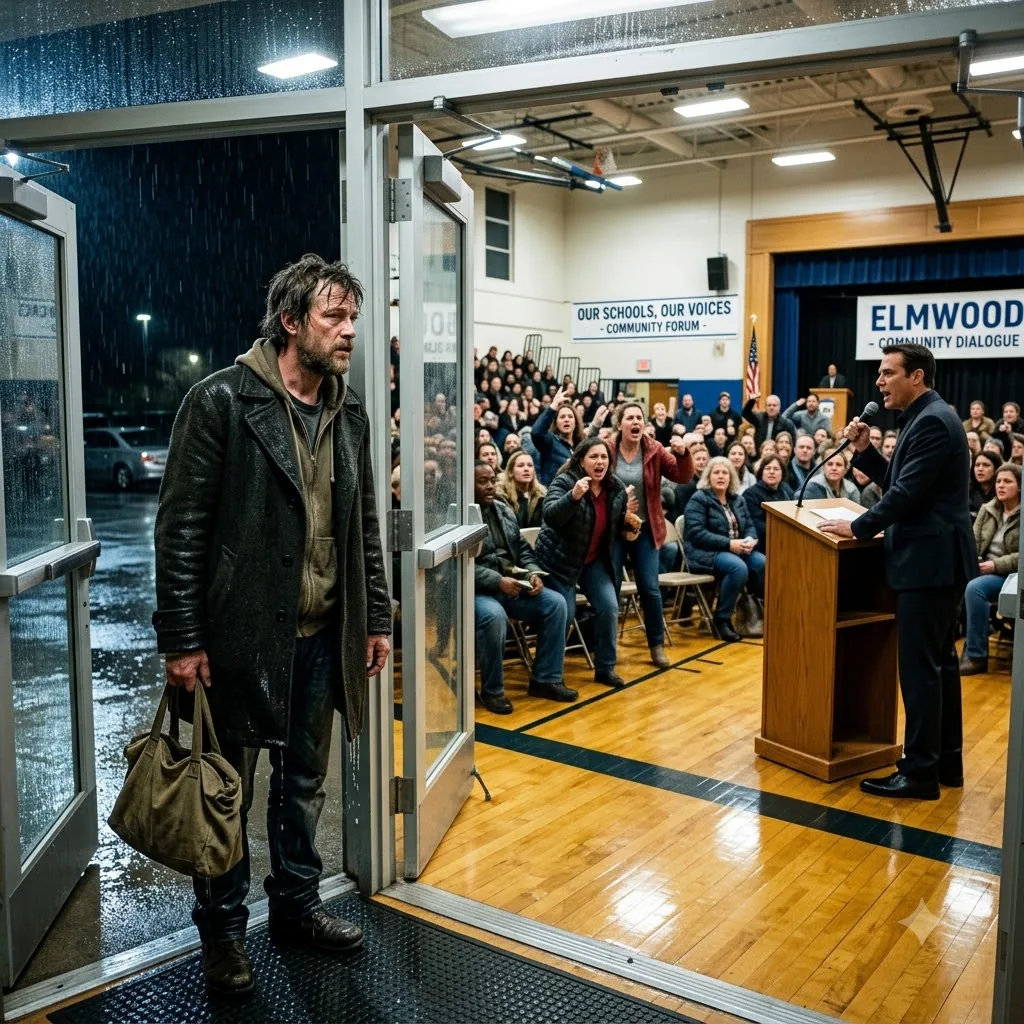
The fluorescent lights of the gymnasium slammed into Elias like a physical blow, stripping away the numb, creeping comfort of the freezing parking lot. He dragged his frostbitten boots across the polished hardwood, his battered surplus jacket dripping gray slush onto the brightly painted home court logo of the Oakridge Eagles. Heat blasted from overhead vents, thawing the ice in his matted beard into a humiliating, steady drip as the roar of an enraged crowd crashed over him. His head throbbed with a familiar, blinding pressure. The mortar blast from Fallujah always echoed louder when his core temperature dropped past a certain point, leaving a high-pitched ringing in his right ear that distorted the chaotic shouting in the room.
He leaned heavily against the padded blue wall near the emergency exit, just trying to survive the night. Outside, the windchill had plummeted well below zero, freezing the condensation on the inside of the dumpsters at the adjacent strip mall. If he had stayed in his cardboard windbreak, he would have been a solid block of ice for the morning sanitation crew to find. Here, in the blinding glare of the affluent suburb, he was just a smudge of dirt they had not noticed yet.
Hundreds of people packed the folding aluminum bleachers. Women in cashmere sweaters and men in tailored quarter-zips screamed with faces twisted in absolute fury. Elias squinted through the migraine aura pulsing in his peripheral vision, instinctively scanning the room for a threat. There were no weapons visible. There was no incoming fire. The civilians were holding up printed sheets of paper and waving their expensive smartphones in the air. A woman in a camel hair coat a few feet away was sobbing into a tissue, shaking her head as if mourning a devastating casualty. It took Elias several minutes of staring through the haze of his own exhaustion to locate the focus of their rage. It was a massive projection screen showing the cartoon cover of a children’s library book.
Elias coughed, a wet, rattling sound that tore at his bruised ribs. He pressed a trembling, dirt-caked hand over his mouth to muffle the spasm. Nobody looked at him. The citizens of Oakridge were entirely consumed by their manufactured hysteria, fighting a desperate war over paper and ink while an actual combat veteran died of exposure in their shadow. He slid slowly down the padded wall, letting his battered knees buckle until he hit the floor. The waxed hardwood felt like absolute luxury against his freezing legs. He closed his eyes, letting the ambient, dry heat soak into his frozen joints. The crowd noise merged into a meaningless drone, punctuated by bursts of frantic applause and angry stomping on the bleachers. He just needed to stay awake until the janitor inevitably found him and kicked him back into the blizzard.
Then a new voice cut through the chaos, perfectly modulated and amplified by the gymnasium’s state-of-the-art sound system. It was smooth, intensely practiced, and dripping with a manufactured, folksy concern that instantly silenced the shrieking parents.
“We have to protect the innocence of our community,” the voice echoed across the gym.
Elias froze. His lungs stopped expanding. The persistent ringing in his ears vanished, replaced by an absolute, terrifying clarity that cut through his brain fog. He knew that cadence. He knew the precise, measured pause before the word community. It was a tactical pause. A politician’s pause.
He opened his eyes and forced his stiff, aching muscles to cooperate, pushing himself up against the blue padding. His vision swam for a second, graying at the edges, before snapping into sharp focus on the temporary stage set up at half-court.
A man stood at the wooden podium, bathed in the bright white beam of a follow spot. He wore a charcoal suit perfectly tailored to his shoulders. His silver hair was swept back flawlessly, catching the overhead light as he moved. He gripped the edges of the lectern with both hands, leaning into the microphone, projecting the calculated image of a reluctant warrior forced to lead his people against the darkness.
“They are coming for your values,” the man said, his voice lowering to a conspiratorial, intimate rumble that reached the back of the bleachers. “They are coming for your homes. But I promise you, not on my watch.”
The crowd erupted into thunderous, foot-stomping applause. The woman in the camel coat cheered so hard she spilled her insulated coffee cup, sending a puddle of latte across the gym floor.
Elias stared at the man on the stage, ignoring the spilled coffee soaking into the toe of his boot. The phantom ache in his skull surged, dragging him violently back to a stifling, windowless conference room in D.C., back before his medical discharge, before the streets, before the betrayal that ruined his life. The suit was a different color, and the hair was gray instead of dark brown, but the arrogant posture was identical. It was the exact same bureaucrat who had signed the papers burying the investigation into his unit’s equipment failure. The same polished official who had looked Elias in the eye and calmly stated that his traumatic brain injury was a complete fiction, a convenient lie fabricated to secure a lifetime disability check.
The heat of the gymnasium suddenly felt like a suffocating blanket. Elias pushed away from the wall. He did not care about the library book, or the screaming parents, or the freezing wind waiting to kill him outside. He stepped out from the shadows of the exit door, his wet boots squeaking loudly against the pristine hardwood, marching straight into the center aisle leading to the stage. The woman in the camel coat turned, her mouth dropping open in absolute disgust as she took in his ruined clothes and unwashed face. She raised a manicured hand to block his path. Elias shoved her arm aside and kept walking.
The fluorescent lights of the gymnasium slammed into Elias like a physical blow, stripping away the numb, creeping comfort of the freezing parking lot. He dragged his frostbitten boots across the polished hardwood, his battered surplus jacket dripping gray slush onto the brightly painted home court logo of the Oakridge Eagles. Heat blasted from overhead vents, thawing the ice in his matted beard into a humiliating, steady drip as the roar of an enraged crowd crashed over him. His head throbbed with a familiar, blinding pressure. The mortar blast from Fallujah always echoed louder when his core temperature dropped past a certain point, leaving a high-pitched ringing in his right ear that distorted the chaotic shouting in the room.
He leaned heavily against the padded blue wall near the emergency exit, just trying to survive the night. Outside, the windchill had plummeted well below zero, freezing the condensation on the inside of the dumpsters at the adjacent strip mall. If he had stayed in his cardboard windbreak, he would have been a solid block of ice for the morning sanitation crew to find. Here, in the blinding glare of the affluent suburb, he was just a smudge of dirt they had not noticed yet.
Hundreds of people packed the folding aluminum bleachers. Women in cashmere sweaters and men in tailored quarter-zips screamed with faces twisted in absolute fury. Elias squinted through the migraine aura pulsing in his peripheral vision, instinctively scanning the room for a threat. There were no weapons visible. There was no incoming fire. The civilians were holding up printed sheets of paper and waving their expensive smartphones in the air. A woman in a camel hair coat a few feet away was sobbing into a tissue, shaking her head as if mourning a devastating casualty. It took Elias several minutes of staring through the haze of his own exhaustion to locate the focus of their rage. It was a massive projection screen showing the cartoon cover of a children’s library book.
Elias coughed, a wet, rattling sound that tore at his bruised ribs. He pressed a trembling, dirt-caked hand over his mouth to muffle the spasm. Nobody looked at him. The citizens of Oakridge were entirely consumed by their manufactured hysteria, fighting a desperate war over paper and ink while an actual combat veteran died of exposure in their shadow. He slid slowly down the padded wall, letting his battered knees buckle until he hit the floor. The waxed hardwood felt like absolute luxury against his freezing legs. He closed his eyes, letting the ambient, dry heat soak into his frozen joints. The crowd noise merged into a meaningless drone, punctuated by bursts of frantic applause and angry stomping on the bleachers. He just needed to stay awake until the janitor inevitably found him and kicked him back into the blizzard.
Then a new voice cut through the chaos, perfectly modulated and amplified by the gymnasium’s state-of-the-art sound system. It was smooth, intensely practiced, and dripping with a manufactured, folksy concern that instantly silenced the shrieking parents.
“We have to protect the innocence of our community,” the voice echoed across the gym.
Elias froze. His lungs stopped expanding. The persistent ringing in his ears vanished, replaced by an absolute, terrifying clarity that cut through his brain fog. He knew that cadence. He knew the precise, measured pause before the word community. It was a tactical pause. A politician’s pause.
He opened his eyes and forced his stiff, aching muscles to cooperate, pushing himself up against the blue padding. His vision swam for a second, graying at the edges, before snapping into sharp focus on the temporary stage set up at half-court.
A man stood at the wooden podium, bathed in the bright white beam of a follow spot. He wore a charcoal suit perfectly tailored to his shoulders. His silver hair was swept back flawlessly, catching the overhead light as he moved. He gripped the edges of the lectern with both hands, leaning into the microphone, projecting the calculated image of a reluctant warrior forced to lead his people against the darkness.
“They are coming for your values,” the man said, his voice lowering to a conspiratorial, intimate rumble that reached the back of the bleachers. “They are coming for your homes. But I promise you, not on my watch.”
The crowd erupted into thunderous, foot-stomping applause. The woman in the camel coat cheered so hard she spilled her insulated coffee cup, sending a puddle of latte across the gym floor.
Elias stared at the man on the stage, ignoring the spilled coffee soaking into the toe of his boot. The phantom ache in his skull surged, dragging him violently back to a stifling, windowless conference room in D.C., back before his medical discharge, before the streets, before the betrayal that ruined his life. The suit was a different color, and the hair was gray instead of dark brown, but the arrogant posture was identical. It was the exact same bureaucrat who had signed the papers burying the investigation into his unit’s equipment failure. The same polished official who had looked Elias in the eye and calmly stated that his traumatic brain injury was a complete fiction, a convenient lie fabricated to secure a lifetime disability check.
The heat of the gymnasium suddenly felt like a suffocating blanket. Elias pushed away from the wall. He did not care about the library book, or the screaming parents, or the freezing wind waiting to kill him outside. He stepped out from the shadows of the exit door, his wet boots squeaking loudly against the pristine hardwood, marching straight into the center aisle leading to the stage. The woman in the camel coat turned, her mouth dropping open in absolute disgust as she took in his ruined clothes and unwashed face. She raised a manicured hand to block his path. Elias shoved her arm aside and kept walking.