Story code: ST-000264
Part 1: The Glass Fortress
The marble floor of the Pinnacle Tower lobby tilted violently to the left, forcing Mateo to drop his shoulder so the forty pounds of glass-bottled alkaline water and organic groceries wouldn’t smash against the stone. Sweat stung his eyes, blurring the edges of the minimalist security desk into a streak of harsh white LED light. He shifted his stance, trying to lock his knees, but his joints felt like hollow glass. His heart hammered a frantic, irregular rhythm against his ribs.
He needed sugar, and he needed it ten minutes ago.
The security guard, a blurry figure in a tailored charcoal suit, gestured vaguely toward the back corridor without looking up from a glowing tablet. Mateo gritted his teeth, hoisted the thick canvas straps higher on his forearms, and dragged his feet forward. The straps cut deep, angry red lines into his skin. His breath came out in short gasps. The air in the lobby was aggressively filtered, chilled to a sterile temperature that made the cold sweat clinging to his neck feel like a layer of frost. A continuous hum from the climate control system synced with the frantic thumping in his chest.
This used to be his uncle’s neighborhood. Three years ago, this exact square footage had been Hector’s Auto Repair, a sprawling garage smelling permanently of motor oil, roasting garlic, and old tires. Mateo had spent his teenage summers sweeping right about where a minimalist geometric water feature now trickled over imported black river stones. Now, the entire block was a fortress of mirrored glass and brushed steel, erected to keep people like him outside the perimeter unless they were carrying dinner.
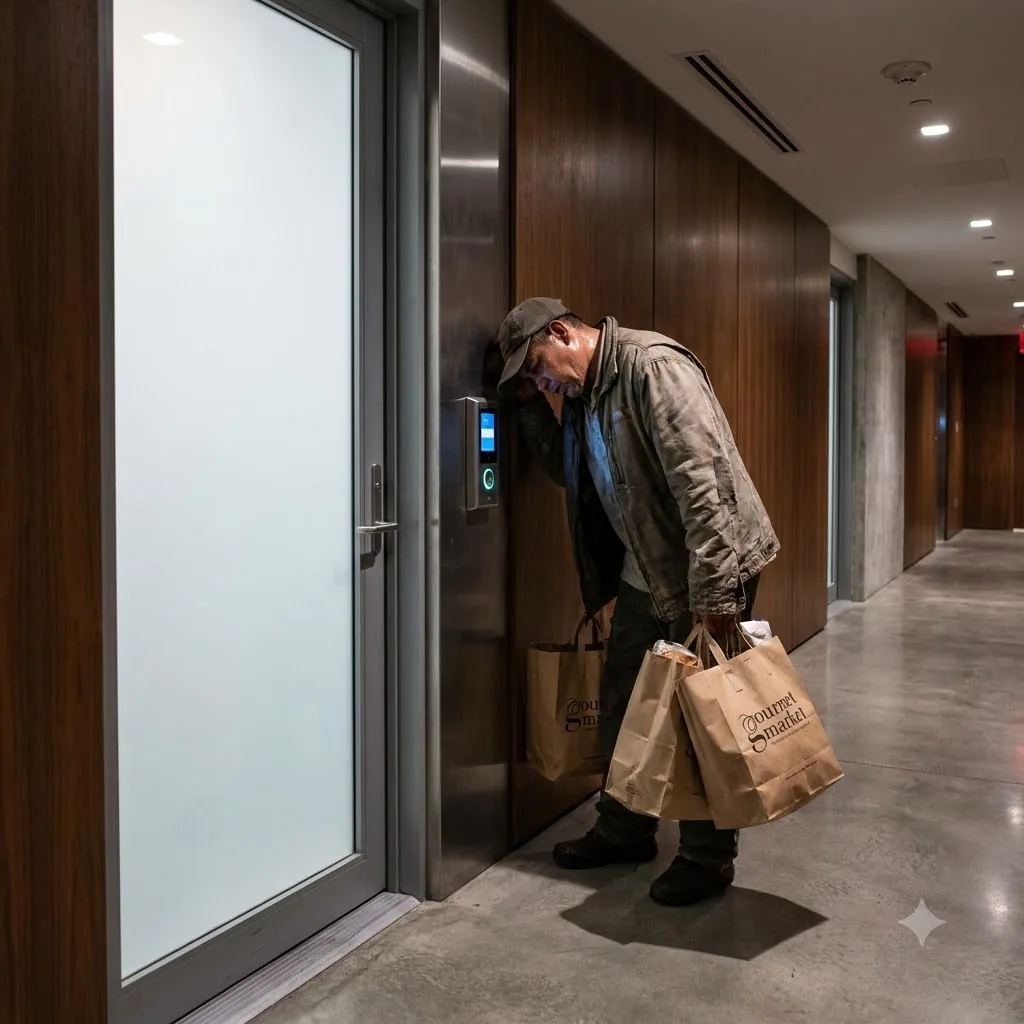
He reached the stainless-steel doors of the service elevator and leaned his forehead against the cool metal. He fumbled frantically with his free hand, digging into the pockets of his worn jacket. His fingers scraped against a crumpled gas receipt, a loose house key, and lint. The plastic tube of glucose tablets was gone. He visualized his battered Corolla, parked illegally three blocks away, and remembered tossing the half-empty tube onto the passenger seat in his rush to grab the oversized bags.
A wave of nausea rolled through his stomach. His blood sugar was plummeting fast, entering the deep danger zone. It was the direct result of stretching his last vial of rapid-acting insulin too thin over the past four days. The brutal math had seemed necessary on Tuesday, trading full medical doses to keep the electricity on in his small apartment, but his body was violently rejecting the compromise now. His limbs felt disconnected, floating outside of his conscious control.
The elevator arrived with a soft chime. Mateo stumbled inside, letting the heavy bags rest on the floor. He pressed the button for the fifty-second floor. The machine ascended with a smooth acceleration that made his stomach drop and the gray fuzz in his peripheral vision thicken.
He stared down at the open canvas bags. One of them contained fruit. He could clearly see a plastic clamshell of grapes poking out next to a box of artisanal crackers and a jar of raw honeycomb. Just one handful of those grapes would stabilize his crashing system enough to walk out of the building. But the warning on the gig worker app flashed in his mind in unforgiving red letters. Tampering with an order meant immediate deactivation, no appeals. Losing the app meant losing the sole income he desperately needed to buy the next box of insulin pens at full retail price. He squeezed his eyes shut and pulled his trembling hands away from the bags.
The digital display above the door blinked the floor numbers. Forty. Forty-five. Fifty.
When the doors parted, a dizzying hallway of repeating monochromatic carpet patterns stretched out endlessly before him. The recessed ceiling lights made it impossible for his unfocused eyes to gauge the true distance to the final door at the end of the hall.
Penthouse A.
He gripped the canvas straps again. His forearms screamed in protest. Every step forward felt like wading through wet cement. The absolute silence of the corridor was oppressive, swallowing the sound of his shallow breathing. The repeating gray-and-silver diamond pattern on the floor seemed to ripple beneath his feet. He kept his eyes fixed on the heavy wooden door at the end of the hall, using it as a singular anchor to keep from pitching over.
Ten feet away. Five feet.
His vision narrowed to a tight tunnel. The metallic taste in his mouth grew overwhelming. He reached the door and raised a heavy hand to knock, but his muscles stopped responding. The canvas bags slipped from his weakened grip, hitting the plush carpet with a heavy, muffled thud. A glass bottle inside clinked sharply.
Mateo’s knees buckled. He caught himself against the solid oak door, sliding down the smooth wood until he hit the floor. The world spun in a sickening carousel of gray shadows. He tried to reach out to gather the spilled groceries, but his arms lay uselessly at his sides. The crushing weight of the crash pressed down on his chest, making it physically impossible to draw a full breath. The edges of his vision darkened entirely.
The brass lock above his head clicked loudly.
The heavy door swung inward, taking away his only support. Mateo tipped sideways onto the carpet, staring up through swimming vision at a pair of highly polished leather loafers. Above the expensive shoes, a man in a pristine cashmere sweater looked down at him.
The man took a single step back, his face tightening in sharp alarm as he surveyed the spilled luxury groceries and the delivery driver gasping on his threshold. Mateo forced his heavy jaw open to explain, to beg for a glass of orange juice, but his tongue felt swollen and the words refused to form.
The man leaned forward, his gaze dropping from Mateo’s pale, sweat-drenched face to the worn silver medical alert bracelet dangling loosely on his wrist. The annoyance in the man’s eyes vanished, replaced instantly by a sharp, calculating intensity as he reached his hand down and grabbed Mateo by the shoulder.
The marble floor of the Pinnacle Tower lobby tilted violently to the left, forcing Mateo to drop his shoulder so the forty pounds of glass-bottled alkaline water and organic groceries wouldn’t smash against the stone. Sweat stung his eyes, blurring the edges of the minimalist security desk into a streak of harsh white LED light. He shifted his stance, trying to lock his knees, but his joints felt like hollow glass. His heart hammered a frantic, irregular rhythm against his ribs.
He needed sugar, and he needed it ten minutes ago.
The security guard, a blurry figure in a tailored charcoal suit, gestured vaguely toward the back corridor without looking up from a glowing tablet. Mateo gritted his teeth, hoisted the thick canvas straps higher on his forearms, and dragged his feet forward. The straps cut deep, angry red lines into his skin. His breath came out in short gasps. The air in the lobby was aggressively filtered, chilled to a sterile temperature that made the cold sweat clinging to his neck feel like a layer of frost. A continuous hum from the climate control system synced with the frantic thumping in his chest.
This used to be his uncle’s neighborhood. Three years ago, this exact square footage had been Hector’s Auto Repair, a sprawling garage smelling permanently of motor oil, roasting garlic, and old tires. Mateo had spent his teenage summers sweeping right about where a minimalist geometric water feature now trickled over imported black river stones. Now, the entire block was a fortress of mirrored glass and brushed steel, erected to keep people like him outside the perimeter unless they were carrying dinner.
He reached the stainless-steel doors of the service elevator and leaned his forehead against the cool metal. He fumbled frantically with his free hand, digging into the pockets of his worn jacket. His fingers scraped against a crumpled gas receipt, a loose house key, and lint. The plastic tube of glucose tablets was gone. He visualized his battered Corolla, parked illegally three blocks away, and remembered tossing the half-empty tube onto the passenger seat in his rush to grab the oversized bags.
A wave of nausea rolled through his stomach. His blood sugar was plummeting fast, entering the deep danger zone. It was the direct result of stretching his last vial of rapid-acting insulin too thin over the past four days. The brutal math had seemed necessary on Tuesday, trading full medical doses to keep the electricity on in his small apartment, but his body was violently rejecting the compromise now. His limbs felt disconnected, floating outside of his conscious control.
The elevator arrived with a soft chime. Mateo stumbled inside, letting the heavy bags rest on the floor. He pressed the button for the fifty-second floor. The machine ascended with a smooth acceleration that made his stomach drop and the gray fuzz in his peripheral vision thicken.
He stared down at the open canvas bags. One of them contained fruit. He could clearly see a plastic clamshell of grapes poking out next to a box of artisanal crackers and a jar of raw honeycomb. Just one handful of those grapes would stabilize his crashing system enough to walk out of the building. But the warning on the gig worker app flashed in his mind in unforgiving red letters. Tampering with an order meant immediate deactivation, no appeals. Losing the app meant losing the sole income he desperately needed to buy the next box of insulin pens at full retail price. He squeezed his eyes shut and pulled his trembling hands away from the bags.
The digital display above the door blinked the floor numbers. Forty. Forty-five. Fifty.
When the doors parted, a dizzying hallway of repeating monochromatic carpet patterns stretched out endlessly before him. The recessed ceiling lights made it impossible for his unfocused eyes to gauge the true distance to the final door at the end of the hall.
Penthouse A.
He gripped the canvas straps again. His forearms screamed in protest. Every step forward felt like wading through wet cement. The absolute silence of the corridor was oppressive, swallowing the sound of his shallow breathing. The repeating gray-and-silver diamond pattern on the floor seemed to ripple beneath his feet. He kept his eyes fixed on the heavy wooden door at the end of the hall, using it as a singular anchor to keep from pitching over.
Ten feet away. Five feet.
His vision narrowed to a tight tunnel. The metallic taste in his mouth grew overwhelming. He reached the door and raised a heavy hand to knock, but his muscles stopped responding. The canvas bags slipped from his weakened grip, hitting the plush carpet with a heavy, muffled thud. A glass bottle inside clinked sharply.
Mateo’s knees buckled. He caught himself against the solid oak door, sliding down the smooth wood until he hit the floor. The world spun in a sickening carousel of gray shadows. He tried to reach out to gather the spilled groceries, but his arms lay uselessly at his sides. The crushing weight of the crash pressed down on his chest, making it physically impossible to draw a full breath. The edges of his vision darkened entirely.
The brass lock above his head clicked loudly.
The heavy door swung inward, taking away his only support. Mateo tipped sideways onto the carpet, staring up through swimming vision at a pair of highly polished leather loafers. Above the expensive shoes, a man in a pristine cashmere sweater looked down at him.
The man took a single step back, his face tightening in sharp alarm as he surveyed the spilled luxury groceries and the delivery driver gasping on his threshold. Mateo forced his heavy jaw open to explain, to beg for a glass of orange juice, but his tongue felt swollen and the words refused to form.
The man leaned forward, his gaze dropping from Mateo’s pale, sweat-drenched face to the worn silver medical alert bracelet dangling loosely on his wrist. The annoyance in the man’s eyes vanished, replaced instantly by a sharp, calculating intensity as he reached his hand down and grabbed Mateo by the shoulder.