Story code: ST-000165
Part 1: The Flawless Facade
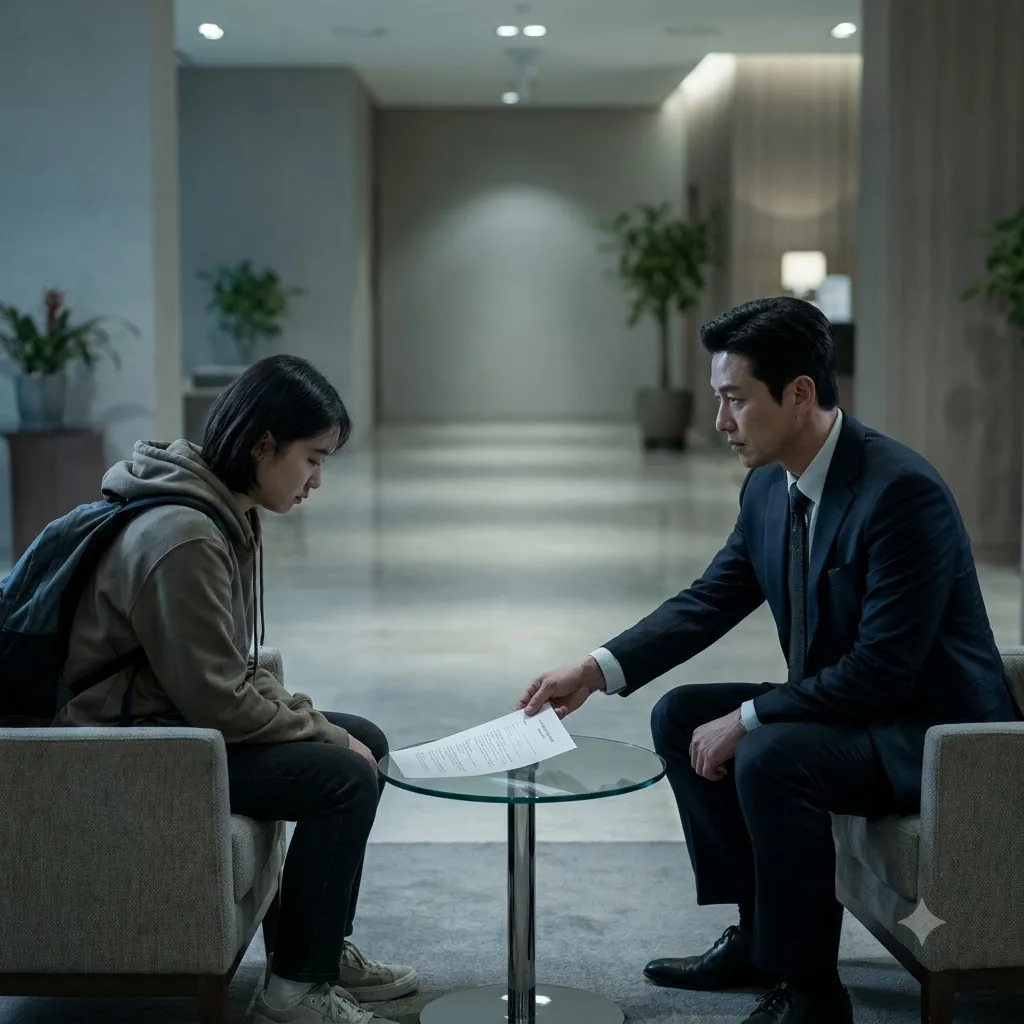
The leather lobby chair groaned under my weight as Mr. Sterling carefully aligned his gold fountain pen parallel to my printed resume. We were tucked into a quiet, heavily air-conditioned alcove of the Marriott, the silence broken only by the distant hum of a commercial ice machine. I forced my spine straight against the cushion, locking my face into the bright, eager expression I had been practicing in my bathroom mirror since before dawn. My muscles ached from the sheer effort of holding the smile.
For the first twenty minutes, the regional admissions interview proceeded exactly as I had scripted it in my head. I delivered my carefully rehearsed monologues about my passion for debate, my leadership in Model United Nations, and my commitment to weekend community service. I spoke with the cadence of a seasoned politician, expertly masking the bone-deep burnout that had been consuming me since the beginning of junior year. Every answer was meticulously designed to portray the perfect applicant, a flawless academic machine completely unfazed by the crushing pressure of my competitive high school. Mr. Sterling nodded along, checking boxes on his evaluation sheet with precise, rhythmic strokes of his pen. He seemed entirely captivated by the polished, two-dimensional version of Chloe that I presented to the world every single day.
He paused, taking a moment to look over the top of his wire-rimmed reading glasses. He leaned forward and told me my transcript was one of the most flawless he had seen in his fifteen years of conducting these regional interviews. He praised my course rigor, noting the sheer volume of Advanced Placement classes I had managed to balance alongside my extracurricular commitments. I let out a measured breath, allowing a modest, grateful smile to touch my lips. I thought the hard part was finally over. I thought I had successfully navigated the final hurdle and secured my ticket out of my suffocating hometown.
Then, Mr. Sterling set his pen down.
The metallic click echoed sharply in the sterile lobby alcove. He reached down into his worn leather briefcase resting by his shoes and pulled out a secondary manila folder. It lacked the familiar crest of my high school or the official seal of the admissions office. My heart performed a slow, heavy thud against my ribs. I kept my hands folded tightly in my lap, digging my fingernails into my palms to maintain my composed facade. I forced myself to keep eye contact, projecting the image of a relaxed, confident student.
He opened the folder and flattened the center crease with the heel of his hand. His entire demeanor shifted in an instant. He dropped the warm, encouraging cadence he had used when asking about my AP Chemistry project. His voice became clinical, deliberate, and entirely devoid of the previous warmth. He informed me that the admissions committee conducts a holistic review of every single candidate, a process that includes verifying the full context of their academic journey.
I nodded slowly, waiting for the standard boilerplate lecture on academic integrity. Instead, Mr. Sterling zeroed in on my attendance record. He flipped to the second page in his folder and brought up the month of October.
He noted, his tone perfectly even, that I had missed two consecutive weeks of instruction during the fall semester. I had my response ready for this exact moment. I had constructed a perfectly acceptable narrative about a severe viral infection that had kept me bedridden, complete with an authentic medical note that the school administration had accepted without a moment of hesitation. I opened my mouth to recite the medical excuse.
Mr. Sterling raised a single hand, stopping me before I could utter a syllable.
He told me the university had received an anonymous flag regarding that specific timeframe.
The air in the hotel lobby seemed to freeze. The distant hum of the ice machine faded into a high-pitched ringing in my ears. I stared at the blank cover of the manila folder, my throat suddenly so dry I could barely swallow. An anonymous flag meant someone from my own community had reached out to the Ivy League admissions office directly. Someone had bypassed the school counselors, the principal, and my parents, taking deliberate aim at the one thing I had sacrificed my adolescence to build.
Mr. Sterling leaned back in his chair, studying my reaction with predatory patience. He spoke at length about the importance of transparency, emphasizing that the university takes unsolicited tips very seriously when they pertain to a student’s core character. He dragged the silence out, employing a polite but lethal stalling tactic clearly designed to make me break under the pressure. He watched my eyes, waiting for a spontaneous confession to a violation he had not yet explicitly named.
I refused to give him the satisfaction of a visible panic attack. I held his intense gaze, willing my breathing to remain slow and steady, even as a layer of cold sweat broke out along my spine. I stated firmly that I stood by my academic record and my officially reported absences.
Mr. Sterling sighed, a soft, immensely disappointed sound that made my stomach violently churn. He reached into the folder and pinched the corner of a single sheet of paper. It was a printed email, the header text bold and dark against the crisp white page.
He slid the document slowly across the polished wood of the table, stopping the paper just inches from my folded hands. My eyes darted to the subject line, absorbing the words that detailed exactly where I had been during those two weeks in October, right before I saw the name printed next to the sender icon.
The leather lobby chair groaned under my weight as Mr. Sterling carefully aligned his gold fountain pen parallel to my printed resume. We were tucked into a quiet, heavily air-conditioned alcove of the Marriott, the silence broken only by the distant hum of a commercial ice machine. I forced my spine straight against the cushion, locking my face into the bright, eager expression I had been practicing in my bathroom mirror since before dawn. My muscles ached from the sheer effort of holding the smile.
For the first twenty minutes, the regional admissions interview proceeded exactly as I had scripted it in my head. I delivered my carefully rehearsed monologues about my passion for debate, my leadership in Model United Nations, and my commitment to weekend community service. I spoke with the cadence of a seasoned politician, expertly masking the bone-deep burnout that had been consuming me since the beginning of junior year. Every answer was meticulously designed to portray the perfect applicant, a flawless academic machine completely unfazed by the crushing pressure of my competitive high school. Mr. Sterling nodded along, checking boxes on his evaluation sheet with precise, rhythmic strokes of his pen. He seemed entirely captivated by the polished, two-dimensional version of Chloe that I presented to the world every single day.
He paused, taking a moment to look over the top of his wire-rimmed reading glasses. He leaned forward and told me my transcript was one of the most flawless he had seen in his fifteen years of conducting these regional interviews. He praised my course rigor, noting the sheer volume of Advanced Placement classes I had managed to balance alongside my extracurricular commitments. I let out a measured breath, allowing a modest, grateful smile to touch my lips. I thought the hard part was finally over. I thought I had successfully navigated the final hurdle and secured my ticket out of my suffocating hometown.
Then, Mr. Sterling set his pen down.
The metallic click echoed sharply in the sterile lobby alcove. He reached down into his worn leather briefcase resting by his shoes and pulled out a secondary manila folder. It lacked the familiar crest of my high school or the official seal of the admissions office. My heart performed a slow, heavy thud against my ribs. I kept my hands folded tightly in my lap, digging my fingernails into my palms to maintain my composed facade. I forced myself to keep eye contact, projecting the image of a relaxed, confident student.
He opened the folder and flattened the center crease with the heel of his hand. His entire demeanor shifted in an instant. He dropped the warm, encouraging cadence he had used when asking about my AP Chemistry project. His voice became clinical, deliberate, and entirely devoid of the previous warmth. He informed me that the admissions committee conducts a holistic review of every single candidate, a process that includes verifying the full context of their academic journey.
I nodded slowly, waiting for the standard boilerplate lecture on academic integrity. Instead, Mr. Sterling zeroed in on my attendance record. He flipped to the second page in his folder and brought up the month of October.
He noted, his tone perfectly even, that I had missed two consecutive weeks of instruction during the fall semester. I had my response ready for this exact moment. I had constructed a perfectly acceptable narrative about a severe viral infection that had kept me bedridden, complete with an authentic medical note that the school administration had accepted without a moment of hesitation. I opened my mouth to recite the medical excuse.
Mr. Sterling raised a single hand, stopping me before I could utter a syllable.
He told me the university had received an anonymous flag regarding that specific timeframe.
The air in the hotel lobby seemed to freeze. The distant hum of the ice machine faded into a high-pitched ringing in my ears. I stared at the blank cover of the manila folder, my throat suddenly so dry I could barely swallow. An anonymous flag meant someone from my own community had reached out to the Ivy League admissions office directly. Someone had bypassed the school counselors, the principal, and my parents, taking deliberate aim at the one thing I had sacrificed my adolescence to build.
Mr. Sterling leaned back in his chair, studying my reaction with predatory patience. He spoke at length about the importance of transparency, emphasizing that the university takes unsolicited tips very seriously when they pertain to a student’s core character. He dragged the silence out, employing a polite but lethal stalling tactic clearly designed to make me break under the pressure. He watched my eyes, waiting for a spontaneous confession to a violation he had not yet explicitly named.
I refused to give him the satisfaction of a visible panic attack. I held his intense gaze, willing my breathing to remain slow and steady, even as a layer of cold sweat broke out along my spine. I stated firmly that I stood by my academic record and my officially reported absences.
Mr. Sterling sighed, a soft, immensely disappointed sound that made my stomach violently churn. He reached into the folder and pinched the corner of a single sheet of paper. It was a printed email, the header text bold and dark against the crisp white page.
He slid the document slowly across the polished wood of the table, stopping the paper just inches from my folded hands. My eyes darted to the subject line, absorbing the words that detailed exactly where I had been during those two weeks in October, right before I saw the name printed next to the sender icon.