Story code: ST-001622
Part 4: The Loading Dock
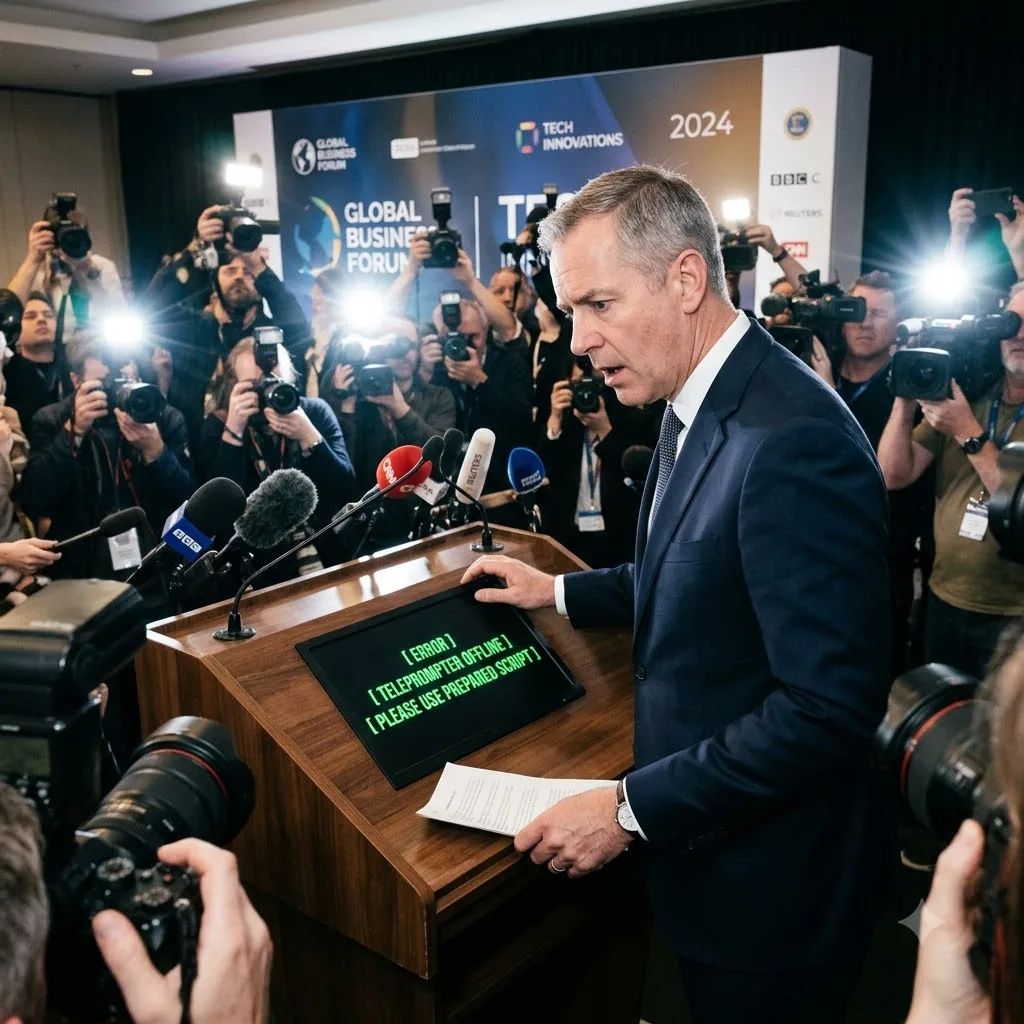
The green checkmark held on the teleprompter screen for precisely three seconds before the glass went dead black. The sudden darkness on the podium matched the massive screens flanking the stage, cutting the feed and plunging the ballroom into a chaotic strobe of relentless camera flashes.
Marcus finally let go of David’s ruined suit jacket. He stumbled backward, panting heavily, staring wildly at the sea of lenses that had just recorded his threats in high-definition audio. The roar of three hundred journalists surging toward the edge of the stage shook the hardwood floorboards.
Corporate security finally broke their paralysis. Four men in dark suits breached the heavy velvet curtains. They ignored the shouting press corps and bypassed Marcus entirely, forming a tight, physical wall around David.
“Move, Mr. Vance,” the lead guard ordered, gripping David by the bicep.
David offered no resistance. He unclasped his hands from the lucite edges of the podium and let the security team pull him backward into the heavy shadows of the wing. The suffocating heat of the stage lights instantly vanished, replaced by the cool, heavily air-conditioned chill of the hotel’s back corridors.
They marched him briskly down a concrete hallway, far away from the ballroom, until they reached a windowless staging room. The guards shoved him inside. Marcus burst through the door seconds later, his face a mottled, furious purple, flanked by the company’s head of regional security.
“Section four, clause eight,” Marcus spat, pacing the narrow room, his polished shoes scuffing the cheap linoleum. He pointed a trembling finger at David’s chest. “Gross misconduct. Immediate termination for cause. You are legally severed from this company as of this exact second.”
David stood silently in the center of the room. His breathing, which had been frantic and shallow on the stage, was slowly beginning to deepen and steady.
“Empty your pockets,” the security chief demanded, stepping forward with a thick plastic evidence bag.
“Every share of unvested stock is gone, David,” Marcus continued, his voice echoing off the cinderblock walls. “The board will claw back your vested shares for damages. Your severance package is voided. You breached your fiduciary duty on live television. We will bury you in civil litigation until you can’t afford a studio apartment. You are the rogue actor now. Sterling is already drafting the statement.”
David reached into his inner suit pocket. He pulled out the heavy, metallic corporate smartphone. For the last five years, that device had tethered him to the glass towers, vibrating at all hours with demands, sanitized statements, and crisis management protocols. He dropped it into the plastic bag. It landed with a dull, heavy thud.
“Your badge,” the security chief said.
David reached to his belt, unclipped the plastic keycard that granted him access to the executive suites, and let it fall into the bag. He retrieved his corporate credit card from his wallet and surrendered it as well.
“You have nothing,” Marcus sneered, stopping his pacing to stand inches from David’s face. “By the time you reach the sidewalk, your email is wiped. Your calendar is gone. Your career is ash. You just threw your entire life into a woodchipper for a hysterical engineer.”
“Dr. Kessler wasn’t hysterical,” David said quietly. “And you’re right. I don’t have anything left for you to take.”
Marcus’s jaw clenched, but he had no leverage left. The threat of federal prison, the threat of losing the corner office, the threat of being stripped of his wealth-it had all been executed. The worst had happened, and David was still standing.
“Get him off the property,” Marcus snapped at the security chief, turning his back on David.
Two guards flanked David, escorting him out of the staging room and deeper into the unglamorous underbelly of the hotel. They walked him in silence past industrial kitchens, towering stacks of linen carts, and humming ice machines. At the end of a long, fluorescent-lit corridor, they reached the metal double doors of the loading dock.
The guards pushed the heavy doors open.
David stepped out onto the cracked asphalt. The Galveston heat hit him instantly, thick and damp, carrying the heavy scent of salt, dead fish, and diesel exhaust. Behind him, the metal doors swung shut, the locks clicking into place with a sharp, final snap.
He was alone in the alley. There was no black town car waiting for him. There was no PR team to guide his steps, no Legal department to filter his thoughts, and no teleprompter to tell him what to say next.
David reached up and loosened his silk tie, pulling it completely free from his collar. He folded it and shoved it into his pocket. He was facing certain bankruptcy. He would spend the next year sitting across from federal investigators, parsing through the wreckage of his own complicity. The fortress he had built around his life was entirely gone.
He took a slow, deep breath of the coastal air. He had spent years as the company’s designated armor, a weaponized shield built to absorb the public fury and protect the men hiding behind him. But a shield was just a heavy, suffocating piece of metal to carry.
David turned away from the locked doors and began the long walk down the alley toward the street, his footsteps echoing in the quiet heat, feeling a profound, heavy clarity in the empty spaces of his pockets.