Story code: ST-000988
Part 1: The Silent Audience
The first thing that hit me when I pushed through the swinging double doors of the break room was the dead silence. Normally, the midday rush at our pharmacy counter is a chaotic, overlapping wall of sound. You expect the constant ringing of the consultation line, the rustling of heavy paper bags, the aggressive clatter of the pill-counting trays, and the steady hum of impatient conversations. But right now, the entire front half of the store was swallowed in an eerie, suffocating quiet.
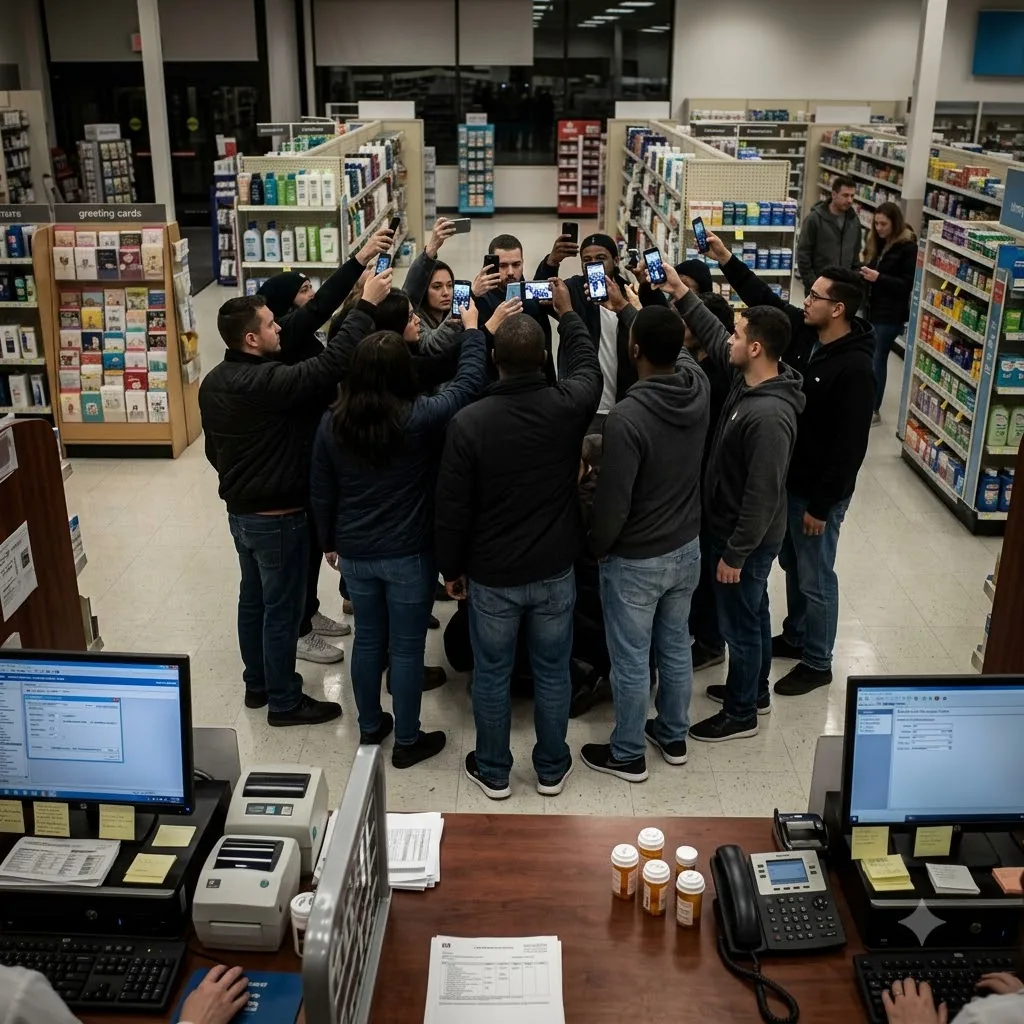
I wiped the last bit of my rushed lunch off my mouth and froze at the end of the seasonal aisle. About thirty feet away, right in front of the drop-off window, was a tight semicircle of at least fifteen customers. They were packed together like sardines, standing shoulder-to-shoulder to form a solid wall of winter coats, damp umbrellas, and half-full shopping baskets. Every single one of them had a smartphone held aloft. The pale, bluish light from their screens reflected off their faces, highlighting a collective expression of morbid fascination.
My immediate assumption was that we had another classic retail meltdown on our hands. Working in a pharmacy means you see a lot of people at their absolute worst. Usually, it is an angry customer throwing a massive temper tantrum over a denied refill or a sudden hike in an insurance copay. The protocol for those situations is deeply ingrained in all of us: let them vent, call the shift manager, and wait for the storm to pass while a few bored busybodies film the screaming match to post on the internet.
But there was absolutely no screaming. The absence of noise was deeply unsettling. The only sounds in the entire building were the low, buzzing hum of the overhead fluorescent lights and the faint, tinny upbeat rhythm of a faded pop song playing through the store speakers.
I took a few slow steps forward, my rubber-soled shoes squeaking far too loudly against the polished linoleum. Not a single person in the semicircle turned around or flinched at the noise. They were entirely mesmerized by whatever was happening in the center of their ring. I could see the tiny red recording dots on several of the screens, capturing the moment with a chilling, clinical detachment.
I looked past the wall of onlookers toward the main pharmacy counter. Marcus, our head pharmacist, was standing rigidly behind the thick safety glass of the consultation window. He was a man who usually moved with frantic, nervous energy, constantly pacing between the inventory shelves and the computer terminals. Now, he was utterly paralyzed. His hands were planted flat on the keyboard in front of him, his knuckles completely white from the pressure. He was staring straight ahead, his jaw locked tight, taking in shallow, rapid bursts of air. He looked exactly like a man trapped in a cage.
Our corporate policy is notoriously strict about securing the pharmacy area. Once the gate is up and the shift has started, leaving the secure enclosure to intervene in a front-of-house customer dispute is a direct violation of compliance protocols, a fireable offense. Marcus was clearly wrestling with that mandate. He made eye contact with me for a fraction of a second. The sheer, naked panic in his expression sent a cold spike of dread straight into my stomach. He gave a tiny, almost imperceptible shake of his head, sending me a clear warning to stay back.
But I could not just stand by the seasonal aisle. It was my shift, my floor, and the suffocating silence of the crowd was making my chest tight. I needed to know what was commanding the attention of half the store while our lead pharmacist stood frozen behind bulletproof glass.
I stepped up to the outer edge of the crowd. A tall man in a dark grey business suit was blocking my path, his phone held right at eye level, recording steadily. I cleared my throat, expecting him to step aside. He ignored me completely. I tapped his elbow. He merely leaned away from my touch, keeping his camera perfectly framed on the unseen event, entirely unwilling to break his focus for even a second.
The sheer indifference of it made my blood run cold. Whatever was happening on the floor, these people were treating it as pure content. It was a spectacle to be captured, uploaded, and consumed, rather than a crisis requiring any actual human intervention.
I could hear a faint, ragged sound coming from the center of the circle. It sounded wet and desperate, a rhythmic, dragging noise that absolutely did not belong in a retail environment.
I placed my hand firmly on the shoulder of a young woman in a green puffer jacket and wedged myself between her and the man in the suit. She gave an annoyed huff, shifting her stance to maintain her shot without taking her eyes off her screen. I pushed harder, throwing my weight forward to force my way through the narrow gap. The smell of the crowd was overwhelming, a claustrophobic mix of stale coffee, damp wool, and the sharp, metallic scent of nervous sweat.
I finally broke through the inner edge of the semicircle and stumbled out into the clearing. The air here felt ten degrees colder, heavy with the reality of what everyone had been silently filming.
Marcus was still locked behind the glass, his eyes darting toward the heavy security door that separated the pharmacy floor from the public aisles, his hands still anchored to the desk.
I looked down at the linoleum floor.
There was a figure curled inward, surrounded by a scattering of spilled orange pill bottles and a shattered plastic basket. The ragged scraping sound was much louder now, echoing off the bottom of the pharmacy counter. I dropped to my knees and reached my hands out to grab her shaking shoulders before I even fully understood what I was looking at.
The first thing that hit me when I pushed through the swinging double doors of the break room was the dead silence. Normally, the midday rush at our pharmacy counter is a chaotic, overlapping wall of sound. You expect the constant ringing of the consultation line, the rustling of heavy paper bags, the aggressive clatter of the pill-counting trays, and the steady hum of impatient conversations. But right now, the entire front half of the store was swallowed in an eerie, suffocating quiet.
I wiped the last bit of my rushed lunch off my mouth and froze at the end of the seasonal aisle. About thirty feet away, right in front of the drop-off window, was a tight semicircle of at least fifteen customers. They were packed together like sardines, standing shoulder-to-shoulder to form a solid wall of winter coats, damp umbrellas, and half-full shopping baskets. Every single one of them had a smartphone held aloft. The pale, bluish light from their screens reflected off their faces, highlighting a collective expression of morbid fascination.
My immediate assumption was that we had another classic retail meltdown on our hands. Working in a pharmacy means you see a lot of people at their absolute worst. Usually, it is an angry customer throwing a massive temper tantrum over a denied refill or a sudden hike in an insurance copay. The protocol for those situations is deeply ingrained in all of us: let them vent, call the shift manager, and wait for the storm to pass while a few bored busybodies film the screaming match to post on the internet.
But there was absolutely no screaming. The absence of noise was deeply unsettling. The only sounds in the entire building were the low, buzzing hum of the overhead fluorescent lights and the faint, tinny upbeat rhythm of a faded pop song playing through the store speakers.
I took a few slow steps forward, my rubber-soled shoes squeaking far too loudly against the polished linoleum. Not a single person in the semicircle turned around or flinched at the noise. They were entirely mesmerized by whatever was happening in the center of their ring. I could see the tiny red recording dots on several of the screens, capturing the moment with a chilling, clinical detachment.
I looked past the wall of onlookers toward the main pharmacy counter. Marcus, our head pharmacist, was standing rigidly behind the thick safety glass of the consultation window. He was a man who usually moved with frantic, nervous energy, constantly pacing between the inventory shelves and the computer terminals. Now, he was utterly paralyzed. His hands were planted flat on the keyboard in front of him, his knuckles completely white from the pressure. He was staring straight ahead, his jaw locked tight, taking in shallow, rapid bursts of air. He looked exactly like a man trapped in a cage.
Our corporate policy is notoriously strict about securing the pharmacy area. Once the gate is up and the shift has started, leaving the secure enclosure to intervene in a front-of-house customer dispute is a direct violation of compliance protocols, a fireable offense. Marcus was clearly wrestling with that mandate. He made eye contact with me for a fraction of a second. The sheer, naked panic in his expression sent a cold spike of dread straight into my stomach. He gave a tiny, almost imperceptible shake of his head, sending me a clear warning to stay back.
But I could not just stand by the seasonal aisle. It was my shift, my floor, and the suffocating silence of the crowd was making my chest tight. I needed to know what was commanding the attention of half the store while our lead pharmacist stood frozen behind bulletproof glass.
I stepped up to the outer edge of the crowd. A tall man in a dark grey business suit was blocking my path, his phone held right at eye level, recording steadily. I cleared my throat, expecting him to step aside. He ignored me completely. I tapped his elbow. He merely leaned away from my touch, keeping his camera perfectly framed on the unseen event, entirely unwilling to break his focus for even a second.
The sheer indifference of it made my blood run cold. Whatever was happening on the floor, these people were treating it as pure content. It was a spectacle to be captured, uploaded, and consumed, rather than a crisis requiring any actual human intervention.
I could hear a faint, ragged sound coming from the center of the circle. It sounded wet and desperate, a rhythmic, dragging noise that absolutely did not belong in a retail environment.
I placed my hand firmly on the shoulder of a young woman in a green puffer jacket and wedged myself between her and the man in the suit. She gave an annoyed huff, shifting her stance to maintain her shot without taking her eyes off her screen. I pushed harder, throwing my weight forward to force my way through the narrow gap. The smell of the crowd was overwhelming, a claustrophobic mix of stale coffee, damp wool, and the sharp, metallic scent of nervous sweat.
I finally broke through the inner edge of the semicircle and stumbled out into the clearing. The air here felt ten degrees colder, heavy with the reality of what everyone had been silently filming.
Marcus was still locked behind the glass, his eyes darting toward the heavy security door that separated the pharmacy floor from the public aisles, his hands still anchored to the desk.
I looked down at the linoleum floor.
There was a figure curled inward, surrounded by a scattering of spilled orange pill bottles and a shattered plastic basket. The ragged scraping sound was much louder now, echoing off the bottom of the pharmacy counter. I dropped to my knees and reached my hands out to grab her shaking shoulders before I even fully understood what I was looking at.