Story code: ST-000691
Part 1: The Blind Spot
The mechanical clunk of the tier three lockdown disengaging did not sound right. Instead of the heavy thud signaling the morning headcount, the magnetic bolts slid back with a soft, electronic click. The standard amber security strobes remained dark. Marcus pressed his shoulder against the peeling paint of his cell wall, keeping his breathing shallow. He locked his eyes on the narrow strip of visibility past his reinforced door. He was waiting for a single sound. He needed to hear the unmistakable squeak of the left front caster on the tier three janitorial cart.
The cellblock felt off, the usual morning tension replaced by an eerie stillness. The guards held everyone in their cells twenty minutes past breakfast release. No announcements came over the distorted PA system. Marcus ignored the shift in routine, focusing all his energy on the corridor. Thirty-two seconds. That was the window he had calculated over the past three weeks. When the cart passed the junction of block C and the main stairwell, it entered a blind spot caused by a malfunctioning overhead camera.
Hidden inside the false bottom of the blue detergent bucket on that cart was a battered burner phone. Marcus needed three minutes with that device. Three minutes to make the call that would stop his younger brother from meeting a man handing out unregistered firearms. Three minutes to keep the only family he had left from throwing his life away on the streets.
A rhythmic squeak echoed off the concrete walls. Marcus shifted his weight to the balls of his feet. He mentally counted down the steps as the sound grew louder. The cart rolled past cell 302, then 304. The inmate pushing it stared straight ahead, a blank expression masking the transaction about to happen. Marcus rested his hand on the metal frame of his open cell door, ready to slip out into the corridor, grab the package, and slide back before the tier guard turned the corner. He hit zero in his head. His muscles tensed for the push.
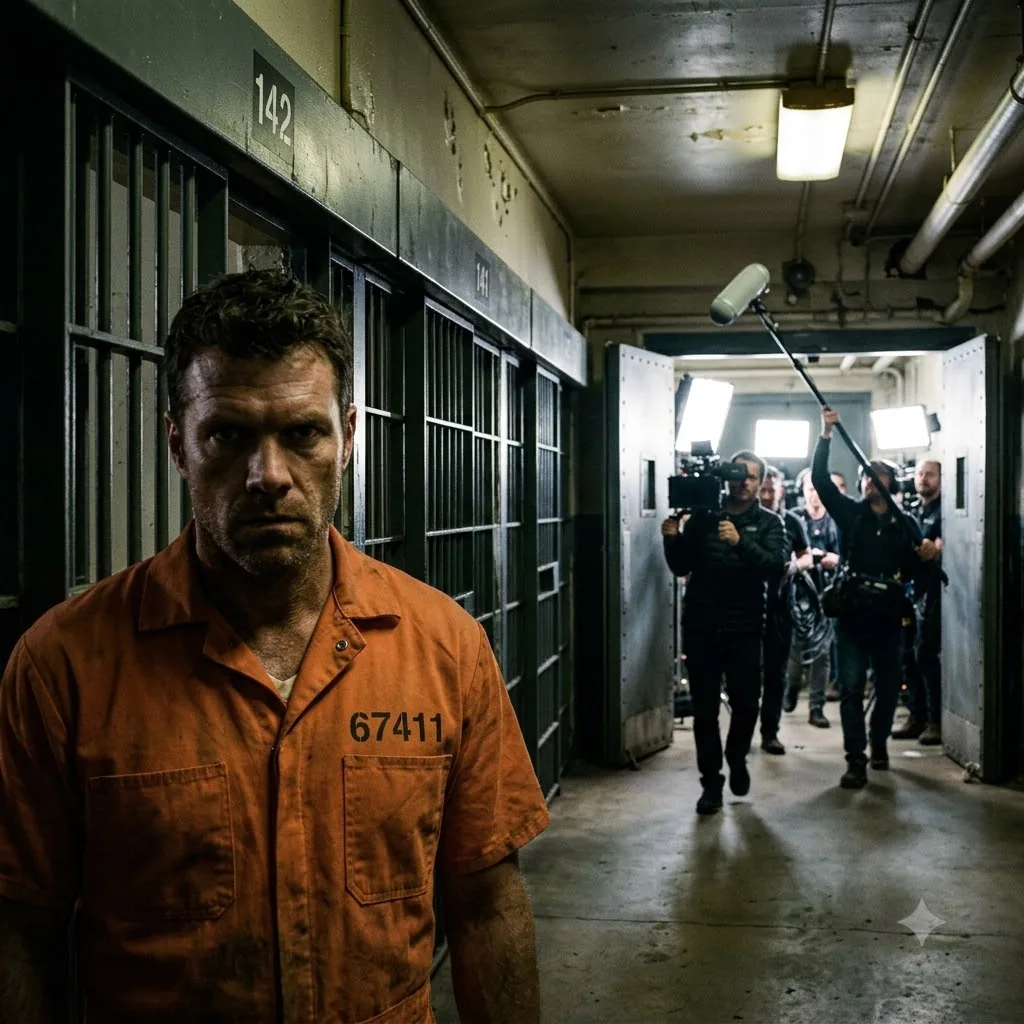
The corridor erupted in blinding, artificial daylight. Marcus flinched, throwing a forearm over his eyes as a massive bank of LED panel lights snapped on, completely washing out the dim, institutional gray of the cellblock. The squeaking cart jerked to a halt. The inmate pushing it scrambled backward against the iron railing, abandoning the bucket in the center of the walkway. The carefully timed blind spot was gone, obliterated by two thousand watts of commercial-grade illumination.
Heavy footsteps stomped up the metal stairs, completely out of rhythm with the heavy boots of standard guard patrols. A thick black boom mic swung into view, covered in a fuzzy gray wind muff, hovering just below the ceiling grates. Two men dressed in black t-shirts and cargo pants walked backward down the tier, holding shoulder-mounted cameras. They adjusted focus rings, panning across the rows of confused inmates peering out from behind their bars. A third man in a headset barked an order, pointing toward the exact junction where the cart sat abandoned.
Marcus gripped the bars, his knuckles turning white as his three-minute window evaporated into the harsh glare. A figure stepped into the center of the lit corridor, flanked by the prison warden and a young woman frantically scribbling on a tablet. The man wore a tailored charcoal suit that cost more than the combined bail of everyone on the tier. He raised a hand, flashing a brilliant, perfectly capped smile for the rolling cameras. He adjusted his silk tie and turned his chin slightly to catch the best lighting from the LED panels.
Marcus stopped breathing. The polished black shoes stepped directly over the spot where the burner phone sat concealed. The face beaming into the camera lens belonged to Julian Vance. Six months ago, Julian sat in a glass-walled corner office and signed the documents that authorized a phantom shell company to drain eighty million dollars from a municipal pension fund. Marcus had been the mid-level accountant ordered to reconcile the fake ledger under threat of termination.
Julian had walked away with a slap on the wrist, a massive golden parachute, and a high-priced public relations team desperate to rebrand him as a philanthropic reformer. Marcus had walked away with a five-year sentence for wire fraud. Julian’s voice drifted down the corridor, loud and theatrical, bouncing off the steel bars. He spoke about rehabilitation, systemic flaws, and second chances, gesturing vaguely at the human cages surrounding him.
The boom mic dipped lower to catch his rehearsed empathy. The camera operators circled him, framing the shot to include the grimy reality of the cellblock as a gritty backdrop for his redemption tour. Julian took another step forward, his expensive leather sole coming to rest inches from the blue detergent bucket. The woman with the tablet pointed toward the end of the hall, suggesting they move the interview away from the cluttered stairwell.
Marcus watched Julian’s smile falter for a fraction of a second as he glanced down at the abandoned janitorial cart blocking his path. Julian extended his polished shoe and firmly kicked the plastic bucket aside, sending it sliding across the concrete until it slammed against the metal bars of Marcus’s cell.
The mechanical clunk of the tier three lockdown disengaging did not sound right. Instead of the heavy thud signaling the morning headcount, the magnetic bolts slid back with a soft, electronic click. The standard amber security strobes remained dark. Marcus pressed his shoulder against the peeling paint of his cell wall, keeping his breathing shallow. He locked his eyes on the narrow strip of visibility past his reinforced door. He was waiting for a single sound. He needed to hear the unmistakable squeak of the left front caster on the tier three janitorial cart.
The cellblock felt off, the usual morning tension replaced by an eerie stillness. The guards held everyone in their cells twenty minutes past breakfast release. No announcements came over the distorted PA system. Marcus ignored the shift in routine, focusing all his energy on the corridor. Thirty-two seconds. That was the window he had calculated over the past three weeks. When the cart passed the junction of block C and the main stairwell, it entered a blind spot caused by a malfunctioning overhead camera.
Hidden inside the false bottom of the blue detergent bucket on that cart was a battered burner phone. Marcus needed three minutes with that device. Three minutes to make the call that would stop his younger brother from meeting a man handing out unregistered firearms. Three minutes to keep the only family he had left from throwing his life away on the streets.
A rhythmic squeak echoed off the concrete walls. Marcus shifted his weight to the balls of his feet. He mentally counted down the steps as the sound grew louder. The cart rolled past cell 302, then 304. The inmate pushing it stared straight ahead, a blank expression masking the transaction about to happen. Marcus rested his hand on the metal frame of his open cell door, ready to slip out into the corridor, grab the package, and slide back before the tier guard turned the corner. He hit zero in his head. His muscles tensed for the push.
The corridor erupted in blinding, artificial daylight. Marcus flinched, throwing a forearm over his eyes as a massive bank of LED panel lights snapped on, completely washing out the dim, institutional gray of the cellblock. The squeaking cart jerked to a halt. The inmate pushing it scrambled backward against the iron railing, abandoning the bucket in the center of the walkway. The carefully timed blind spot was gone, obliterated by two thousand watts of commercial-grade illumination.
Heavy footsteps stomped up the metal stairs, completely out of rhythm with the heavy boots of standard guard patrols. A thick black boom mic swung into view, covered in a fuzzy gray wind muff, hovering just below the ceiling grates. Two men dressed in black t-shirts and cargo pants walked backward down the tier, holding shoulder-mounted cameras. They adjusted focus rings, panning across the rows of confused inmates peering out from behind their bars. A third man in a headset barked an order, pointing toward the exact junction where the cart sat abandoned.
Marcus gripped the bars, his knuckles turning white as his three-minute window evaporated into the harsh glare. A figure stepped into the center of the lit corridor, flanked by the prison warden and a young woman frantically scribbling on a tablet. The man wore a tailored charcoal suit that cost more than the combined bail of everyone on the tier. He raised a hand, flashing a brilliant, perfectly capped smile for the rolling cameras. He adjusted his silk tie and turned his chin slightly to catch the best lighting from the LED panels.
Marcus stopped breathing. The polished black shoes stepped directly over the spot where the burner phone sat concealed. The face beaming into the camera lens belonged to Julian Vance. Six months ago, Julian sat in a glass-walled corner office and signed the documents that authorized a phantom shell company to drain eighty million dollars from a municipal pension fund. Marcus had been the mid-level accountant ordered to reconcile the fake ledger under threat of termination.
Julian had walked away with a slap on the wrist, a massive golden parachute, and a high-priced public relations team desperate to rebrand him as a philanthropic reformer. Marcus had walked away with a five-year sentence for wire fraud. Julian’s voice drifted down the corridor, loud and theatrical, bouncing off the steel bars. He spoke about rehabilitation, systemic flaws, and second chances, gesturing vaguely at the human cages surrounding him.
The boom mic dipped lower to catch his rehearsed empathy. The camera operators circled him, framing the shot to include the grimy reality of the cellblock as a gritty backdrop for his redemption tour. Julian took another step forward, his expensive leather sole coming to rest inches from the blue detergent bucket. The woman with the tablet pointed toward the end of the hall, suggesting they move the interview away from the cluttered stairwell.
Marcus watched Julian’s smile falter for a fraction of a second as he glanced down at the abandoned janitorial cart blocking his path. Julian extended his polished shoe and firmly kicked the plastic bucket aside, sending it sliding across the concrete until it slammed against the metal bars of Marcus’s cell.