Story code: ST-001634
Part 1: The Buffer
Leo watched the migration progress bar on his primary monitor crawl past twelve percent, batching a quarter-million demographic profiles into a new routing folder. He clicked a metadata field in the terminal, watching the tags ‘truancy-history’ and ‘foster-system-active’ merge under a single delivery token. The destination ID, a thirty-character alphanumeric string ending in ‘GEO-CORP’, had never appeared on their analytics roster before this morning.
He dragged his cursor over the column headers, feeling a cold knot tighten in his chest. The dataset was massive and granular. It included ZIP codes, juvenile citation records, household income brackets, behavioral risk scores, and school suspension frequencies. Their firm usually sold this kind of predictive modeling to educational non-profits or state outreach programs looking to allocate funding.
This new pipeline was entirely different. The security protocols were unusually tight, requiring a physical hardware key from the executive suite just to authorize the batch transfer. Earlier that afternoon, Leo had run a background trace on the ‘GEO-CORP’ routing string. The terminal spat out a series of nested shell companies, finally terminating at a massive private infrastructure conglomerate. They were a syndicate known primarily for constructing and managing high-security detention centers.
They were not building outreach programs. They were mapping future inventory.
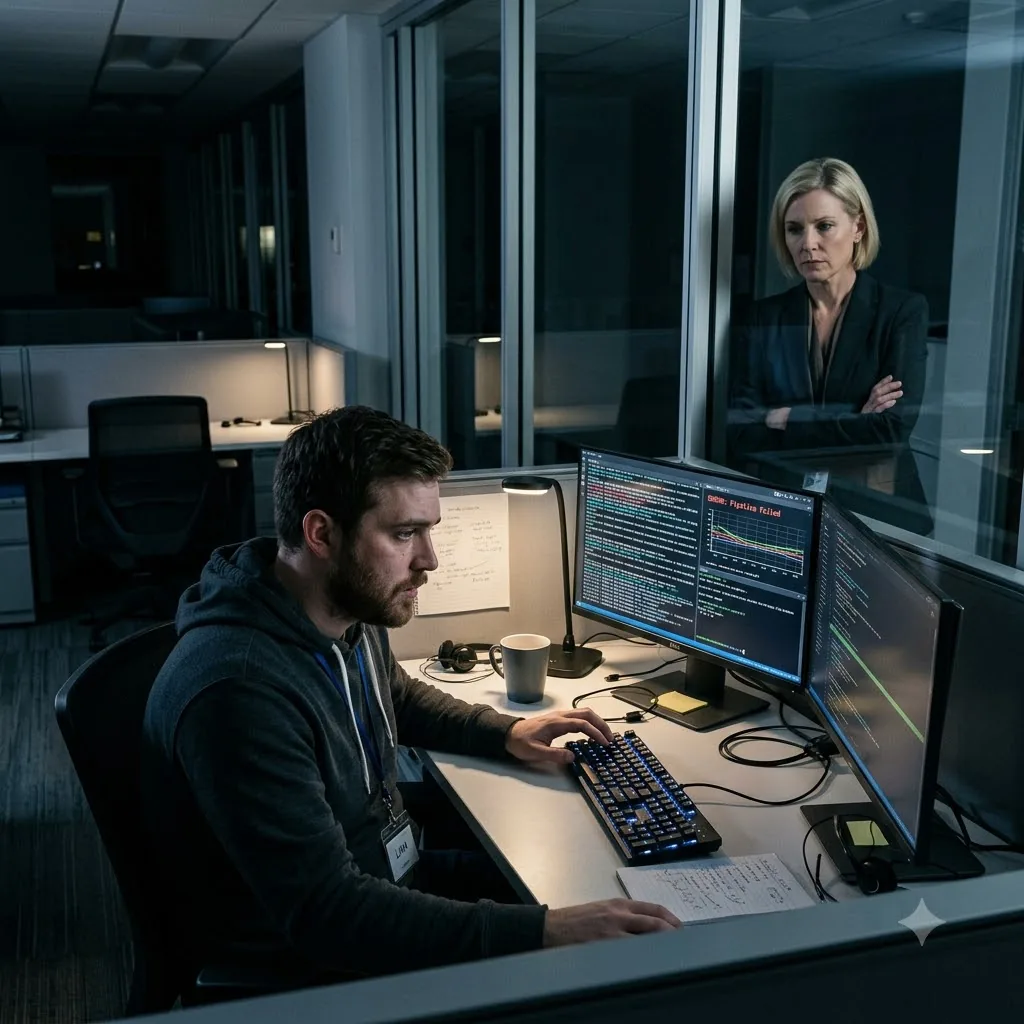
Leo glanced over the gray partition of his cubicle. The open-plan office was sparse at seven in the evening. Most of the engineering team had logged off hours ago, leaving behind a graveyard of empty swivel chairs and darkened monitors. The only sound was the low, steady hum of the server racks in the adjacent room and the aggressive hiss of the air conditioning. His supervisor, Corinne, was still in her glass-walled office at the far end of the floor. Her back was turned to him as she typed furiously on her laptop.
He reached into his pocket and pulled out a black, iron-encased flash drive. He wiped his sweaty palms on his jeans, leaned awkwardly under his desk, and slotted the drive into a blind USB port on the back of his workstation tower. The metal chassis of the computer felt hot against his knuckles.
Sitting back up, he pulled up a hidden command-line interface, keeping it layered carefully behind the main migration window. He typed out a bypass script he had written over his lunch break, pointing the local copy command at the active memory buffer. If he tried to copy the files directly from the server storage, Corinne’s administrative dashboard would flag the unauthorized read request immediately. By skimming the data exactly as it passed through the buffer into the GEO-CORP pipeline, he could ghost the files onto his drive without triggering a system alert.
He hit enter.
A secondary, much smaller progress bar appeared at the bottom edge of his screen, disguised in the system tray as an antivirus update icon. The drive began to write.
Ten percent.
Leo shifted in his chair, trying to look perfectly relaxed. He pulled up a dummy spreadsheet on his secondary monitor, clicking random cells to keep his employee monitoring activity status green.
Twenty-five percent.
The raw text files were small, but the sheer volume of records throttled the transfer speed. Every single line represented a teenager. Every row was a map pointing a billion-dollar syndicate toward the most vulnerable neighborhoods in the state.
Forty percent.
A Slack notification popped up in the top corner of his screen. It was from Corinne.
*Migration status update required.*
Leo ignored the message. He needed another three minutes. He kept his eyes locked on the tiny sliver of pixels filling with dark green.
Fifty percent.
The floorboards creaked out in the main hallway. He risked a peripheral glance past his monitors. Corinne was no longer sitting in her office. Her door was wide open, her ergonomic chair pushed back against the glass.
He frantically typed a response in the chat window, hoping the keystrokes would sound like diligent work. *Batch processing now, running at normal speed, expected completion in ten.*
Fifty-eight percent.
He heard the distinct click of Corinne’s heels on the hardwood corridor. She was not walking toward the breakroom or the elevators. The cadence of her steps was direct, aggressive, and heading straight down his aisle.
Sixty percent.
The tiny green bar stopped moving.
Leo tapped his finger against the side of his mouse. The command line remained frozen. A flashing cursor blinked mockingly next to a sector-write error message. The buffer had choked on a corrupted data packet, hanging the entire transfer script.
He needed to eject the drive. If he pulled it right now, the encryption protocol would lock down the incomplete file, corrupting everything he had managed to steal. He would have nothing to take to the press, and Corinne’s security logs would eventually find the ghost process anyway.
The footsteps grew louder. She was three rows away.
Leo typed a force-resume command. The terminal rejected it with an illegal operation prompt.
Two rows away.
He reached under the desk, his hand hovering over the hot metal of the flash drive. He had to pull it. He had to abort the mission and wipe the drive.
The system tray icon flashed red.
A shadow fell over his keyboard, blocking out the fluorescent overhead lights.
“Leo,” Corinne said, leaning over his shoulder to stare directly at his frozen monitors. “Take your hand out from under the desk.”
Leo watched the migration progress bar on his primary monitor crawl past twelve percent, batching a quarter-million demographic profiles into a new routing folder. He clicked a metadata field in the terminal, watching the tags ‘truancy-history’ and ‘foster-system-active’ merge under a single delivery token. The destination ID, a thirty-character alphanumeric string ending in ‘GEO-CORP’, had never appeared on their analytics roster before this morning.
He dragged his cursor over the column headers, feeling a cold knot tighten in his chest. The dataset was massive and granular. It included ZIP codes, juvenile citation records, household income brackets, behavioral risk scores, and school suspension frequencies. Their firm usually sold this kind of predictive modeling to educational non-profits or state outreach programs looking to allocate funding.
This new pipeline was entirely different. The security protocols were unusually tight, requiring a physical hardware key from the executive suite just to authorize the batch transfer. Earlier that afternoon, Leo had run a background trace on the ‘GEO-CORP’ routing string. The terminal spat out a series of nested shell companies, finally terminating at a massive private infrastructure conglomerate. They were a syndicate known primarily for constructing and managing high-security detention centers.
They were not building outreach programs. They were mapping future inventory.
Leo glanced over the gray partition of his cubicle. The open-plan office was sparse at seven in the evening. Most of the engineering team had logged off hours ago, leaving behind a graveyard of empty swivel chairs and darkened monitors. The only sound was the low, steady hum of the server racks in the adjacent room and the aggressive hiss of the air conditioning. His supervisor, Corinne, was still in her glass-walled office at the far end of the floor. Her back was turned to him as she typed furiously on her laptop.
He reached into his pocket and pulled out a black, iron-encased flash drive. He wiped his sweaty palms on his jeans, leaned awkwardly under his desk, and slotted the drive into a blind USB port on the back of his workstation tower. The metal chassis of the computer felt hot against his knuckles.
Sitting back up, he pulled up a hidden command-line interface, keeping it layered carefully behind the main migration window. He typed out a bypass script he had written over his lunch break, pointing the local copy command at the active memory buffer. If he tried to copy the files directly from the server storage, Corinne’s administrative dashboard would flag the unauthorized read request immediately. By skimming the data exactly as it passed through the buffer into the GEO-CORP pipeline, he could ghost the files onto his drive without triggering a system alert.
He hit enter.
A secondary, much smaller progress bar appeared at the bottom edge of his screen, disguised in the system tray as an antivirus update icon. The drive began to write.
Ten percent.
Leo shifted in his chair, trying to look perfectly relaxed. He pulled up a dummy spreadsheet on his secondary monitor, clicking random cells to keep his employee monitoring activity status green.
Twenty-five percent.
The raw text files were small, but the sheer volume of records throttled the transfer speed. Every single line represented a teenager. Every row was a map pointing a billion-dollar syndicate toward the most vulnerable neighborhoods in the state.
Forty percent.
A Slack notification popped up in the top corner of his screen. It was from Corinne.
*Migration status update required.*
Leo ignored the message. He needed another three minutes. He kept his eyes locked on the tiny sliver of pixels filling with dark green.
Fifty percent.
The floorboards creaked out in the main hallway. He risked a peripheral glance past his monitors. Corinne was no longer sitting in her office. Her door was wide open, her ergonomic chair pushed back against the glass.
He frantically typed a response in the chat window, hoping the keystrokes would sound like diligent work. *Batch processing now, running at normal speed, expected completion in ten.*
Fifty-eight percent.
He heard the distinct click of Corinne’s heels on the hardwood corridor. She was not walking toward the breakroom or the elevators. The cadence of her steps was direct, aggressive, and heading straight down his aisle.
Sixty percent.
The tiny green bar stopped moving.
Leo tapped his finger against the side of his mouse. The command line remained frozen. A flashing cursor blinked mockingly next to a sector-write error message. The buffer had choked on a corrupted data packet, hanging the entire transfer script.
He needed to eject the drive. If he pulled it right now, the encryption protocol would lock down the incomplete file, corrupting everything he had managed to steal. He would have nothing to take to the press, and Corinne’s security logs would eventually find the ghost process anyway.
The footsteps grew louder. She was three rows away.
Leo typed a force-resume command. The terminal rejected it with an illegal operation prompt.
Two rows away.
He reached under the desk, his hand hovering over the hot metal of the flash drive. He had to pull it. He had to abort the mission and wipe the drive.
The system tray icon flashed red.
A shadow fell over his keyboard, blocking out the fluorescent overhead lights.
“Leo,” Corinne said, leaning over his shoulder to stare directly at his frozen monitors. “Take your hand out from under the desk.”