Story code: ST-001139
Part 1: The Last Drop
The needle hovered above Marcus’s thigh, but his hand shook too violently to sink it into the muscle. A cold, clammy sweat slicked his forehead, stinging his eyes as he squinted at the translucent vial pinched between his thumb and forefinger. Three drops remained. Maybe four. It was nowhere near enough to stop the creeping static at the edges of his vision, but this meager dose had to last until Tuesday. He lowered his hand, resting his forehead against the cracked leather of the steering wheel. His pulse hammered a dull, irregular rhythm against his temples, the sound echoing in the silent cabin of his sedan.
A heavy fist slammed onto the hood, shaking the entire car.
Marcus jolted upright, his vision swimming for a terrible second before focusing. Two figures stood illuminated in the amber, sodium-vapor glow of the streetlamp. The taller one, wearing a thick canvas jacket, slammed a flat palm against the windshield. Marcus recognized the jagged teardrop tattoo near the kid’s eye. It was one of Dante’s crew. His brother’s people.
The kid yelled something muffled by the glass, gesturing sharply for Marcus to unlock the doors. The second figure leaned against the driver-side door, rapping hard metal against the window. The unmistakable click of a switchblade against glass vibrated through the door panel. They did not want a ride. Dante had warned him earlier that the crew needed a clean, untraceable car for a run tonight, and they intended to commandeer this one, whether Marcus agreed or not.
Marcus’s phone illuminated the dark cabin with a sudden, jarring chime. A high-tier premium ride request flashed on the screen. The pickup was three miles away in the financial district, promising a massive multiplier payout that could cover half a vial of generic synthetic insulin.
The kid outside slammed his fist on the window again, his face twisting into an aggressive sneer, mouthing a violent threat.
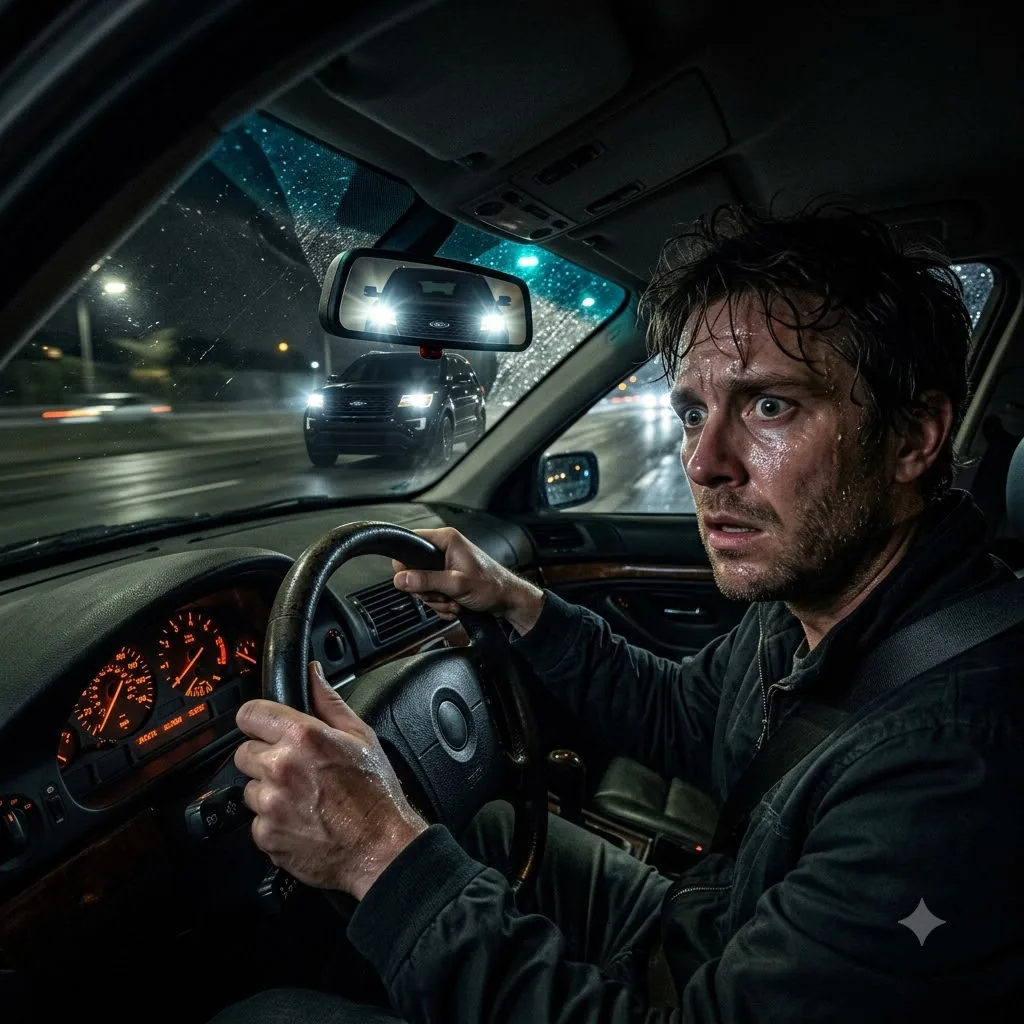
Marcus slammed his foot on the brake, shifted into drive, and floored the accelerator. The sedan lurched forward with a screech of tires. The kid on the hood slid off with a startled curse, tumbling backward into the wet gutter. Marcus did not look back. He gripped the wheel with trembling fingers, struggling to keep the lane markers from blurring together. The cold sweat deepened, soaking his collar and chilling his spine. His blood sugar was dropping faster than he had calculated.
He navigated the glowing canyon of downtown, the towering glass facades mocking the dirty windshield and dented quarter-panels of his sedan. He pulled to the curb outside a polished granite lobby. A man in a tailored charcoal suit stood waiting under the awning, checking a heavy platinum watch. The man did not look like he belonged anywhere near Marcus’s car, but he opened the rear door and slid onto the worn leather seats without hesitation.
The passenger brought the scent of expensive sandalwood cologne and crisp, sterile air conditioning into the stifling heat of the vehicle. He adjusted his French cuffs and immediately began tapping on his phone.
Marcus confirmed the destination in the app, a gated enclave twenty miles north in the hills. He put the car in gear, his right leg trembling so violently against the center console he had to lock his knee to keep it still. He focused entirely on his breathing, desperate to push back the encroaching darkness creeping into his peripheral vision.
The man in the back sighed, a long, irritated sound that filled the quiet space. He tapped an earpiece and began speaking, his voice a smooth, commanding baritone that dominated the tight confines of the car. He discussed international supply chains and quarterly projections. Marcus tried to tune it out, focusing intently on the red tail lights ahead of him.
Then the passenger mentioned the pharmaceutical restructuring.
The man told whoever was on the line that the new pricing model for the synthetic pancreatic lines was an absolute masterstroke. He stated that the elasticity of demand was virtually nonexistent when the product was required for basic cellular function. He laughed, a dry, dismissive sound that grated against Marcus’s ears. The executive noted that the recent fifty percent markup would drive the third-quarter profits through the roof, while the consumer base had absolutely no choice but to absorb the devastating cost.
Marcus felt a cold spike of adrenaline pierce the heavy fog in his brain. He glanced at the rearview mirror. The logo embossed on the passenger’s leather briefcase, barely visible in the shifting streetlights, matched the crest on the letterhead that had abruptly denied Marcus’s patient assistance appeal just three days ago. It was the exact same corporate crest printed on the nearly empty vial sitting in his center cup holder.
The steering wheel felt slick under Marcus’s palms. The static in his vision flared into bright, dancing spots. He pressed his foot harder on the gas, his chest tightening as a wave of nausea washed over him. The man in the back continued talking about profit margins and totally acceptable attrition rates in lower-income demographics.
A loud pop echoed from the rear driver-side tire, followed immediately by the harsh grind of metal on asphalt.
The steering wheel jerked violently to the left, nearly tearing itself from Marcus’s weakened grip. He fought the sudden slide, his arms screaming with effort as the sedan careened toward the concrete median. He slammed both feet on the brake pedal. The car spun in a sickening, uncontrolled arc, tires shrieking against the road, before slamming to a halt perpendicular to the lanes.
The passenger shouted, dropping his phone to the floorboard.
Before Marcus could even unbuckle his seatbelt, a pair of matte black SUVs boxed them in from the front and rear. The high beams flooded the cabin with blinding, interrogating white light. A heavy, sickening thud struck the trunk, followed by the deafening sound of shattered glass as the rear window imploded inward.
The needle hovered above Marcus’s thigh, but his hand shook too violently to sink it into the muscle. A cold, clammy sweat slicked his forehead, stinging his eyes as he squinted at the translucent vial pinched between his thumb and forefinger. Three drops remained. Maybe four. It was nowhere near enough to stop the creeping static at the edges of his vision, but this meager dose had to last until Tuesday. He lowered his hand, resting his forehead against the cracked leather of the steering wheel. His pulse hammered a dull, irregular rhythm against his temples, the sound echoing in the silent cabin of his sedan.
A heavy fist slammed onto the hood, shaking the entire car.
Marcus jolted upright, his vision swimming for a terrible second before focusing. Two figures stood illuminated in the amber, sodium-vapor glow of the streetlamp. The taller one, wearing a thick canvas jacket, slammed a flat palm against the windshield. Marcus recognized the jagged teardrop tattoo near the kid’s eye. It was one of Dante’s crew. His brother’s people.
The kid yelled something muffled by the glass, gesturing sharply for Marcus to unlock the doors. The second figure leaned against the driver-side door, rapping hard metal against the window. The unmistakable click of a switchblade against glass vibrated through the door panel. They did not want a ride. Dante had warned him earlier that the crew needed a clean, untraceable car for a run tonight, and they intended to commandeer this one, whether Marcus agreed or not.
Marcus’s phone illuminated the dark cabin with a sudden, jarring chime. A high-tier premium ride request flashed on the screen. The pickup was three miles away in the financial district, promising a massive multiplier payout that could cover half a vial of generic synthetic insulin.
The kid outside slammed his fist on the window again, his face twisting into an aggressive sneer, mouthing a violent threat.
Marcus slammed his foot on the brake, shifted into drive, and floored the accelerator. The sedan lurched forward with a screech of tires. The kid on the hood slid off with a startled curse, tumbling backward into the wet gutter. Marcus did not look back. He gripped the wheel with trembling fingers, struggling to keep the lane markers from blurring together. The cold sweat deepened, soaking his collar and chilling his spine. His blood sugar was dropping faster than he had calculated.
He navigated the glowing canyon of downtown, the towering glass facades mocking the dirty windshield and dented quarter-panels of his sedan. He pulled to the curb outside a polished granite lobby. A man in a tailored charcoal suit stood waiting under the awning, checking a heavy platinum watch. The man did not look like he belonged anywhere near Marcus’s car, but he opened the rear door and slid onto the worn leather seats without hesitation.
The passenger brought the scent of expensive sandalwood cologne and crisp, sterile air conditioning into the stifling heat of the vehicle. He adjusted his French cuffs and immediately began tapping on his phone.
Marcus confirmed the destination in the app, a gated enclave twenty miles north in the hills. He put the car in gear, his right leg trembling so violently against the center console he had to lock his knee to keep it still. He focused entirely on his breathing, desperate to push back the encroaching darkness creeping into his peripheral vision.
The man in the back sighed, a long, irritated sound that filled the quiet space. He tapped an earpiece and began speaking, his voice a smooth, commanding baritone that dominated the tight confines of the car. He discussed international supply chains and quarterly projections. Marcus tried to tune it out, focusing intently on the red tail lights ahead of him.
Then the passenger mentioned the pharmaceutical restructuring.
The man told whoever was on the line that the new pricing model for the synthetic pancreatic lines was an absolute masterstroke. He stated that the elasticity of demand was virtually nonexistent when the product was required for basic cellular function. He laughed, a dry, dismissive sound that grated against Marcus’s ears. The executive noted that the recent fifty percent markup would drive the third-quarter profits through the roof, while the consumer base had absolutely no choice but to absorb the devastating cost.
Marcus felt a cold spike of adrenaline pierce the heavy fog in his brain. He glanced at the rearview mirror. The logo embossed on the passenger’s leather briefcase, barely visible in the shifting streetlights, matched the crest on the letterhead that had abruptly denied Marcus’s patient assistance appeal just three days ago. It was the exact same corporate crest printed on the nearly empty vial sitting in his center cup holder.
The steering wheel felt slick under Marcus’s palms. The static in his vision flared into bright, dancing spots. He pressed his foot harder on the gas, his chest tightening as a wave of nausea washed over him. The man in the back continued talking about profit margins and totally acceptable attrition rates in lower-income demographics.
A loud pop echoed from the rear driver-side tire, followed immediately by the harsh grind of metal on asphalt.
The steering wheel jerked violently to the left, nearly tearing itself from Marcus’s weakened grip. He fought the sudden slide, his arms screaming with effort as the sedan careened toward the concrete median. He slammed both feet on the brake pedal. The car spun in a sickening, uncontrolled arc, tires shrieking against the road, before slamming to a halt perpendicular to the lanes.
The passenger shouted, dropping his phone to the floorboard.
Before Marcus could even unbuckle his seatbelt, a pair of matte black SUVs boxed them in from the front and rear. The high beams flooded the cabin with blinding, interrogating white light. A heavy, sickening thud struck the trunk, followed by the deafening sound of shattered glass as the rear window imploded inward.