Story code: ST-001751
Part 1: The Ultrasound
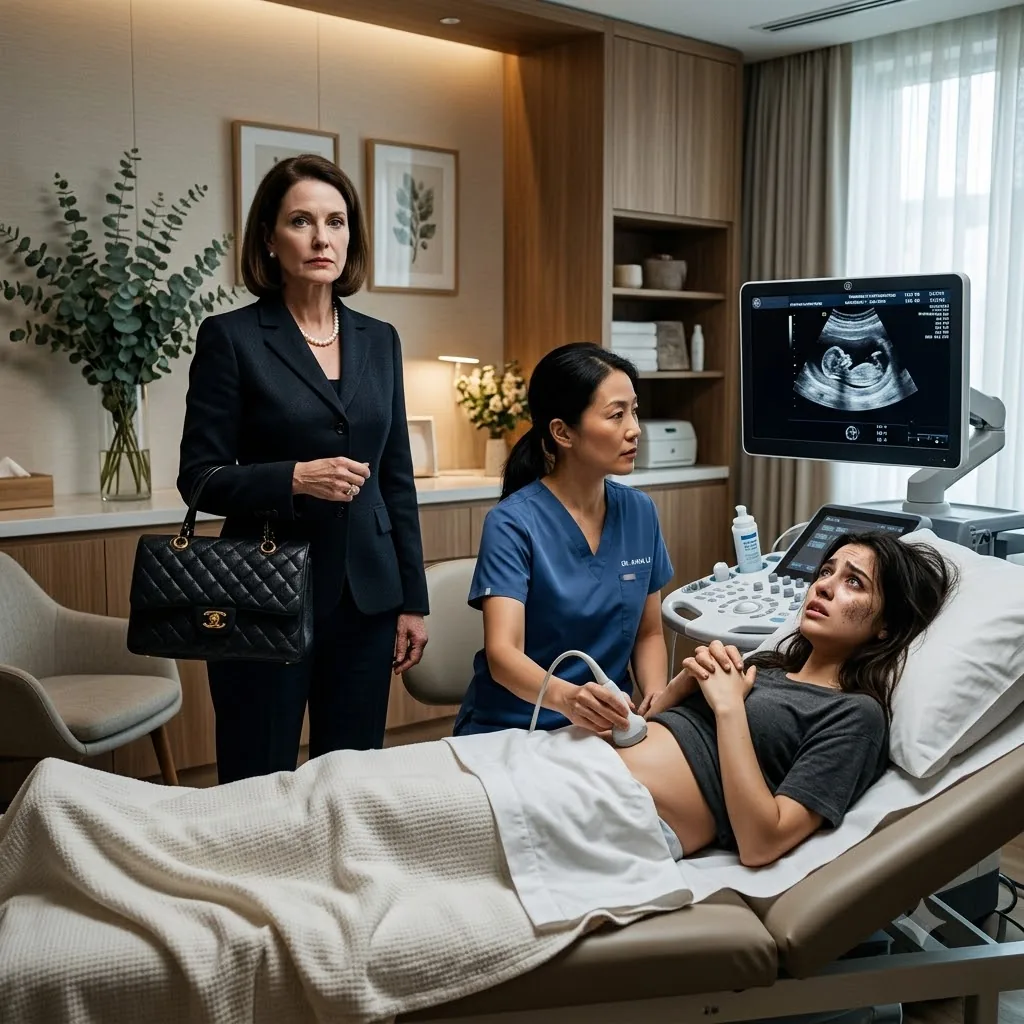
The exam table in Dr. Thorne’s private concierge suite feels like heated Italian leather. Mrs. Evelyn Vance sits in a custom velvet armchair across from me, her posture rigid, her platinum bracelets silent against her wrists. I am sweating through my faded cotton t-shirt, painfully aware of my cheap sneakers resting in the metallic stirrups. The clinic smells of crushed eucalyptus and wealth, a jarring contrast to the anxiety sitting heavy in my chest.
The sixty thousand dollars sitting in escrow is supposed to wipe out the medical debt from my mother’s final year. It is the exact number required to stop the collection calls and buy my life back. All I have to do is serve as the vessel for the Vance family heir. It seemed like a straightforward transaction in their glass-walled boardroom three months ago. They needed a surrogate, and I needed financial salvation.
The ultrasound technician, a woman in crisp burgundy scrubs, pumps clear gel onto my lower abdomen. The gel is surprisingly warm against my shivering skin. She presses the wand into my stomach, and the massive flat-screen monitor mounted on the opposite wall blinks to life. A swirling landscape of gray static fills the darkened room.
Mrs. Vance leans forward. Her manicured fingernails tap exactly once against the armrest of her velvet chair. She is staring intensely at the screen, evaluating her investment.
The technician adjusts a dial on the side of the machine. A steady, rhythmic swoosh fills the room, echoing from the surround-sound speakers built into the ceiling. The heartbeat is fast, sounding like a small washing machine on a rapid spin cycle. A wave of profound relief washes over me. The embryo took. The contract is active. My debt is going to be erased. I let out a long breath and let my head fall back against the crinkling paper-lined pillow.
Then the technician stops moving the wand.
Her hand goes still against my stomach. She taps a button, freezing the image on the wall monitor. The rhythmic swoosh cuts out instantly, replaced by the low hum of the clinic’s air conditioning. The silence is sudden and absolutely suffocating.
I lift my head. The technician is staring at the frozen screen. She blinks, leans in closer, and taps another series of keys. Her jaw is tight. She looks at the screen, then down at her keyboard, then back at the screen. She does not look at me, and she does not look at Mrs. Vance.
Panic begins to claw at the edges of my vision. If something is wrong with the baby, the entire contract is void. If the fetus is non-viable, I get a fraction of the base compensation, leaving me drowning in the very debt I am desperately trying to escape. I try to read the gray shapes on the monitor, searching for whatever the technician sees, but it just looks like a fuzzy, dark cavern.
The silence stretches out. Ten seconds. Twenty seconds. The warm gel on my skin is starting to turn cold.
“State the problem with the heartbeat,” Mrs. Vance demands, her tone completely flat. It is a command, devoid of any maternal concern or human empathy.
The technician clears her throat, her eyes glued to the glowing monitor. She shifts her weight awkwardly. “Mrs. Vance. I need to bring Dr. Thorne in to verify this.”
“State what you see immediately,” Mrs. Vance orders.
The technician swallows hard. She traces a gloved finger over the frozen gray static on the screen. “There are two gestational sacs. You can see the distinct outlines right here, and then a second one right here. Both show strong cardiac activity.”
Twins. Two babies.
My breath catches in my throat. I look desperately at Mrs. Vance, expecting shock, maybe tears of joy, or even basic human panic. Two babies mean double the physical toll, double the medical risk, and a complete deviation from the ironclad agreement we signed. The contract explicitly outlined a single embryo transfer to guarantee a single, perfect heir.
Mrs. Vance does not gasp. She does not move to hold my hand. She does not even look at the monitor on the wall.
She slowly stands up and smooths the front of her tailored wool skirt. Her expression remains perfectly composed, utterly devoid of any warmth. She walks with measured, echoing steps toward the end of my exam table. She stops right next to my feet, looking down at me as if I am a piece of faulty machinery on a factory line. She reaches into her designer handbag and pulls out a sleek, silver phone.
She dials a number and presses the phone to her ear.
“Cancel the nursery order,” Mrs. Vance says, her voice as cold and precise as a surgical blade. “The merchandise is defective, so we will need to initiate the reduction clause immediately.”
The exam table in Dr. Thorne’s private concierge suite feels like heated Italian leather. Mrs. Evelyn Vance sits in a custom velvet armchair across from me, her posture rigid, her platinum bracelets silent against her wrists. I am sweating through my faded cotton t-shirt, painfully aware of my cheap sneakers resting in the metallic stirrups. The clinic smells of crushed eucalyptus and wealth, a jarring contrast to the anxiety sitting heavy in my chest.
The sixty thousand dollars sitting in escrow is supposed to wipe out the medical debt from my mother’s final year. It is the exact number required to stop the collection calls and buy my life back. All I have to do is serve as the vessel for the Vance family heir. It seemed like a straightforward transaction in their glass-walled boardroom three months ago. They needed a surrogate, and I needed financial salvation.
The ultrasound technician, a woman in crisp burgundy scrubs, pumps clear gel onto my lower abdomen. The gel is surprisingly warm against my shivering skin. She presses the wand into my stomach, and the massive flat-screen monitor mounted on the opposite wall blinks to life. A swirling landscape of gray static fills the darkened room.
Mrs. Vance leans forward. Her manicured fingernails tap exactly once against the armrest of her velvet chair. She is staring intensely at the screen, evaluating her investment.
The technician adjusts a dial on the side of the machine. A steady, rhythmic swoosh fills the room, echoing from the surround-sound speakers built into the ceiling. The heartbeat is fast, sounding like a small washing machine on a rapid spin cycle. A wave of profound relief washes over me. The embryo took. The contract is active. My debt is going to be erased. I let out a long breath and let my head fall back against the crinkling paper-lined pillow.
Then the technician stops moving the wand.
Her hand goes still against my stomach. She taps a button, freezing the image on the wall monitor. The rhythmic swoosh cuts out instantly, replaced by the low hum of the clinic’s air conditioning. The silence is sudden and absolutely suffocating.
I lift my head. The technician is staring at the frozen screen. She blinks, leans in closer, and taps another series of keys. Her jaw is tight. She looks at the screen, then down at her keyboard, then back at the screen. She does not look at me, and she does not look at Mrs. Vance.
Panic begins to claw at the edges of my vision. If something is wrong with the baby, the entire contract is void. If the fetus is non-viable, I get a fraction of the base compensation, leaving me drowning in the very debt I am desperately trying to escape. I try to read the gray shapes on the monitor, searching for whatever the technician sees, but it just looks like a fuzzy, dark cavern.
The silence stretches out. Ten seconds. Twenty seconds. The warm gel on my skin is starting to turn cold.
“State the problem with the heartbeat,” Mrs. Vance demands, her tone completely flat. It is a command, devoid of any maternal concern or human empathy.
The technician clears her throat, her eyes glued to the glowing monitor. She shifts her weight awkwardly. “Mrs. Vance. I need to bring Dr. Thorne in to verify this.”
“State what you see immediately,” Mrs. Vance orders.
The technician swallows hard. She traces a gloved finger over the frozen gray static on the screen. “There are two gestational sacs. You can see the distinct outlines right here, and then a second one right here. Both show strong cardiac activity.”
Twins. Two babies.
My breath catches in my throat. I look desperately at Mrs. Vance, expecting shock, maybe tears of joy, or even basic human panic. Two babies mean double the physical toll, double the medical risk, and a complete deviation from the ironclad agreement we signed. The contract explicitly outlined a single embryo transfer to guarantee a single, perfect heir.
Mrs. Vance does not gasp. She does not move to hold my hand. She does not even look at the monitor on the wall.
She slowly stands up and smooths the front of her tailored wool skirt. Her expression remains perfectly composed, utterly devoid of any warmth. She walks with measured, echoing steps toward the end of my exam table. She stops right next to my feet, looking down at me as if I am a piece of faulty machinery on a factory line. She reaches into her designer handbag and pulls out a sleek, silver phone.
She dials a number and presses the phone to her ear.
“Cancel the nursery order,” Mrs. Vance says, her voice as cold and precise as a surgical blade. “The merchandise is defective, so we will need to initiate the reduction clause immediately.”