Story code: ST-000656
Part 1: The Priority Crate
The needle slipped. It slid sideways as the bruised, rolling vessel under Miller’s tattooed skin collapsed flat. Nurse Sarah Hayes pulled the catheter back, pressing a square of sterile gauze over the fresh puncture. Dark, thin blood welled up immediately, soaking the white cotton pad in seconds. Miller let out a low, wet rasp, his head rolling against the heavy plastic-covered mattress. The heat radiating off the older veteran’s chest felt like standing near an open oven door in the cramped, windowless infirmary cell. She glanced at the analog wall clock. His fever had been spiking relentlessly since midnight, leaving him drenched, shivering, and trapped in a puddle of his own sweat.
Sarah tossed the ruined IV starter kit into the overflowing red biohazard bin. She wiped her forehead with the back of her latex-gloved wrist, leaving a faint smear of moisture across her skin. With his superficial veins entirely blown out from years of hard living before his sentence, oral medication was her only remaining immediate option. She stepped over to the rusted metal prep cart, grabbing a tiny plastic cup containing two chalky white pills. The expiration date stamped on the foil blister pack was from fourteen months ago. She crushed the expired ibuprofen with the heavy metal handle of her bandage shears, grinding it down and mixing the bitter powder into a thimble of warm tap water. She tipped the crude slurry past Miller’s cracked lips, stroking the outside of his throat until the physical reflex forced him to swallow. It was a desperate, useless gesture. It would barely take the edge off the rolling boil in his bloodstream. He needed broad-spectrum intravenous antibiotics, and he needed them hours ago.
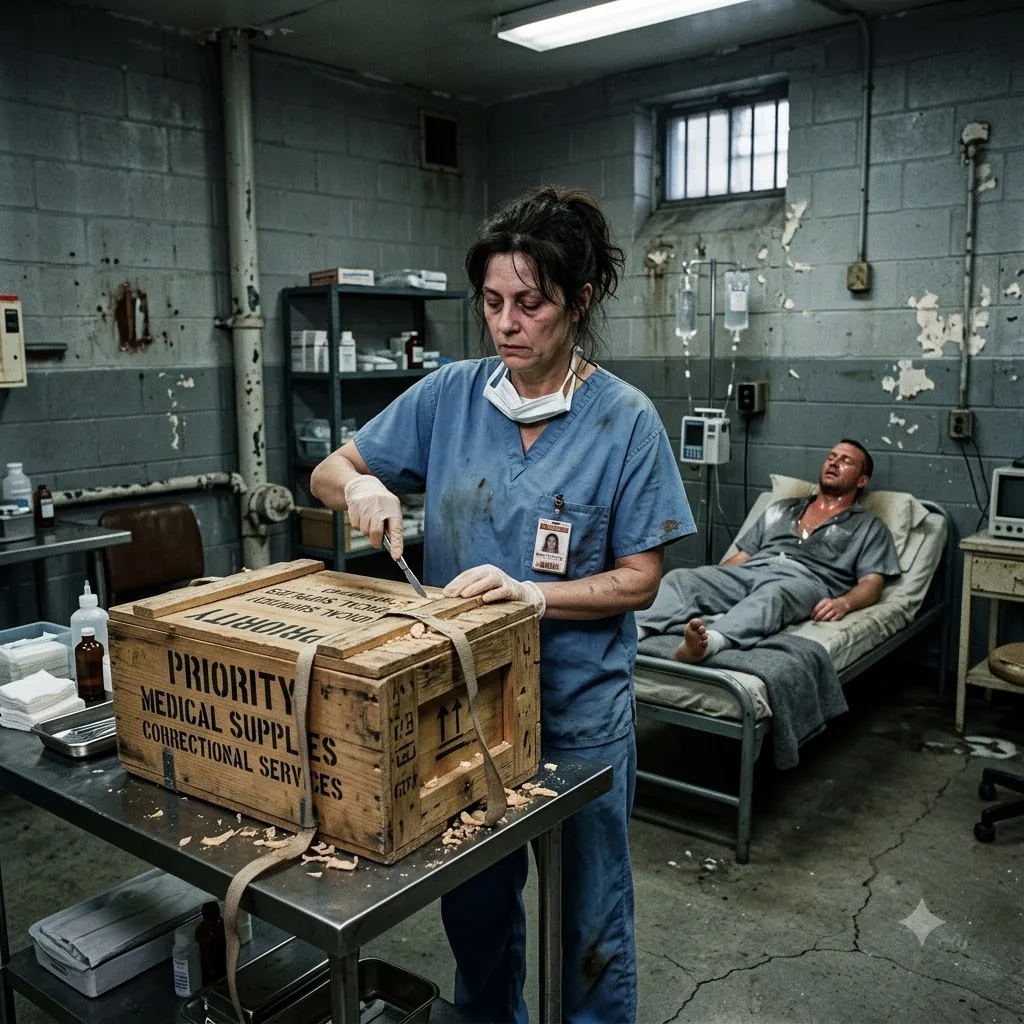
A heavy metallic crash echoed down the concrete corridor, followed by the squeal of ungreased rubber wheels. Two corrections officers in heavy stab vests wrestled a wooden pallet through the swinging double doors of the medical wing. They shoved the heavy load against the far wall and walked out without a word. The oversized crate sitting on top of the pallet was stamped with thick red lettering.
Priority Emergency Routing.
Sarah left Miller’s side, her rubber soles squeaking loudly against the cracked linoleum. She practically sprinted to the nurses’ station where the pallet rested. This was the critical supply drop she had requested three days ago, escalated through every bureaucratic channel the Department of Corrections allowed. The regional medical director had sworn on a recorded line that a full infectious disease intervention kit was on the truck. She had been promised IV Rocephin, liters of normal saline, and sterile central line kits to bypass Miller’s ruined arm veins.
She grabbed a heavy steel pry bar from the janitorial closet. The wooden crate was bound tight with thick metal shipping bands. She jammed the flat edge of the bar under the first steel strap, throwing her entire body weight against the handle. The metal snapped with a violent crack, echoing sharply against the cinderblock walls. She moved to the second strap, her breathing turning shallow and fast. Every second Miller lay cooking on that cot was another step toward irreversible sepsis. She wedged the bar under the heavy pine lid, leveraging it upward until the industrial nails shrieked and gave way.
Splinters of pale wood cascaded onto the floor. Sarah threw the heavy lid aside, ignoring the rough scratch it left running down her forearm. She reached frantically into the sea of brown paper void-fill, her hands shaking as she dug for the familiar cold plastic of IV bags and the rattle of glass medicine vials. Instead, her fingers brushed against something slick, smooth, and uniformly rectangular.
She grabbed a heavy handful of the items and pulled them up into the harsh fluorescent light.
They were glossy, tri-fold pamphlets. The cover featured a high-resolution stock photo of a smiling, ethnically ambiguous doctor giving a cheerful thumbs-up. The bold, friendly text across the top read, ‘Inmate Wellness Initiative: Beating the Seasonal Flu with Hydration and Positivity.’
Sarah stared at the heavy bundle in her hands. The slick paper felt cold and heavy. She dropped the pamphlets back into the box and dug deeper, violently tossing aside wads of packing paper. There had to be medication buried underneath the promotional garbage. Her knuckles hit the bottom of the wooden box. There was nothing but more tightly banded stacks of glossy paper, accompanied by shrink-wrapped boxes of customized foam stress balls. Each useless piece of foam was perfectly stamped with the state prison system’s new corporate logo. There was not a single sterile needle. There was not a single vial of antibiotics.
Her pulse hammered in her ears, a dull roar drowning out the ambient hum of the overhead ventilation system. A bright pink sticky note was plastered across the top of one of the stress ball boxes, standing out violently against the sea of brown paper. It featured the neat, looping handwriting of the central procurement officer.
Sarah peeled the note off the plastic film, holding it up under the buzzing overhead light. The ink was a cheerful, vibrant blue. It read, “Per the warden’s mandate on community optics, all medical budget overages are diverted to the upcoming press tour packets, so…”
The needle slipped. It slid sideways as the bruised, rolling vessel under Miller’s tattooed skin collapsed flat. Nurse Sarah Hayes pulled the catheter back, pressing a square of sterile gauze over the fresh puncture. Dark, thin blood welled up immediately, soaking the white cotton pad in seconds. Miller let out a low, wet rasp, his head rolling against the heavy plastic-covered mattress. The heat radiating off the older veteran’s chest felt like standing near an open oven door in the cramped, windowless infirmary cell. She glanced at the analog wall clock. His fever had been spiking relentlessly since midnight, leaving him drenched, shivering, and trapped in a puddle of his own sweat.
Sarah tossed the ruined IV starter kit into the overflowing red biohazard bin. She wiped her forehead with the back of her latex-gloved wrist, leaving a faint smear of moisture across her skin. With his superficial veins entirely blown out from years of hard living before his sentence, oral medication was her only remaining immediate option. She stepped over to the rusted metal prep cart, grabbing a tiny plastic cup containing two chalky white pills. The expiration date stamped on the foil blister pack was from fourteen months ago. She crushed the expired ibuprofen with the heavy metal handle of her bandage shears, grinding it down and mixing the bitter powder into a thimble of warm tap water. She tipped the crude slurry past Miller’s cracked lips, stroking the outside of his throat until the physical reflex forced him to swallow. It was a desperate, useless gesture. It would barely take the edge off the rolling boil in his bloodstream. He needed broad-spectrum intravenous antibiotics, and he needed them hours ago.
A heavy metallic crash echoed down the concrete corridor, followed by the squeal of ungreased rubber wheels. Two corrections officers in heavy stab vests wrestled a wooden pallet through the swinging double doors of the medical wing. They shoved the heavy load against the far wall and walked out without a word. The oversized crate sitting on top of the pallet was stamped with thick red lettering.
Priority Emergency Routing.
Sarah left Miller’s side, her rubber soles squeaking loudly against the cracked linoleum. She practically sprinted to the nurses’ station where the pallet rested. This was the critical supply drop she had requested three days ago, escalated through every bureaucratic channel the Department of Corrections allowed. The regional medical director had sworn on a recorded line that a full infectious disease intervention kit was on the truck. She had been promised IV Rocephin, liters of normal saline, and sterile central line kits to bypass Miller’s ruined arm veins.
She grabbed a heavy steel pry bar from the janitorial closet. The wooden crate was bound tight with thick metal shipping bands. She jammed the flat edge of the bar under the first steel strap, throwing her entire body weight against the handle. The metal snapped with a violent crack, echoing sharply against the cinderblock walls. She moved to the second strap, her breathing turning shallow and fast. Every second Miller lay cooking on that cot was another step toward irreversible sepsis. She wedged the bar under the heavy pine lid, leveraging it upward until the industrial nails shrieked and gave way.
Splinters of pale wood cascaded onto the floor. Sarah threw the heavy lid aside, ignoring the rough scratch it left running down her forearm. She reached frantically into the sea of brown paper void-fill, her hands shaking as she dug for the familiar cold plastic of IV bags and the rattle of glass medicine vials. Instead, her fingers brushed against something slick, smooth, and uniformly rectangular.
She grabbed a heavy handful of the items and pulled them up into the harsh fluorescent light.
They were glossy, tri-fold pamphlets. The cover featured a high-resolution stock photo of a smiling, ethnically ambiguous doctor giving a cheerful thumbs-up. The bold, friendly text across the top read, ‘Inmate Wellness Initiative: Beating the Seasonal Flu with Hydration and Positivity.’
Sarah stared at the heavy bundle in her hands. The slick paper felt cold and heavy. She dropped the pamphlets back into the box and dug deeper, violently tossing aside wads of packing paper. There had to be medication buried underneath the promotional garbage. Her knuckles hit the bottom of the wooden box. There was nothing but more tightly banded stacks of glossy paper, accompanied by shrink-wrapped boxes of customized foam stress balls. Each useless piece of foam was perfectly stamped with the state prison system’s new corporate logo. There was not a single sterile needle. There was not a single vial of antibiotics.
Her pulse hammered in her ears, a dull roar drowning out the ambient hum of the overhead ventilation system. A bright pink sticky note was plastered across the top of one of the stress ball boxes, standing out violently against the sea of brown paper. It featured the neat, looping handwriting of the central procurement officer.
Sarah peeled the note off the plastic film, holding it up under the buzzing overhead light. The ink was a cheerful, vibrant blue. It read, “Per the warden’s mandate on community optics, all medical budget overages are diverted to the upcoming press tour packets, so…”