Story code: ST-000744
Part 1: The Quota
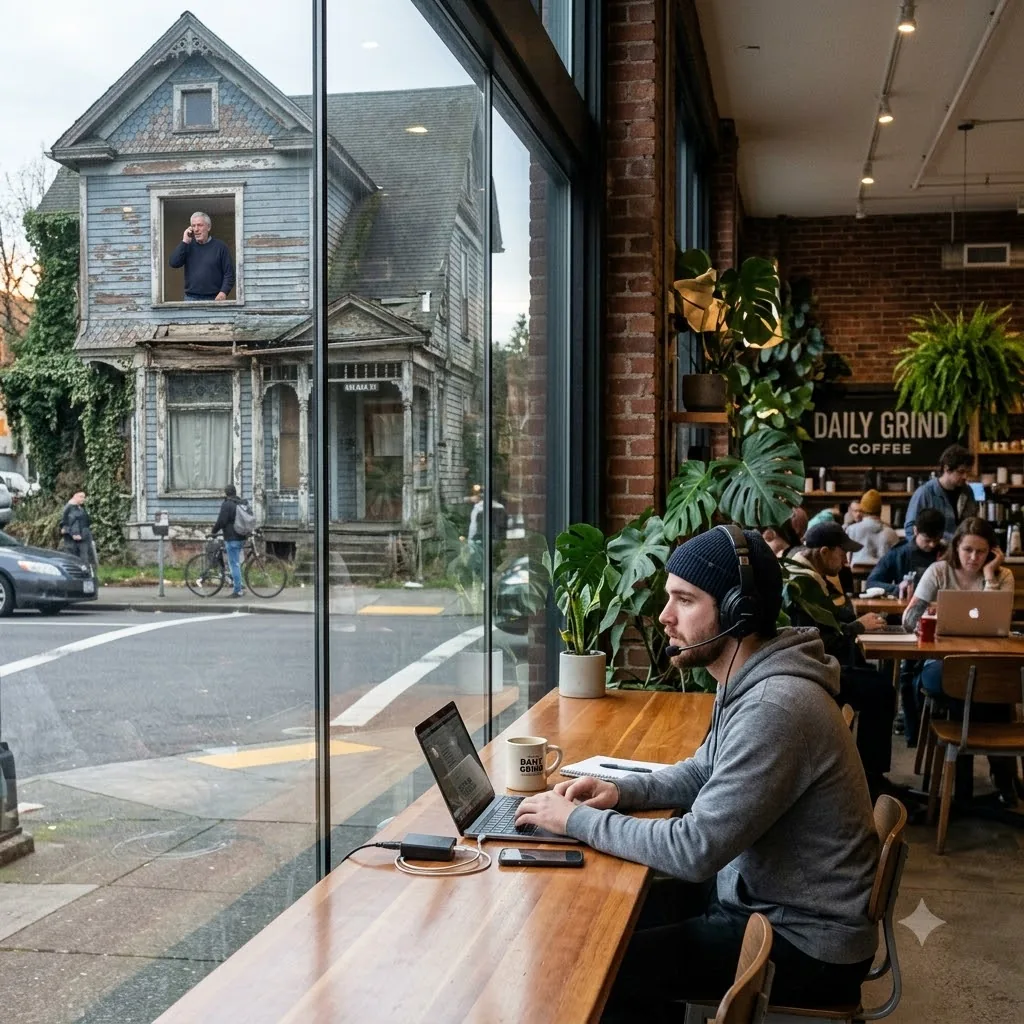
Trent needed three more account liquidations to hit the daily algorithm target, and the eight-dollar matcha latte cooling on his artisanal saucer was not going to pay for itself. He minimized the blinking performance warning on his dashboard and stared past his laptop screen, looking out the cafe’s pristine floor-to-ceiling windows at the rotting, blue-tarped house directly across the street. The neighborhood was in aggressive transition, caught perfectly between hundred-year-old decay and brutalist coffee shops. It made the block the ideal remote office for someone whose entire job was to extract remaining capital from the dying half of the demographic.
He tapped the spacebar to initiate the auto-dialer for his next queued target. The headset chirped twice in his left ear to signal a live connection. A digital timer began ticking on his screen beside a color-coded profile matrix.
A harsh, wet cough echoed through the earpiece.
Trent leaned forward in his leather chair and adopted the flat, practiced cadence that neutralized anger and forced compliance. He stated his name, the standard recording disclaimer, and the exact dollar amount of the extreme delinquency. The screen populated with a grid of the debtor’s recent financial movements, pulling data from partnered institutions. The interface highlighted a small, previously hidden savings account that had just received a direct deposit that morning.
The man on the line took a long, ragged breath. He stated in a thin, exhausted voice that the deposit was ring-fenced for something urgent, something he simply could not afford to delay or surrender.
Trent clicked the ‘Leverage’ tab on his dashboard. It was a digital chess match, and Trent’s software held all the major pieces on the board. The platform scrubbed public registries and private data brokers in real-time, providing him with a branching tree of conversational counter-moves to box the target in. He noted the origin of the massive primary debt. It was a sprawling, catastrophic sum owed to the regional medical center, itemized in a way that suggested a long, failing battle against something systemic and terminal. The software flashed a yellow prompt telling him to ignore the emotional weight of that origin code. The sole objective for the quarter was the fresh deposit. Trent read the highlighted script on his screen, informing the man that an automated freeze would initiate at midnight if a voluntary payment was not authorized immediately.
In the background of the call, Trent heard the distinct, hollow sound of bare feet pacing heavily on hardwood floors.
A barista at the polished concrete counter called out an order for an iced cortado. Trent took a sip of his matcha and glanced out the window again. Across the street, behind the cracked glass of the dilapidated Victorian’s front room, a figure was pacing back and forth in the shadows.
The man in Trent’s ear pleaded for a temporary extension. He mentioned a delay in a secondary approval process that would clear everything up by the end of the month. Trent moved his cursor over the bright red ‘Deny/Escalate’ button. The behavioral script mandated a firm refusal for this risk tier. Trent delivered the rejection flawlessly, maintaining a sterile, corporate volume that would not disturb the freelance designers typing on their silver laptops at the adjacent tables.
The figure in the house across the street stopped pacing.
Trent watched the silhouette step closer to the ruined window. The house was a derelict shell, its porch sagging under the weight of overgrown ivy and sheer neglect. The man standing behind the glass was holding a cell phone to his right ear. He wore a faded thermal shirt that hung loosely over a gaunt, skeletal frame.
The voice in Trent’s headset stopped mid-sentence. A heavy silence stretched over the digital connection.
Trent looked back at his screen, verifying the target’s address in the upper right quadrant of the profile. He read the street number, then the street name. He looked back up at the physical world. The street sign on the corner matched the screen. The rusted brass numerals hanging by a single screw on the sagging porch across the avenue matched perfectly.
Trent swallowed hard, feeling the sudden, cold spike of adrenaline hit his chest. The geographical coordinates of his laptop and the last known billing address of the debtor had just converged in the most uncomfortable way possible. He tapped his microphone mute button, but his finger just hovered over the key without pressing down.
The man in the house lowered his phone from his ear by a fraction of an inch.
Trent heard the distinct rustle of fabric through his headset, confirming the movement on a microscopic delay.
The man across the street raised his free hand and wiped a layer of condensation and interior grime from the glass of his living room window. The afternoon sun caught the deep hollows of his cheeks. He leaned forward, pressing his forehead almost flush against the pane.
Trent froze in his comfortable chair. The soft jazz of the cafe dissolved entirely into white noise.
Through the pristine glass of the coffee shop, and through the filthy glass of the dying house, the man stared directly into Trent’s eyes. The target did not blink. He lifted the phone back to his ear with agonizing slowness.
Trent heard the man’s ragged breathing resume in the headset. The sound was loud and amplified, perfectly synced with the subtle rise and fall of the thermal shirt across the street.
The man spoke into the receiver without breaking his gaze.
He told Trent to close his laptop, cross the street, and try taking the money in person.
Trent needed three more account liquidations to hit the daily algorithm target, and the eight-dollar matcha latte cooling on his artisanal saucer was not going to pay for itself. He minimized the blinking performance warning on his dashboard and stared past his laptop screen, looking out the cafe’s pristine floor-to-ceiling windows at the rotting, blue-tarped house directly across the street. The neighborhood was in aggressive transition, caught perfectly between hundred-year-old decay and brutalist coffee shops. It made the block the ideal remote office for someone whose entire job was to extract remaining capital from the dying half of the demographic.
He tapped the spacebar to initiate the auto-dialer for his next queued target. The headset chirped twice in his left ear to signal a live connection. A digital timer began ticking on his screen beside a color-coded profile matrix.
A harsh, wet cough echoed through the earpiece.
Trent leaned forward in his leather chair and adopted the flat, practiced cadence that neutralized anger and forced compliance. He stated his name, the standard recording disclaimer, and the exact dollar amount of the extreme delinquency. The screen populated with a grid of the debtor’s recent financial movements, pulling data from partnered institutions. The interface highlighted a small, previously hidden savings account that had just received a direct deposit that morning.
The man on the line took a long, ragged breath. He stated in a thin, exhausted voice that the deposit was ring-fenced for something urgent, something he simply could not afford to delay or surrender.
Trent clicked the ‘Leverage’ tab on his dashboard. It was a digital chess match, and Trent’s software held all the major pieces on the board. The platform scrubbed public registries and private data brokers in real-time, providing him with a branching tree of conversational counter-moves to box the target in. He noted the origin of the massive primary debt. It was a sprawling, catastrophic sum owed to the regional medical center, itemized in a way that suggested a long, failing battle against something systemic and terminal. The software flashed a yellow prompt telling him to ignore the emotional weight of that origin code. The sole objective for the quarter was the fresh deposit. Trent read the highlighted script on his screen, informing the man that an automated freeze would initiate at midnight if a voluntary payment was not authorized immediately.
In the background of the call, Trent heard the distinct, hollow sound of bare feet pacing heavily on hardwood floors.
A barista at the polished concrete counter called out an order for an iced cortado. Trent took a sip of his matcha and glanced out the window again. Across the street, behind the cracked glass of the dilapidated Victorian’s front room, a figure was pacing back and forth in the shadows.
The man in Trent’s ear pleaded for a temporary extension. He mentioned a delay in a secondary approval process that would clear everything up by the end of the month. Trent moved his cursor over the bright red ‘Deny/Escalate’ button. The behavioral script mandated a firm refusal for this risk tier. Trent delivered the rejection flawlessly, maintaining a sterile, corporate volume that would not disturb the freelance designers typing on their silver laptops at the adjacent tables.
The figure in the house across the street stopped pacing.
Trent watched the silhouette step closer to the ruined window. The house was a derelict shell, its porch sagging under the weight of overgrown ivy and sheer neglect. The man standing behind the glass was holding a cell phone to his right ear. He wore a faded thermal shirt that hung loosely over a gaunt, skeletal frame.
The voice in Trent’s headset stopped mid-sentence. A heavy silence stretched over the digital connection.
Trent looked back at his screen, verifying the target’s address in the upper right quadrant of the profile. He read the street number, then the street name. He looked back up at the physical world. The street sign on the corner matched the screen. The rusted brass numerals hanging by a single screw on the sagging porch across the avenue matched perfectly.
Trent swallowed hard, feeling the sudden, cold spike of adrenaline hit his chest. The geographical coordinates of his laptop and the last known billing address of the debtor had just converged in the most uncomfortable way possible. He tapped his microphone mute button, but his finger just hovered over the key without pressing down.
The man in the house lowered his phone from his ear by a fraction of an inch.
Trent heard the distinct rustle of fabric through his headset, confirming the movement on a microscopic delay.
The man across the street raised his free hand and wiped a layer of condensation and interior grime from the glass of his living room window. The afternoon sun caught the deep hollows of his cheeks. He leaned forward, pressing his forehead almost flush against the pane.
Trent froze in his comfortable chair. The soft jazz of the cafe dissolved entirely into white noise.
Through the pristine glass of the coffee shop, and through the filthy glass of the dying house, the man stared directly into Trent’s eyes. The target did not blink. He lifted the phone back to his ear with agonizing slowness.
Trent heard the man’s ragged breathing resume in the headset. The sound was loud and amplified, perfectly synced with the subtle rise and fall of the thermal shirt across the street.
The man spoke into the receiver without breaking his gaze.
He told Trent to close his laptop, cross the street, and try taking the money in person.