Story code: ST-001432
Part 1: The Liability Record
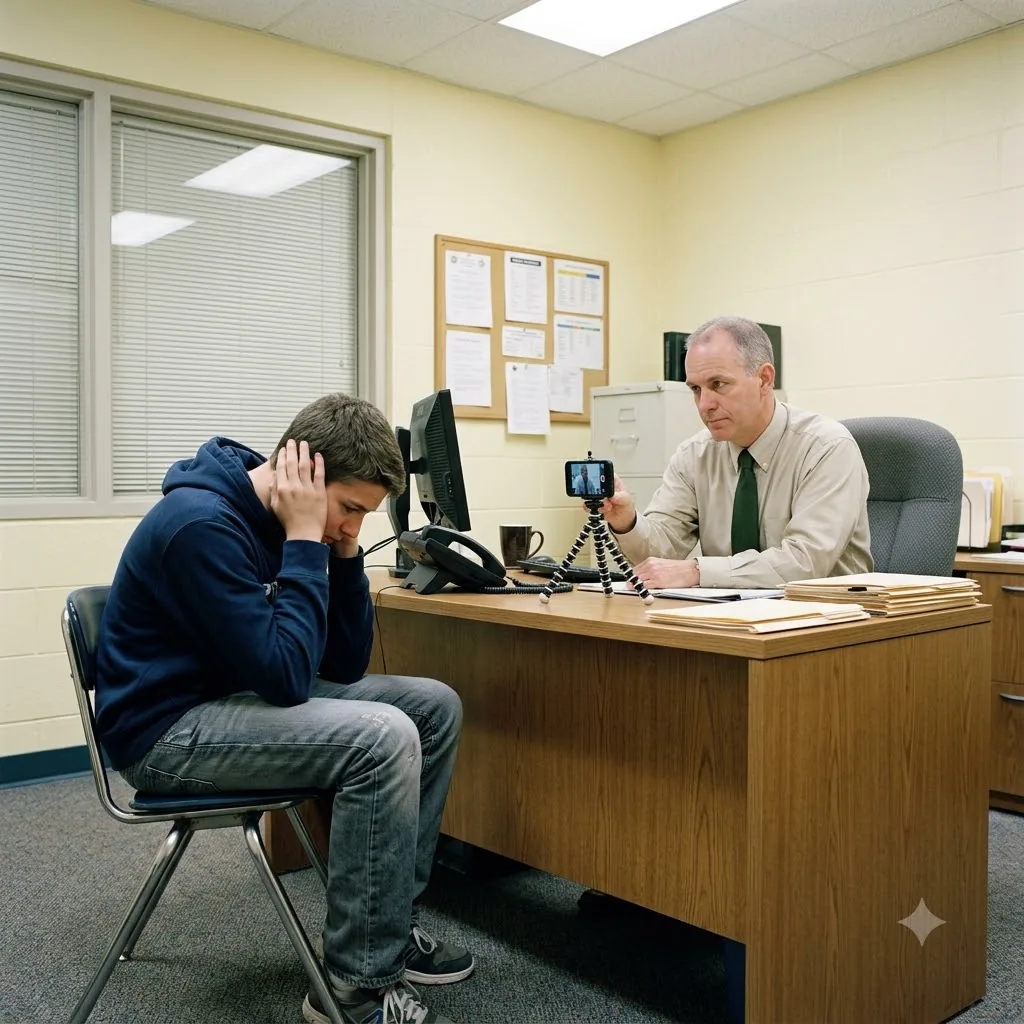
The intercom crackled with the sterile beep of the all-clear signal, dropping a ringing, heavy silence over Principal Thorne’s office. Sixteen-year-old Leo sat collapsed in the oversized leather visitor’s chair, his hands locked together in a violent, uncontrollable tremor. Thorne did not offer a glass of water, a calming word, or a call to the school nurse. Instead, the principal leaned across his vast mahogany desk and nudged a desk lamp three inches to the left, angling the harsh LED bulb so it illuminated the tear tracks streaking through the dust on Leo’s cheeks.
The active shooter drill had lasted forty-seven minutes. The new protocol included simulated gunfire echoing through the hallway speakers, heavy boots sprinting past the lockers, and the terrifying, violent rattling of the classroom door handles. Leo had spent the entire duration wedged under a biology lab table, his hands clamped over his ears, trapped in a sensory overload so intense his vision had gone entirely white. Now, pulled from the classroom for a post-incident evaluation, he could not stop his knees from bouncing against the heavy wood of Thorne’s desk.
Thorne stepped back, his polished shoes silent on the carpet. He held a sleek digital camera at chest level, squinting at the digital display. He moved one step to the right, checking the frame, ensuring the backdrop of academic awards and the American flag contrasted perfectly with the image of a teenager in the throes of an acute panic attack.
“Keep your hands clasped just like that, Leo,” Thorne instructed. His tone held none of the gentle, placating warmth expected of a high school administrator managing a student in crisis. It was the clipped, precise voice of a man giving stage directions. “Do not try to mask the tremors. This is strictly for the district liability record. We must thoroughly document the psychological impact of the heightened realism in today’s drill to ensure our safety frameworks remain compliant.”
Leo squeezed his eyes shut, trying to regulate his breathing. The air in the office smelled of bitter coffee and expensive cologne, a sharp contrast to the metallic tang of fear that still coated the back of his throat. He attempted to lower his hands, desperate to regain some shred of dignity, to stop feeling like a specimen pinned to a corkboard.
“I said keep them up,” Thorne snapped, a sudden edge of impatience cutting through his professional veneer. He adjusted the lens ring, pulling focus. “The school board needs to see the unvarnished reality of student trauma. If you suppress your physical reactions, the documentation loses its integrity. We cannot protect you if we do not understand exactly how vulnerable you are.”
The words felt wrong, sliding into Leo’s panicked mind like jagged pieces of glass. The principal was not looking at him. Thorne was looking at the screen, observing Leo entirely through a digital filter. The man paced slowly around the perimeter of the desk, capturing Leo from a high angle, emphasizing the boy’s small, huddled posture against the massive furniture.
Leo let out a shaky breath, his chest tight. He rocked forward, a deep, involuntary self-soothing motion.
“Excellent,” Thorne murmured, his thumb resting lightly on the record button. “Hold that posture. Look toward the window, please. The natural light highlights the physical exhaustion perfectly.”
Leo turned his head toward the drawn blinds, the narrow slats of sunlight burning his exhausted eyes. His neurodivergence had always made the unpredictable environment of high school challenging, but the drills were a distinct, recurring nightmare. This one had been different. Louder, more aggressive, meticulously designed to bypass logic and trigger pure, primal terror. And Thorne had been waiting in the hallway the exact second the all-clear sounded, bypassing the teachers to personally escort the most visibly shattered student directly to this office.
Thorne crouched down, angling the camera upward to catch the erratic, shallow rise and fall of Leo’s chest. He checked his watch, then checked the camera battery. The sterile, clinical nature of the process made the room feel freezing. There was no empathy in the space, only the relentless documentation of a breakdown.
Leo’s gaze drifted past Thorne’s shoulder. While the principal fussed with the handheld device, Leo’s eyes locked onto the towering oak bookshelf in the corner of the room. Nestled between a set of thick educational law encyclopedias and a decorative globe sat a hollowed-out binder. The spine was slightly misaligned. Protruding from a tiny, perfectly drilled hole in the dark vinyl was a tiny glass bead.
Beside the glass bead, a microscopic red light pulsed in a slow, steady rhythm.
Thorne stood up, reviewing his footage with a satisfied, tight-lipped expression. He reached out to turn off his handheld camera, declaring the mandatory liability session complete.
Leo slowly lifted his trembling right hand, extending a single, shaking finger past Thorne, pointing directly at the blinking crimson dot on the bookshelf.
The intercom crackled with the sterile beep of the all-clear signal, dropping a ringing, heavy silence over Principal Thorne’s office. Sixteen-year-old Leo sat collapsed in the oversized leather visitor’s chair, his hands locked together in a violent, uncontrollable tremor. Thorne did not offer a glass of water, a calming word, or a call to the school nurse. Instead, the principal leaned across his vast mahogany desk and nudged a desk lamp three inches to the left, angling the harsh LED bulb so it illuminated the tear tracks streaking through the dust on Leo’s cheeks.
The active shooter drill had lasted forty-seven minutes. The new protocol included simulated gunfire echoing through the hallway speakers, heavy boots sprinting past the lockers, and the terrifying, violent rattling of the classroom door handles. Leo had spent the entire duration wedged under a biology lab table, his hands clamped over his ears, trapped in a sensory overload so intense his vision had gone entirely white. Now, pulled from the classroom for a post-incident evaluation, he could not stop his knees from bouncing against the heavy wood of Thorne’s desk.
Thorne stepped back, his polished shoes silent on the carpet. He held a sleek digital camera at chest level, squinting at the digital display. He moved one step to the right, checking the frame, ensuring the backdrop of academic awards and the American flag contrasted perfectly with the image of a teenager in the throes of an acute panic attack.
“Keep your hands clasped just like that, Leo,” Thorne instructed. His tone held none of the gentle, placating warmth expected of a high school administrator managing a student in crisis. It was the clipped, precise voice of a man giving stage directions. “Do not try to mask the tremors. This is strictly for the district liability record. We must thoroughly document the psychological impact of the heightened realism in today’s drill to ensure our safety frameworks remain compliant.”
Leo squeezed his eyes shut, trying to regulate his breathing. The air in the office smelled of bitter coffee and expensive cologne, a sharp contrast to the metallic tang of fear that still coated the back of his throat. He attempted to lower his hands, desperate to regain some shred of dignity, to stop feeling like a specimen pinned to a corkboard.
“I said keep them up,” Thorne snapped, a sudden edge of impatience cutting through his professional veneer. He adjusted the lens ring, pulling focus. “The school board needs to see the unvarnished reality of student trauma. If you suppress your physical reactions, the documentation loses its integrity. We cannot protect you if we do not understand exactly how vulnerable you are.”
The words felt wrong, sliding into Leo’s panicked mind like jagged pieces of glass. The principal was not looking at him. Thorne was looking at the screen, observing Leo entirely through a digital filter. The man paced slowly around the perimeter of the desk, capturing Leo from a high angle, emphasizing the boy’s small, huddled posture against the massive furniture.
Leo let out a shaky breath, his chest tight. He rocked forward, a deep, involuntary self-soothing motion.
“Excellent,” Thorne murmured, his thumb resting lightly on the record button. “Hold that posture. Look toward the window, please. The natural light highlights the physical exhaustion perfectly.”
Leo turned his head toward the drawn blinds, the narrow slats of sunlight burning his exhausted eyes. His neurodivergence had always made the unpredictable environment of high school challenging, but the drills were a distinct, recurring nightmare. This one had been different. Louder, more aggressive, meticulously designed to bypass logic and trigger pure, primal terror. And Thorne had been waiting in the hallway the exact second the all-clear sounded, bypassing the teachers to personally escort the most visibly shattered student directly to this office.
Thorne crouched down, angling the camera upward to catch the erratic, shallow rise and fall of Leo’s chest. He checked his watch, then checked the camera battery. The sterile, clinical nature of the process made the room feel freezing. There was no empathy in the space, only the relentless documentation of a breakdown.
Leo’s gaze drifted past Thorne’s shoulder. While the principal fussed with the handheld device, Leo’s eyes locked onto the towering oak bookshelf in the corner of the room. Nestled between a set of thick educational law encyclopedias and a decorative globe sat a hollowed-out binder. The spine was slightly misaligned. Protruding from a tiny, perfectly drilled hole in the dark vinyl was a tiny glass bead.
Beside the glass bead, a microscopic red light pulsed in a slow, steady rhythm.
Thorne stood up, reviewing his footage with a satisfied, tight-lipped expression. He reached out to turn off his handheld camera, declaring the mandatory liability session complete.
Leo slowly lifted his trembling right hand, extending a single, shaking finger past Thorne, pointing directly at the blinking crimson dot on the bookshelf.