Story code: ST-000878
Part 1: He Said My Sister Was Too Ignorant To Leave Right
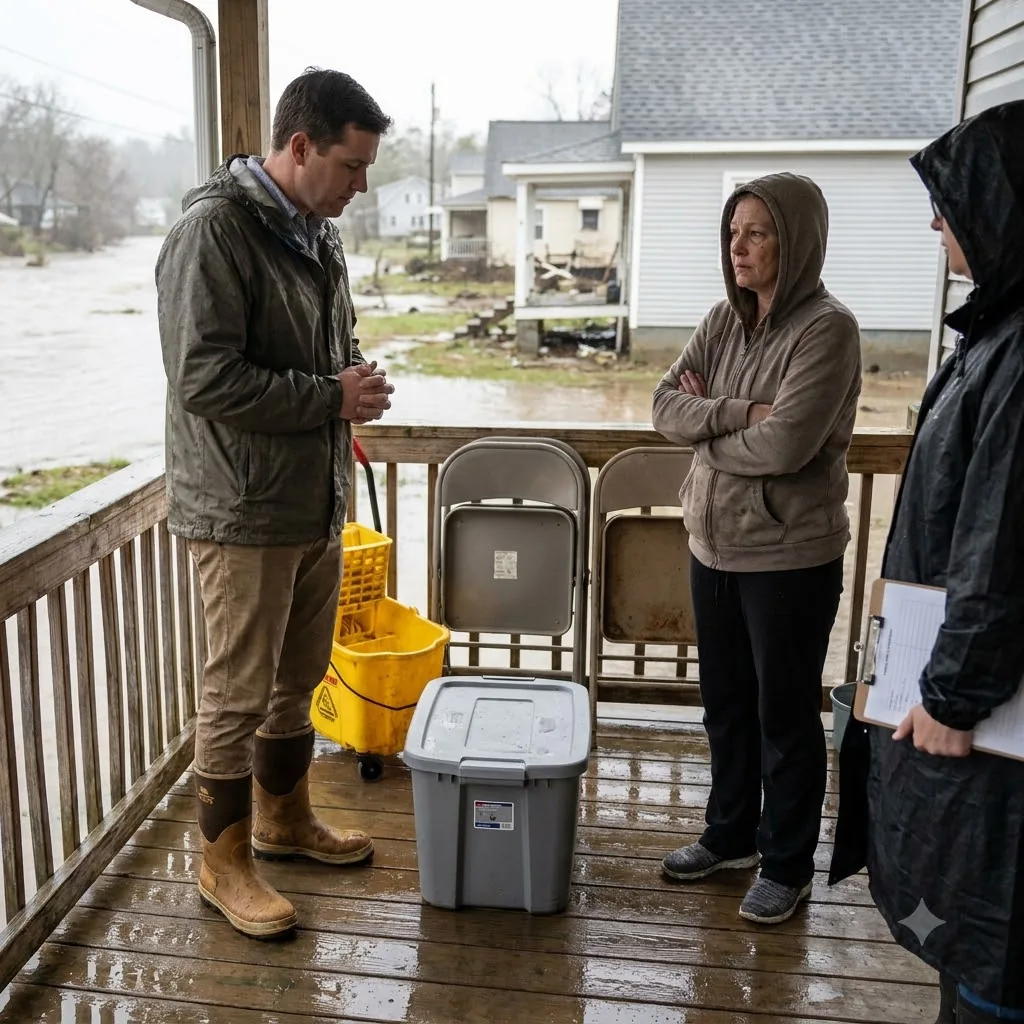
Grant Holloway stood on a flooded porch in dry shoes, looked at my sister’s evacuation tote sitting between a mop bucket and two folded chairs, and told her she was “not equipped to challenge the migration sequence model.” Tessa had only asked where our mother could sleep that night if the water kept rising, but he said it in the same polished voice people use when they want a room to turn against one person. I was wringing out towels at the inside threshold when he used a term so slick and so strange that even I stopped moving for a second. Our porch had turned into one of those temporary meeting spaces people pretend is normal once enough agencies start using them. The front boards were wet and dark. I had towels stacked on a crate, a bucket catching drip from the sag in the screen frame, and a legal pad gone soft at the corners from damp fingers. Elena sat in one of the folding chairs with her knees angled away from the water line, her pill bottles and keys in a grocery bag on her lap. Noah kept shifting plastic bins farther from the edge where the seepage came in. Tessa stayed by the black evacuation tote with one hand hooked through the strap like somebody might decide even that was too much to keep. Grant had a branded folder tucked under his arm and a voice made for cutting off plain speech without ever sounding loud. “What I’m trying to explain,” he said, not looking at Tessa now but at the folder, then at me, then at Elena, “is that your household is in a pre-transitional retreat posture. If she interrupts before we establish migration sequencing, she’s going to confuse the eligibility pathway.” Tessa blinked at him once and said, “I asked where we’re supposed to go tonight.” He gave her a patient smile that made his face look practiced instead of kind. “That’s exactly what I mean. You’re jumping to shelter assumptions before we stabilize your littoral continuity profile.” Noah repeated it under his breath. “Littoral continuity profile.” Grant heard him and nodded like that helped. “Yes. Thank you. That’s the framework.” I had heard enough intake language over the last two storm seasons to know what belonged in a room and what didn’t. Most of it, even the ugly official phrases, still landed on something solid: motel vouchers, transport zones, medication storage, pet exceptions, next-day check-ins. What Grant was doing slid over the porch like oil. Every answer got longer and less useful. Tessa asked again, slower this time. “Can my mother be placed somewhere with electricity for her charger and meds, yes or no?” Grant shifted his folder from one hand to the other. “You’re asking a downstream question without respecting the upstream migration architecture. That’s how families self-sabotage relocation.” He tipped his chin toward the tote. “Packing before sequence confirmation can also create noncompliant movement signals.” That made Elena sit forward in her chair. She kept one hand over the grocery bag in her lap and said, “Noncompliant to who? The water?” He gave a short laugh through his nose, not enough to sound rude if somebody wrote it down, more than enough in a room like ours. “Ma’am, with respect, this is specialized planning.” Tessa’s mouth flattened. She pulled a crumpled inventory sheet from the side pocket of the tote. “This bag has insulin cooler packs, chargers, socks, two changes of clothes, my mother’s pills, family papers, and pictures she wouldn’t leave behind. If we get a ride in the next hour, we go. If we don’t, we stay here with water under the porch. I don’t need specialized planning. I need an answer.” Grant leaned back like her plain language had proved something for him. “And that’s the difference between urgency and readiness. You’re focused on objects. I’m focused on relocation integrity.” He said it smoothly. He said it with that little pause before integrity, so the word would land heavy. It worked on the room for a second. Noah stopped moving bins. Elena looked at Tessa instead of at him. Even the dripping into the bucket seemed louder because nobody else was talking. Then Grant made his move plain. “If you don’t understand staged retreat compliance,” he said, “it’s better to let trained people lead this. Otherwise you can talk your family out of assistance without realizing it.” That hit exactly where he wanted it to. Tessa’s hand tightened on the tote strap. Her other hand with the paper dropped to her side. She didn’t step back, but the space around her changed. He had taken a woman asking where to put her mother for the night and made her look like the dangerous person in the conversation. I set the towel down on the back of a chair and said, “Can you define staged retreat compliance for the family in plain English?” Grant turned to me with the same smile. “It means movement discipline in advance of formal placement.” “Movement from where to where?” “From unstable occupancy toward coordinated relocation,” he said, quick as a reflex. Tessa looked at him hard. “So can we leave?” He held up one finger without looking at her. “Not until I finish the framework.” That was when I noticed he had started building the whole meeting around a term none of them could use back at him. Every time Tessa asked a direct question, he answered with another layer. Every time Elena asked yes or no, he widened it into a system. Every time Noah repeated a phrase to make sense of it, Grant accepted that repeat like proof the phrase belonged there. Then he said the one that stopped me cold. “Your tote itself,” Grant said, tapping the air toward the black bag, “may trigger a premature self-relocation event unless we first assess its drift index.” Nobody said anything for a beat. The bucket dripped. Noah looked at the tote. Elena.
Grant Holloway stood on a flooded porch in dry shoes, looked at my sister’s evacuation tote sitting between a mop bucket and two folded chairs, and told her she was “not equipped to challenge the migration sequence model.” Tessa had only asked where our mother could sleep that night if the water kept rising, but he said it in the same polished voice people use when they want a room to turn against one person. I was wringing out towels at the inside threshold when he used a term so slick and so strange that even I stopped moving for a second. Our porch had turned into one of those temporary meeting spaces people pretend is normal once enough agencies start using them. The front boards were wet and dark. I had towels stacked on a crate, a bucket catching drip from the sag in the screen frame, and a legal pad gone soft at the corners from damp fingers. Elena sat in one of the folding chairs with her knees angled away from the water line, her pill bottles and keys in a grocery bag on her lap. Noah kept shifting plastic bins farther from the edge where the seepage came in. Tessa stayed by the black evacuation tote with one hand hooked through the strap like somebody might decide even that was too much to keep. Grant had a branded folder tucked under his arm and a voice made for cutting off plain speech without ever sounding loud. “What I’m trying to explain,” he said, not looking at Tessa now but at the folder, then at me, then at Elena, “is that your household is in a pre-transitional retreat posture. If she interrupts before we establish migration sequencing, she’s going to confuse the eligibility pathway.” Tessa blinked at him once and said, “I asked where we’re supposed to go tonight.” He gave her a patient smile that made his face look practiced instead of kind. “That’s exactly what I mean. You’re jumping to shelter assumptions before we stabilize your littoral continuity profile.” Noah repeated it under his breath. “Littoral continuity profile.” Grant heard him and nodded like that helped. “Yes. Thank you. That’s the framework.” I had heard enough intake language over the last two storm seasons to know what belonged in a room and what didn’t. Most of it, even the ugly official phrases, still landed on something solid: motel vouchers, transport zones, medication storage, pet exceptions, next-day check-ins. What Grant was doing slid over the porch like oil. Every answer got longer and less useful. Tessa asked again, slower this time. “Can my mother be placed somewhere with electricity for her charger and meds, yes or no?” Grant shifted his folder from one hand to the other. “You’re asking a downstream question without respecting the upstream migration architecture. That’s how families self-sabotage relocation.” He tipped his chin toward the tote. “Packing before sequence confirmation can also create noncompliant movement signals.” That made Elena sit forward in her chair. She kept one hand over the grocery bag in her lap and said, “Noncompliant to who? The water?” He gave a short laugh through his nose, not enough to sound rude if somebody wrote it down, more than enough in a room like ours. “Ma’am, with respect, this is specialized planning.” Tessa’s mouth flattened. She pulled a crumpled inventory sheet from the side pocket of the tote. “This bag has insulin cooler packs, chargers, socks, two changes of clothes, my mother’s pills, family papers, and pictures she wouldn’t leave behind. If we get a ride in the next hour, we go. If we don’t, we stay here with water under the porch. I don’t need specialized planning. I need an answer.” Grant leaned back like her plain language had proved something for him. “And that’s the difference between urgency and readiness. You’re focused on objects. I’m focused on relocation integrity.” He said it smoothly. He said it with that little pause before integrity, so the word would land heavy. It worked on the room for a second. Noah stopped moving bins. Elena looked at Tessa instead of at him. Even the dripping into the bucket seemed louder because nobody else was talking. Then Grant made his move plain. “If you don’t understand staged retreat compliance,” he said, “it’s better to let trained people lead this. Otherwise you can talk your family out of assistance without realizing it.” That hit exactly where he wanted it to. Tessa’s hand tightened on the tote strap. Her other hand with the paper dropped to her side. She didn’t step back, but the space around her changed. He had taken a woman asking where to put her mother for the night and made her look like the dangerous person in the conversation. I set the towel down on the back of a chair and said, “Can you define staged retreat compliance for the family in plain English?” Grant turned to me with the same smile. “It means movement discipline in advance of formal placement.” “Movement from where to where?” “From unstable occupancy toward coordinated relocation,” he said, quick as a reflex. Tessa looked at him hard. “So can we leave?” He held up one finger without looking at her. “Not until I finish the framework.” That was when I noticed he had started building the whole meeting around a term none of them could use back at him. Every time Tessa asked a direct question, he answered with another layer. Every time Elena asked yes or no, he widened it into a system. Every time Noah repeated a phrase to make sense of it, Grant accepted that repeat like proof the phrase belonged there. Then he said the one that stopped me cold. “Your tote itself,” Grant said, tapping the air toward the black bag, “may trigger a premature self-relocation event unless we first assess its drift index.” Nobody said anything for a beat. The bucket dripped. Noah looked at the tote. Elena.