Story code: ST-000761
Part 1: Space Forty-Two
I told the girl at the drive-through window to make the second coffee a decaf, just in case my buddy wanted to take it easy on his blood pressure today. It is a pathetic, embarrassing lie I tell every single morning. I handed over a crumpled ten-dollar bill, took the cardboard tray, and drove off with two steaming cups rattling against each other. The second one always sits in the passenger-side cup holder until the ice melts or the heat fades away into nothing. I just cannot stand the hollow pity in the eyes of a nineteen-year-old barista if she realizes a sixty-year-old man is buying a single coffee to drink alone in an empty parking lot. My daily routine requires this illusion of company.
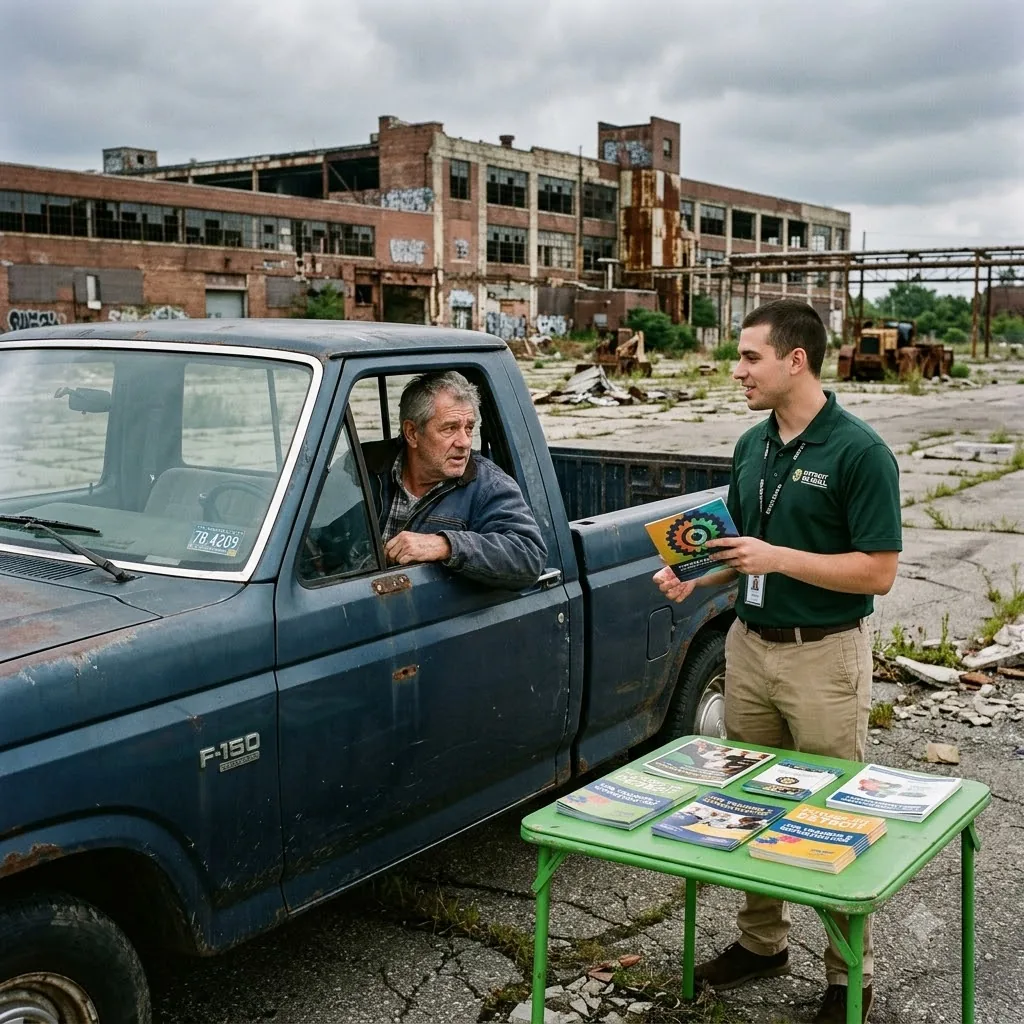
The lot belongs to the old Harrison automotive stamping plant. Management chained the perimeter gates shut five years ago, leaving three thousand of us standing on the outside with our final severance checks, trying to figure out what to do with the rest of our lives. Most guys moved on. I spend my mornings sitting right outside the rusted chain-link fence. I always park in space forty-two. That was my designated spot for three decades of shift work. The faded yellow lines are mostly swallowed by aggressive weeds now, thick dandelions pushing up through the neglected, spider-webbed asphalt. I sit there, drink my bitter black coffee, and stare at the corrugated metal siding of Building C. It is a silent graveyard of American steel. The heavy quiet usually settles my nerves. Today, the quiet was dead on arrival.
A blinding, neon-green canvas canopy stood erected right in the absolute center of space forty-two. It looked like a toxic, radioactive toad squatting directly on top of my memories. Two foldable canvas camping chairs sat underneath the shade, flanking a plastic folding table draped in a matching bright green cloth. A vinyl banner snapped violently in the morning breeze. A kid was busy setting out heavy stacks of glossy paper on the table, weighing them down with branded ink pens. He wore a crisp, bright white polo shirt and khaki pants that had never once seen a grease stain in their lifespan.
I threw my truck into park a few yards away, letting the old engine idle rough. The broken exhaust pipe rattled loudly against the dead silence of the factory grounds. The kid looked up, spotted my rusted hood, and instantly lit up with the kind of aggressive, blinding enthusiasm you only see on used car salespeople and door-to-door religious missionaries. He grabbed a silver clipboard, patted his pockets, and marched straight toward my driver-side door. I considered slamming the shifter into reverse. I should have just backed out, gone back to my empty house, and written off the day entirely. Instead, my stubborn streak flared up. I let the window roll down exactly three inches. Just enough space to tell him to pack up his ridiculous circus tent and get off my pavement.
He leaned in uncomfortably close to the dirty glass. His plastic name tag said Leo. He smelled intensely of expensive laundry detergent and synthetic mint chewing gum. He started talking right over the harsh rumble of my exhaust, projecting his voice with a heavily practiced, seminar-taught cheerfulness. He told me I was looking at the dawn of a completely new era. He literally pointed at the crumbling walls of the dead auto plant and called it a tragic relic of the past. He slapped the edge of his clipboard and announced that the new green economy was here to catch the hardworking men left behind by corporate greed. Solar panel installation. Wind turbine maintenance. Retraining programs fully funded for displaced industrial workers. It was a slick, canned speech he had clearly memorized in some air-conditioned office downtown, delivered to a man whose knuckles were permanently scarred and stained with hydraulic fluid.
I stared down at the glossy tri-fold brochure he managed to slide seamlessly through the three-inch gap in my window. It landed perfectly flush on my lap. The cover featured a stock photograph of a grinning, flawless man in a pristine hard hat, pointing up at a gleaming solar panel against a cloudless blue sky. It was profoundly insulting. It was utterly clean and bright and entirely disconnected from the harsh reality of the oil-soaked earth we were parked on. I picked the heavy, expensive paper up by the corner, gripping it tight, fully intending to shove it right back through the narrow crack in the glass.
I flipped the pamphlet over to find the corporate contact information on the back panel. My calloused thumb brushed the bottom edge. I stopped breathing. The glossy paper felt suddenly heavy, dropping like a solid slab of lead into my palm. Down in the absolute bottom margin, printed in a microscopic, pale gray font meant to be completely ignored by the casual reader, was a highly specific string of text. A sequence of letters and numbers. It was not a toll-free phone number or a corporate website directory. It was a code I knew by heart, a sequence that had absolutely no logical reason to exist on a clean-energy retraining brochure handed out by a random kid at an abandoned factory.
The truck engine kept sputtering. My decoy decaf coffee sloshed over the rim of its paper cup as my hand started to shake uncontrollably. The kid named Leo was still talking rapidly outside my window, his mouth moving in a blur, pointing eagerly back toward his green tent. I did not hear a single syllable he said. I stared blindly at the faded yellow lines of space forty-two, then down at the microscopic gray print blurring my vision. I grabbed the door handle, kicked the metal latch hard, and shoved the heavy steel door outward with every ounce of physical strength I had left.
I told the girl at the drive-through window to make the second coffee a decaf, just in case my buddy wanted to take it easy on his blood pressure today. It is a pathetic, embarrassing lie I tell every single morning. I handed over a crumpled ten-dollar bill, took the cardboard tray, and drove off with two steaming cups rattling against each other. The second one always sits in the passenger-side cup holder until the ice melts or the heat fades away into nothing. I just cannot stand the hollow pity in the eyes of a nineteen-year-old barista if she realizes a sixty-year-old man is buying a single coffee to drink alone in an empty parking lot. My daily routine requires this illusion of company.
The lot belongs to the old Harrison automotive stamping plant. Management chained the perimeter gates shut five years ago, leaving three thousand of us standing on the outside with our final severance checks, trying to figure out what to do with the rest of our lives. Most guys moved on. I spend my mornings sitting right outside the rusted chain-link fence. I always park in space forty-two. That was my designated spot for three decades of shift work. The faded yellow lines are mostly swallowed by aggressive weeds now, thick dandelions pushing up through the neglected, spider-webbed asphalt. I sit there, drink my bitter black coffee, and stare at the corrugated metal siding of Building C. It is a silent graveyard of American steel. The heavy quiet usually settles my nerves. Today, the quiet was dead on arrival.
A blinding, neon-green canvas canopy stood erected right in the absolute center of space forty-two. It looked like a toxic, radioactive toad squatting directly on top of my memories. Two foldable canvas camping chairs sat underneath the shade, flanking a plastic folding table draped in a matching bright green cloth. A vinyl banner snapped violently in the morning breeze. A kid was busy setting out heavy stacks of glossy paper on the table, weighing them down with branded ink pens. He wore a crisp, bright white polo shirt and khaki pants that had never once seen a grease stain in their lifespan.
I threw my truck into park a few yards away, letting the old engine idle rough. The broken exhaust pipe rattled loudly against the dead silence of the factory grounds. The kid looked up, spotted my rusted hood, and instantly lit up with the kind of aggressive, blinding enthusiasm you only see on used car salespeople and door-to-door religious missionaries. He grabbed a silver clipboard, patted his pockets, and marched straight toward my driver-side door. I considered slamming the shifter into reverse. I should have just backed out, gone back to my empty house, and written off the day entirely. Instead, my stubborn streak flared up. I let the window roll down exactly three inches. Just enough space to tell him to pack up his ridiculous circus tent and get off my pavement.
He leaned in uncomfortably close to the dirty glass. His plastic name tag said Leo. He smelled intensely of expensive laundry detergent and synthetic mint chewing gum. He started talking right over the harsh rumble of my exhaust, projecting his voice with a heavily practiced, seminar-taught cheerfulness. He told me I was looking at the dawn of a completely new era. He literally pointed at the crumbling walls of the dead auto plant and called it a tragic relic of the past. He slapped the edge of his clipboard and announced that the new green economy was here to catch the hardworking men left behind by corporate greed. Solar panel installation. Wind turbine maintenance. Retraining programs fully funded for displaced industrial workers. It was a slick, canned speech he had clearly memorized in some air-conditioned office downtown, delivered to a man whose knuckles were permanently scarred and stained with hydraulic fluid.
I stared down at the glossy tri-fold brochure he managed to slide seamlessly through the three-inch gap in my window. It landed perfectly flush on my lap. The cover featured a stock photograph of a grinning, flawless man in a pristine hard hat, pointing up at a gleaming solar panel against a cloudless blue sky. It was profoundly insulting. It was utterly clean and bright and entirely disconnected from the harsh reality of the oil-soaked earth we were parked on. I picked the heavy, expensive paper up by the corner, gripping it tight, fully intending to shove it right back through the narrow crack in the glass.
I flipped the pamphlet over to find the corporate contact information on the back panel. My calloused thumb brushed the bottom edge. I stopped breathing. The glossy paper felt suddenly heavy, dropping like a solid slab of lead into my palm. Down in the absolute bottom margin, printed in a microscopic, pale gray font meant to be completely ignored by the casual reader, was a highly specific string of text. A sequence of letters and numbers. It was not a toll-free phone number or a corporate website directory. It was a code I knew by heart, a sequence that had absolutely no logical reason to exist on a clean-energy retraining brochure handed out by a random kid at an abandoned factory.
The truck engine kept sputtering. My decoy decaf coffee sloshed over the rim of its paper cup as my hand started to shake uncontrollably. The kid named Leo was still talking rapidly outside my window, his mouth moving in a blur, pointing eagerly back toward his green tent. I did not hear a single syllable he said. I stared blindly at the faded yellow lines of space forty-two, then down at the microscopic gray print blurring my vision. I grabbed the door handle, kicked the metal latch hard, and shoved the heavy steel door outward with every ounce of physical strength I had left.