Story code: ST-001376
Part 1: Looking Out of Place
The heavy, gloved hand hit Marcus right between the shoulder blades, driving his chest hard into the dented blue metal of locker 142. The impact rattled the combination lock against the door, the sharp sound echoing down the empty C-wing. Before Marcus could turn or speak, a reinforced tactical boot kicked his ankles apart, forcing him into a wide, vulnerable stance. The hallway smelled of industrial floor wax and the stale ozone of the aging heating system, a perfectly normal sensory backdrop for a Tuesday morning at Westside High. The heavy breathing behind him and the cold, hard mass of a holstered service weapon pressing into his lower back shattered that normalcy.
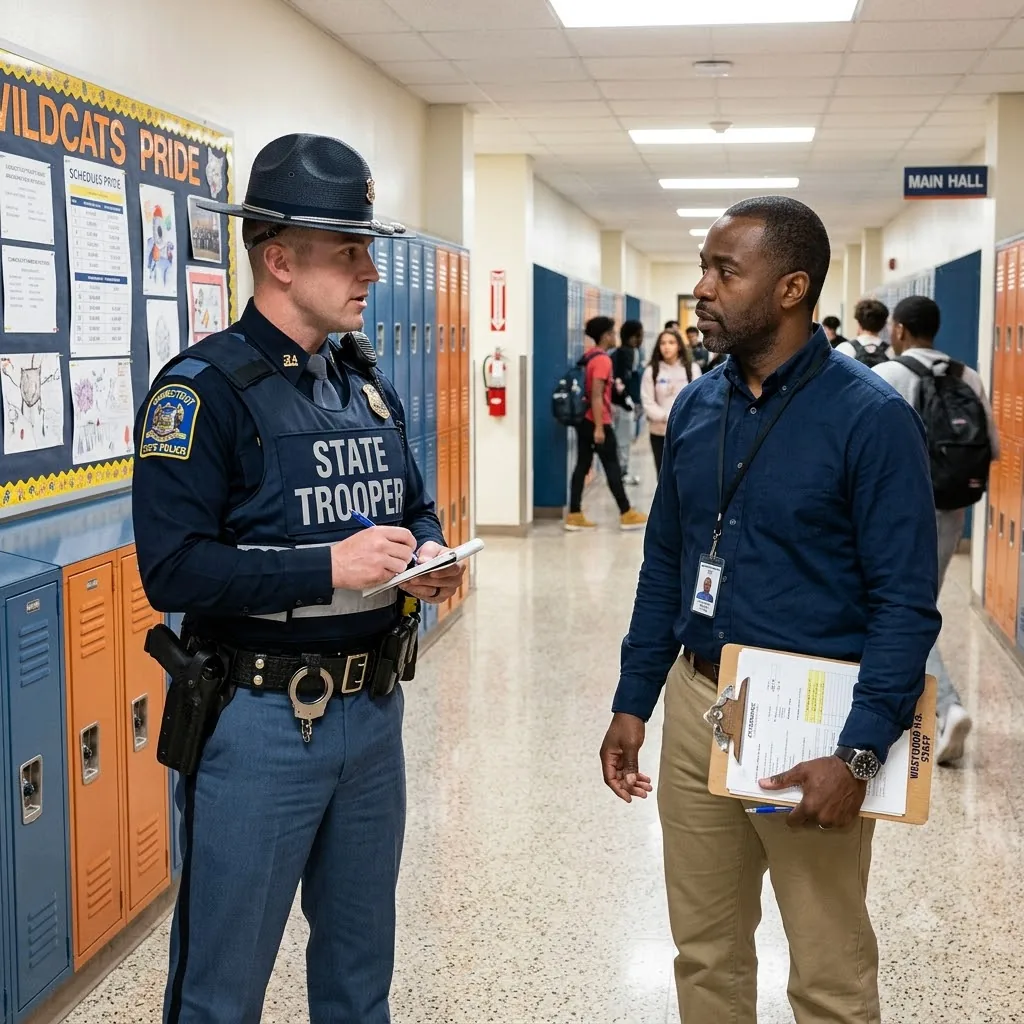
Rough hands patted down his sides. They grabbed at his waistband, digging under the belt, before sliding aggressively down his pant legs. Marcus kept his palms flat against the cold locker door, his breathing shallow. He caught a warped reflection in the polished metal surface. It was a state trooper, fully outfitted in tactical gear, his vest bulging with spare magazines and nylon zip-ties. The trooper ordered him to remain absolutely still, muttering something under his breath about standard security protocols. Marcus felt the deep, familiar indignity burn flush in his neck as those heavy hands emptied his pockets, tossing his dry-erase markers, his worn key lanyard, and his plastic faculty ID onto the scuffed linoleum floor.
The trooper stepped back just enough to let Marcus breathe, but kept a firm grip on the back of his shirt. He scooped up the faculty ID. He squinted at the small portrait, then stared hard at the back of Marcus’s head. The officer stated flatly that Marcus looked entirely out of place. Marcus swallowed the dry lump in his throat and pointed out the word ‘Faculty’ printed in bold red letters across the laminated plastic. The trooper tossed the card back onto the floor with a dismissive flick of his wrist. He claimed he was just being careful. The phrase hung heavily in the dead silence of the corridor. ‘Just being careful’ meant that Marcus, wearing a pressed button-down shirt and a conservative tie, somehow registered as an active threat in the exact building where he had taught AP History for six years.
The trooper shifted his attention to the leather satchel Marcus had dropped during the initial shove. He nudged it with his steel-toed boot, spilling graded essays and a thermos onto the floor. His boot stopped, resting heavily on the small, reinforced steel lockbox Marcus kept tucked in the bottom compartment. The trooper demanded to know the contents of the box immediately. His tone left no room for hesitation or debate. Marcus explained it was a standard security box for his classroom, used to secure confiscated cell phones and the history club’s petty cash. The trooper did not look convinced in the slightest. He unbuckled the retaining strap on his thigh holster with a sharp, deliberate snap that echoed off the tile walls.
He ordered Marcus to pick up the box and open it slowly. Marcus knelt on the linoleum, his knees popping in the quiet hall. He gathered his scattered markers and his ID, slipping them into his pocket before grabbing the cold handle of the lockbox. His hands shook slightly, not from fear, but from the boiling frustration of being treated like a dangerous intruder mere feet from his own homeroom. The trooper hovered directly over him, the leather of his duty belt creaking with every micro-movement. The radio on the officer’s shoulder hissed with static, spitting out garbled dispatch codes that only amplified the stifling tension in the hallway.
Marcus stood up, holding the lockbox out where the trooper could see it clearly. He turned the small key, popped the metal latch, and flipped the lid open to reveal empty felt lining and a few loose dollar bills. The trooper grunted, a harsh sound completely devoid of apology, and finally took a half-step back. He instructed Marcus to proceed to his destination but warned him to keep his hands fully visible at all times. The hallway stretched out before them, a gauntlet of closed classroom doors and silent lockers. Marcus picked up his ruined bag and walked forward, the heavy, measured footsteps of the trooper following right on his heels.
Every step felt monitored, measured, and unfairly judged. Marcus approached the heavy oak double doors of the faculty center at the far end of the hall. This was where the morning assembly was mandated to take place. He could hear the low, tense murmur of his colleagues inside. The trooper stepped ahead, placing a hand on the brass handle, blocking Marcus from entering freely. The officer gave him one last sweeping, suspicious look, as if expecting Marcus to suddenly produce a threat from thin air.
The trooper shoved the doors open, pushing Marcus roughly inside. The room was not set up for a standard staff meeting. Long folding tables replaced the usual comfortable chairs, and instead of coffee and donuts, the tables were lined with rows of black polymer handguns and boxes of ammunition for the district’s new mandatory educator arming seminar, just as the head tactical instructor racked the slide of his own weapon and raised a hand to halt them.
The heavy, gloved hand hit Marcus right between the shoulder blades, driving his chest hard into the dented blue metal of locker 142. The impact rattled the combination lock against the door, the sharp sound echoing down the empty C-wing. Before Marcus could turn or speak, a reinforced tactical boot kicked his ankles apart, forcing him into a wide, vulnerable stance. The hallway smelled of industrial floor wax and the stale ozone of the aging heating system, a perfectly normal sensory backdrop for a Tuesday morning at Westside High. The heavy breathing behind him and the cold, hard mass of a holstered service weapon pressing into his lower back shattered that normalcy.
Rough hands patted down his sides. They grabbed at his waistband, digging under the belt, before sliding aggressively down his pant legs. Marcus kept his palms flat against the cold locker door, his breathing shallow. He caught a warped reflection in the polished metal surface. It was a state trooper, fully outfitted in tactical gear, his vest bulging with spare magazines and nylon zip-ties. The trooper ordered him to remain absolutely still, muttering something under his breath about standard security protocols. Marcus felt the deep, familiar indignity burn flush in his neck as those heavy hands emptied his pockets, tossing his dry-erase markers, his worn key lanyard, and his plastic faculty ID onto the scuffed linoleum floor.
The trooper stepped back just enough to let Marcus breathe, but kept a firm grip on the back of his shirt. He scooped up the faculty ID. He squinted at the small portrait, then stared hard at the back of Marcus’s head. The officer stated flatly that Marcus looked entirely out of place. Marcus swallowed the dry lump in his throat and pointed out the word ‘Faculty’ printed in bold red letters across the laminated plastic. The trooper tossed the card back onto the floor with a dismissive flick of his wrist. He claimed he was just being careful. The phrase hung heavily in the dead silence of the corridor. ‘Just being careful’ meant that Marcus, wearing a pressed button-down shirt and a conservative tie, somehow registered as an active threat in the exact building where he had taught AP History for six years.
The trooper shifted his attention to the leather satchel Marcus had dropped during the initial shove. He nudged it with his steel-toed boot, spilling graded essays and a thermos onto the floor. His boot stopped, resting heavily on the small, reinforced steel lockbox Marcus kept tucked in the bottom compartment. The trooper demanded to know the contents of the box immediately. His tone left no room for hesitation or debate. Marcus explained it was a standard security box for his classroom, used to secure confiscated cell phones and the history club’s petty cash. The trooper did not look convinced in the slightest. He unbuckled the retaining strap on his thigh holster with a sharp, deliberate snap that echoed off the tile walls.
He ordered Marcus to pick up the box and open it slowly. Marcus knelt on the linoleum, his knees popping in the quiet hall. He gathered his scattered markers and his ID, slipping them into his pocket before grabbing the cold handle of the lockbox. His hands shook slightly, not from fear, but from the boiling frustration of being treated like a dangerous intruder mere feet from his own homeroom. The trooper hovered directly over him, the leather of his duty belt creaking with every micro-movement. The radio on the officer’s shoulder hissed with static, spitting out garbled dispatch codes that only amplified the stifling tension in the hallway.
Marcus stood up, holding the lockbox out where the trooper could see it clearly. He turned the small key, popped the metal latch, and flipped the lid open to reveal empty felt lining and a few loose dollar bills. The trooper grunted, a harsh sound completely devoid of apology, and finally took a half-step back. He instructed Marcus to proceed to his destination but warned him to keep his hands fully visible at all times. The hallway stretched out before them, a gauntlet of closed classroom doors and silent lockers. Marcus picked up his ruined bag and walked forward, the heavy, measured footsteps of the trooper following right on his heels.
Every step felt monitored, measured, and unfairly judged. Marcus approached the heavy oak double doors of the faculty center at the far end of the hall. This was where the morning assembly was mandated to take place. He could hear the low, tense murmur of his colleagues inside. The trooper stepped ahead, placing a hand on the brass handle, blocking Marcus from entering freely. The officer gave him one last sweeping, suspicious look, as if expecting Marcus to suddenly produce a threat from thin air.
The trooper shoved the doors open, pushing Marcus roughly inside. The room was not set up for a standard staff meeting. Long folding tables replaced the usual comfortable chairs, and instead of coffee and donuts, the tables were lined with rows of black polymer handguns and boxes of ammunition for the district’s new mandatory educator arming seminar, just as the head tactical instructor racked the slide of his own weapon and raised a hand to halt them.