Story code: ST-000416
Part 1: Sensory Breach
The fluorescent lights above section D flickered with a high-pitched electronic whine that drove straight into Marcus’s temples like a hot needle. To his left, three outbound sales reps engaged in a loud, overlapping debate about a delayed freight shipment, their voices cutting sharply through the dense, recycled air of the open-plan floor. From the cubicle directly behind him came the rhythmic, percussive slamming of a heavy mechanical keyboard, each aggressive keystroke echoing like a tiny hammer against his skull. Marcus closed his eyes and reached up, pressing the dual pads of his headset firmer against his cheekbones. He tapped the small rubberized button on the left band, flooding his auditory nerve with a deep, rumbling frequency of brown noise. The chaotic frequencies of the logistics floor instantly dampened into a manageable, distant blur, allowing the tight knot in his chest to finally loosen.
These bone-conduction headphones were the only reason he could function in the regional routing hub. The technology bypassed his eardrums entirely, transmitting the stabilizing vibrations directly to his inner ear through his jawbone. It was an elegant solution, officially approved three years ago by the medical review board to manage his severe sensory processing overload. With the brown noise anchoring him, the complex routing spreadsheets on his dual monitors finally stopped swimming and locked into sharp focus.
A heavy shadow dropped across his desk, blocking the harsh overhead light and plunging his monitors into glare.
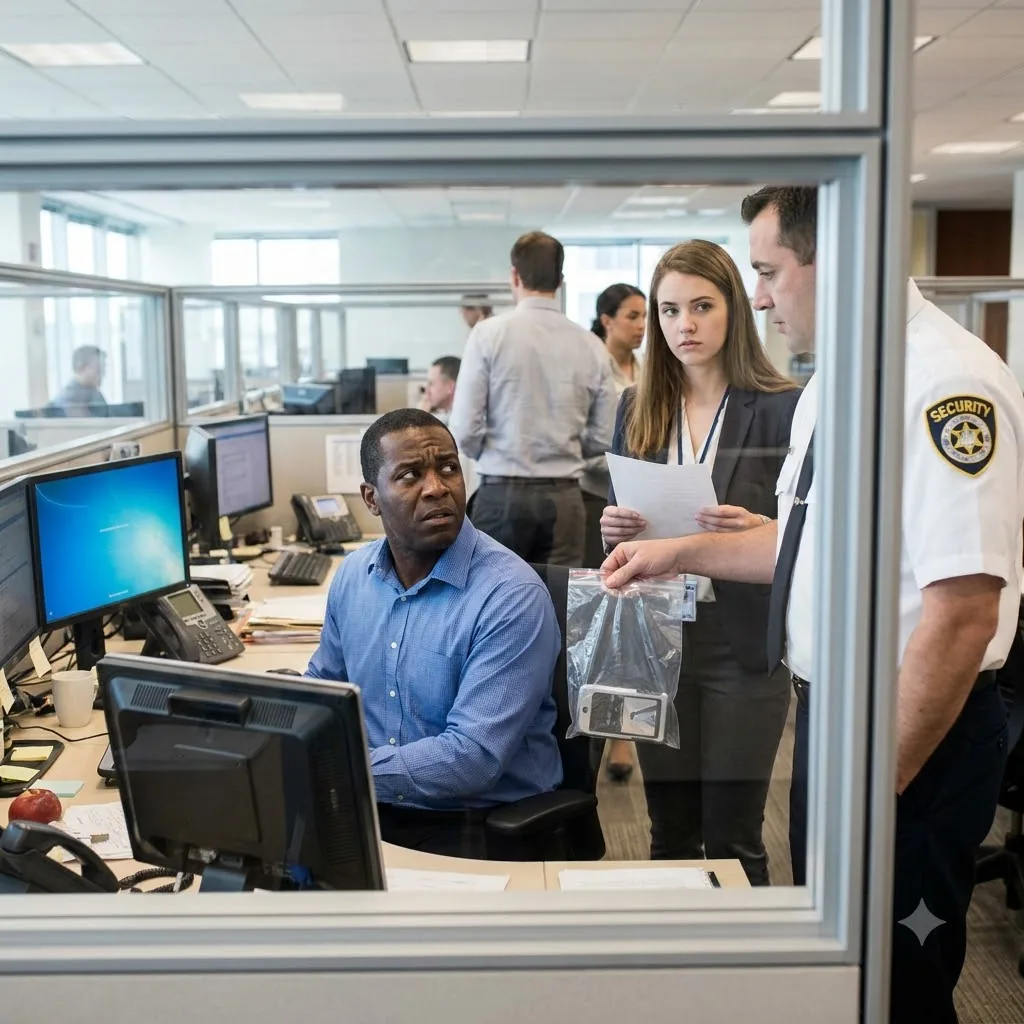
Marcus blinked and looked up. A uniformed security guard stood on the other side of the low fabric partition. Beside him stood Elaine from Human Resources, clutching a thick manila folder tight against her dark blazer. The guard was a third-party contractor Marcus did not recognize, a massive man holding a heavy, clear plastic bag with a bright red tamper-evident seal at the top. The bag was empty. The guard held it open with both hands, his stance rigid and defensive, as if he expected Marcus to suddenly lunge at him.
Elaine tapped her acrylic fingernail against the metal frame of Marcus’s cubicle. She instructed him to remove the electronic device from his head and place it into the plastic bag immediately.
Marcus paused, his fingers hovering over his ergonomic mouse. He stared at the thick plastic bag, noting the strange alphanumeric barcodes printed along the bottom edge. He stated that he had a medical accommodation on file for the headset. He reminded her it had been signed off by the previous HR director, heavily documented as a permanent fixture in his employee file to allow him to maintain his productivity in the completely open floor plan.
Elaine did not look at the file in her arms. She kept her gaze fixed on a point just above his left shoulder, refusing to make eye contact. She informed him that corporate had just initiated a sweeping situational awareness protocol for all logistics personnel on the floor. She said any personal electronic devices emitting sound were now classified as a critical safety hazard. She declared that all such devices must be surrendered to security during shift hours, effective immediately, with zero exceptions.
The guard took a heavy step around the partition, invading the small footprint of Marcus’s workspace. The crinkling of the heavy plastic bag sounded incredibly sharp and threatening in the confined area. Marcus asked them to explain the sudden change in policy and to justify why a standard office environment required evidence bags for personal property.
Elaine simply repeated the exact phrase about situational awareness and critical safety hazards. Her tone was entirely devoid of inflection, sounding exactly like a prerecorded safety training module rather than a human being addressing a tenured employee.
Marcus reached up and slowly pulled the tension band off the back of his neck. The sudden absence of the stabilizing brown noise felt like a physical blow to the head. The screech of a poorly oiled chair wheel, the booming laugh of a shift supervisor across the room, and the relentless clatter of mechanical keys flooded back into his brain, immediately elevating his heart rate. His skin prickled with cold sweat. He looked down at the dark gray band resting in his trembling hands.
He held the device up toward the fluorescent light and pointed to the small, smooth transducer pads. He told Elaine she was making a grave mistake based on a fundamental misunderstanding of the hardware. He explained that these were bone-conduction units, not traditional audio speakers. He held them up to his face to demonstrate how they sat on his cheekbones, resting far away from his ear canals.
He pointed out the mechanical impossibility of the device hindering his situational awareness. He told her that his ears were completely unobstructed and open to the air at all times, meaning he could hear every fire alarm, every PA announcement, and every ambient noise perfectly while wearing them. He stated that the technical specifications of his headset completely invalidated the safety hazard claim she was using to confiscate his property. He held the headset out toward the guard, offering to let them inspect the solid pads to prove they did not block his hearing in any capacity whatsoever.
Elaine finally lowered her chin and looked directly into his eyes. Her expression remained completely blank, the muscles in her face unnaturally still. She reached into her thick manila folder and pulled out a single sheet of heavy stock paper stamped with a bright red compliance seal. She slid the document across his desk, pushing it right over his keyboard.
She announced that his medical accommodation was officially revoked by the compliance committee as of five minutes ago, and she ordered him to drop the unapproved electronics into the security bag before she called for his immediate termination.
The fluorescent lights above section D flickered with a high-pitched electronic whine that drove straight into Marcus’s temples like a hot needle. To his left, three outbound sales reps engaged in a loud, overlapping debate about a delayed freight shipment, their voices cutting sharply through the dense, recycled air of the open-plan floor. From the cubicle directly behind him came the rhythmic, percussive slamming of a heavy mechanical keyboard, each aggressive keystroke echoing like a tiny hammer against his skull. Marcus closed his eyes and reached up, pressing the dual pads of his headset firmer against his cheekbones. He tapped the small rubberized button on the left band, flooding his auditory nerve with a deep, rumbling frequency of brown noise. The chaotic frequencies of the logistics floor instantly dampened into a manageable, distant blur, allowing the tight knot in his chest to finally loosen.
These bone-conduction headphones were the only reason he could function in the regional routing hub. The technology bypassed his eardrums entirely, transmitting the stabilizing vibrations directly to his inner ear through his jawbone. It was an elegant solution, officially approved three years ago by the medical review board to manage his severe sensory processing overload. With the brown noise anchoring him, the complex routing spreadsheets on his dual monitors finally stopped swimming and locked into sharp focus.
A heavy shadow dropped across his desk, blocking the harsh overhead light and plunging his monitors into glare.
Marcus blinked and looked up. A uniformed security guard stood on the other side of the low fabric partition. Beside him stood Elaine from Human Resources, clutching a thick manila folder tight against her dark blazer. The guard was a third-party contractor Marcus did not recognize, a massive man holding a heavy, clear plastic bag with a bright red tamper-evident seal at the top. The bag was empty. The guard held it open with both hands, his stance rigid and defensive, as if he expected Marcus to suddenly lunge at him.
Elaine tapped her acrylic fingernail against the metal frame of Marcus’s cubicle. She instructed him to remove the electronic device from his head and place it into the plastic bag immediately.
Marcus paused, his fingers hovering over his ergonomic mouse. He stared at the thick plastic bag, noting the strange alphanumeric barcodes printed along the bottom edge. He stated that he had a medical accommodation on file for the headset. He reminded her it had been signed off by the previous HR director, heavily documented as a permanent fixture in his employee file to allow him to maintain his productivity in the completely open floor plan.
Elaine did not look at the file in her arms. She kept her gaze fixed on a point just above his left shoulder, refusing to make eye contact. She informed him that corporate had just initiated a sweeping situational awareness protocol for all logistics personnel on the floor. She said any personal electronic devices emitting sound were now classified as a critical safety hazard. She declared that all such devices must be surrendered to security during shift hours, effective immediately, with zero exceptions.
The guard took a heavy step around the partition, invading the small footprint of Marcus’s workspace. The crinkling of the heavy plastic bag sounded incredibly sharp and threatening in the confined area. Marcus asked them to explain the sudden change in policy and to justify why a standard office environment required evidence bags for personal property.
Elaine simply repeated the exact phrase about situational awareness and critical safety hazards. Her tone was entirely devoid of inflection, sounding exactly like a prerecorded safety training module rather than a human being addressing a tenured employee.
Marcus reached up and slowly pulled the tension band off the back of his neck. The sudden absence of the stabilizing brown noise felt like a physical blow to the head. The screech of a poorly oiled chair wheel, the booming laugh of a shift supervisor across the room, and the relentless clatter of mechanical keys flooded back into his brain, immediately elevating his heart rate. His skin prickled with cold sweat. He looked down at the dark gray band resting in his trembling hands.
He held the device up toward the fluorescent light and pointed to the small, smooth transducer pads. He told Elaine she was making a grave mistake based on a fundamental misunderstanding of the hardware. He explained that these were bone-conduction units, not traditional audio speakers. He held them up to his face to demonstrate how they sat on his cheekbones, resting far away from his ear canals.
He pointed out the mechanical impossibility of the device hindering his situational awareness. He told her that his ears were completely unobstructed and open to the air at all times, meaning he could hear every fire alarm, every PA announcement, and every ambient noise perfectly while wearing them. He stated that the technical specifications of his headset completely invalidated the safety hazard claim she was using to confiscate his property. He held the headset out toward the guard, offering to let them inspect the solid pads to prove they did not block his hearing in any capacity whatsoever.
Elaine finally lowered her chin and looked directly into his eyes. Her expression remained completely blank, the muscles in her face unnaturally still. She reached into her thick manila folder and pulled out a single sheet of heavy stock paper stamped with a bright red compliance seal. She slid the document across his desk, pushing it right over his keyboard.
She announced that his medical accommodation was officially revoked by the compliance committee as of five minutes ago, and she ordered him to drop the unapproved electronics into the security bag before she called for his immediate termination.