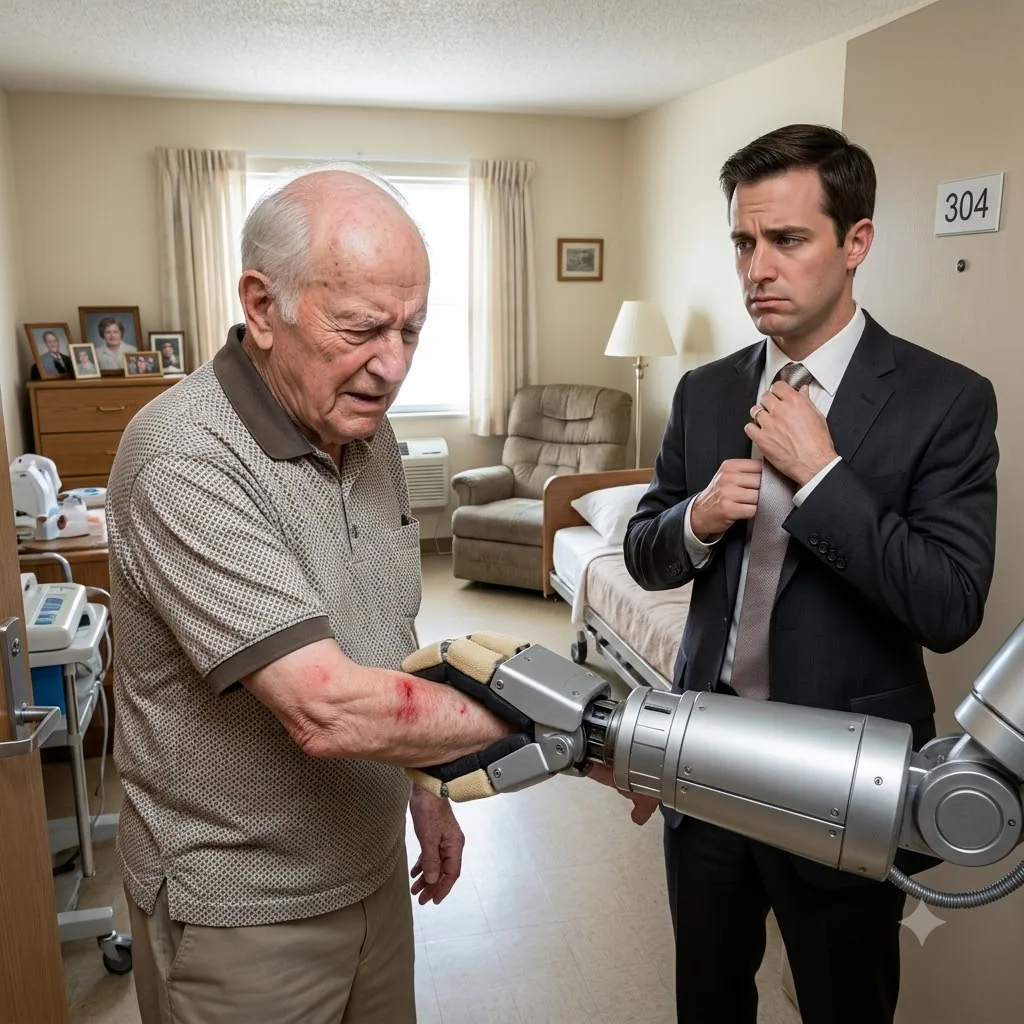
Story code: ST-001198
Part 2: The Telemetry Screen
Julian continued to scroll through the data on his tablet, his movements sharp and practiced. “The bi-lateral static feedback bleed,” he said, pitching his voice louder to carry across the room, “is currently stabilizing at four point two micro-ohms. That is well within the safety parameters specified by the corporate engineering team. If we disrupt it, we risk a complete feedback loop collapse.”
Clara looked at me, then back at Julian. “Is that true? Can it collapse?”
“According to the manufacturer’s documentation, yes,” Julian said before I could speak. He held the tablet screen toward Clara, pointing to a flashing yellow bar graph. “As you can see, the auxiliary telemetry is running its standard baseline. We simply have to wait for the cycle to complete. I suggest we let the machine do its job.”
I took a step closer to the bedside table. “Mr. Vance, if the static feedback bleed is indeed at four point two, we should be able to verify that on the live diagnostic panel.”
Julian’s thumb paused on the screen. He did not look up immediately. “The diagnostic panel is restricted to certified technicians. It’s not meant for facility staff.”
“The Shady Pines protocol manual states that all active calibrations must be verified on-site if a resident displays visible physical distress,” I said, gesturing to the red mark spreading on Arthur’s wrist. “And as a senior care worker, I am cleared to view the telemetry screen during live adjustments. Could you open the raw sensor stream?”
Julian shifted his feet. He tapped the corner of the tablet, and a column of green text began scrolling down the display. He pointed to a line of numbers near the bottom. “There. You see? The static feedback bleed is right there, currently reading four point two. It’s perfectly safe.”
I leaned in to look at the screen. The line he was pointing to was labeled ‘V-REF_CH2_VOLT’.
“That’s the voltage reference for the primary battery housing, Mr. Vance,” I said. “Where is the bi-lateral static feedback bleed listed?”
Julian’s grip on the tablet tightened. The plastic casing made a slight creaking sound under his fingers. A small bead of sweat appeared near his right temple, though the room’s air conditioning was humming loudly.
“The software compiles the feedback bleed into the voltage reference module to save processing power,” Julian said, his voice rising slightly in pitch. “It’s an integrated system architecture. The two metrics are functionally identical on this interface.”
“I see,” I said. “Then if we initiate a manual pressure override, we should see both values drop to zero immediately on this screen. Shall we run the live test to confirm?”
Clara stepped closer, her eyes moving between Julian and the tablet. “Yes. Let’s do the test. Let’s see if it drops.”
Julian stared at the screen, his fingers remaining perfectly still above the glass.