Story code: ST-001198
Part 1: The Torque Calibration
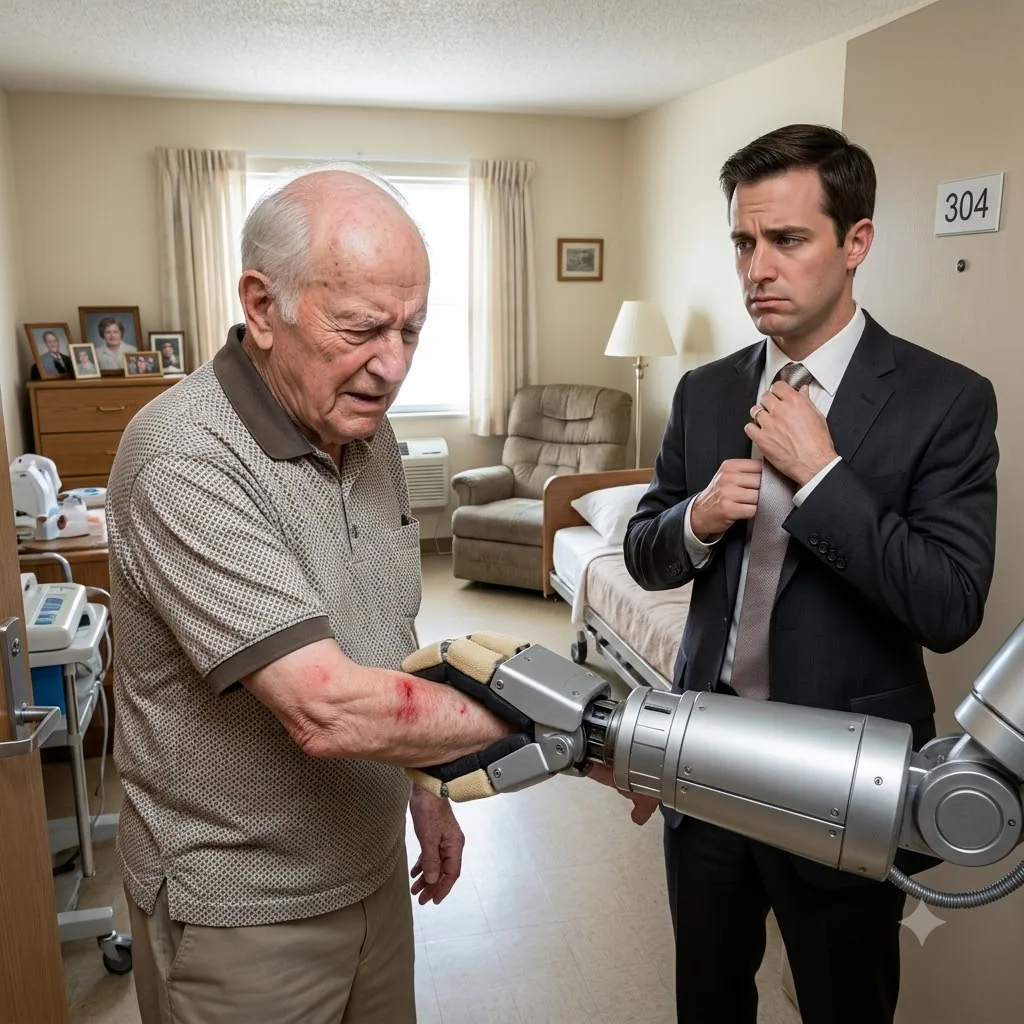
In Room 304 of Shady Pines Assisted Living, Julian Vance adjusted his silk tie while the Companion-V Care Robot’s chrome clamp squeezed Arthur’s frail wrist, leaving a deep red indentation. When Arthur’s daughter, Clara, reached out to pull the mechanical arm away, Julian blocked her path with his diagnostic calibration tablet, claiming the machine was running an “adaptive torque calibration sequence” that non-engineers could not understand. He sighed, looking down at Clara’s worn sneakers, and muttered that interfering with the sequence would void the lease agreement and damage the robot’s neural net. Clara pulled her hands back, her face turning pale as she stared at the carpet in silence.
I stood by the window, folding a stack of clean pillowcases. The Companion-V hummed, a high-pitched vibration that made Arthur wince again. He tried to shift his arm, but the heavy metal limb kept its rigid grip. Julian did not look at Arthur. Instead, he kept his eyes on the tablet, typing rapidly.
“The pressure is clearly too high,” Clara said, her voice barely audible over the mechanical hum. “My father is in pain.”
“What you’re observing is standard haptic alignment, Ms. Vance,” Julian said, his voice smooth and dismissive. He tapped the stylus against the tablet’s glass screen with a rhythmic click. “The Companion-V uses a multi-layered sensor matrix to gauge bone density. If I interrupt this, the calibration will reset to factory default, which requires a three-hundred-dollar diagnostic fee. If you had read the technical addendum I provided, you would understand why this is necessary.”
Clara’s shoulders slumped. She looked at her father, then at the floor, her fingers twitching against her purse. Julian’s mouth curved into a polite, cold smile.
I set the pillowcases on the bedside table and walked over to the robot. I looked at the digital readout on the Companion-V’s shoulder module. The indicator light was flashing a steady, warning amber, not the green of a standard calibration.
“Mr. Vance,” I said, keeping my voice flat. “Does this model’s calibration take into account the bi-lateral static feedback bleed?”
Julian didn’t hesitate. He stood up straighter, holding the tablet against his chest. “Of course it does. The bi-lateral static feedback bleed is actually the primary metric we monitor during the initial synchronization phase. It’s what prevents the servo motors from experiencing thermal overload when adjusting to the resident’s bone structure. If we stop the process now, the feedback bleed could spike, permanently disabling the primary processor.”
Julian pointed to the blue status light on the robot’s collar. “This indicator shows the system is compensating for the bleed in real-time. It’s highly technical, but essentially, the machine is protecting itself while finding the optimal grip. A layman sees resistance; the algorithm sees calibration.”
Arthur let out a low, dry cough, his eyes fixed on the floor. His fingers were white where the blood had been squeezed out. Clara reached toward her father’s shoulder but stopped, her hand hovering in the air. Julian watched her hand, then looked back at his screen, his thumb scrolling through lines of diagnostic code.
“If we interrupt this,” Julian added, “we also risk losing the baseline telemetry. I’d have to write up a non-compliance report for the facility administration.”
Clara looked up, her eyes wide. Julian nodded at her, his expression filled with absolute, unshakeable confidence.
In Room 304 of Shady Pines Assisted Living, Julian Vance adjusted his silk tie while the Companion-V Care Robot’s chrome clamp squeezed Arthur’s frail wrist, leaving a deep red indentation. When Arthur’s daughter, Clara, reached out to pull the mechanical arm away, Julian blocked her path with his diagnostic calibration tablet, claiming the machine was running an “adaptive torque calibration sequence” that non-engineers could not understand. He sighed, looking down at Clara’s worn sneakers, and muttered that interfering with the sequence would void the lease agreement and damage the robot’s neural net. Clara pulled her hands back, her face turning pale as she stared at the carpet in silence.
I stood by the window, folding a stack of clean pillowcases. The Companion-V hummed, a high-pitched vibration that made Arthur wince again. He tried to shift his arm, but the heavy metal limb kept its rigid grip. Julian did not look at Arthur. Instead, he kept his eyes on the tablet, typing rapidly.
“The pressure is clearly too high,” Clara said, her voice barely audible over the mechanical hum. “My father is in pain.”
“What you’re observing is standard haptic alignment, Ms. Vance,” Julian said, his voice smooth and dismissive. He tapped the stylus against the tablet’s glass screen with a rhythmic click. “The Companion-V uses a multi-layered sensor matrix to gauge bone density. If I interrupt this, the calibration will reset to factory default, which requires a three-hundred-dollar diagnostic fee. If you had read the technical addendum I provided, you would understand why this is necessary.”
Clara’s shoulders slumped. She looked at her father, then at the floor, her fingers twitching against her purse. Julian’s mouth curved into a polite, cold smile.
I set the pillowcases on the bedside table and walked over to the robot. I looked at the digital readout on the Companion-V’s shoulder module. The indicator light was flashing a steady, warning amber, not the green of a standard calibration.
“Mr. Vance,” I said, keeping my voice flat. “Does this model’s calibration take into account the bi-lateral static feedback bleed?”
Julian didn’t hesitate. He stood up straighter, holding the tablet against his chest. “Of course it does. The bi-lateral static feedback bleed is actually the primary metric we monitor during the initial synchronization phase. It’s what prevents the servo motors from experiencing thermal overload when adjusting to the resident’s bone structure. If we stop the process now, the feedback bleed could spike, permanently disabling the primary processor.”
Julian pointed to the blue status light on the robot’s collar. “This indicator shows the system is compensating for the bleed in real-time. It’s highly technical, but essentially, the machine is protecting itself while finding the optimal grip. A layman sees resistance; the algorithm sees calibration.”
Arthur let out a low, dry cough, his eyes fixed on the floor. His fingers were white where the blood had been squeezed out. Clara reached toward her father’s shoulder but stopped, her hand hovering in the air. Julian watched her hand, then looked back at his screen, his thumb scrolling through lines of diagnostic code.
“If we interrupt this,” Julian added, “we also risk losing the baseline telemetry. I’d have to write up a non-compliance report for the facility administration.”
Clara looked up, her eyes wide. Julian nodded at her, his expression filled with absolute, unshakeable confidence.