Story code: ST-000845
Part 1: The Digital Siege
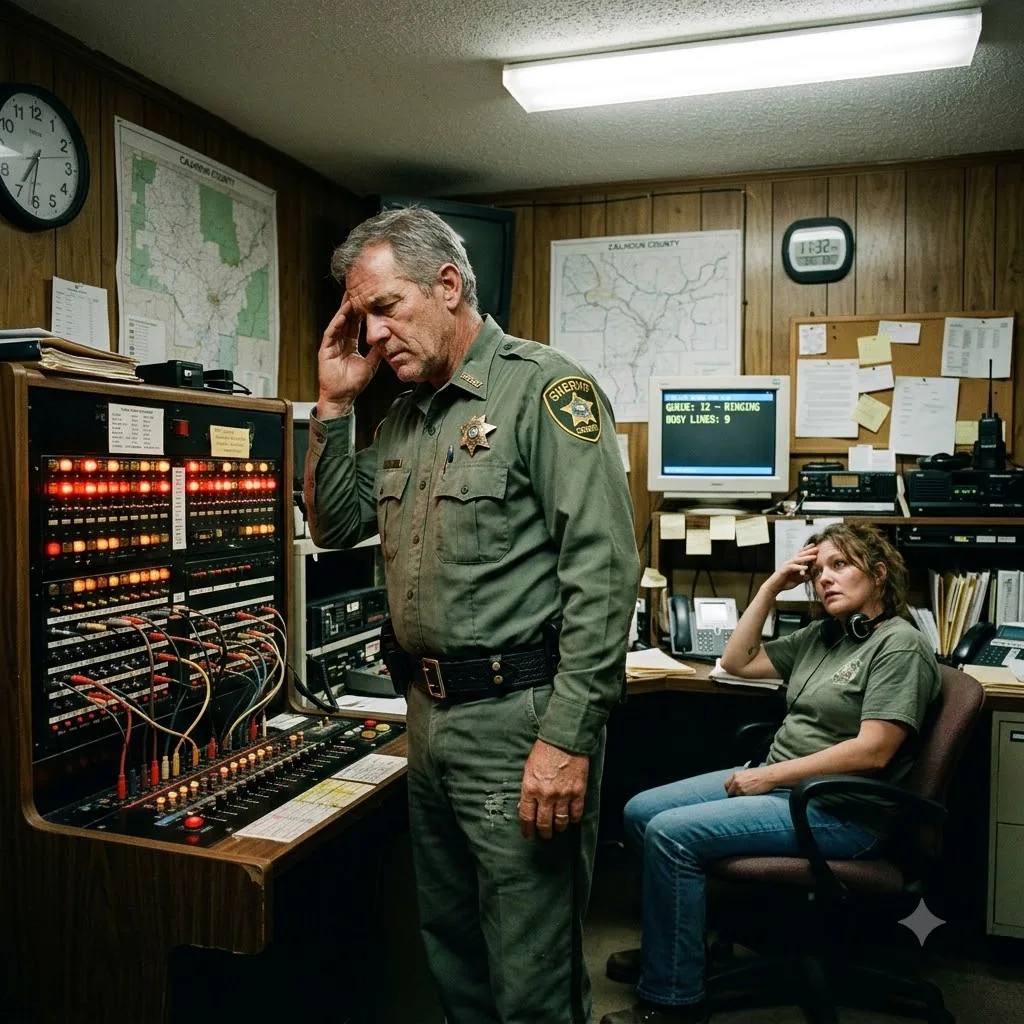
The main switchboard in the Oakhaven County dispatch center blinked like a malfunctioning traffic grid. Red lights, usually reserved for multi-car pileups on the interstate, strobed across all twelve incoming lines simultaneously. Sheriff Cal stood behind the primary console, watching his night dispatcher, Sarah, physically recoil and yank off her headset. A shrill electronic whine pierced the cramped room, signaling a cascade failure in the county’s aging telecom server. The digital outrage had officially breached the physical world.
Four million views. Cal kept his arms crossed, staring at the monitor displaying the local news feed. The clip looped on mute. It showed him standing on Arthur Vance’s dilapidated front porch, holding his hands up in a placating gesture, then turning his back to walk away without the man’s scoped hunting rifles. A fifty-second fragment of bodycam footage, leaked by a deputy and stripped of all context, had turned a rural jurisdiction into the epicenter of a national crusade.
The office phone on the cinderblock wall screamed. Sarah reached out a trembling hand, punched the speaker button, and flinched back in her rolling chair.
“Coward,” a digitally synthesized voice blasted through the cheap plastic speaker. “You left her to die. We have your home address. We have your daughters’ names. Go back and do your job or we will come do it for you.”
Cal severed the line. Another angry red light immediately took its place. The dispatch room felt suffocatingly hot, the ancient ventilation system failing to keep up with the server racks churning overtime. The sharp smell of ozone and burnt dust mingled with stale coffee. Thousands of strangers, secure behind glowing screens a thousand miles away, demanded immediate, violent justice. They wanted a door kicked in. They wanted a dramatic raid.
“The switchboard is locking up,” Sarah said, her voice tight. “I cannot get local emergency calls through this mess. If someone has a medical emergency on the highway right now, we will never know.”
“Reroute the main trunks to the state police barracks,” Cal ordered, keeping his tone entirely flat to anchor the panic rising in the small room. “Let their call center filter the death threats. Shut down our administrative lines completely. Unplug them from the wall if you have to.”
Sarah nodded, her fingers flying over the keyboard. The mechanical clatter provided a momentary distraction from the relentless electronic ringing. Cal looked down at his personal cell phone resting on the laminate counter. The screen was a solid, glowing block of notifications. Social media tags, anonymous texts, auto-dialer voicemails. The digital mob had scraped his personal number from public records. Every second, another vibration rattled the heavy phone against the desk.
He picked it up, intending to power the device down entirely. The screen lit up with the looping video again, embedded in yet another direct message full of expletives. He watched his own recorded image slowly back away from the heavy oak door. In the video, he looked defeated. In reality, he had been keeping his eyes entirely fixed on the unnatural tension of a thin, translucent filament strung low across the threshold, and the dull metallic sheen of the heavy cylinders stacked just inside the deep shadows of the hallway. The internet saw a coward abandoning his duty. Cal knew he had been backing away from a trigger that would have left nothing but burning splinters to save.
Cal walked to the frosted glass window of the dispatch room and looked out into the empty rear parking lot. The yellow sodium streetlights illuminated the dust swirling in the bitter cold air. The isolation of his station felt profound, a tiny island of cracked concrete sinking rapidly under a tidal wave of unseen algorithms. He needed a tactical unit and a specialized negotiator, but the state command was paralyzed by the unfolding public relations nightmare, refusing to commit physical assets until the media frenzy cooled down.
His phone buzzed again in his palm. He moved his heavy thumb to the power button, ready to sever his absolute last connection to the digital noise.
A simple text message cut through the relentless barrage of threats, overriding the social media alerts and pushing to the center of his screen. It came from a temporary burner number he had memorized exactly twelve hours ago.
*He is watching the news feed on his tablet.*
*He sees the massive crowds marching outside the statehouse on TV.*
*He just unlocked the primary safe and told me the war is finally here.*
Cal stared at the glowing green text bubbles. The internet mob wanted action, and their blind outrage had just handed Arthur Vance the ultimate, terrifying justification to initiate his endgame.
*Please,* the next message read. *He is going down to the basement to check the main fuses.*
Cal did not type a reply. He dropped the phone into his cargo pocket, unholstered his radio, and kicked open the heavy dispatch room door.
The main switchboard in the Oakhaven County dispatch center blinked like a malfunctioning traffic grid. Red lights, usually reserved for multi-car pileups on the interstate, strobed across all twelve incoming lines simultaneously. Sheriff Cal stood behind the primary console, watching his night dispatcher, Sarah, physically recoil and yank off her headset. A shrill electronic whine pierced the cramped room, signaling a cascade failure in the county’s aging telecom server. The digital outrage had officially breached the physical world.
Four million views. Cal kept his arms crossed, staring at the monitor displaying the local news feed. The clip looped on mute. It showed him standing on Arthur Vance’s dilapidated front porch, holding his hands up in a placating gesture, then turning his back to walk away without the man’s scoped hunting rifles. A fifty-second fragment of bodycam footage, leaked by a deputy and stripped of all context, had turned a rural jurisdiction into the epicenter of a national crusade.
The office phone on the cinderblock wall screamed. Sarah reached out a trembling hand, punched the speaker button, and flinched back in her rolling chair.
“Coward,” a digitally synthesized voice blasted through the cheap plastic speaker. “You left her to die. We have your home address. We have your daughters’ names. Go back and do your job or we will come do it for you.”
Cal severed the line. Another angry red light immediately took its place. The dispatch room felt suffocatingly hot, the ancient ventilation system failing to keep up with the server racks churning overtime. The sharp smell of ozone and burnt dust mingled with stale coffee. Thousands of strangers, secure behind glowing screens a thousand miles away, demanded immediate, violent justice. They wanted a door kicked in. They wanted a dramatic raid.
“The switchboard is locking up,” Sarah said, her voice tight. “I cannot get local emergency calls through this mess. If someone has a medical emergency on the highway right now, we will never know.”
“Reroute the main trunks to the state police barracks,” Cal ordered, keeping his tone entirely flat to anchor the panic rising in the small room. “Let their call center filter the death threats. Shut down our administrative lines completely. Unplug them from the wall if you have to.”
Sarah nodded, her fingers flying over the keyboard. The mechanical clatter provided a momentary distraction from the relentless electronic ringing. Cal looked down at his personal cell phone resting on the laminate counter. The screen was a solid, glowing block of notifications. Social media tags, anonymous texts, auto-dialer voicemails. The digital mob had scraped his personal number from public records. Every second, another vibration rattled the heavy phone against the desk.
He picked it up, intending to power the device down entirely. The screen lit up with the looping video again, embedded in yet another direct message full of expletives. He watched his own recorded image slowly back away from the heavy oak door. In the video, he looked defeated. In reality, he had been keeping his eyes entirely fixed on the unnatural tension of a thin, translucent filament strung low across the threshold, and the dull metallic sheen of the heavy cylinders stacked just inside the deep shadows of the hallway. The internet saw a coward abandoning his duty. Cal knew he had been backing away from a trigger that would have left nothing but burning splinters to save.
Cal walked to the frosted glass window of the dispatch room and looked out into the empty rear parking lot. The yellow sodium streetlights illuminated the dust swirling in the bitter cold air. The isolation of his station felt profound, a tiny island of cracked concrete sinking rapidly under a tidal wave of unseen algorithms. He needed a tactical unit and a specialized negotiator, but the state command was paralyzed by the unfolding public relations nightmare, refusing to commit physical assets until the media frenzy cooled down.
His phone buzzed again in his palm. He moved his heavy thumb to the power button, ready to sever his absolute last connection to the digital noise.
A simple text message cut through the relentless barrage of threats, overriding the social media alerts and pushing to the center of his screen. It came from a temporary burner number he had memorized exactly twelve hours ago.
*He is watching the news feed on his tablet.*
*He sees the massive crowds marching outside the statehouse on TV.*
*He just unlocked the primary safe and told me the war is finally here.*
Cal stared at the glowing green text bubbles. The internet mob wanted action, and their blind outrage had just handed Arthur Vance the ultimate, terrifying justification to initiate his endgame.
*Please,* the next message read. *He is going down to the basement to check the main fuses.*
Cal did not type a reply. He dropped the phone into his cargo pocket, unholstered his radio, and kicked open the heavy dispatch room door.