Story code: ST-000958
Part 4: The Boycott
Sylvia left that morning in her pristine silver pickup, chased out of the parking lot by the very mob she had orchestrated. Dave Hennessey had thrown his crowbar into the bed of his rusted Ford in disgust, and one by one, the idling engines had faded into the freezing fog, leaving Marcus alone with the shattered glass of his storefront. The state-level injunction held up in court exactly as the bulldog First Amendment lawyers had promised. The municipal access roads remained firmly under state protection, the school district’s transportation charter was secured, and the emergency receivership was permanently blocked. Sylvia’s meticulously planned textbook ban evaporated into the cold morning air.
Marcus had won. The curriculum was saved.
But as the weeks bled into a bitter, freezing November, Marcus learned a brutal lesson about human nature. A town robbed of its lottery dream did not forgive the man who woke them up.
Sylvia had lied about the massive logistics buyout, but the fantasy of that corporate money had been the only thing keeping the dying valley going. The neighbors despised Sylvia for the deception, but they despised Marcus for his absolute, unyielding proof of it. He had shattered their illusion of a pristine escape from their debts. They hated him for his righteousness, and they exacted their revenge not with bricks or gasoline, but with an absolute, suffocating silence.
The grandfather clock behind the checkout counter ticked loudly in the cavernous, empty shop. It was two in the afternoon on a Tuesday. The bell above the front door had not chimed in four days.
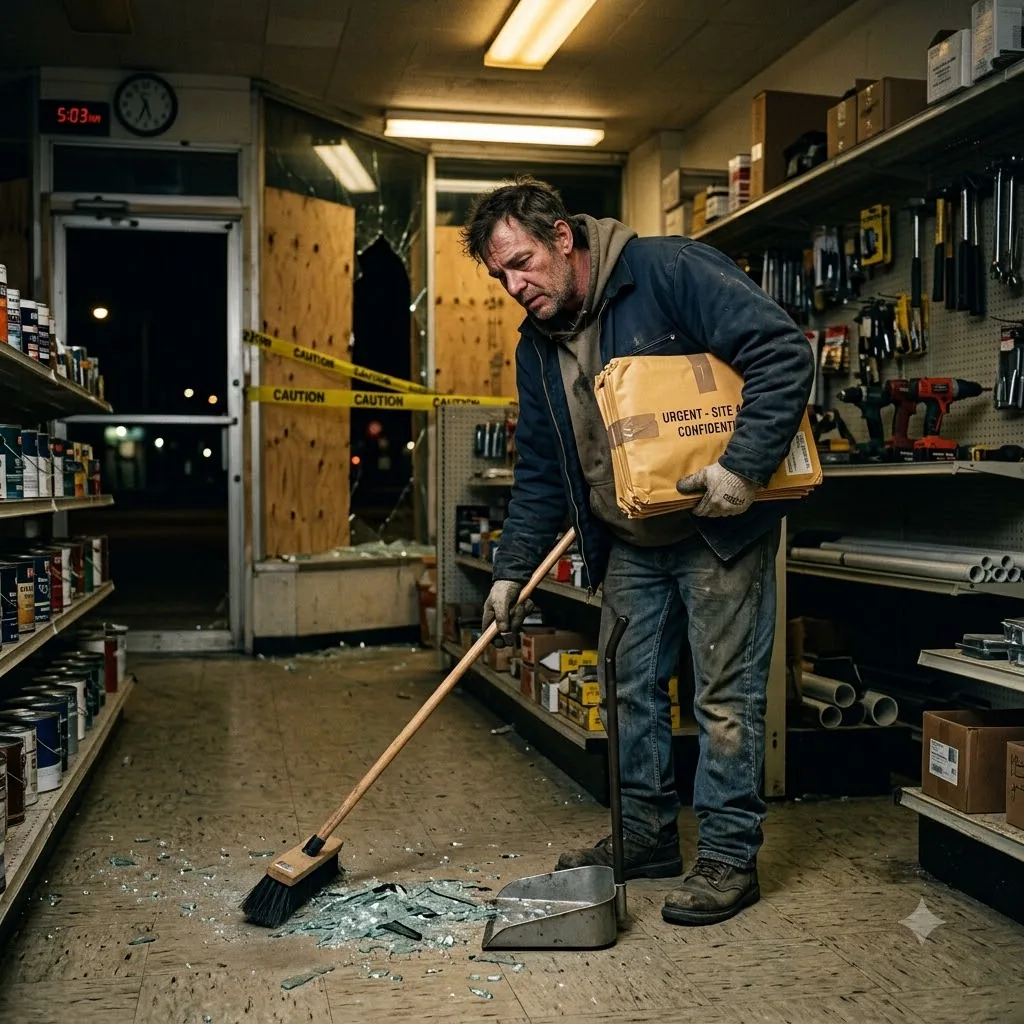
Marcus leaned against the scarred Formica counter, staring at the front of the building. He hadn’t been able to afford a replacement for the fifty-year-old plate glass window. The massive, ruinous personal loan he had taken out to fund the legal injunction was draining his accounts dry. Every cent his family’s name was worth was tied up in a monthly payment to a bank in the state capital. Instead of glass, thick sheets of untreated plywood covered the storefront, plunging the aisles of PVC piping and power tools into perpetual gloom.
Through the narrow slit of the glass door, Marcus watched Dave Hennessey’s rusted Ford roll past the curb. Dave didn’t look toward the store. The bed of his truck was loaded with two-by-fours carrying the bright, generic stickers of the corporate big-box home center twenty miles down the highway. A half hour later, Sarah from the diner drove by in her dark green SUV, turning her head deliberately toward the opposite sidewalk to avoid looking at the plywood.
It was a quiet, absolute boycott. They were letting him starve. The twenty-year-old business he had managed since his father handed him the keys was hemorrhaging money by the hour. The bulk fertilizer bins in the back room remained full, the nitrogen pellets slowly going stale in the damp air. The impulse-buy flashlights gathered a fine, undisturbed layer of dust.
The heavy wooden stairs behind the counter creaked. Marcus turned as his sixteen-year-old daughter, Maya, descended into the dim shop. Her backpack hung off one shoulder, heavy and sagging. She dropped it onto the floorboards with a dull thud, her shoulders slumped beneath her heavy winter coat.
“No track practice today?” Marcus asked, his voice sounding entirely too thin in the dead silence of the store.
Maya wouldn’t meet his eyes. She walked over to the checkout counter and began pulling out her binders. “Coach canceled. Said the field was too muddy.” She paused, her finger tracing a deep scratch in the wood where the burnt boundary stake had once rested. “But I saw Sarah’s daughter and the rest of the girls walking to the diner in their gear. They just moved practice to the community center. Nobody told me.”
Marcus felt a hollow, nauseating ache in the pit of his stomach. It wasn’t just the adults holding a grudge. The isolation had trickled down, infecting the very high school he had bankrupted himself to protect. Maya was a ghost in her own classes, frozen out by the children of the mechanics, plumbers, and farmers who blamed her father for the death of their valley’s salvation.
Maya pulled her sociology textbook from her bag-the exact edition Sylvia’s PAC had tried to purge. She opened it under the weak, yellow glow of the register lamp, reading the curriculum Marcus had sacrificed his entire livelihood to save. She was completely, utterly alone.
“I can talk to the coach, Maya,” Marcus offered, knowing it was a useless gesture.
“Don’t,” Maya whispered, turning a page without looking up. “Just… don’t make it worse, Dad.”
Marcus closed his mouth. He looked at the heavy brass Zippo lighter that he had kept in the drawer beneath the register, a permanent reminder of the fire that hadn’t happened. He had protected the access roads. He had kept the books on the shelves. His principles were perfectly intact.
But the phone on the wall remained dead. The bank’s third foreclosure warning sat unopened in the stack of morning mail. Marcus stood in the freezing, boarded-up dark of his empty store, surrounded by the crushing silence of a town that had quietly decided to let him ruin himself.