Story code: ST-001752
Part 1: The Pitch
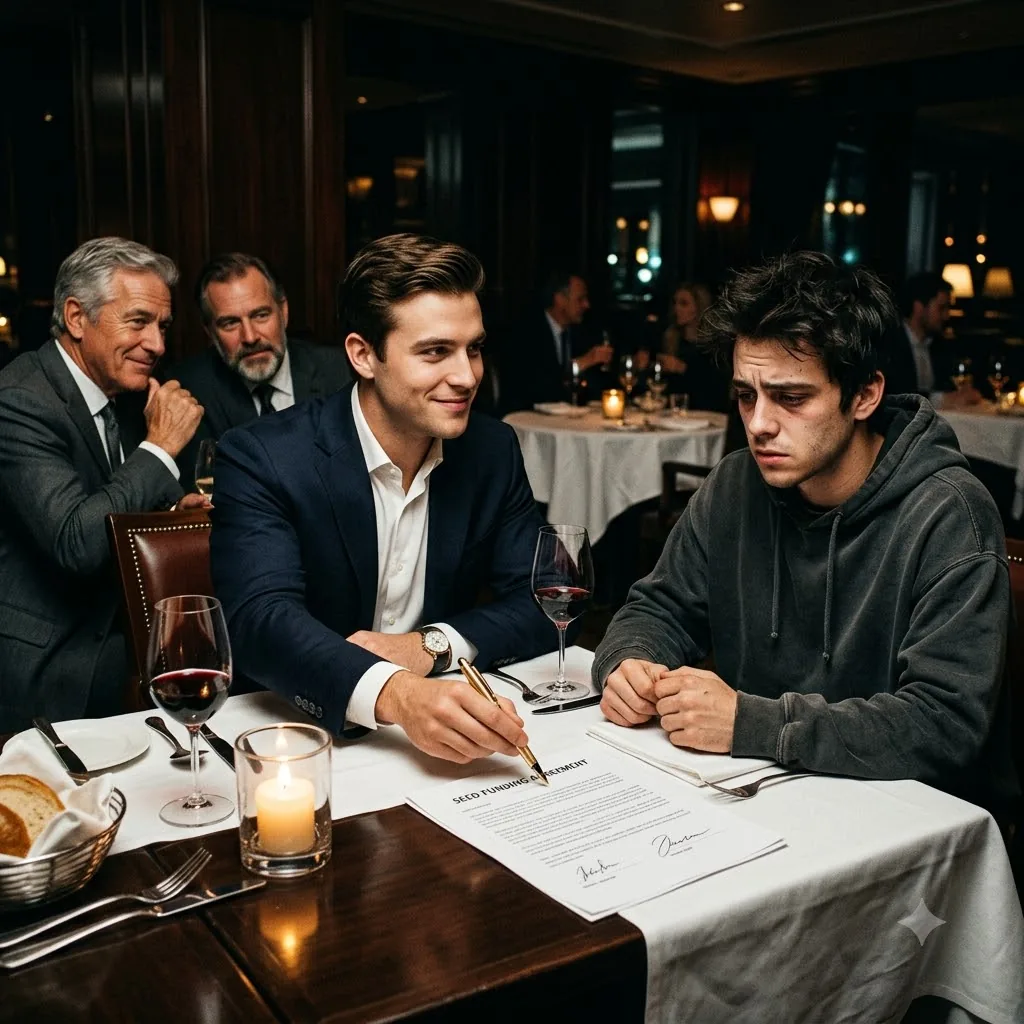
Brooks leaned across the linen tablecloth at Le Bernardin, tapping a silver pen against the glossy cover of a pitch deck. He was pitching my peer-to-peer logistics network to three venture capitalists as his own brilliant startup idea, and I had to sit there and swallow my filet mignon like an obedient employee.
“Disruptive, decentralized routing,” Brooks said, flashing his rehearsed, million-dollar smile. “Node-to-node anonymous transfers. Zero central logging. The ultimate privacy-first delivery protocol for the modern era.”
The three investors, clad in varying shades of expensive charcoal and navy, leaned in closer. They were eating it up. They thought they were looking at the next evolution of secure courier services, a frictionless way to transport sensitive legal documents or high-value art.
They had no idea what the system was actually built to move.
I took a slow sip of my ice water to wash down the dry lump of panic in my throat. Brooks had stolen my GitHub repository three days ago. He thought he had stumbled onto a goldmine, a perfectly coded app that he could slap a sleek UI onto and sell to Sand Hill Road. He possessed the wealth, the connections, and the sheer audacity to book a private dining room and bring these titans of industry to the table.
He also possessed absolutely zero understanding of the active, volatile ecosystem currently running on those servers.
“The beauty is in the blind drops,” Brooks continued, waving his hand to dismiss a waiter who had come to clear the plates. “User A leaves the package in a secure locker. Driver B picks it up using a single-use cryptographic key. Neither knows the other’s identity. Our encryption ensures that no centralized authority can subpoena the manifests.”
A VC with sharp eyes and a cashmere blazer nodded slowly. “Tell me about the liability. If the cargo is unknown, the risk profile changes.”
“The manifests simply do not exist on our servers,” Brooks replied without missing a beat. “The routing tables dissolve the moment a delivery is confirmed. It is a completely trustless, zero-knowledge environment.”
I pressed my cloth napkin against my mouth. Brooks was using all the right buzzwords to describe the architecture I had painstakingly built. But the architecture was zero-knowledge for a reason. If these venture capitalists ordered a technical audit, their due diligence team would look at the live traffic patterns. They would trace the beta testers moving through the system right now. They would find the illicit syndicate I was permanently trapped under, and the police would be kicking in my door before the ink dried on any term sheet.
Brooks slid a sleek, leather-bound folder across the table toward me.
“Mateo here is my lead engineer,” Brooks announced. “I brought him on early to handle the backend architecture. I believe in rewarding loyalty, which is why I am offering him a generous slice of the founder’s pool.”
I opened the folder. It was an equity contract. Five percent.
It was an insulting number, but the percentage was entirely irrelevant. It was a trap.
“Sign it,” Brooks murmured under his breath, his voice barely carrying over the ambient hum of the restaurant while the VCs examined a chart on page four of the deck. “Welcome to the big leagues.”
He placed a heavy Montblanc pen on top of the paper.
My chest tightened. If I stood up right now and declared that Brooks stole the code, the VCs would demand proof. They would demand to see the admin logs. That would expose the underlying reality of the network. If I refused to sign, Brooks would fire me, lock me out of the AWS instances he had hijacked this morning, and bring in his own developers. Those new developers would inevitably stumble into the dark-web integrations I had hidden in the source code.
I had to play along. I had to smile and nod to maintain my access to the system, or I would lose my freedom, my life, and everything I had left.
I picked up the heavy silver pen. The metal was cold against my sweating palm.
“We need to see the live demo,” the cashmere-clad VC said suddenly, placing her copy of the deck flat on the table. “You mentioned you could route a dummy package right now. I want to see the latency on the handshake protocol.”
Brooks smiled that blinding, practiced smile. “Absolutely. Mateo has the terminal on his laptop. He can initiate a blind drop for us right here.”
Brooks reached under the table and kicked my shin hard.
I unzipped my canvas messenger bag and pulled out my laptop. My hands were shaking slightly as I placed it next to my half-empty wine glass. I opened the lid, and the screen flared to life, casting a pale glow over the expensive crystal and silverware. I brought up the command line interface I had built in my dim, windowless basement weeks ago.
The three investors stood up and crowded behind my chair, peering at the screen.
“Run the genesis script,” Brooks instructed, his voice dripping with forced camaraderie. “Show them how we disrupt the supply chain.”
I stared at the blinking white cursor on the black screen. The genesis script would not just simulate a drop. Brooks had no idea that I had hard-coded the primary test node to a live drop-house in the warehouse district. Pressing enter would not send a ping to a test server. It would alert a very real, very dangerous crew that a pickup was ready for transport.
“Go ahead, Matty,” Brooks urged, leaning in close so I could smell his expensive cologne. “Show them the magic.”
I placed my trembling fingers on the keyboard.
Brooks leaned across the linen tablecloth at Le Bernardin, tapping a silver pen against the glossy cover of a pitch deck. He was pitching my peer-to-peer logistics network to three venture capitalists as his own brilliant startup idea, and I had to sit there and swallow my filet mignon like an obedient employee.
“Disruptive, decentralized routing,” Brooks said, flashing his rehearsed, million-dollar smile. “Node-to-node anonymous transfers. Zero central logging. The ultimate privacy-first delivery protocol for the modern era.”
The three investors, clad in varying shades of expensive charcoal and navy, leaned in closer. They were eating it up. They thought they were looking at the next evolution of secure courier services, a frictionless way to transport sensitive legal documents or high-value art.
They had no idea what the system was actually built to move.
I took a slow sip of my ice water to wash down the dry lump of panic in my throat. Brooks had stolen my GitHub repository three days ago. He thought he had stumbled onto a goldmine, a perfectly coded app that he could slap a sleek UI onto and sell to Sand Hill Road. He possessed the wealth, the connections, and the sheer audacity to book a private dining room and bring these titans of industry to the table.
He also possessed absolutely zero understanding of the active, volatile ecosystem currently running on those servers.
“The beauty is in the blind drops,” Brooks continued, waving his hand to dismiss a waiter who had come to clear the plates. “User A leaves the package in a secure locker. Driver B picks it up using a single-use cryptographic key. Neither knows the other’s identity. Our encryption ensures that no centralized authority can subpoena the manifests.”
A VC with sharp eyes and a cashmere blazer nodded slowly. “Tell me about the liability. If the cargo is unknown, the risk profile changes.”
“The manifests simply do not exist on our servers,” Brooks replied without missing a beat. “The routing tables dissolve the moment a delivery is confirmed. It is a completely trustless, zero-knowledge environment.”
I pressed my cloth napkin against my mouth. Brooks was using all the right buzzwords to describe the architecture I had painstakingly built. But the architecture was zero-knowledge for a reason. If these venture capitalists ordered a technical audit, their due diligence team would look at the live traffic patterns. They would trace the beta testers moving through the system right now. They would find the illicit syndicate I was permanently trapped under, and the police would be kicking in my door before the ink dried on any term sheet.
Brooks slid a sleek, leather-bound folder across the table toward me.
“Mateo here is my lead engineer,” Brooks announced. “I brought him on early to handle the backend architecture. I believe in rewarding loyalty, which is why I am offering him a generous slice of the founder’s pool.”
I opened the folder. It was an equity contract. Five percent.
It was an insulting number, but the percentage was entirely irrelevant. It was a trap.
“Sign it,” Brooks murmured under his breath, his voice barely carrying over the ambient hum of the restaurant while the VCs examined a chart on page four of the deck. “Welcome to the big leagues.”
He placed a heavy Montblanc pen on top of the paper.
My chest tightened. If I stood up right now and declared that Brooks stole the code, the VCs would demand proof. They would demand to see the admin logs. That would expose the underlying reality of the network. If I refused to sign, Brooks would fire me, lock me out of the AWS instances he had hijacked this morning, and bring in his own developers. Those new developers would inevitably stumble into the dark-web integrations I had hidden in the source code.
I had to play along. I had to smile and nod to maintain my access to the system, or I would lose my freedom, my life, and everything I had left.
I picked up the heavy silver pen. The metal was cold against my sweating palm.
“We need to see the live demo,” the cashmere-clad VC said suddenly, placing her copy of the deck flat on the table. “You mentioned you could route a dummy package right now. I want to see the latency on the handshake protocol.”
Brooks smiled that blinding, practiced smile. “Absolutely. Mateo has the terminal on his laptop. He can initiate a blind drop for us right here.”
Brooks reached under the table and kicked my shin hard.
I unzipped my canvas messenger bag and pulled out my laptop. My hands were shaking slightly as I placed it next to my half-empty wine glass. I opened the lid, and the screen flared to life, casting a pale glow over the expensive crystal and silverware. I brought up the command line interface I had built in my dim, windowless basement weeks ago.
The three investors stood up and crowded behind my chair, peering at the screen.
“Run the genesis script,” Brooks instructed, his voice dripping with forced camaraderie. “Show them how we disrupt the supply chain.”
I stared at the blinking white cursor on the black screen. The genesis script would not just simulate a drop. Brooks had no idea that I had hard-coded the primary test node to a live drop-house in the warehouse district. Pressing enter would not send a ping to a test server. It would alert a very real, very dangerous crew that a pickup was ready for transport.
“Go ahead, Matty,” Brooks urged, leaning in close so I could smell his expensive cologne. “Show them the magic.”
I placed my trembling fingers on the keyboard.