Story code: ST-001720
Part 1: The Resignation
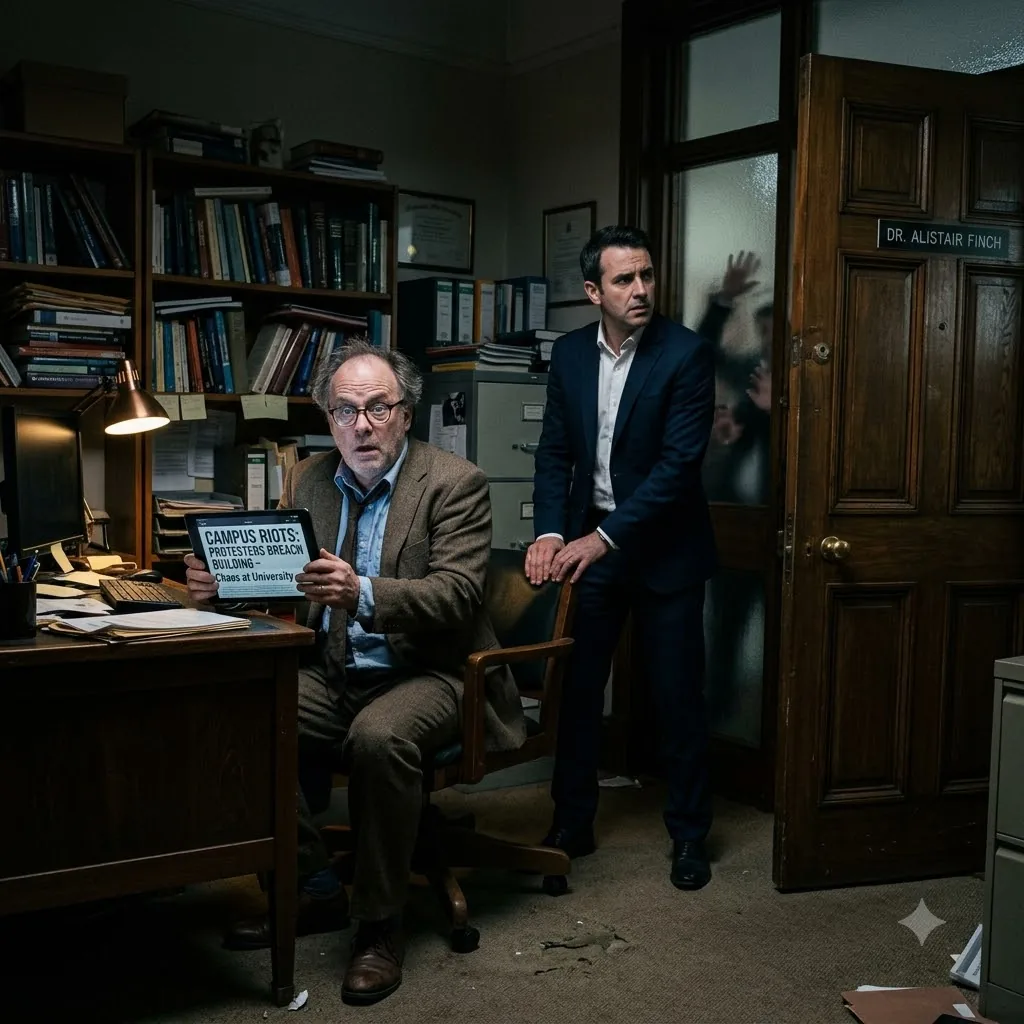
The heavy oak door of Elias’s office shuddered under the synchronized rhythm of sixty fists. Dust drifted down from the doorframe in the dark, settling on the barricade of steel filing cabinets and heavy wooden chairs he had dragged across the carpet. Muffled chants bled through the thick wood, a low, angry hum that rattled the framed degrees hanging on his walls. Elias sat on the floor with his back against his mahogany desk, his breathing shallow, watching the brass doorknob violently twist back and forth. The mob outside was unyielding. They wanted him gone. He rubbed his temples, feeling his pulse hammering against his skull.
A soft click sounded from the bookshelves behind his desk. The faux mahogany panel swung inward, spilling a harsh wedge of fluorescent light from the private administrative corridor. Provost Greg squeezed through the narrow gap. Greg’s tie was yanked loose, his collar damp with sweat, his face pale under the emergency lights. He carried a sleek silver iPad pressed flat against his chest like a shield.
“Keep your voice down,” Greg whispered, pushing the bookshelf shut behind him. The room plunged back into darkness, save for the pale blue glow of the tablet.
“They are going to break the hinges,” Elias said, keeping his eyes on the shaking door.
“I know. I have campus security stalling them on the stairwell, but it will not hold for long.” Greg crossed the dark room, stepping carefully over scattered lecture notes. He crouched beside Elias. “You need to end this right now, Elias. Sign this.”
Greg shoved the tablet into Elias’s hands. The screen displayed a legal document, already populated with Elias’s full legal name and faculty employee ID. Elias felt a cold weight settling in his stomach. Thirty years of tenure, a lifetime of careful research, dismantled in a single afternoon.
A heavy thud shook the barricade. One of the filing cabinets slid a fraction of an inch across the rug, the metal base shrieking against the synthetic fibers.
“Read the summary,” Greg urged, tapping the glass. “Admitting poor judgment during Tuesday’s lecture. Voluntarily stepping down to allow the university community to heal. It is boilerplate HR language. We just need your biometric signature.”
Elias stared at the glowing screen. The words blurred together. His oldest friend, the man who had recruited him to the university two decades ago, was asking him to surrender. Greg’s hands were trembling slightly in the blue light.
“If you sign it before they breach that door, you keep your pension,” Greg said, his voice tight with urgency. “If you let them drag you out of here, the board will terminate you with cause. You will lose absolutely everything. Place your thumb on the scanner.”
Elias moved his thumb toward the glowing green fingerprint icon at the bottom of the screen. He paused. He looked at the heavy oak door bowing inward under another impact, then down at the screen. He swiped his finger upward instead. The document scrolled past the standard severance terms, past the non-disclosure agreement, plunging into dense, heavily formatted legal text.
“Do not bother with the fine print,” Greg said, reaching to pull the tablet back. “We do not have time for a full review.”
Elias shifted his shoulders, turning the screen away from Greg’s grasp. He stopped scrolling at a section buried deep in the final addendums. Section Four: Complete and Irrevocable Transfer of Intellectual Property.
Elias squinted at the dense paragraphs. The clause detailed the immediate forfeiture of all personal research, his proprietary neural-mapping algorithms, and his private offshore data stores to the university endowment. It even listed the patent filings for the bio-synthetic project he had kept entirely separate from his academic duties. It was not a standard clause for a retiring academic. It was a complete, surgically precise commercial seizure of his life’s work. He traced the lines of text, his heart slowing its frantic rhythm as a very different kind of dread took over.
He scrolled further down to the execution clause. The effective date of the intellectual property transfer was clearly typed in bold font. It was dated last Saturday.
Elias stared at the date. Last Saturday was three days before he gave the controversial lecture that sparked the riot outside his door. The document had not been drafted in response to the crisis. It had been waiting for it.
“Look at the date,” Elias said, his voice perfectly flat.
Greg reached for the tablet again, his expression hardening. “Just sign the document, Elias.”
Elias pulled the screen out of reach entirely. He looked up at his oldest friend. The mob outside slammed something heavy and metallic against the door. The wood splintered with a loud crack, but Elias did not flinch. The riot was not the point. The lecture was not the point.
“You drafted this commercial transfer three days before I even spoke,” Elias said.
Greg stopped reaching for the screen. He slowly lowered his hands to his sides, the blue light from the tablet catching the sudden, cold shift in his eyes just as the top hinge of the office door snapped free.
The heavy oak door of Elias’s office shuddered under the synchronized rhythm of sixty fists. Dust drifted down from the doorframe in the dark, settling on the barricade of steel filing cabinets and heavy wooden chairs he had dragged across the carpet. Muffled chants bled through the thick wood, a low, angry hum that rattled the framed degrees hanging on his walls. Elias sat on the floor with his back against his mahogany desk, his breathing shallow, watching the brass doorknob violently twist back and forth. The mob outside was unyielding. They wanted him gone. He rubbed his temples, feeling his pulse hammering against his skull.
A soft click sounded from the bookshelves behind his desk. The faux mahogany panel swung inward, spilling a harsh wedge of fluorescent light from the private administrative corridor. Provost Greg squeezed through the narrow gap. Greg’s tie was yanked loose, his collar damp with sweat, his face pale under the emergency lights. He carried a sleek silver iPad pressed flat against his chest like a shield.
“Keep your voice down,” Greg whispered, pushing the bookshelf shut behind him. The room plunged back into darkness, save for the pale blue glow of the tablet.
“They are going to break the hinges,” Elias said, keeping his eyes on the shaking door.
“I know. I have campus security stalling them on the stairwell, but it will not hold for long.” Greg crossed the dark room, stepping carefully over scattered lecture notes. He crouched beside Elias. “You need to end this right now, Elias. Sign this.”
Greg shoved the tablet into Elias’s hands. The screen displayed a legal document, already populated with Elias’s full legal name and faculty employee ID. Elias felt a cold weight settling in his stomach. Thirty years of tenure, a lifetime of careful research, dismantled in a single afternoon.
A heavy thud shook the barricade. One of the filing cabinets slid a fraction of an inch across the rug, the metal base shrieking against the synthetic fibers.
“Read the summary,” Greg urged, tapping the glass. “Admitting poor judgment during Tuesday’s lecture. Voluntarily stepping down to allow the university community to heal. It is boilerplate HR language. We just need your biometric signature.”
Elias stared at the glowing screen. The words blurred together. His oldest friend, the man who had recruited him to the university two decades ago, was asking him to surrender. Greg’s hands were trembling slightly in the blue light.
“If you sign it before they breach that door, you keep your pension,” Greg said, his voice tight with urgency. “If you let them drag you out of here, the board will terminate you with cause. You will lose absolutely everything. Place your thumb on the scanner.”
Elias moved his thumb toward the glowing green fingerprint icon at the bottom of the screen. He paused. He looked at the heavy oak door bowing inward under another impact, then down at the screen. He swiped his finger upward instead. The document scrolled past the standard severance terms, past the non-disclosure agreement, plunging into dense, heavily formatted legal text.
“Do not bother with the fine print,” Greg said, reaching to pull the tablet back. “We do not have time for a full review.”
Elias shifted his shoulders, turning the screen away from Greg’s grasp. He stopped scrolling at a section buried deep in the final addendums. Section Four: Complete and Irrevocable Transfer of Intellectual Property.
Elias squinted at the dense paragraphs. The clause detailed the immediate forfeiture of all personal research, his proprietary neural-mapping algorithms, and his private offshore data stores to the university endowment. It even listed the patent filings for the bio-synthetic project he had kept entirely separate from his academic duties. It was not a standard clause for a retiring academic. It was a complete, surgically precise commercial seizure of his life’s work. He traced the lines of text, his heart slowing its frantic rhythm as a very different kind of dread took over.
He scrolled further down to the execution clause. The effective date of the intellectual property transfer was clearly typed in bold font. It was dated last Saturday.
Elias stared at the date. Last Saturday was three days before he gave the controversial lecture that sparked the riot outside his door. The document had not been drafted in response to the crisis. It had been waiting for it.
“Look at the date,” Elias said, his voice perfectly flat.
Greg reached for the tablet again, his expression hardening. “Just sign the document, Elias.”
Elias pulled the screen out of reach entirely. He looked up at his oldest friend. The mob outside slammed something heavy and metallic against the door. The wood splintered with a loud crack, but Elias did not flinch. The riot was not the point. The lecture was not the point.
“You drafted this commercial transfer three days before I even spoke,” Elias said.
Greg stopped reaching for the screen. He slowly lowered his hands to his sides, the blue light from the tablet catching the sudden, cold shift in his eyes just as the top hinge of the office door snapped free.