Story code: ST-000132
Part 2: Project Serenity
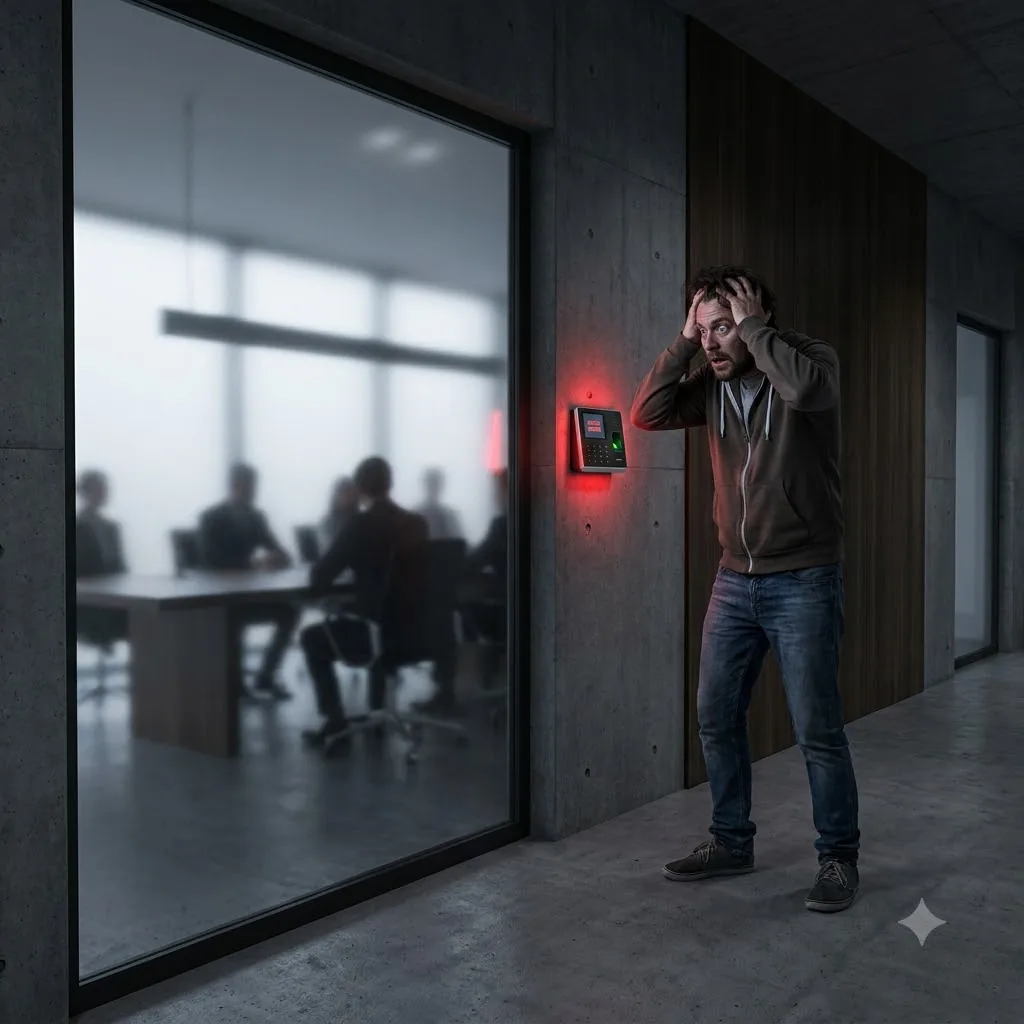
The mechanical hum of the electronic privacy blinds faded, leaving Elias staring at a blank wall of ribbed, opaque gray. The warm yellow light from the boardroom was completely choked out. He stood in the dim corridor, his breath fogging the frosted glass, his fist still raised from where he had struck the door.
Vance had looked right at him. There had been no guilt. No hesitation. Just the calculated press of a button.
Elias spun away from the door, his mind racing to catch up with the betrayal. Vance wasn’t just ignoring a system failure; he was actively orchestrating it. But why? And why hold a full board meeting at midnight on a Friday to do it?
A fresh wave of panic hit Elias as he thought of the users. The weekend spike was already underway. Thousands of people across the country were staring at their phones right now, pressing the amber panic button, waiting for a human voice to pull them back from the edge. And they were getting nothing.
Elias sprinted back up the central aisle of the bullpen. He couldn’t force his way through a mag-locked door, but he knew the building’s nervous system better than anyone. He had wired the original network himself.
He reached his desk, dropped to his knees, and yanked open the bottom drawer of his filing cabinet. He bypassed the sleek modern hardware and pulled out his old, battered Panasonic Toughbook and a heavy nylon toolkit.
He ran toward the rear of the office, past the breakroom, to a narrow, unmarked door: the telecom utility closet. Unlike the boardroom, it wasn’t connected to the digital security system. Elias pulled a standard brass key from his pocket, unlocked the deadbolt, and pushed inside.
The small room smelled of ozone and dust. Tangled waterfalls of blue and yellow Ethernet cables cascaded from ceiling racks down to the junction boxes on the wall. Elias flicked on the overhead fluorescent light and dragged a plastic step stool to the main trunk line. This bundle of fiber optics fed the entire executive suite, including the server annex.
He grabbed his wire strippers, sliced into the protective sheathing of a secondary diagnostic line, and clamped an alligator clip straight to the exposed copper. He plugged the other end into his Toughbook.
Elias crouched on the dusty floor and powered up the laptop. His fingers flew across the thick keyboard, opening a raw command terminal. He couldn’t log in through the front door-Vance had clearly purged his active directory credentials-but Elias had built a shadow directory during the startup’s beta phase three years ago. It was an unsecured backdoor meant for emergency debugging, buried so deep in the kernel that Vance’s corporate auditors wouldn’t know to look for it.
The terminal window flashed green. He was in the local network.
Elias ran a packet sniffer, isolating the IP address of the boardroom’s presentation screen. He wanted to see exactly what Vance was projecting to those suits. He typed a mirroring command, and a second window popped up on his screen, duplicating the boardroom’s display.
Elias stopped breathing.
The architectural diagram of the app’s backend glowed on his laptop. The main data pipeline, which usually branched out into fifty thousand separate streams to connect at-risk users with live human sponsors, had been severed. Instead, all incoming traffic was being funneled into a single, massive API gateway. The logo stamped above the gateway read: *Project Serenity – Automated Triage.*
Elias felt physically sick. Months ago, Vance had aggressively pitched replacing the human sponsor network with an AI language model to drastically cut server costs and eliminate legal liabilities. Elias had killed the idea instantly. An algorithm didn’t have empathy. It couldn’t hear the subtle tremor in a teenager’s voice or parse the messy, irrational panic of someone about to relapse.
But Vance hadn’t dropped it. He had built it in secret, sold the board on the cost savings, and was now running a live, forced beta test on the entire user base during the most dangerous hours of the week.
The live SOS feed hadn’t crashed. The AI was choking. The analytics scrolling on the side of the diagram showed a terrifying reality: the bot was failing to process the complex emotional text inputs. It was returning error codes, instantly dropping the connections of desperate people and officially logging them as “resolved.”
“You’re killing them,” Elias whispered to the empty closet.
He cracked his knuckles and began writing a hard override script. He didn’t care about the board or his job anymore; he just needed to flush the DNS routing tables and violently rip the traffic back to the human network.
He hit execute.
The terminal screen populated with rapid lines of code.
*Bypassing Serenity Gateway…*
*Rerouting to Legacy Nodes…*
*Processing… 40%… 70%… 90%…*
The progress bar violently turned red and stalled. A harsh beep emitted from the laptop speakers.
`FATAL ERROR. PHYSICAL OVERRIDE REQUIRED AT ANNEX TERMINAL.`
Elias stared at the blinking cursor. Vance had anticipated a remote counterattack. He had locked the core routing tables. The only way to reverse the AI integration was to physically plug a hardware token into the primary server rack inside the locked annex. Digital tricks were no longer an option. He had to break through the walls.
As Elias reached to close the laptop, the fluorescent light above his head abruptly flickered and died.
The utility closet plunged into total darkness.
Through the thin walls, Elias heard the distinct, heavy *clank* of the fire doors dropping over the elevator banks out in the main hallway. A second later, the pneumatic hiss of the stairwell doors echoed through the silence, followed by the deep, resonant thud of the magnetic locks engaging.
His Toughbook screen pinged, casting a pale, ghostly light over Elias’s face. A direct message had overridden his command terminal.
`[Admin_Vance]: Nice try, Elias. Containment protocol active.`
The building’s ambient HVAC hum faded into silence. Elias realized with a cold spike of dread that he wasn’t just locked out of the boardroom. He was locked inside the floor, and he was completely alone.