Story code: ST-000604
Part 1: The Wall of Cameras
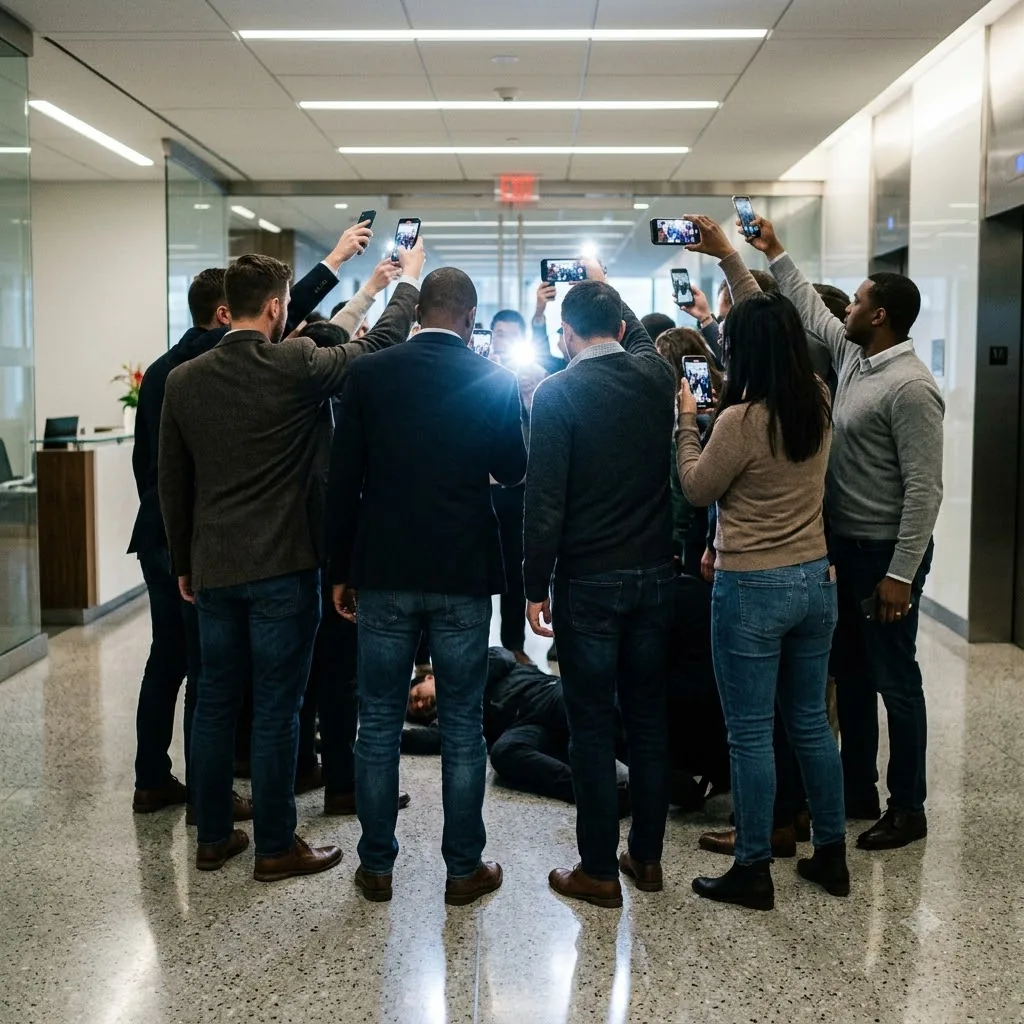
The glare of a dozen smartphone ring lights bounced off the polished marble of the corporate lobby, creating a blinding, shifting wall of LED halos. Elena shielded her eyes as she stepped off the executive elevator, greeted not by the usual hushed professionalism of the atrium, but by the frantic scuffling of leather shoes backing away from the center of the floor. A tight, unyielding circle of bystanders had formed a physical barrier, their arms raised in silent unison to capture the spectacle on video. No one moved forward. No one knelt. They simply filmed.
In the center of the human ring, a man in a neon orange delivery vest thrashed violently against the cold stone floor. His limbs jerked in sharp, erratic spasms, his heavy boots kicking repeatedly against a spilled insulated food bag. Packets of soy sauce and crushed containers of sushi lay scattered around him, trampled by the crowd as they jockeyed for a better camera angle.
Murmurs rippled through the onlookers, an assembly of junior analysts and mid-level managers on their lunch break. Voices muttered loudly about the decay of the city and the tragic inevitability of street drugs. A woman in a sharp gray trench coat shouted for the front desk security guard to run and fetch a Narcan kit, loudly diagnosing the scene as a massive opiate overdose. The guard fumbled with his radio, yelling into the receiver for emergency services while hanging back near the reception desk. The crowd kept their distance, prioritizing the framing of their livestreams over basic first aid. They were documenting a tragedy, perfectly content to let the man seize on the hard marble while they waited for paramedics to absolve them of responsibility.
Elena clutched the handle of her heavy leather briefcase, her instinct demanding she bypass the chaos and head straight for the revolving glass doors. Her morning had already been drained by a grueling, three-hour board meeting fighting over Q4 margin projections and the aggressive new pricing tier for their flagship biologic. Her flight to the European symposium boarded in exactly two hours. She had no time to be a witness, let alone a participant, in a messy public medical incident. She lowered her head and turned toward the eastern exit, calculating the fastest path out of the atrium.
As she skirted the edge of the crowd, the harsh white light from a bystander’s camera flash illuminated something small rolling across the floor. It darted out from beneath the convulsing driver’s heavy coat. It was a jagged cylinder of shattered glass, followed closely by a crushed metallic crimp cap that chimed faintly as it spun across the pristine white marble.
Elena stopped walking. The sound of the glass and the specific, heavy chime of that cap cut through the ambient noise of the lobby.
She turned her head. The metallic cap came to a rest barely a foot from the toe of her pump. It was stamped with a highly specific, muted purple seal. It was the exact proprietary seal her manufacturing division had patented last year to deter overseas counterfeiting.
A cold weight dropped into the pit of her stomach. She shoved her briefcase under her arm and pushed hard past a man in a tailored suit. He stumbled, grumbling a harsh complaint about her ruining his shot, but Elena ignored him, breaking through the wall of cameras to stand inside the empty circle.
The delivery driver’s convulsions were escalating, shifting from localized spasms to full-body tremors. His face was entirely devoid of color, slick with a clammy, freezing sweat that absolutely did not align with the symptoms of an opiate overdose. His jaw was rigidly locked. The thick winter jacket he wore had ripped open during his thrashing, revealing a faded, threadbare uniform shirt beneath. His knuckles were bruised, likely from striking the floor.
Beside his violently shaking left hand, the remainder of the shattered vial lay in a small puddle of clear, viscous fluid. The glossy corporate label had been completely scraped off. In its place, a crude, handwritten sticker clung to the glass, the kind of rudimentary tagging used exclusively in underground distribution networks and black-market pharmacy rings. Yet the distinct, fluted shape of the borosilicate ampoule was unmistakable. It was a silhouette Elena knew intimately, having spent the last three years ruthlessly defending its astronomical retail cost against government regulators.
This man was not overdosing on fentanyl. He was experiencing the severe, acute shock of a cascading neuro-muscular failure. It was the exact biological collapse her company’s flagship drug was designed to prevent. He had likely suffered a violent reaction from a degraded, temperature-ruined bootleg dose, one he was forced to source from the black market because the legitimate, safe supply was locked securely behind the aggressive pricing strategy she had personally implemented.
He was dying on the floor of her corporate headquarters, killed by the financial models in her briefcase.
The security guard finally sprinted into the circle, waving a bright orange nasal spray canister. He dropped to his knees, ripping the plastic packaging open with his teeth, preparing to administer the opioid antagonist to a man whose heart would instantly stop if the spray interacted with the ruined biologic already in his bloodstream.
Elena dropped her briefcase. She lunged forward and grabbed the guard’s wrist in a vise grip, stopping the plastic nozzle inches from the dying man’s face.
The glare of a dozen smartphone ring lights bounced off the polished marble of the corporate lobby, creating a blinding, shifting wall of LED halos. Elena shielded her eyes as she stepped off the executive elevator, greeted not by the usual hushed professionalism of the atrium, but by the frantic scuffling of leather shoes backing away from the center of the floor. A tight, unyielding circle of bystanders had formed a physical barrier, their arms raised in silent unison to capture the spectacle on video. No one moved forward. No one knelt. They simply filmed.
In the center of the human ring, a man in a neon orange delivery vest thrashed violently against the cold stone floor. His limbs jerked in sharp, erratic spasms, his heavy boots kicking repeatedly against a spilled insulated food bag. Packets of soy sauce and crushed containers of sushi lay scattered around him, trampled by the crowd as they jockeyed for a better camera angle.
Murmurs rippled through the onlookers, an assembly of junior analysts and mid-level managers on their lunch break. Voices muttered loudly about the decay of the city and the tragic inevitability of street drugs. A woman in a sharp gray trench coat shouted for the front desk security guard to run and fetch a Narcan kit, loudly diagnosing the scene as a massive opiate overdose. The guard fumbled with his radio, yelling into the receiver for emergency services while hanging back near the reception desk. The crowd kept their distance, prioritizing the framing of their livestreams over basic first aid. They were documenting a tragedy, perfectly content to let the man seize on the hard marble while they waited for paramedics to absolve them of responsibility.
Elena clutched the handle of her heavy leather briefcase, her instinct demanding she bypass the chaos and head straight for the revolving glass doors. Her morning had already been drained by a grueling, three-hour board meeting fighting over Q4 margin projections and the aggressive new pricing tier for their flagship biologic. Her flight to the European symposium boarded in exactly two hours. She had no time to be a witness, let alone a participant, in a messy public medical incident. She lowered her head and turned toward the eastern exit, calculating the fastest path out of the atrium.
As she skirted the edge of the crowd, the harsh white light from a bystander’s camera flash illuminated something small rolling across the floor. It darted out from beneath the convulsing driver’s heavy coat. It was a jagged cylinder of shattered glass, followed closely by a crushed metallic crimp cap that chimed faintly as it spun across the pristine white marble.
Elena stopped walking. The sound of the glass and the specific, heavy chime of that cap cut through the ambient noise of the lobby.
She turned her head. The metallic cap came to a rest barely a foot from the toe of her pump. It was stamped with a highly specific, muted purple seal. It was the exact proprietary seal her manufacturing division had patented last year to deter overseas counterfeiting.
A cold weight dropped into the pit of her stomach. She shoved her briefcase under her arm and pushed hard past a man in a tailored suit. He stumbled, grumbling a harsh complaint about her ruining his shot, but Elena ignored him, breaking through the wall of cameras to stand inside the empty circle.
The delivery driver’s convulsions were escalating, shifting from localized spasms to full-body tremors. His face was entirely devoid of color, slick with a clammy, freezing sweat that absolutely did not align with the symptoms of an opiate overdose. His jaw was rigidly locked. The thick winter jacket he wore had ripped open during his thrashing, revealing a faded, threadbare uniform shirt beneath. His knuckles were bruised, likely from striking the floor.
Beside his violently shaking left hand, the remainder of the shattered vial lay in a small puddle of clear, viscous fluid. The glossy corporate label had been completely scraped off. In its place, a crude, handwritten sticker clung to the glass, the kind of rudimentary tagging used exclusively in underground distribution networks and black-market pharmacy rings. Yet the distinct, fluted shape of the borosilicate ampoule was unmistakable. It was a silhouette Elena knew intimately, having spent the last three years ruthlessly defending its astronomical retail cost against government regulators.
This man was not overdosing on fentanyl. He was experiencing the severe, acute shock of a cascading neuro-muscular failure. It was the exact biological collapse her company’s flagship drug was designed to prevent. He had likely suffered a violent reaction from a degraded, temperature-ruined bootleg dose, one he was forced to source from the black market because the legitimate, safe supply was locked securely behind the aggressive pricing strategy she had personally implemented.
He was dying on the floor of her corporate headquarters, killed by the financial models in her briefcase.
The security guard finally sprinted into the circle, waving a bright orange nasal spray canister. He dropped to his knees, ripping the plastic packaging open with his teeth, preparing to administer the opioid antagonist to a man whose heart would instantly stop if the spray interacted with the ruined biologic already in his bloodstream.
Elena dropped her briefcase. She lunged forward and grabbed the guard’s wrist in a vise grip, stopping the plastic nozzle inches from the dying man’s face.