Story code: ST-001692
Part 1: The Bystander
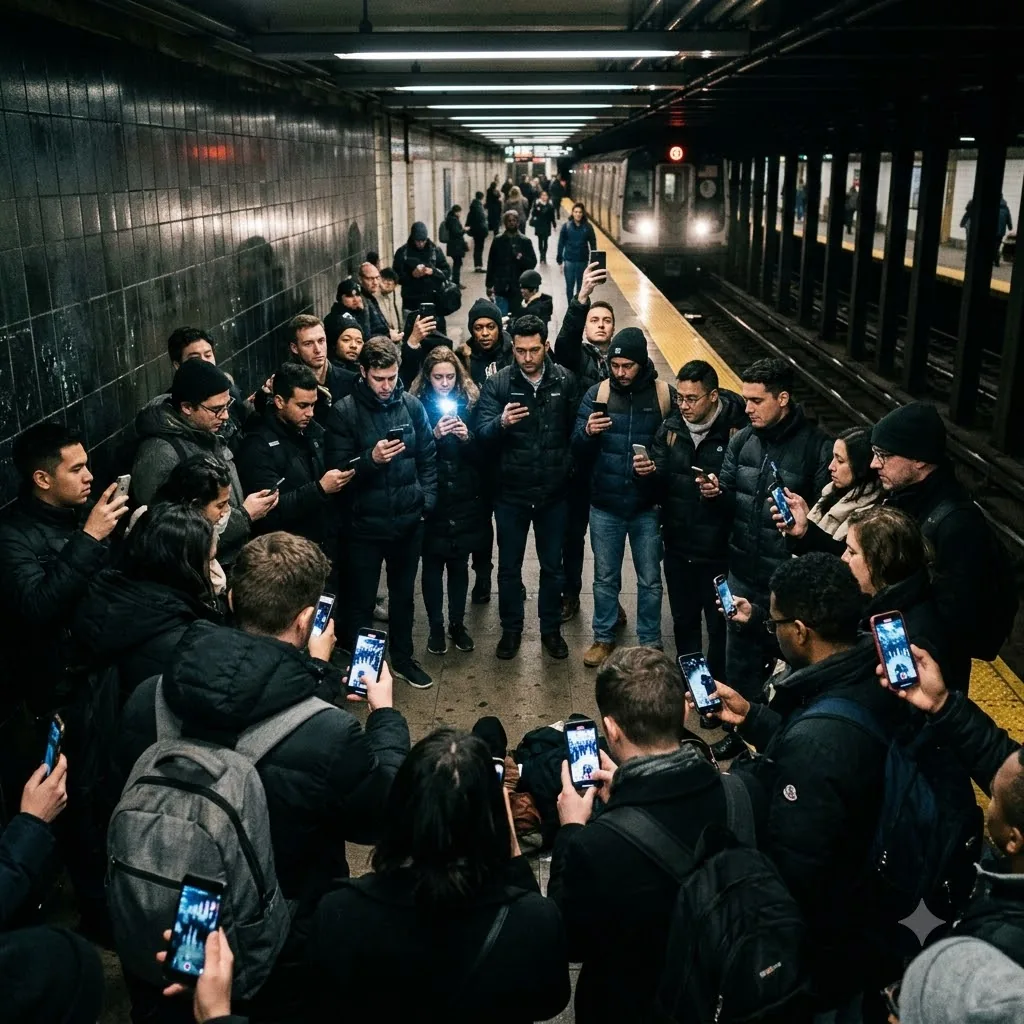
The scream dies into the mechanical whine of the idling D train, leaving an unnatural, vacuum-sealed silence across the platform. A tight circle of commuters stands perfectly still, their faces washed in the cold, artificial glare of fifty smartphone screens angled toward the stained concrete. Evelyn stands among them, her own arms raised, her thumb pressing the red circle on her screen as a heavy work boot connects with human ribs.
The sound is a wet, hollow crack echoing over the rumble of an express train one track over. Nobody gasps. Nobody shouts for transit security. The only movement is the slight, collective sway of the crowd adjusting their camera angles to keep the violence centered in their high-definition frames. The man on the floor curls into a tighter ball, raising bloody hands to shield the back of his neck. The attacker, a broad man in a dark hoodie, does not speak. He just pulls his leg back and kicks again.
Evelyn’s breath catches in her throat, refusing to go down. Her heart hammers against her ribs, demanding she step forward, demanding she use her voice to command the room. Her vocal cords remain paralyzed. The glass screen of her phone reflects her own wide, terrified eyes back at her. She watches the assault not directly, but through the viewfinder of her device, reducing the visceral brutality to a two-dimensional movie. It is easier to watch through the glass.
She tells herself she is securing a conviction. She tells herself this is the best way to ensure the attacker is identified, that the chain of custody for the video will be absolute. It is a lie she uses to cover the ice creeping up her spine. The truth is simple, animal terror. She is a fifty-year-old woman in a tailored wool trench coat, separated from her insulated life by a sudden, violent reality. She is standing shoulder-to-shoulder with strangers, trapped in the collective inertia of the bystander effect.
Usually, there are three plainclothes officers on this platform during the evening rush. She knows this because she signed the memorandum with the transit bureau last Tuesday. She knows this because her office authorized the overtime budget for this exact station to combat a spike in platform assaults. Yet, as she scans the periphery of the glowing screens, the platform is entirely devoid of navy-blue uniforms. The transit booth at the far end of the mezzanine is empty.
Another thud echoes off the tiled walls. The victim goes entirely limp, his arms dropping away from his face to reveal a broken nose and a swelling jaw. The attacker pauses, breathing heavily. The vapor of his breath catches in the harsh fluorescent light overhead. He looks up, ignoring the bleeding man at his feet. He looks slowly around the circle of passive, recording faces. His eyes lock onto the glowing lenses, one by one, tracing the perimeter of his captive audience. He seems to be waiting for someone to intervene. Nobody does.
Evelyn’s phone vibrates in her hand, a harsh, buzzing interruption against her damp palm. A banner notification drops down over her recording screen. It is a message from her Chief of Staff.
*Evelyn, the union rep just called. They pulled the detail from 4th Street.*
She is standing at 4th Street. The realization hits her with the force of a physical blow. The absence of the police is not a gap in the patrol schedule. The empty transit booth is not a bathroom break. The officers she specifically deployed to protect this station are gone. They were ordered away.
The attacker steps back from the motionless body on the floor. He adjusts his hoodie, pulling it further down over his brow. He steps directly toward Evelyn. The crowd parts for him instantly, the wall of smartphones parting like a digital sea. He walks right past her, his heavy shoulder brushing the damp wool of her coat. He does not run. He walks up the stairs at a casual, unbothered pace.
Evelyn lowers her phone, the red square still ticking away the seconds of her recording. The man on the ground groans, a low, wet sound that breaks the spell over the platform. The silence shatters into a sudden chaos of murmurs and retreating footsteps. People are finally moving, slipping away toward the turnstiles, eager to upload their footage, eager to distance themselves from the blood pooling on the gray tiles.
She forces her leaden legs to move. She steps forward, sinking to her knees beside the victim. Her expensive coat drags in the grime of the platform. She reaches out to press two fingers against the side of his neck, checking for a pulse the way she was taught in a first-responder seminar a decade ago. His skin is clammy, but the pulse is there, fast and thready.
A camera flash bursts over her shoulder. Then another. Evelyn snaps her head up.
Three young men are standing at the edge of the platform, their phones no longer pointed at the victim. They are pointed directly at her face. The glare of the flash illuminates the sharp lines of her jaw, the recognizable cut of her auburn hair, the distinct lapels of the District Attorney’s signature winter coat.
She realizes exactly what they are recording. They are not filming a tragedy anymore. They are filming the chief law enforcement officer of the city, kneeling in the dirt, minutes after watching a man get nearly beaten to death without lifting a single finger to help. Her own phone is still clutched in her hand, the screen brightly displaying the recording of her own passive cowardice.
One of the men lowers his phone, a slow, cruel smirk spreading across his face as he recognizes the woman from the evening news broadcasts and campaign billboards. He raises his free hand and points directly at her chest.
The scream dies into the mechanical whine of the idling D train, leaving an unnatural, vacuum-sealed silence across the platform. A tight circle of commuters stands perfectly still, their faces washed in the cold, artificial glare of fifty smartphone screens angled toward the stained concrete. Evelyn stands among them, her own arms raised, her thumb pressing the red circle on her screen as a heavy work boot connects with human ribs.
The sound is a wet, hollow crack echoing over the rumble of an express train one track over. Nobody gasps. Nobody shouts for transit security. The only movement is the slight, collective sway of the crowd adjusting their camera angles to keep the violence centered in their high-definition frames. The man on the floor curls into a tighter ball, raising bloody hands to shield the back of his neck. The attacker, a broad man in a dark hoodie, does not speak. He just pulls his leg back and kicks again.
Evelyn’s breath catches in her throat, refusing to go down. Her heart hammers against her ribs, demanding she step forward, demanding she use her voice to command the room. Her vocal cords remain paralyzed. The glass screen of her phone reflects her own wide, terrified eyes back at her. She watches the assault not directly, but through the viewfinder of her device, reducing the visceral brutality to a two-dimensional movie. It is easier to watch through the glass.
She tells herself she is securing a conviction. She tells herself this is the best way to ensure the attacker is identified, that the chain of custody for the video will be absolute. It is a lie she uses to cover the ice creeping up her spine. The truth is simple, animal terror. She is a fifty-year-old woman in a tailored wool trench coat, separated from her insulated life by a sudden, violent reality. She is standing shoulder-to-shoulder with strangers, trapped in the collective inertia of the bystander effect.
Usually, there are three plainclothes officers on this platform during the evening rush. She knows this because she signed the memorandum with the transit bureau last Tuesday. She knows this because her office authorized the overtime budget for this exact station to combat a spike in platform assaults. Yet, as she scans the periphery of the glowing screens, the platform is entirely devoid of navy-blue uniforms. The transit booth at the far end of the mezzanine is empty.
Another thud echoes off the tiled walls. The victim goes entirely limp, his arms dropping away from his face to reveal a broken nose and a swelling jaw. The attacker pauses, breathing heavily. The vapor of his breath catches in the harsh fluorescent light overhead. He looks up, ignoring the bleeding man at his feet. He looks slowly around the circle of passive, recording faces. His eyes lock onto the glowing lenses, one by one, tracing the perimeter of his captive audience. He seems to be waiting for someone to intervene. Nobody does.
Evelyn’s phone vibrates in her hand, a harsh, buzzing interruption against her damp palm. A banner notification drops down over her recording screen. It is a message from her Chief of Staff.
*Evelyn, the union rep just called. They pulled the detail from 4th Street.*
She is standing at 4th Street. The realization hits her with the force of a physical blow. The absence of the police is not a gap in the patrol schedule. The empty transit booth is not a bathroom break. The officers she specifically deployed to protect this station are gone. They were ordered away.
The attacker steps back from the motionless body on the floor. He adjusts his hoodie, pulling it further down over his brow. He steps directly toward Evelyn. The crowd parts for him instantly, the wall of smartphones parting like a digital sea. He walks right past her, his heavy shoulder brushing the damp wool of her coat. He does not run. He walks up the stairs at a casual, unbothered pace.
Evelyn lowers her phone, the red square still ticking away the seconds of her recording. The man on the ground groans, a low, wet sound that breaks the spell over the platform. The silence shatters into a sudden chaos of murmurs and retreating footsteps. People are finally moving, slipping away toward the turnstiles, eager to upload their footage, eager to distance themselves from the blood pooling on the gray tiles.
She forces her leaden legs to move. She steps forward, sinking to her knees beside the victim. Her expensive coat drags in the grime of the platform. She reaches out to press two fingers against the side of his neck, checking for a pulse the way she was taught in a first-responder seminar a decade ago. His skin is clammy, but the pulse is there, fast and thready.
A camera flash bursts over her shoulder. Then another. Evelyn snaps her head up.
Three young men are standing at the edge of the platform, their phones no longer pointed at the victim. They are pointed directly at her face. The glare of the flash illuminates the sharp lines of her jaw, the recognizable cut of her auburn hair, the distinct lapels of the District Attorney’s signature winter coat.
She realizes exactly what they are recording. They are not filming a tragedy anymore. They are filming the chief law enforcement officer of the city, kneeling in the dirt, minutes after watching a man get nearly beaten to death without lifting a single finger to help. Her own phone is still clutched in her hand, the screen brightly displaying the recording of her own passive cowardice.
One of the men lowers his phone, a slow, cruel smirk spreading across his face as he recognizes the woman from the evening news broadcasts and campaign billboards. He raises his free hand and points directly at her chest.