Story code: ST-001257
Part 4: The Net Worth of Zero
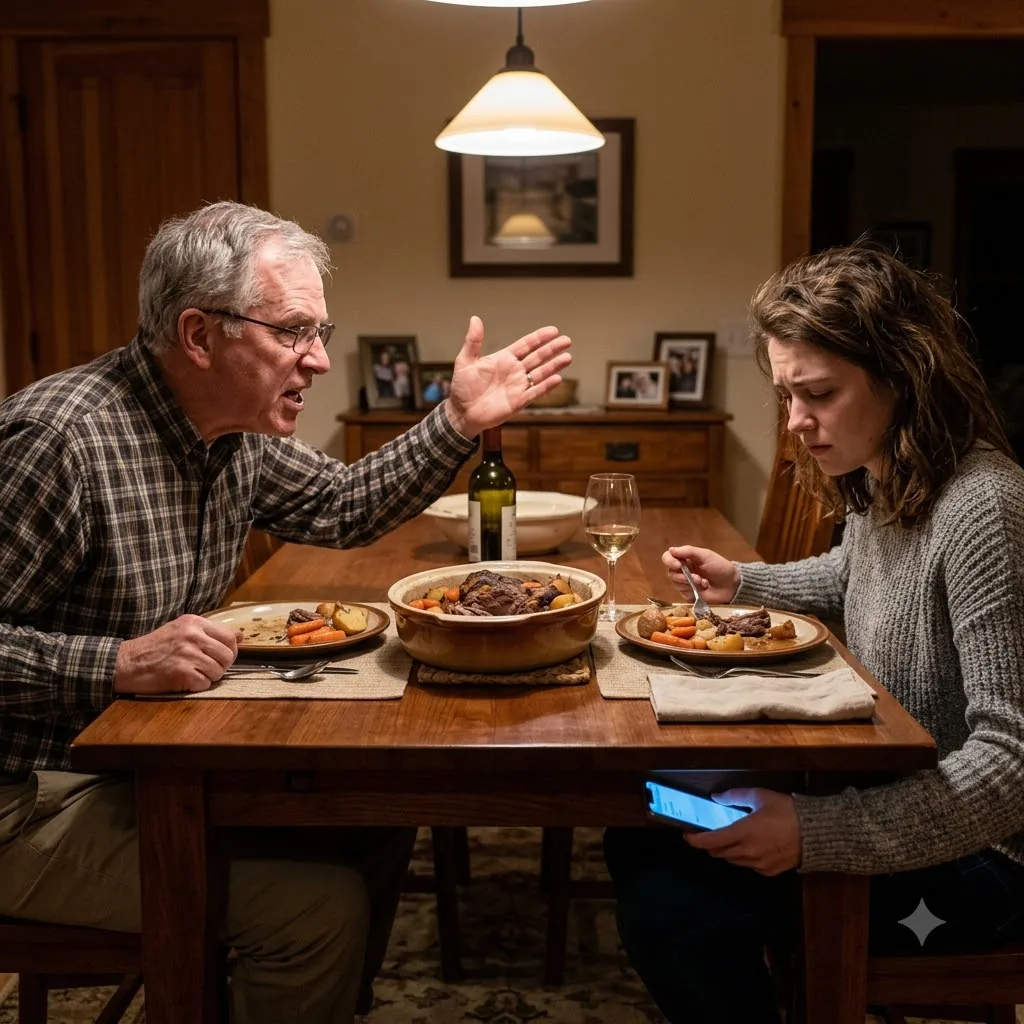
The screen of Maya’s phone finally timed out. The stark black text vanished, plunging the dining room into the dim, shadowy ambiance of the overhead chandelier. The silence that followed was absolute and suffocating, broken only by the distant hum of the kitchen refrigerator. The number-two hundred and twelve thousand dollars-hung over the dining table like a physical weight, crushing the air out of the room.
Helen’s voice, usually so sharp and impeccably certain, trembled as she broke the quiet. “Arthur? It’s fine. We can just… we can call the bank tomorrow morning. We have a hundred and ten thousand dollars. We can negotiate a settlement.”
Arthur couldn’t look at his wife. He kept his eyes locked on the blank rectangle of glass resting on the linen tablecloth. He was a senior risk actuary. He knew the unyielding physics of the financial world better than anyone.
“They won’t settle for half, Helen,” Arthur said, his voice hollow, stripped of all its commanding authority. “It’s unsecured, high-yield debt spread across multiple tertiary lenders. The late penalties alone will consume the principal. And if they even agree to a write-down, she’ll be paying taxes on the forgiven debt as income. It’s… it’s over.”
“What do you mean, it’s over?” Helen pleaded, her hands gripping the edge of the table. “She’s twenty-six years old. She can declare bankruptcy. She can rebuild.”
“With a co-signed apartment and zero assets?” Arthur whispered, the reality of his life’s work collapsing around his own plate of roasted vegetables. “A bankruptcy on a quarter million in predatory debt will destroy her credit for a decade. The starter home. The five-year plan. It’s gone.”
He looked across the table. Maya pushed her chair back, the wooden legs loudly scraping against the rug. Arthur braced himself, expecting her to be weeping, to be begging for the nest egg, to be desperately asking him how to salvage her life.
Instead, the frantic, shallow hyperventilation that had plagued her all evening had stopped. Her face, previously drained of color, was now perfectly calm. The terrifying weight of the secret was finally out. The bomb had detonated, and she was still breathing.
She reached across the table, picked up her phone, and slipped it into her back pocket. “I’m going home.”
“Maya, wait,” Arthur stammered, half-standing. “We can give you the fund. We’ll wire the entire balance on Monday.”
“Keep it,” Maya said. Her voice was entirely devoid of the deferential, apologetic tone she had used since she was a teenager. “Or give it to Velocity Capital. It doesn’t really matter. It won’t clear the principal.”
She turned and walked into the kitchen. Helen, operating on pure, desperate maternal autopilot, rushed after her. Arthur heard the frantic opening of cupboards, the snapping of plastic Tupperware lids. The Sunday leftovers. The steak. The roasted root vegetables. The meal Maya had endured his psychological abuse and financial lecturing for, just to secure a few days’ worth of free groceries to offset her crippling deficit.
Arthur forced himself to stand. His legs felt like lead, completely disconnected from his body. He walked slowly to the kitchen archway. Helen was rapidly loading four heavy plastic containers into Maya’s canvas tote bag, babbling incoherently about calling a fiduciary, about Chapter 11, about Maya moving back into her old childhood bedroom.
“My lease has eight months left, Mom,” Maya said quietly, zipping the tote bag shut. “I can’t break it without a penalty fee I can’t pay. I’m staying in the studio.”
She slung the heavy bag over her shoulder and walked past Arthur without making eye contact. Arthur turned and followed her to the front door, stepping out onto the porch into the biting evening wind.
Maya’s ten-year-old Corolla sat idling in the driveway. The passenger door opened, and a tall young man stepped out, pulling his corduroy jacket tight against the chill. Ben. Her roommate, whom Arthur had always quietly disapproved of because he worked at a coffee shop and had no equity. Ben had driven her tonight because Maya’s car had a bald front tire she couldn’t afford to replace, and they needed to split the gas money.
Ben didn’t say a single word to Arthur. He just walked around the trunk, took the heavy canvas tote bag from Maya’s shoulder, and gently placed the Tupperware in the backseat. He packed the leftovers they had endured the evening for with a quiet, practiced dignity.
“Maya,” Arthur called out from the top of the porch steps, desperate for a lifeline. He needed a way to restore his authority, his position as the patriarch who could fix everything with a lecture and a spreadsheet. “The starter home. If we pool our credit… I can co-sign a mortgage. We can bypass your debt-to-income ratio if I put down a massive deposit. We can still get you into the suburbs.”
Maya paused at the driver’s side door. She looked across the manicured suburban lawn, at the large, quiet house with its perfectly painted shutters. It represented everything Arthur had demanded she strive for. The American Dream. Equity over aesthetics.
“I’m never owning a home, Dad,” Maya said.
The words weren’t angry. They were simply stated, carrying the absolute, unshakeable certainty of a mathematical absolute. “I am going to spend the next ten years of my life just trying to get my net worth back to zero.”
“We didn’t know,” Arthur pleaded, gripping the porch railing. The defense sounded pathetic even to his own ears. “You should have told us it was this bad.”
“I did,” she replied.
Arthur searched her face, but there was no apology left in her eyes. There was no flinching, no shrinking under his judgment. She wasn’t the failing daughter anymore, scrambling for his approval. She was just a survivor, calmly observing the architect of her ruin.
She got into the car. Ben closed her door firmly, walked around to the passenger side, and got in. The engine revved with a rough, uneven belt whine.
Arthur stood on the porch, his hands hanging uselessly at his sides as the cold wind whipped through his thin sweater. He watched the Corolla reverse out of the driveway, the faded taillights bleeding red into the dark street. He had spent years lecturing her on building a future, enforcing a rigid ladder of success, convinced his tough love was protecting her from a harsh, unforgiving world.
But as the taillights vanished around the corner, Arthur finally understood the math. The world hadn’t destroyed his daughter’s future. He had.