Story code: ST-001856
Part 1: Gridlock
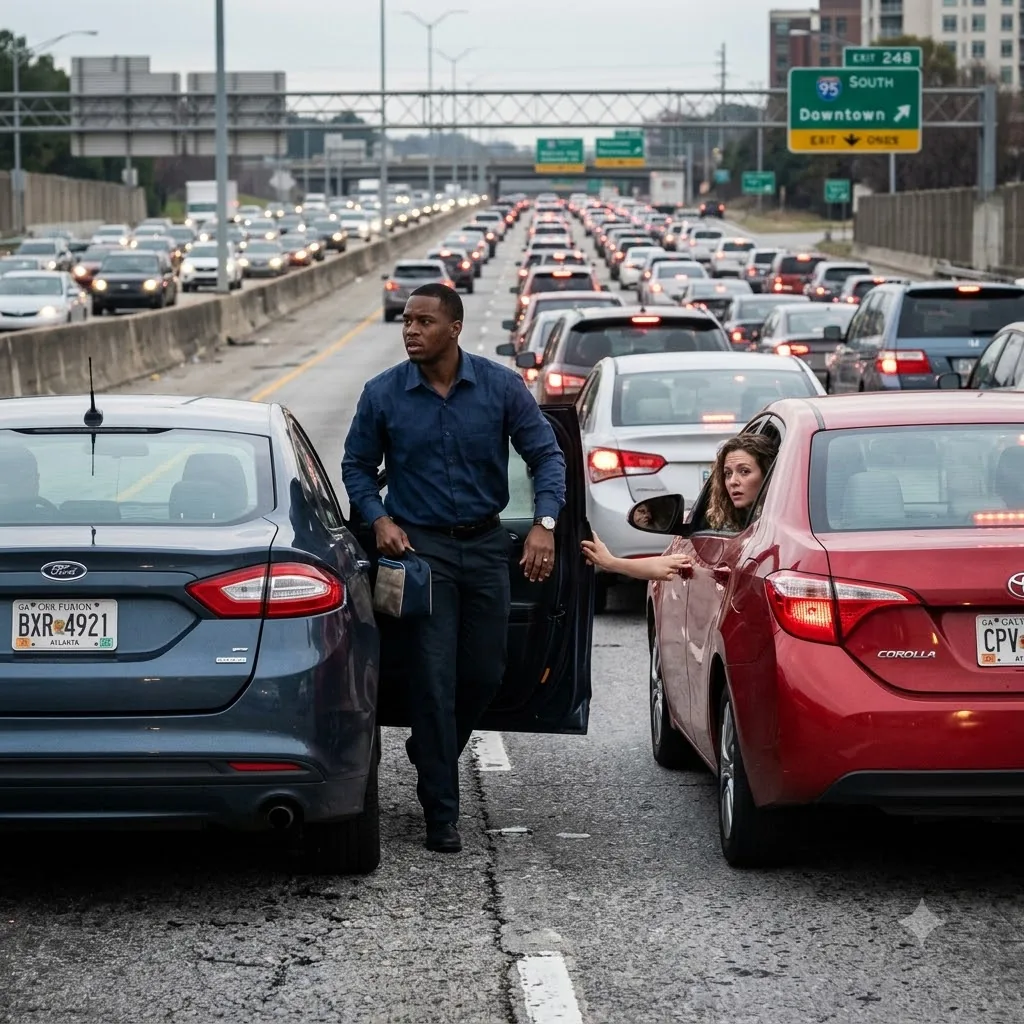
The dashboard clock glared 7:42 AM, a bright digital countdown to ruin. Eighteen minutes remained until his shift at the fulfillment center began. The exhaust fumes from the idling semi-truck ahead seeped through the vents of Marcus’s ten-year-old Corolla, thick and tasting of burnt oil. He tapped the steering wheel, his knee bouncing a frantic, uncontrollable rhythm against the cracked plastic of the steering column. Just yesterday, Manager Higgins had handed him a slip of pink paper in the breakroom. It was his final notice. One more tardy punch-in meant automatic termination, no appeals allowed. Now, all four lanes of the interstate were a parking lot of brake lights, stretching motionless into the morning smog.
The heat inside the cabin was rising. His air conditioning had died a year ago, leaving him to sweat through his faded blue uniform shirt. He needed to see the cause of the delay. Marcus threw the car into park, unbuckled his seatbelt, and pushed his heavy door open into the narrow gap between lanes. He didn’t shout or gesture wildly. He simply stood up on the pavement, stretching his neck to peer over the roof of the massive black SUV idling in front of him.
A sharp, mechanical clack snapped his attention to the right. The woman in the silver Lexus beside him had her eyes locked straight ahead, her knuckles entirely white on her leather-wrapped steering wheel. Her index finger was still pressed flat against the master lock switch on her door panel. She shrank back into her seat, pulling her purse tightly into her lap, reacting as though he had just drawn a weapon.
Marcus swallowed the sudden, sharp knot forming in his throat. He instinctively smoothed down the front of his work shirt, trying to make himself look smaller, less threatening, more like a man just trying to get to work. The woman kept her eyes rigidly averted. He turned his focus back to the road ahead, letting the sting of the moment fade under the crushing weight of the ticking clock.
The gridlock wasn’t an accident. About a half-mile up the highway, a line of neon orange and bright green banners stretched entirely across the asphalt, creating a solid wall blocking all northbound traffic. Figures sat cross-legged on the pavement, their arms linked inside heavy, reinforced PVC pipes.
7:46 AM. Fourteen minutes left. If he lost this warehouse job, the rent check sitting on his small kitchen counter would bounce by Friday afternoon. The eviction notice would be taped to his door by Monday. He absolutely could not afford to sit here and wait for the state troopers to arrive and clear a demonstration. The brake lights around him remained blindingly red and stubbornly unblinking. Marcus took a deep breath, stepped away from the meager safety of his Corolla, and began weaving his way through the dense maze of hot metal and choking exhaust.
Drivers stared at him through heavily tinted windows as he passed. Some held up their phones, recording his hurried march, while others quickly rolled up their glass the moment he drew near. The air grew significantly louder as he approached the front of the blockade. A portable PA system crackled, projecting a rhythmic chant about corporate greed and immediate environmental collapse.
Marcus jogged the last fifty yards, his work boots slapping hard against the asphalt. The activists sat in a rigid, unbreakable line. They wore matching high-visibility vests, their faces set in identical masks of serene, practiced defiance. Behind them, a massive banner declared the total shutdown of the region’s main logistics corridor. Marcus stopped exactly six feet from the center of the human chain. His chest heaved, sweat stinging the corners of his eyes and soaking the collar of his shirt.
“Please,” Marcus said, his voice cracking over the low rumble of a hundred trapped engines. He targeted a young man in the center, someone who looked barely out of college, wearing round wire-rimmed glasses and a thick wool scarf despite the heat. “I work at the warehouse at exit four. I am on my final warning. If I don’t clock in by eight, I lose my job.”
The young man did not look at him. He stared right past Marcus, his jaw tight, fully committed to the trained silence of the protest.
Marcus took a step closer, holding his hands up, palms open, showing he carried nothing. “I agree with your cause,” Marcus lied, the raw desperation leaking heavily into his tone. “I really do. But I just need to get through this line. If I lose this job, my daughter and I are out on the street.”
A woman sitting next to the young man shifted her weight, the heavy steel chain hidden beneath her sleeve rattling harshly against the pavement. She raised a handheld megaphone to her mouth, not to answer him, but to drown him out entirely. She pressed the siren button on the device. A piercing, continuous shriek ripped through the air, forcing Marcus to flinch and cover his ears.
He stepped forward again, fighting through the deafening noise, pointing frantically back down the crowded highway at his distant, empty car. He reached out to gently touch the young man’s shoulder, just to force a moment of eye contact, to force them to see a desperate human being instead of acceptable collateral damage.
The moment his fingertips brushed the rough canvas of the activist’s vest, a second woman leaped up from the support line behind the barricade, a heavy metal canister gripped tightly in her right hand.
The dashboard clock glared 7:42 AM, a bright digital countdown to ruin. Eighteen minutes remained until his shift at the fulfillment center began. The exhaust fumes from the idling semi-truck ahead seeped through the vents of Marcus’s ten-year-old Corolla, thick and tasting of burnt oil. He tapped the steering wheel, his knee bouncing a frantic, uncontrollable rhythm against the cracked plastic of the steering column. Just yesterday, Manager Higgins had handed him a slip of pink paper in the breakroom. It was his final notice. One more tardy punch-in meant automatic termination, no appeals allowed. Now, all four lanes of the interstate were a parking lot of brake lights, stretching motionless into the morning smog.
The heat inside the cabin was rising. His air conditioning had died a year ago, leaving him to sweat through his faded blue uniform shirt. He needed to see the cause of the delay. Marcus threw the car into park, unbuckled his seatbelt, and pushed his heavy door open into the narrow gap between lanes. He didn’t shout or gesture wildly. He simply stood up on the pavement, stretching his neck to peer over the roof of the massive black SUV idling in front of him.
A sharp, mechanical clack snapped his attention to the right. The woman in the silver Lexus beside him had her eyes locked straight ahead, her knuckles entirely white on her leather-wrapped steering wheel. Her index finger was still pressed flat against the master lock switch on her door panel. She shrank back into her seat, pulling her purse tightly into her lap, reacting as though he had just drawn a weapon.
Marcus swallowed the sudden, sharp knot forming in his throat. He instinctively smoothed down the front of his work shirt, trying to make himself look smaller, less threatening, more like a man just trying to get to work. The woman kept her eyes rigidly averted. He turned his focus back to the road ahead, letting the sting of the moment fade under the crushing weight of the ticking clock.
The gridlock wasn’t an accident. About a half-mile up the highway, a line of neon orange and bright green banners stretched entirely across the asphalt, creating a solid wall blocking all northbound traffic. Figures sat cross-legged on the pavement, their arms linked inside heavy, reinforced PVC pipes.
7:46 AM. Fourteen minutes left. If he lost this warehouse job, the rent check sitting on his small kitchen counter would bounce by Friday afternoon. The eviction notice would be taped to his door by Monday. He absolutely could not afford to sit here and wait for the state troopers to arrive and clear a demonstration. The brake lights around him remained blindingly red and stubbornly unblinking. Marcus took a deep breath, stepped away from the meager safety of his Corolla, and began weaving his way through the dense maze of hot metal and choking exhaust.
Drivers stared at him through heavily tinted windows as he passed. Some held up their phones, recording his hurried march, while others quickly rolled up their glass the moment he drew near. The air grew significantly louder as he approached the front of the blockade. A portable PA system crackled, projecting a rhythmic chant about corporate greed and immediate environmental collapse.
Marcus jogged the last fifty yards, his work boots slapping hard against the asphalt. The activists sat in a rigid, unbreakable line. They wore matching high-visibility vests, their faces set in identical masks of serene, practiced defiance. Behind them, a massive banner declared the total shutdown of the region’s main logistics corridor. Marcus stopped exactly six feet from the center of the human chain. His chest heaved, sweat stinging the corners of his eyes and soaking the collar of his shirt.
“Please,” Marcus said, his voice cracking over the low rumble of a hundred trapped engines. He targeted a young man in the center, someone who looked barely out of college, wearing round wire-rimmed glasses and a thick wool scarf despite the heat. “I work at the warehouse at exit four. I am on my final warning. If I don’t clock in by eight, I lose my job.”
The young man did not look at him. He stared right past Marcus, his jaw tight, fully committed to the trained silence of the protest.
Marcus took a step closer, holding his hands up, palms open, showing he carried nothing. “I agree with your cause,” Marcus lied, the raw desperation leaking heavily into his tone. “I really do. But I just need to get through this line. If I lose this job, my daughter and I are out on the street.”
A woman sitting next to the young man shifted her weight, the heavy steel chain hidden beneath her sleeve rattling harshly against the pavement. She raised a handheld megaphone to her mouth, not to answer him, but to drown him out entirely. She pressed the siren button on the device. A piercing, continuous shriek ripped through the air, forcing Marcus to flinch and cover his ears.
He stepped forward again, fighting through the deafening noise, pointing frantically back down the crowded highway at his distant, empty car. He reached out to gently touch the young man’s shoulder, just to force a moment of eye contact, to force them to see a desperate human being instead of acceptable collateral damage.
The moment his fingertips brushed the rough canvas of the activist’s vest, a second woman leaped up from the support line behind the barricade, a heavy metal canister gripped tightly in her right hand.