Story code: ST-000097
Part 4: The Reconnection
The silence in the isolation wing was absolute, thick and heavy enough to make Shayna’s ears ring. She sat on the thin, crinkling mattress, pulling her knees tightly to her chest to conserve whatever body heat she could. The bruises on her wrists from Officer Miller’s iron handcuffs had blossomed into a deep, mottled purple, aching with every small shift of her weight.
It had been three days since the heavy steel door had slammed shut. Maybe four. Time in the hole was measured solely by the scrape of the meal slot opening and the dim, artificial yellow light bleeding through the crack beneath the door frame. She had missed her parole hearing window. The warden had made sure of that with a single administrative keystroke. The institutional machinery had swallowed her whole for daring to step over the painted yellow line and break the script.
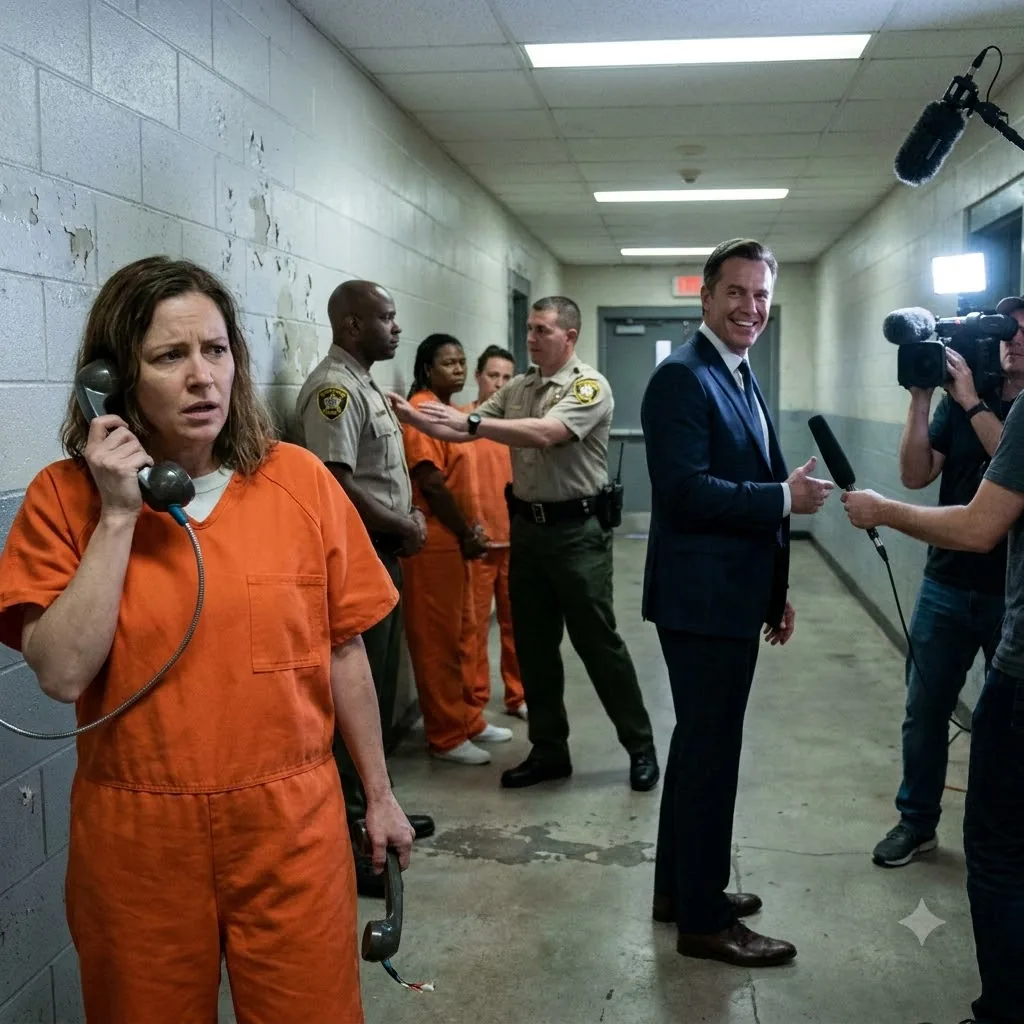
But every time the crushing claustrophobia of the cinderblocks threatened to suffocate her, she replayed the memory of Richard Vance’s face. The absolute, unscripted panic in his eyes. The way his practiced corporate veneer had shattered the moment the brutal math trapped him on camera.
The heavy metal flap of her door’s meal slot suddenly ground open, shattering the quiet. Shayna flinched, blinking against the harsh beam of corridor light cutting through the dust.
“Step back to the wall,” a voice muttered. It wasn’t Miller’s aggressive, booming bark. It was Officer Davis, a younger guard who usually worked the night shifts in the laundry wing, a man who survived the prison’s toxic ecosystem by keeping his head down just as much as the inmates did.
Shayna pressed her back against the freezing concrete wall, keeping her hands visible.
Davis slid a gray plastic tray through the slot. Instead of immediately slamming the flap shut, his fingers lingered on the edge of the metal. “Tray’s heavy today,” he whispered, his voice barely carrying over the low hum of the ceiling ventilation grate. “Don’t let them see the wrapping.”
The flap slammed shut. The deadbolt clicked into place.
Shayna approached the door, her canvas sneakers completely silent on the concrete. She picked up the tray. It held the standard solitary fare: a scoop of flavorless, lukewarm oatmeal, a slice of stale bread, and a bruised apple. But trapped between the bottom of the plastic tray and the cardboard liner was a folded piece of newsprint, accompanied by a thick, cream-colored piece of facility stationery.
She carried the tray to her cot, her hands trembling slightly as she slid the papers out from underneath. She held them up to the thin strip of yellow light cutting across the dark cell.
The newspaper clipping was torn roughly from the front page of the state’s weekend edition. The headline took up a quarter of the page in bold, damning ink: *PRISON TELECOM CEO SNAPS ON CAMERA AMID EXPLOITATION PROBE.*
Beneath the text was a high-resolution still from the broadcast. It wasn’t the frozen, speechless Vance she remembered. It was a chaotic frame captured seconds after the math had settled. Vance’s face was contorted in a furious, ugly snarl, his manicured hand caught in a violent blur as he lunged forward, attempting to physically smack the microphone out of the anchor’s grip.
Shayna devoured the article, her eyes darting across the columns in the dim light. Following the disastrous cell block interview, Vance had completely lost his composure, screaming at the news crew to surrender their footage. When the anchor refused, Vance had attacked her. The footage had aired uncut on the evening broadcast.
The fallout had been catastrophic and immediate. The state’s Department of Corrections, desperate to avoid the political blast radius of a viral meltdown, had formally frozen the entire telecommunications contract. A third-party forensic audit of the network hardware had been initiated by the state attorney general. Vance was on indefinite administrative leave, and his corporation’s stock was plunging into a freefall as federal regulators began circling the auto-reconnection clause.
Shayna let out a breath she didn’t know she was holding. A sharp, stinging laugh bubbled up in her throat, echoing strangely in the quiet cell. She had paid for that moment with her freedom, sacrificing her only shot at early release, but the math had finally balanced. She had broken his untouchable machine.
She carefully set the newspaper aside and picked up the second piece of paper. It was a standard facility form, the kind usually reserved for the administrative offices, printed on thick paper with a raised state seal at the top.
It was a Notification of Approved In-Person Visitation.
Shayna’s fingertips traced the typed letters. The applicant’s name was her mother, officially listed on the paperwork as the state-appointed foster guardian for her children. For the past two years, the warden’s office had routinely denied all physical visitation requests from her mother, citing staffing shortages and aggressively pushing the family toward the lucrative, exploitative video and phone systems instead.
But with the telecom contract frozen and the facility under a blinding media spotlight, the administrative blockades had miraculously vanished overnight.
At the bottom of the page, under the scheduled visitors section, were two names. Her seven-year-old son. Her five-year-old daughter. The date stamped in bright red ink was for the following Sunday. Seven days away.
Shayna carefully folded the visitation approval and the newspaper clipping, slipping them inside the thin pillowcase on her cot to keep them safe. She sat back against the freezing cinderblock wall, pulling her knees to her chest once more. The cell was still brutally cold. The heavy metal door was still locked, and her parole was definitively gone. She would serve every remaining day of her sentence behind these gray walls.
But as she stared at the sliver of light beneath the steel door, the isolation didn’t feel like a void anymore. The dead receiver was gone. Next Sunday, there would be no automated hold chime, no five-dollar convenience fees, and no artificial drop in the connection. Next Sunday, she was going to look her children in the eyes, and she wouldn’t have to pay a single cent to hear them say her name.