Story code: ST-001511
Part 1: The Automation Shield
Sarah pressed her county ID badge against the staff entrance reader. A short, flat beep sounded, accompanied by a solid red LED. She wiped the magnetic strip on the sleeve of her cardigan and tapped it again. Red light, identical beep. The heavy metal security door remained deadlocked. She assumed the old magnetic sensors were failing again, a regular occurrence in a building constructed long before the digital age. She walked around the brick exterior to the main public entrance. The morning patrons were already lining up on the damp concrete, holding their reusable bags and returning books. She slipped past them, nodding to the security guard who held the heavy glass door open for her.
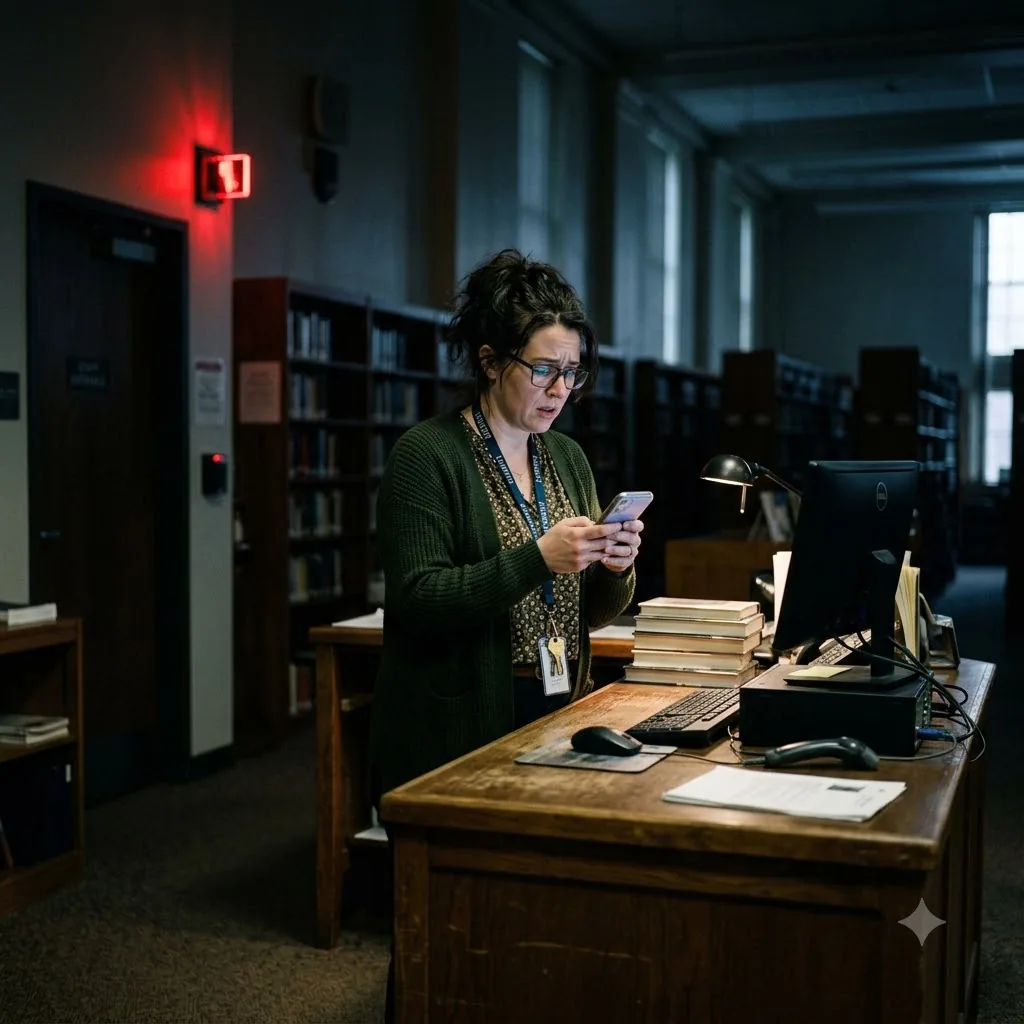
Inside, the air smelled of industrial floor wax and aging paper. She moved to the main circulation desk, dropping her canvas tote bag beside her ergonomic chair. She reached out and wiggled her mouse to wake the primary terminal. The monitor flared to life, but the familiar library management dashboard was missing. A gray, featureless login screen stared back, displaying only the county seal. She typed her credentials, taking care to hit every key perfectly.
Access Denied.
She rubbed her temples and tried again, typing at half her normal speed.
Account Disabled. Contact System Administrator.
It had to be a system update pushed overnight. She pulled her personal phone from her pocket and opened the county employee portal app. Her inbox loaded with agonizing slowness. At the very top sat an unread message stamped at 3:14 AM. The sender was not HR, nor was it her branch manager. It was listed as County CivicGuard Automated System.
She opened the message. The text was sterile, formatted in the county’s standard block layout, entirely devoid of a human signature or a contact extension.
Notice of Indefinite Administrative Leave.
Employee ID: 88492.
Effective immediately, your access to all county facilities and digital infrastructure is revoked. The CivicGuard predictive algorithm has flagged your recent employee activity as a Priority One Community Violation. This automated determination is final pending a secondary algorithmic review in ninety days. Do not attempt to access county property. Do not contact department heads regarding this automated action. Compliance is mandatory.
Sarah read the block of text three times. A Priority One Community Violation was a classification reserved for severe offenses like systemic embezzlement or physical violence. She was a reference and circulation librarian. Her daily routine consisted of organizing community reading events and waiving minor late fees for local high school students. She looked across the silent reading room toward the glass-walled manager’s office. The blinds were drawn completely tight. Her branch manager, David, always had his door propped open by eight in the morning, ready to greet the staff. The closed blinds felt like a physical barrier, a deliberate and cowardly shielding. David was letting the machine do the dirty work.
She needed an explanation. She walked over to the reference desk, where the public access terminals were still booting up. Marcus, the regional IT technician, was kneeling under desk three, untangling a massive knot of blue ethernet cables. She tapped his shoulder. He jumped, hitting his hardhat against the underside of the desk.
He rubbed his head and stood up, offering a strained, polite smile. She held out her phone, keeping the screen tilted so the early patrons browsing the nearby shelves could not read the text.
Marcus squinted at the CivicGuard header. His shoulders instantly dropped. His polite smile vanished, replaced by a tight grimace. He reached for his ruggedized diagnostic tablet, plugging a data cable into the nearest active staff terminal. He pulled up the master active directory for the county network and typed her employee ID number. The screen populated with rapid lines of code, directory paths, and status flags.
He scrolled down, his finger hovering over a solid red block of text at the bottom of her file. The color drained from his face, leaving his skin a pale, sickly gray. He stopped breathing for a long, terrible second. His eyes darted from the glowing screen to her face, then back to the glaring red text. He read the hidden lines twice.
He yanked the data cable out of the terminal port with such force that the plastic casing cracked.
He shoved the tablet into his canvas messenger bag and zipped it shut with a loud, aggressive rip. He looked at her, his eyes wide and completely unfocused, breathing in shallow, panicked gasps. He stepped backward, keeping the heavy wooden reference desk between them as if she were carrying a highly contagious disease.
He pointed a shaking finger at her phone, shook his head violently from side to side, and bolted toward the emergency exit. He slammed the crash bar down, setting off the shrill security alarm, and disappeared into the back alley as the heavy metal door swung shut.
Sarah pressed her county ID badge against the staff entrance reader. A short, flat beep sounded, accompanied by a solid red LED. She wiped the magnetic strip on the sleeve of her cardigan and tapped it again. Red light, identical beep. The heavy metal security door remained deadlocked. She assumed the old magnetic sensors were failing again, a regular occurrence in a building constructed long before the digital age. She walked around the brick exterior to the main public entrance. The morning patrons were already lining up on the damp concrete, holding their reusable bags and returning books. She slipped past them, nodding to the security guard who held the heavy glass door open for her.
Inside, the air smelled of industrial floor wax and aging paper. She moved to the main circulation desk, dropping her canvas tote bag beside her ergonomic chair. She reached out and wiggled her mouse to wake the primary terminal. The monitor flared to life, but the familiar library management dashboard was missing. A gray, featureless login screen stared back, displaying only the county seal. She typed her credentials, taking care to hit every key perfectly.
Access Denied.
She rubbed her temples and tried again, typing at half her normal speed.
Account Disabled. Contact System Administrator.
It had to be a system update pushed overnight. She pulled her personal phone from her pocket and opened the county employee portal app. Her inbox loaded with agonizing slowness. At the very top sat an unread message stamped at 3:14 AM. The sender was not HR, nor was it her branch manager. It was listed as County CivicGuard Automated System.
She opened the message. The text was sterile, formatted in the county’s standard block layout, entirely devoid of a human signature or a contact extension.
Notice of Indefinite Administrative Leave.
Employee ID: 88492.
Effective immediately, your access to all county facilities and digital infrastructure is revoked. The CivicGuard predictive algorithm has flagged your recent employee activity as a Priority One Community Violation. This automated determination is final pending a secondary algorithmic review in ninety days. Do not attempt to access county property. Do not contact department heads regarding this automated action. Compliance is mandatory.
Sarah read the block of text three times. A Priority One Community Violation was a classification reserved for severe offenses like systemic embezzlement or physical violence. She was a reference and circulation librarian. Her daily routine consisted of organizing community reading events and waiving minor late fees for local high school students. She looked across the silent reading room toward the glass-walled manager’s office. The blinds were drawn completely tight. Her branch manager, David, always had his door propped open by eight in the morning, ready to greet the staff. The closed blinds felt like a physical barrier, a deliberate and cowardly shielding. David was letting the machine do the dirty work.
She needed an explanation. She walked over to the reference desk, where the public access terminals were still booting up. Marcus, the regional IT technician, was kneeling under desk three, untangling a massive knot of blue ethernet cables. She tapped his shoulder. He jumped, hitting his hardhat against the underside of the desk.
He rubbed his head and stood up, offering a strained, polite smile. She held out her phone, keeping the screen tilted so the early patrons browsing the nearby shelves could not read the text.
Marcus squinted at the CivicGuard header. His shoulders instantly dropped. His polite smile vanished, replaced by a tight grimace. He reached for his ruggedized diagnostic tablet, plugging a data cable into the nearest active staff terminal. He pulled up the master active directory for the county network and typed her employee ID number. The screen populated with rapid lines of code, directory paths, and status flags.
He scrolled down, his finger hovering over a solid red block of text at the bottom of her file. The color drained from his face, leaving his skin a pale, sickly gray. He stopped breathing for a long, terrible second. His eyes darted from the glowing screen to her face, then back to the glaring red text. He read the hidden lines twice.
He yanked the data cable out of the terminal port with such force that the plastic casing cracked.
He shoved the tablet into his canvas messenger bag and zipped it shut with a loud, aggressive rip. He looked at her, his eyes wide and completely unfocused, breathing in shallow, panicked gasps. He stepped backward, keeping the heavy wooden reference desk between them as if she were carrying a highly contagious disease.
He pointed a shaking finger at her phone, shook his head violently from side to side, and bolted toward the emergency exit. He slammed the crash bar down, setting off the shrill security alarm, and disappeared into the back alley as the heavy metal door swung shut.