Story code: ST-001088
Part 1: The Dead Keycard
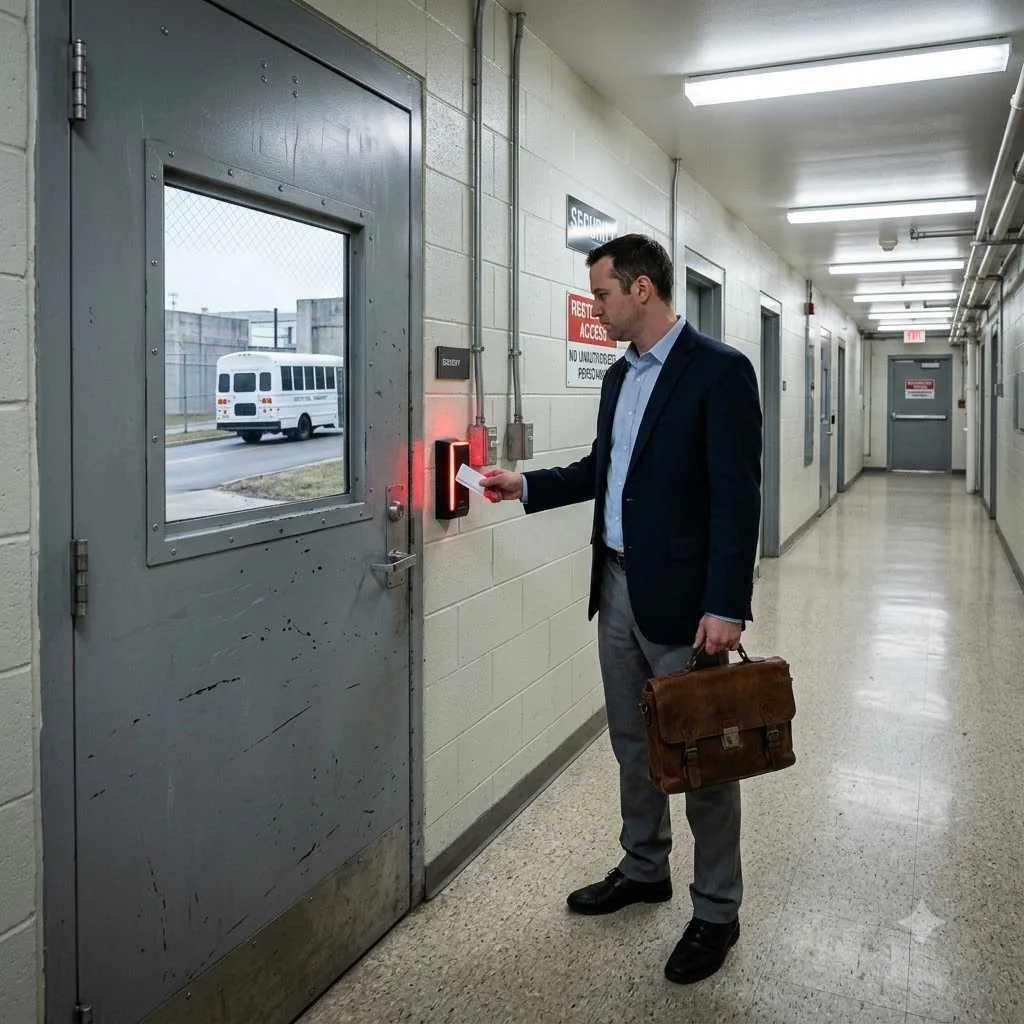
Aris swiped his ID badge through the card reader beside the heavy steel door of Interview Room B, expecting the familiar, violent clack of the mag-lock disengaging. He needed to get in, get the final psychological evaluation done, and get Marcus Vance cleared for his parole hearing on Tuesday. Instead of the green light and the mechanical thud, the keypad blinked a steady, dead red. Aris wiped the magnetic strip on his slacks and swiped it a second time, pressing harder against the plastic track. The door remained a solid, inert barrier of painted metal.
He leaned forward, pressing his face against the reinforced wire-mesh glass. The harsh fluorescent lights illuminated an entirely empty room. The bolted steel table was bare. The metal chair opposite the door sat vacant. Marcus should have been sitting there, nervous, reciting his post-release employment plans for the dozenth time. Aris tapped his knuckles against the glass, an entirely useless gesture, but the hollow sound only echoed back down the desolate transfer wing.
The squeak of rubber soles against polished linoleum broke the silence. Aris turned to find a junior guard approaching at a brisk pace. The young man had a tight jaw and rested his right hand defensively near the radio on his utility belt. His uniform looked stiff, lacking the faded patches and scuff marks characteristic of the veteran corrections officers who typically managed the high-traffic transfer corridors.
“My card is malfunctioning,” Aris said, holding up his lanyard. “And my nine o’clock appointment is missing.”
“The room is closed, Doctor,” the guard replied, his tone clipped and rehearsed.
“I have a mandated evaluation with Marcus Vance,” Aris stated, taking a step toward the wall-mounted phone to dial the warden’s office. “He is up for the board in exactly one week. This paperwork has to be filed by noon.”
As Aris reached for the receiver, the guard stepped laterally, placing his body directly between Aris and the phone console. It was a physical block, deliberate and sudden.
“The phone is down for maintenance,” the guard said, refusing to make eye contact.
Aris stared at the small green light glowing steadily at the base of the phone, a clear indicator of an active line. He looked back at the guard’s tense posture.
“Inmate Vance has been rerouted,” the guard continued, shifting his weight to maintain the barricade. “He caught a last-minute behavioral flag. Maximum-security protocol. He is no longer in this block.”
The statement was utterly absurd. Marcus Vance had not received a single disciplinary write-up in six years. He was the model of rehabilitation, a man who kept his head down, scrubbed the cafeteria tables on third shift, and read paperback biographies in his cell. Men like Marcus did not trigger sudden emergency max-security transfers days before guaranteed freedom. A behavioral flag required documentation, an incident report, and a preliminary hearing, none of which had crossed Aris’s desk.
Aris stepped back from the guard, his eyes darting down the length of the corridor. The tall, frosted security windows at the far end offered a distorted view of the loading bay. Aris walked briskly toward them. The junior officer followed immediately, boots thudding loudly against the floor, acting overtly agitated by Aris breaking from the designated visitor path.
Aris rubbed his palm against the condensation on the heavy glass, clearing a circle to look down into the yard.
The bleak morning light washed over the fenced-in concrete expanse. Down below, an armored Department of Corrections transport bus idled heavily. Thick white diesel exhaust plumed from its tailpipe, drifting upward into the razor wire. Two armed tactical officers stood by the folding doors. They wore heavy exterior vests and helmets with dark visors pulled down, obscuring their faces completely.
Between them, a figure in a bright orange high-visibility jumpsuit was being pushed forward. The man’s wrists were bound in heavy transit irons, connected to a thick steel belly chain that restricted his movements to a rigid shuffle.
Aris recognized the stooped shoulders and the distinct, uneven gait resulting from an old knee injury. It was Marcus.
The tactical officers flanking him were not local prison staff. Their vests bore the grey and black insignia of the state high-risk transport division, a specialized unit deployed exclusively for violent supermax relocations or federal handovers. They had no business touching an inmate slated for routine parole.
“He is going to miss his board hearing,” Aris stated, his voice flat as he watched one of the tactical officers shove Marcus roughly toward the first step of the bus.
“His board hearing is no longer on the schedule,” the young guard said, coming to a halt just inches from Aris’s shoulder, invading his personal space to assert control.
Aris turned his attention back to the window. He watched the heavy metal doors of the transport bus slam shut, sealing Marcus inside the windowless steel box. The engine roared, a deep, vibrating hum that traveled up the brick walls and rattled the security glass under Aris’s fingertips.
He reached into his pocket for his cell phone, needing to document the unmarked license plates on the transport vehicle. His fingers met empty fabric. They had made him check his personal devices at the front gate security desk, exactly as they did every single morning. He had no camera, no access to the outside world, and his internal clearance badge was entirely dead.
The armored bus shifted into gear, letting out a sharp hiss of air brakes, and began rolling toward the primary sally port exit. Aris spun around to head back down the corridor, determined to bypass the young guard, force his way into the administrative wing, and demand to see the warden in person.
Before he could take a second step, the heavy metal door to the adjacent stairwell swung open, and three more officers stepped out to form a solid wall of dark blue uniforms across the narrow hallway.
Aris swiped his ID badge through the card reader beside the heavy steel door of Interview Room B, expecting the familiar, violent clack of the mag-lock disengaging. He needed to get in, get the final psychological evaluation done, and get Marcus Vance cleared for his parole hearing on Tuesday. Instead of the green light and the mechanical thud, the keypad blinked a steady, dead red. Aris wiped the magnetic strip on his slacks and swiped it a second time, pressing harder against the plastic track. The door remained a solid, inert barrier of painted metal.
He leaned forward, pressing his face against the reinforced wire-mesh glass. The harsh fluorescent lights illuminated an entirely empty room. The bolted steel table was bare. The metal chair opposite the door sat vacant. Marcus should have been sitting there, nervous, reciting his post-release employment plans for the dozenth time. Aris tapped his knuckles against the glass, an entirely useless gesture, but the hollow sound only echoed back down the desolate transfer wing.
The squeak of rubber soles against polished linoleum broke the silence. Aris turned to find a junior guard approaching at a brisk pace. The young man had a tight jaw and rested his right hand defensively near the radio on his utility belt. His uniform looked stiff, lacking the faded patches and scuff marks characteristic of the veteran corrections officers who typically managed the high-traffic transfer corridors.
“My card is malfunctioning,” Aris said, holding up his lanyard. “And my nine o’clock appointment is missing.”
“The room is closed, Doctor,” the guard replied, his tone clipped and rehearsed.
“I have a mandated evaluation with Marcus Vance,” Aris stated, taking a step toward the wall-mounted phone to dial the warden’s office. “He is up for the board in exactly one week. This paperwork has to be filed by noon.”
As Aris reached for the receiver, the guard stepped laterally, placing his body directly between Aris and the phone console. It was a physical block, deliberate and sudden.
“The phone is down for maintenance,” the guard said, refusing to make eye contact.
Aris stared at the small green light glowing steadily at the base of the phone, a clear indicator of an active line. He looked back at the guard’s tense posture.
“Inmate Vance has been rerouted,” the guard continued, shifting his weight to maintain the barricade. “He caught a last-minute behavioral flag. Maximum-security protocol. He is no longer in this block.”
The statement was utterly absurd. Marcus Vance had not received a single disciplinary write-up in six years. He was the model of rehabilitation, a man who kept his head down, scrubbed the cafeteria tables on third shift, and read paperback biographies in his cell. Men like Marcus did not trigger sudden emergency max-security transfers days before guaranteed freedom. A behavioral flag required documentation, an incident report, and a preliminary hearing, none of which had crossed Aris’s desk.
Aris stepped back from the guard, his eyes darting down the length of the corridor. The tall, frosted security windows at the far end offered a distorted view of the loading bay. Aris walked briskly toward them. The junior officer followed immediately, boots thudding loudly against the floor, acting overtly agitated by Aris breaking from the designated visitor path.
Aris rubbed his palm against the condensation on the heavy glass, clearing a circle to look down into the yard.
The bleak morning light washed over the fenced-in concrete expanse. Down below, an armored Department of Corrections transport bus idled heavily. Thick white diesel exhaust plumed from its tailpipe, drifting upward into the razor wire. Two armed tactical officers stood by the folding doors. They wore heavy exterior vests and helmets with dark visors pulled down, obscuring their faces completely.
Between them, a figure in a bright orange high-visibility jumpsuit was being pushed forward. The man’s wrists were bound in heavy transit irons, connected to a thick steel belly chain that restricted his movements to a rigid shuffle.
Aris recognized the stooped shoulders and the distinct, uneven gait resulting from an old knee injury. It was Marcus.
The tactical officers flanking him were not local prison staff. Their vests bore the grey and black insignia of the state high-risk transport division, a specialized unit deployed exclusively for violent supermax relocations or federal handovers. They had no business touching an inmate slated for routine parole.
“He is going to miss his board hearing,” Aris stated, his voice flat as he watched one of the tactical officers shove Marcus roughly toward the first step of the bus.
“His board hearing is no longer on the schedule,” the young guard said, coming to a halt just inches from Aris’s shoulder, invading his personal space to assert control.
Aris turned his attention back to the window. He watched the heavy metal doors of the transport bus slam shut, sealing Marcus inside the windowless steel box. The engine roared, a deep, vibrating hum that traveled up the brick walls and rattled the security glass under Aris’s fingertips.
He reached into his pocket for his cell phone, needing to document the unmarked license plates on the transport vehicle. His fingers met empty fabric. They had made him check his personal devices at the front gate security desk, exactly as they did every single morning. He had no camera, no access to the outside world, and his internal clearance badge was entirely dead.
The armored bus shifted into gear, letting out a sharp hiss of air brakes, and began rolling toward the primary sally port exit. Aris spun around to head back down the corridor, determined to bypass the young guard, force his way into the administrative wing, and demand to see the warden in person.
Before he could take a second step, the heavy metal door to the adjacent stairwell swung open, and three more officers stepped out to form a solid wall of dark blue uniforms across the narrow hallway.