Story code: ST-000922
Part 1: The Anomaly
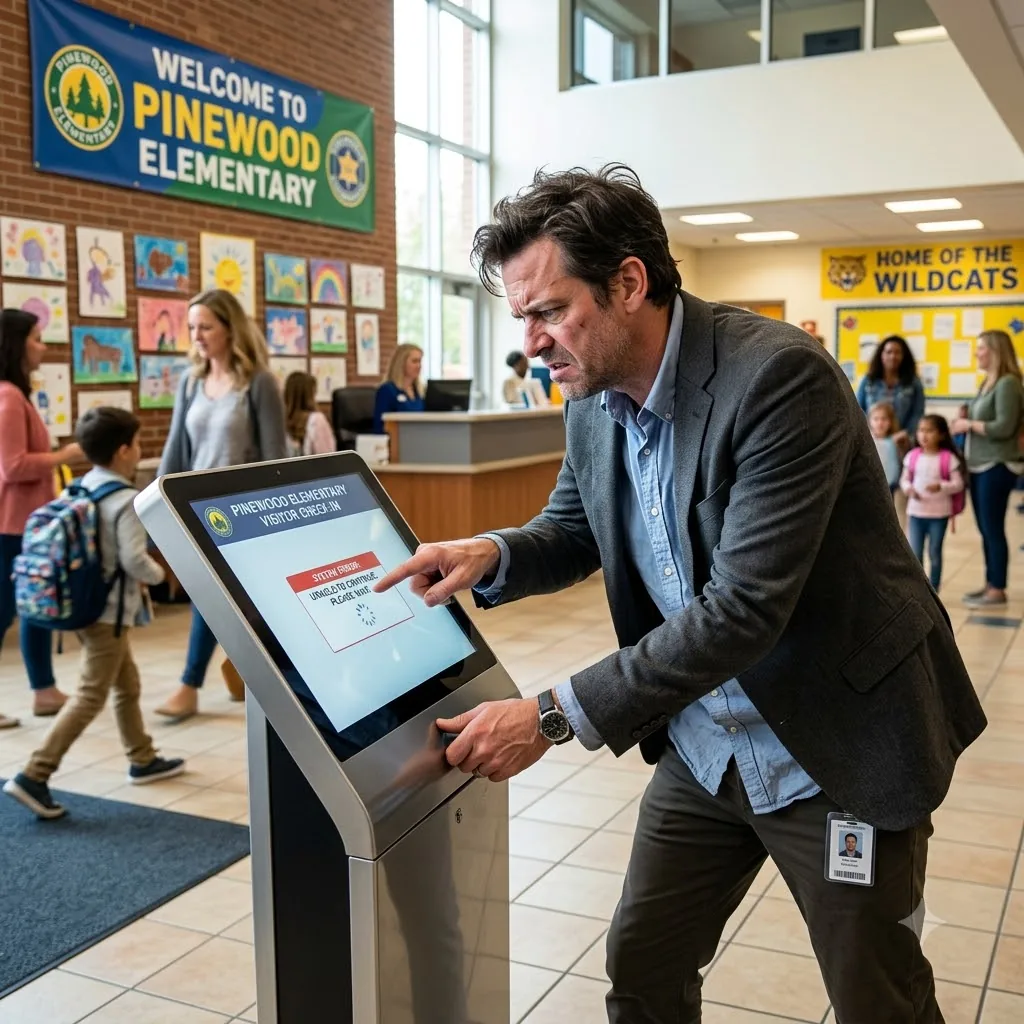
The visitor-management kiosk in the lobby of Oak Creek Elementary emitted a flat, synthesized buzz, flashing a red UNRECOGNIZED across David’s reflection on the screen. He jammed his driver’s license back into the plastic slot, pushing hard enough to make the machine rock on its bolted pedestal. The automated system spun a loading wheel, the exact same shade of pale corporate blue as the HR portal that had terminated his twelve-year data analytics career last Tuesday.
David tapped the screen with a rigid index finger. Smudges from a dozen other parents layered over the tempered glass, blurring the digital prompts. The interface demanded a fingerprint for secondary verification. He pressed his thumb against the illuminated green square. MATCH FAILED. PLEASE TRY AGAIN. His pulse thickened in his neck, a heavy, rhythmic thudding against his collar. The algorithm running this kiosk was a simplistic decision-tree, something a first-year programming student could write in an afternoon, yet it held absolute authority over the reinforced glass partition separating the lobby from the first-grade hallway. He wiped his thumb violently on the thigh of his jeans and pressed it down a second time.
MATCH FAILED. PROFILE LOCKED.
Last Tuesday, a similar chunk of code had optimized him out of a livelihood. No manager to look him in the eye, no handshake, just a deactivated keycard and a localized severance packet generated by a predictive cost-reduction model. He had become a negative integer on a spreadsheet. Now, another invisible script was blocking him from the only thing he had left. He slapped the side of the kiosk. The plastic housing rattled, a sharp, cracking sound in the dead quiet of the lobby.
Through the security glass, the hallways were sterile and empty. First period reading blocks were underway. Chloe was down that hall, sitting in Room 104 with Mr. Hayes. Mr. Hayes, who possessed the newly minted, district-mandated concealed carry permit. The parent newsletter had framed the armed teacher initiative as a proactive safety enhancement. The thought of a loaded nine-millimeter resting beneath a cardigan, just yards away from where his daughter colored inside the lines, had kept David pacing his living room until four in the morning. He needed to pull her out of class. He needed to physically hold her hand, to walk her out to the car, to prove to himself that his entire existence had not simply evaporated overnight.
The kiosk screen timed out. It reset to a smiling, stock-photo security guard pointing at a welcoming message.
David gripped the edge of the monitor, his knuckles turning white. He breathed in the smell of institutional floor wax and stale air conditioning. He tapped the screen to wake it up again, bypassing the biometric prompt and aggressively selecting the manual entry form. His fingers hammered the digital keyboard. David Miller. Father. Room 104.
The machine paused. A new message popped up in a sterile yellow box: CLEARANCE PENDING. SEE FRONT DESK.
The reception desk behind him was empty. A hastily written cardboard sign taped to the monitor indicated the secretary was on a campus run. There was just David, the relentless humming of the fluorescent lights, and the magnetic lock on the double doors. He leaned his torso over the laminate counter, eyeing the manual release button tucked beneath the secretary’s keyboard. The glowing red ring of the button mirrored the rejection light of the kiosk.
He had spent a decade building systems that categorized human behavior into risk brackets. He knew exactly what he looked like right now on the lobby security feed. A disheveled adult male, late thirties, wearing a rumpled jacket, displaying an elevated heart rate and erratic physical contact with school property. The kiosk was functioning perfectly. It was categorizing him as an anomaly. It was flagging him as a threat.
He stretched further over the reception desk. His ribs pressed painfully against the edge of the counter. His fingertips brushed the smooth plastic of the release button. He pushed it. The magnetic lock on the hallway doors clicked, a heavy, metallic thud echoing off the cinderblock walls. He had breached the first barrier.
David pulled his arm back, his chest heaving, waiting for a localized alarm to trigger. The silence held. The system was flawed. The automation was full of blind spots.
He pushed through the double doors. The atmosphere of the school changed instantly, the scent shifting from industrial cleaner to construction paper and spilled apple juice. He walked down the corridor, his boots squeaking sharply against the polished linoleum. Every classroom door he passed was shut tight, narrow vertical windows offering only slivers of the life inside. He kept his eyes locked on the blue placard jutting out from the wall at the end of the hall. 104. First Grade. Hayes.
The pressure in his skull mounted with every step, the humiliation of his firing and the cold rejection of the machine compounding into a singular, driving momentum. He reached the heavy wooden door of 104. He did not bother to knock. He wrapped his damp hand around the metal lever and pushed it down with all his weight.
The hinges let out a high-pitched whine. Thirty small faces turned toward the doorway in total unison. Chloe was sitting in the second row, a yellow marker frozen inches from a piece of construction paper. Her eyes widened at the sight of him.
At the front of the room, Mr. Hayes stopped mid-sentence. The teacher stood by the whiteboard, wearing a beige cardigan layered over a button-down shirt. David’s eyes immediately tracked past the man’s face, dropping straight to the slight, unnatural bulge at Mr. Hayes’s right hip. The concealed holster. The unpredictable variable that David’s shattered mind could no longer tolerate leaving to chance.
Mr. Hayes slowly lowered his dry-erase marker. The teacher took one deliberate step backward, angling his body away from the children, his right hand drifting upward to rest instinctively near his waistline.
David stepped fully into the classroom, letting the heavy door swing shut on its pneumatic hinge, the latch snapping into place behind him.
The visitor-management kiosk in the lobby of Oak Creek Elementary emitted a flat, synthesized buzz, flashing a red UNRECOGNIZED across David’s reflection on the screen. He jammed his driver’s license back into the plastic slot, pushing hard enough to make the machine rock on its bolted pedestal. The automated system spun a loading wheel, the exact same shade of pale corporate blue as the HR portal that had terminated his twelve-year data analytics career last Tuesday.
David tapped the screen with a rigid index finger. Smudges from a dozen other parents layered over the tempered glass, blurring the digital prompts. The interface demanded a fingerprint for secondary verification. He pressed his thumb against the illuminated green square. MATCH FAILED. PLEASE TRY AGAIN. His pulse thickened in his neck, a heavy, rhythmic thudding against his collar. The algorithm running this kiosk was a simplistic decision-tree, something a first-year programming student could write in an afternoon, yet it held absolute authority over the reinforced glass partition separating the lobby from the first-grade hallway. He wiped his thumb violently on the thigh of his jeans and pressed it down a second time.
MATCH FAILED. PROFILE LOCKED.
Last Tuesday, a similar chunk of code had optimized him out of a livelihood. No manager to look him in the eye, no handshake, just a deactivated keycard and a localized severance packet generated by a predictive cost-reduction model. He had become a negative integer on a spreadsheet. Now, another invisible script was blocking him from the only thing he had left. He slapped the side of the kiosk. The plastic housing rattled, a sharp, cracking sound in the dead quiet of the lobby.
Through the security glass, the hallways were sterile and empty. First period reading blocks were underway. Chloe was down that hall, sitting in Room 104 with Mr. Hayes. Mr. Hayes, who possessed the newly minted, district-mandated concealed carry permit. The parent newsletter had framed the armed teacher initiative as a proactive safety enhancement. The thought of a loaded nine-millimeter resting beneath a cardigan, just yards away from where his daughter colored inside the lines, had kept David pacing his living room until four in the morning. He needed to pull her out of class. He needed to physically hold her hand, to walk her out to the car, to prove to himself that his entire existence had not simply evaporated overnight.
The kiosk screen timed out. It reset to a smiling, stock-photo security guard pointing at a welcoming message.
David gripped the edge of the monitor, his knuckles turning white. He breathed in the smell of institutional floor wax and stale air conditioning. He tapped the screen to wake it up again, bypassing the biometric prompt and aggressively selecting the manual entry form. His fingers hammered the digital keyboard. David Miller. Father. Room 104.
The machine paused. A new message popped up in a sterile yellow box: CLEARANCE PENDING. SEE FRONT DESK.
The reception desk behind him was empty. A hastily written cardboard sign taped to the monitor indicated the secretary was on a campus run. There was just David, the relentless humming of the fluorescent lights, and the magnetic lock on the double doors. He leaned his torso over the laminate counter, eyeing the manual release button tucked beneath the secretary’s keyboard. The glowing red ring of the button mirrored the rejection light of the kiosk.
He had spent a decade building systems that categorized human behavior into risk brackets. He knew exactly what he looked like right now on the lobby security feed. A disheveled adult male, late thirties, wearing a rumpled jacket, displaying an elevated heart rate and erratic physical contact with school property. The kiosk was functioning perfectly. It was categorizing him as an anomaly. It was flagging him as a threat.
He stretched further over the reception desk. His ribs pressed painfully against the edge of the counter. His fingertips brushed the smooth plastic of the release button. He pushed it. The magnetic lock on the hallway doors clicked, a heavy, metallic thud echoing off the cinderblock walls. He had breached the first barrier.
David pulled his arm back, his chest heaving, waiting for a localized alarm to trigger. The silence held. The system was flawed. The automation was full of blind spots.
He pushed through the double doors. The atmosphere of the school changed instantly, the scent shifting from industrial cleaner to construction paper and spilled apple juice. He walked down the corridor, his boots squeaking sharply against the polished linoleum. Every classroom door he passed was shut tight, narrow vertical windows offering only slivers of the life inside. He kept his eyes locked on the blue placard jutting out from the wall at the end of the hall. 104. First Grade. Hayes.
The pressure in his skull mounted with every step, the humiliation of his firing and the cold rejection of the machine compounding into a singular, driving momentum. He reached the heavy wooden door of 104. He did not bother to knock. He wrapped his damp hand around the metal lever and pushed it down with all his weight.
The hinges let out a high-pitched whine. Thirty small faces turned toward the doorway in total unison. Chloe was sitting in the second row, a yellow marker frozen inches from a piece of construction paper. Her eyes widened at the sight of him.
At the front of the room, Mr. Hayes stopped mid-sentence. The teacher stood by the whiteboard, wearing a beige cardigan layered over a button-down shirt. David’s eyes immediately tracked past the man’s face, dropping straight to the slight, unnatural bulge at Mr. Hayes’s right hip. The concealed holster. The unpredictable variable that David’s shattered mind could no longer tolerate leaving to chance.
Mr. Hayes slowly lowered his dry-erase marker. The teacher took one deliberate step backward, angling his body away from the children, his right hand drifting upward to rest instinctively near his waistline.
David stepped fully into the classroom, letting the heavy door swing shut on its pneumatic hinge, the latch snapping into place behind him.