Story code: ST-001237
Part 1: The Fabricated Bylaw
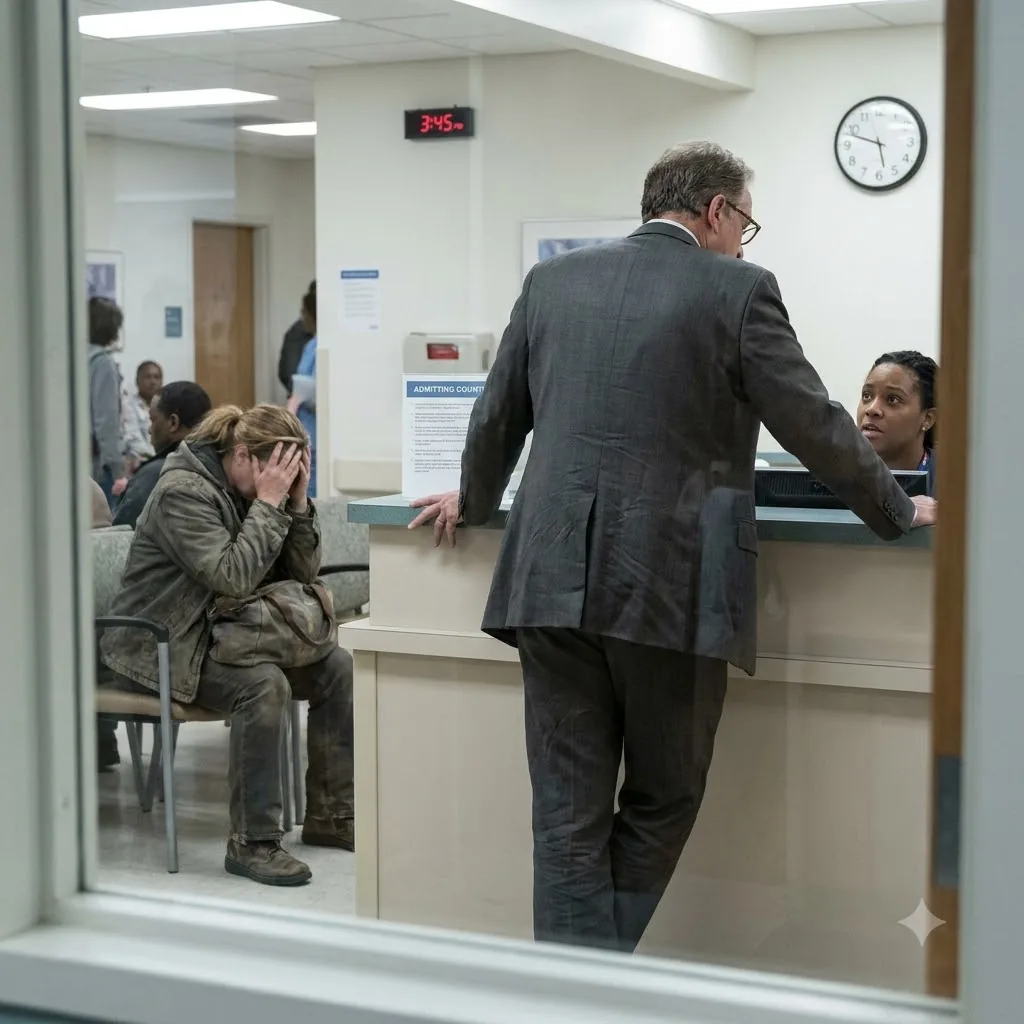
The security footage from the Metropolitan Hospital transplant waiting room shows Harold Vance, dressed in a sharp charcoal suit, slamming his palm on the admitting counter to block his nephew’s urgent organ donation. He loudly declared that hospital bylaws prohibited processing the patient’s blue silicone donor bracelet without an elder male relative’s co-signature. Because of this fabricated rule, the desk administrator, Officer Davies, halted the queue, leaving Sarah Vance clutching her late brother’s bracelet in silent shock while the transplant window ticked away.
From my desk in Quality Assurance, I have analyzed the audio logs and video feeds from that evening. The ambient noise of the waiting room-the low hum of the vending machines, the soft squeak of nurses’ rubber-soled shoes-is suddenly punctured by Harold’s booming voice. He leans over the counter, pointing a finger directly at Officer Davies.
Sarah Vance stands beside him, her knuckles white as she grips the blue silicone donor bracelet. She does not speak, but her eyes remain fixed on Davies. According to the log files, the patient had been declared brain-dead just forty minutes prior, and the transplant team was already preparing the recipient.
“Look at the policy manual,” Harold demands on the tape, his voice echoing off the sterile walls. “A family representative must co-sign any anatomical gift authorization before the wristband can be scanned. I am the executor of the family estate. You process that bracelet without my signature, and you violate federal transplant protocol.”
Officer Davies, looking visibly uneasy, opens his laminated policy binder. He flips through the tabs, his fingers tracing the columns of fine print. He pauses, looking from the binder to Harold, then to Sarah. The video shows him tapping his pen against the desk in a rhythmic, nervous cadence.
“Sir,” Davies says, his voice cracking slightly on the microphone. “I’m looking at the donor registration section. It doesn’t mention family co-signatures for registered organ donors.”
“It’s under the general medical consent bylaws, section four,” Harold lies, stepping closer. His posture is aggressive, shoulders squared, chest puffed out. He points to the blue bracelet in Sarah’s hands. “That bracelet is a medical directive. It is subject to estate oversight. If you scan it now, you are acting without legal consent.”
Sarah Vance takes a slow, deep breath. She holds the bracelet tighter but remains silent. The tension in the waiting room is thick; two other families sitting nearby have stopped talking, their attention drawn to the confrontation at the desk.
Davies looks at the screen of his terminal. The transplant authorization queue log sits open, a flashing cursor demanding the scan of the donor bracelet to release the medical files. But Davies hesitates. He looks back at the laminated binder, completely stymied by Harold’s authoritative assertions. The gatekeeper cannot explain how a general estate rule could possibly override an active, state-registered donor status, yet he hesitates to bypass the aggressive relative.
The security footage from the Metropolitan Hospital transplant waiting room shows Harold Vance, dressed in a sharp charcoal suit, slamming his palm on the admitting counter to block his nephew’s urgent organ donation. He loudly declared that hospital bylaws prohibited processing the patient’s blue silicone donor bracelet without an elder male relative’s co-signature. Because of this fabricated rule, the desk administrator, Officer Davies, halted the queue, leaving Sarah Vance clutching her late brother’s bracelet in silent shock while the transplant window ticked away.
From my desk in Quality Assurance, I have analyzed the audio logs and video feeds from that evening. The ambient noise of the waiting room-the low hum of the vending machines, the soft squeak of nurses’ rubber-soled shoes-is suddenly punctured by Harold’s booming voice. He leans over the counter, pointing a finger directly at Officer Davies.
Sarah Vance stands beside him, her knuckles white as she grips the blue silicone donor bracelet. She does not speak, but her eyes remain fixed on Davies. According to the log files, the patient had been declared brain-dead just forty minutes prior, and the transplant team was already preparing the recipient.
“Look at the policy manual,” Harold demands on the tape, his voice echoing off the sterile walls. “A family representative must co-sign any anatomical gift authorization before the wristband can be scanned. I am the executor of the family estate. You process that bracelet without my signature, and you violate federal transplant protocol.”
Officer Davies, looking visibly uneasy, opens his laminated policy binder. He flips through the tabs, his fingers tracing the columns of fine print. He pauses, looking from the binder to Harold, then to Sarah. The video shows him tapping his pen against the desk in a rhythmic, nervous cadence.
“Sir,” Davies says, his voice cracking slightly on the microphone. “I’m looking at the donor registration section. It doesn’t mention family co-signatures for registered organ donors.”
“It’s under the general medical consent bylaws, section four,” Harold lies, stepping closer. His posture is aggressive, shoulders squared, chest puffed out. He points to the blue bracelet in Sarah’s hands. “That bracelet is a medical directive. It is subject to estate oversight. If you scan it now, you are acting without legal consent.”
Sarah Vance takes a slow, deep breath. She holds the bracelet tighter but remains silent. The tension in the waiting room is thick; two other families sitting nearby have stopped talking, their attention drawn to the confrontation at the desk.
Davies looks at the screen of his terminal. The transplant authorization queue log sits open, a flashing cursor demanding the scan of the donor bracelet to release the medical files. But Davies hesitates. He looks back at the laminated binder, completely stymied by Harold’s authoritative assertions. The gatekeeper cannot explain how a general estate rule could possibly override an active, state-registered donor status, yet he hesitates to bypass the aggressive relative.