Story code: ST-000763
Part 1: The Severance
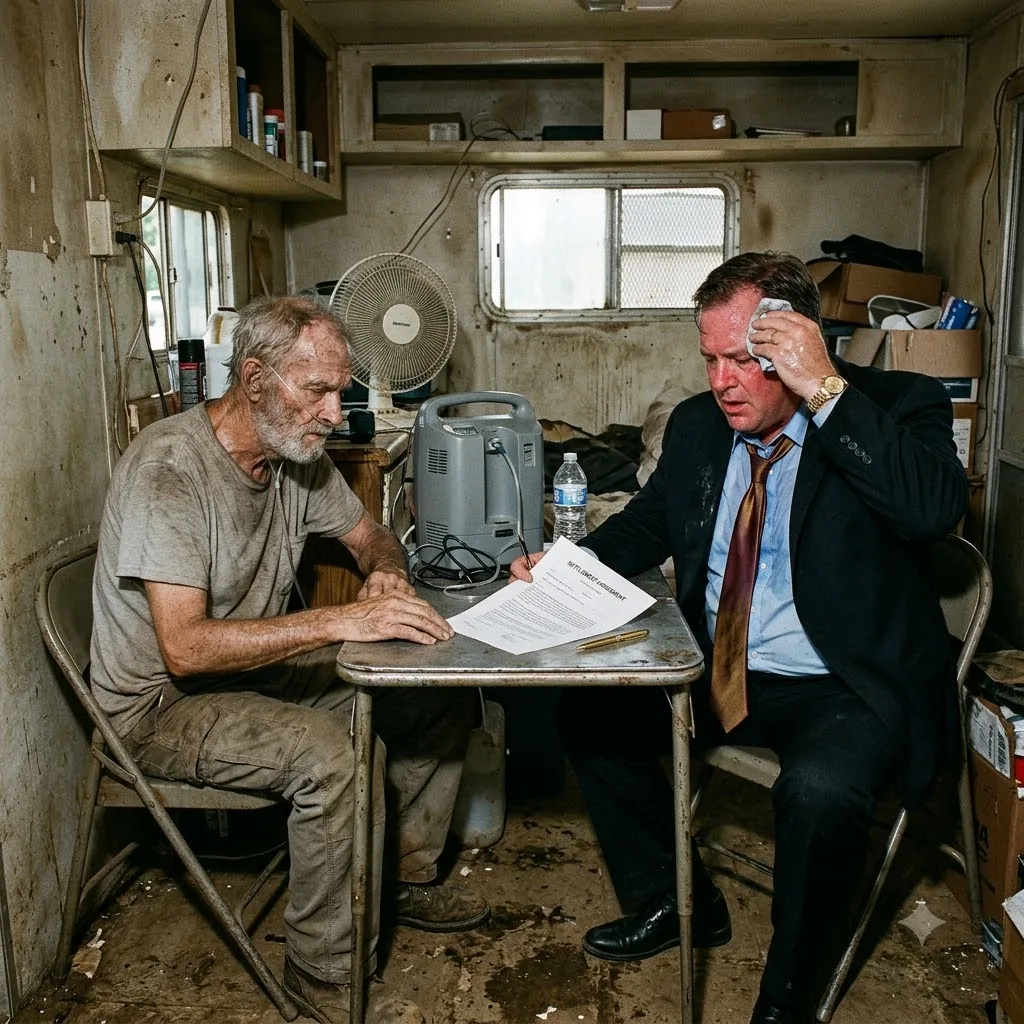
The FEMA trailer smelled of river mud and black mold, a suffocating heat trapping Silas against the sticky vinyl cushions while his oxygen concentrator choked out a rhythmic, rattling wheeze. He kept his sunken eyes on the warped particle-board table, waiting for the blue envelope Vance had promised to bring. The floodwaters had receded three weeks ago, leaving a thick crust of Appalachian clay over everything Silas had spent a lifetime building. Now he existed inside a tin can that cooked in the late afternoon sun, tethered to a failing medical device that sounded like a flooded outboard engine. The machine chugged, clicked, and hissed, pushing a meager flow of purified air through fifty feet of clear plastic tubing coiled on the linoleum floor.
He needed the relief funds today. The diesel generator rattling outside the thin walls had maybe three gallons of fuel left, and without power, the concentrator would die. Silas’s lungs already felt like they were packed tightly with wet fiberglass. Every inhalation required conscious effort, a burning pull against a chest that refused to expand.
Vance sat directly across from him, taking up too much space in the cramped galley. He wore a crisp white dress shirt and a navy tie that looked entirely out of place in the humid wreckage of the disaster zone. His silver watch caught the harsh, flickering fluorescent light overhead as he tapped his fingers on the table. Silas had paid his union dues for thirty-five years, breathing fine black coal dust in the deep seams of the Blackwood mine, trusting men exactly like Vance to have his back when the inevitable collapse finally arrived. The flood destruction was supposed to be completely covered by the emergency catastrophe fund. Vance had smiled widely when he stepped through the metal door, patting his heavy leather briefcase with a reassuring nod. He had looked like the long-awaited savior.
Vance unclasped the briefcase, the brass latches snapping like gunshots in the small space. Silas leaned forward, the plastic cannula tightening uncomfortably against his nostrils. He braced himself to see the heavy, watermarked stock of a union-certified check.
Instead, Vance withdrew a single sheet of paper, freshly printed and stark white, and slid it across the damp surface of the table.
Silas stared down at the document. It was a standard legal release, but the bold heading at the top caught his eye and refused to let go. It read ‘Act of God Voidance and Settlement of Claims.’ There was no check attached to the back. There was no envelope containing a voucher. There was just a thick black signature line at the bottom next to a date stamped in bright red ink.
Silas looked up at his union representative. Vance kept his manicured hands folded resting on the table, his expression completely blank, wiped utterly clean of the forced, brotherly camaraderie he had worn at the door just five minutes prior. Silas reached a trembling, deeply calloused hand toward the paper. He dragged the sheet closer, squinting at the dense blocks of fine print. The words blurred together at first, but the phrases ‘total indemnification’ and ‘natural disaster exception clause’ stood out sharp and brutal against the page. They were cutting him loose. Thirty-five years of breathing poison, a ruined set of lungs, and a washed-away house, all erased by a bureaucratic loophole Vance had personally driven out to the mud flats to enforce.
The oppressive air inside the trailer seemed to turn instantly solid. Silas felt a deeply familiar, terrifying tightness clamping down hard on his chest. His breathing grew shallow and rapid, the panic response triggering involuntarily as his damaged respiratory system strained for more oxygen. The concentrator chugged louder, the compressor whining as it tried to match his sudden, desperate inhalations. He gasped, his shoulders heaving violently against his sweat-soaked flannel shirt. He pointed a shaking finger at the paper, completely unable to find the breath to form the words of protest burning in his throat. The betrayal was absolute, engineered in a corporate boardroom, and happening right in front of him.
Vance did not flinch as Silas began to hyperventilate. The younger man simply watched the struggle, his eyes cold and detached, observing Silas like a technician monitoring a failing pressure valve. Silas grabbed the edge of the particle-board table with both hands, his knuckles turning stark white, sucking in useless, shallow drafts of thick, hot air. The wheeze of the machine grew erratic, matching the chaotic rhythm of his failing lungs.
Vance leaned forward slowly, closing the distance over the table. He reached his hand out, his fingers extending toward the coil of clear plastic tubing resting near Silas’s elbow. With a terrifyingly calm precision, Vance pinched the main oxygen supply hose tightly shut between his thumb and forefinger.
The FEMA trailer smelled of river mud and black mold, a suffocating heat trapping Silas against the sticky vinyl cushions while his oxygen concentrator choked out a rhythmic, rattling wheeze. He kept his sunken eyes on the warped particle-board table, waiting for the blue envelope Vance had promised to bring. The floodwaters had receded three weeks ago, leaving a thick crust of Appalachian clay over everything Silas had spent a lifetime building. Now he existed inside a tin can that cooked in the late afternoon sun, tethered to a failing medical device that sounded like a flooded outboard engine. The machine chugged, clicked, and hissed, pushing a meager flow of purified air through fifty feet of clear plastic tubing coiled on the linoleum floor.
He needed the relief funds today. The diesel generator rattling outside the thin walls had maybe three gallons of fuel left, and without power, the concentrator would die. Silas’s lungs already felt like they were packed tightly with wet fiberglass. Every inhalation required conscious effort, a burning pull against a chest that refused to expand.
Vance sat directly across from him, taking up too much space in the cramped galley. He wore a crisp white dress shirt and a navy tie that looked entirely out of place in the humid wreckage of the disaster zone. His silver watch caught the harsh, flickering fluorescent light overhead as he tapped his fingers on the table. Silas had paid his union dues for thirty-five years, breathing fine black coal dust in the deep seams of the Blackwood mine, trusting men exactly like Vance to have his back when the inevitable collapse finally arrived. The flood destruction was supposed to be completely covered by the emergency catastrophe fund. Vance had smiled widely when he stepped through the metal door, patting his heavy leather briefcase with a reassuring nod. He had looked like the long-awaited savior.
Vance unclasped the briefcase, the brass latches snapping like gunshots in the small space. Silas leaned forward, the plastic cannula tightening uncomfortably against his nostrils. He braced himself to see the heavy, watermarked stock of a union-certified check.
Instead, Vance withdrew a single sheet of paper, freshly printed and stark white, and slid it across the damp surface of the table.
Silas stared down at the document. It was a standard legal release, but the bold heading at the top caught his eye and refused to let go. It read ‘Act of God Voidance and Settlement of Claims.’ There was no check attached to the back. There was no envelope containing a voucher. There was just a thick black signature line at the bottom next to a date stamped in bright red ink.
Silas looked up at his union representative. Vance kept his manicured hands folded resting on the table, his expression completely blank, wiped utterly clean of the forced, brotherly camaraderie he had worn at the door just five minutes prior. Silas reached a trembling, deeply calloused hand toward the paper. He dragged the sheet closer, squinting at the dense blocks of fine print. The words blurred together at first, but the phrases ‘total indemnification’ and ‘natural disaster exception clause’ stood out sharp and brutal against the page. They were cutting him loose. Thirty-five years of breathing poison, a ruined set of lungs, and a washed-away house, all erased by a bureaucratic loophole Vance had personally driven out to the mud flats to enforce.
The oppressive air inside the trailer seemed to turn instantly solid. Silas felt a deeply familiar, terrifying tightness clamping down hard on his chest. His breathing grew shallow and rapid, the panic response triggering involuntarily as his damaged respiratory system strained for more oxygen. The concentrator chugged louder, the compressor whining as it tried to match his sudden, desperate inhalations. He gasped, his shoulders heaving violently against his sweat-soaked flannel shirt. He pointed a shaking finger at the paper, completely unable to find the breath to form the words of protest burning in his throat. The betrayal was absolute, engineered in a corporate boardroom, and happening right in front of him.
Vance did not flinch as Silas began to hyperventilate. The younger man simply watched the struggle, his eyes cold and detached, observing Silas like a technician monitoring a failing pressure valve. Silas grabbed the edge of the particle-board table with both hands, his knuckles turning stark white, sucking in useless, shallow drafts of thick, hot air. The wheeze of the machine grew erratic, matching the chaotic rhythm of his failing lungs.
Vance leaned forward slowly, closing the distance over the table. He reached his hand out, his fingers extending toward the coil of clear plastic tubing resting near Silas’s elbow. With a terrifyingly calm precision, Vance pinched the main oxygen supply hose tightly shut between his thumb and forefinger.