Story code: ST-001289
Part 1: The Shred Bin
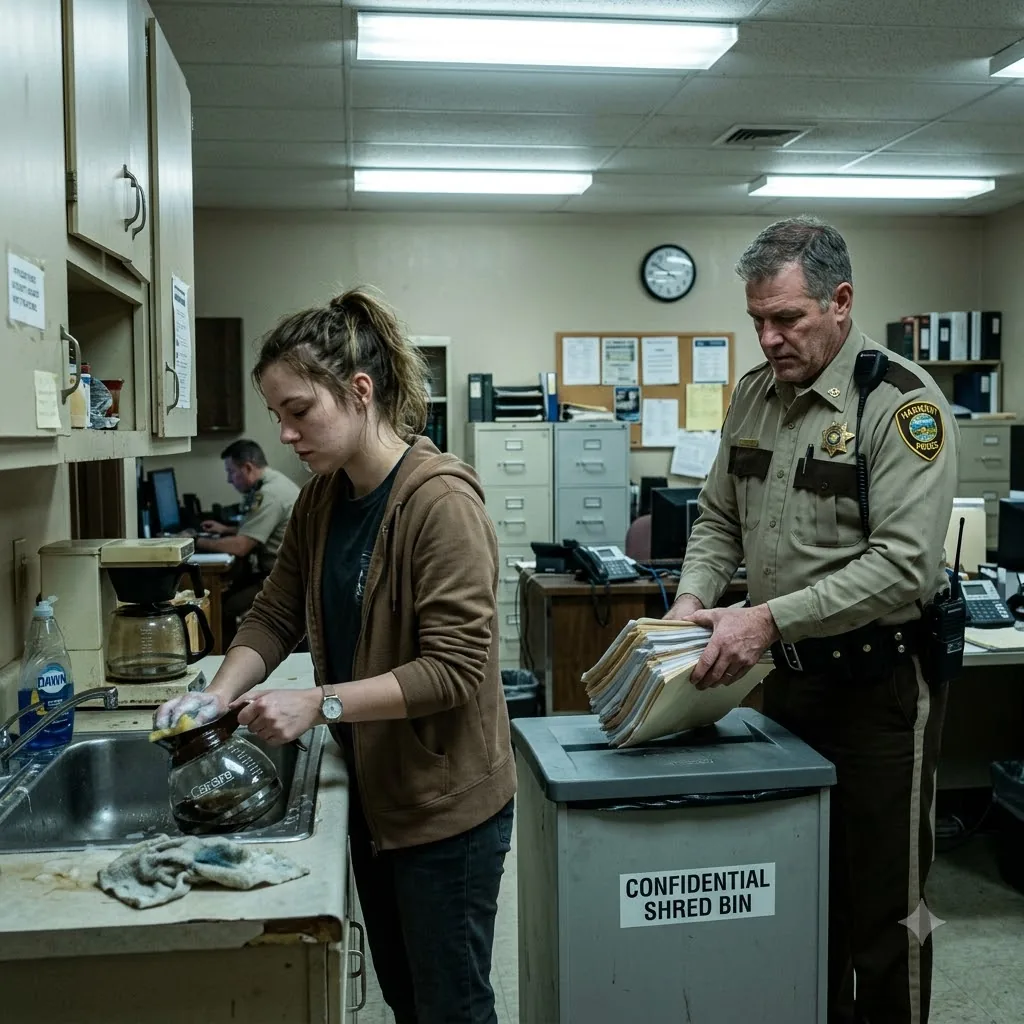
The industrial sponge disintegrated against the bottom of the breakroom coffee pot. Riley pressed harder, scraping a thick layer of charred sludge from the glass while fighting a violent tremor in both hands. The smell of stale French fry grease still clung to Riley’s skin from the graveyard shift at the diner, battling the sharp chemical tang of the precinct dish soap. Sunlight stabbed through the barred window above the sink. It was seven in the morning. This was hour one of an unpaid internship and hour nine of being awake and on their feet.
Sheriff Miller’s heavy boots announced him before the breakroom door swung open. The rhythmic, expensive thud of custom leather against cheap linoleum echoed down the quiet hallway. Riley stiffened, turning the faucet on high to rinse the pot and keeping bloodshot eyes fixed firmly on the metal drain.
Miller stepped into the small kitchen space, radiating the aggressive scent of expensive cedar aftershave and a full eight hours of sleep. He leaned against the doorframe, adjusting the heavy silver star pinned to his impeccably pressed uniform. He watched Riley scrub the carafe, a familiar, condescending smirk lifting the corner of his mouth.
“You missed a spot right near the handle, kid,” Miller said, pointing a thick, calloused finger. “Attention to detail. That is what separates the men from the boys in this line of work.”
Riley scrubbed the handle in silence, biting down on the inside of their cheek. A stack of final eviction notices waited in a duffel bag stuffed in the corner locker. This unpaid internship was supposed to be the golden ticket to a permanent, salaried deputy position. It was the only viable way out of a crushing mountain of student debt and medical bills left behind by a shattered family. Instead, it had been three months of fetching dry cleaning, filing endless paperwork, and cleaning up after men who made six figures to drive around in air-conditioned cruisers.
“Your generation does not understand the concept of paying dues,” Miller continued, stepping fully into the room and claiming the space with his broad shoulders. He carried a thick stack of manila folders under his left arm. “You all want the badge, the gun, and the glory right out of the gate. You lack grit. You have to earn the right to stand in that uniform. It takes sweat. It takes knowing your place and keeping your head down.”
Riley rinsed the pot, set it carefully on the warming plate, and wiped down the counter with a frayed towel. “Yes, sir.”
“I was working construction at your age,” Miller said, walking past the sink toward the large blue shred bin tucked beside the industrial copier. “Twelve hours a day in the blistering sun, then night classes. Nobody handed me a single thing. I built this department by demanding that exact same work ethic from everyone who walks through these doors.”
Riley focused on folding the damp paper towel into perfect squares. The diner shift had ended at six. The walk to the station took forty-five minutes because the transmission on the rusted sedan had finally seized up in a parking lot. The deep, physical ache in Riley’s lower back throbbed in perfect time with Miller’s lecture on hardship.
“You want to make it here, you have to prove you can handle the ugly side of the job without complaining,” Miller said. He lifted the heavy plastic lid of the shred bin. It was already full to the brim from the weekend shift, overflowing with curled strips of confidential documents. “You have to show me you have the stomach for the real work.”
Miller dropped his stack of folders directly onto the overflowing pile of shredded paper. He did not bother to push them down or wait for the blades to catch. He simply let them fall. He turned his back on the bin and walked toward the fresh pot of coffee on the counter.
As the heavy lid of the bin fell shut, the displaced air pushed the top folder sideways. It slid down the angled plastic rim and hit the linoleum floor with a soft slap. The metal clasp popped open, spilling three printed pages across the dusty tiles.
Miller was busy pouring his coffee, his broad back turned completely to the mess. He hummed a low, tuneless song, admiring his own reflection in the dark glass of the microwave door.
Riley knelt to gather the spilled papers. The top sheet was a standard coroner’s preliminary report. The bright red stamp in the top right corner marked it as a fatal overdose. Riley reached for it, intending to slide it back into the manila folder and hand it over.
Then the bold text on the second page caught the harsh fluorescent light. It was a transfer log from the county evidence room. A massive seizure of prescription narcotics had been checked out for incineration the previous afternoon. The signature at the bottom of the release form belonged to Sheriff Miller. The receiving address for the incineration was not the county incinerator facility. It was the address of the free clinic on the south side of town, the exact location where the overdose victim had been found dead just four hours later.
Riley’s fingers stopped inches from the paper. The dates aligned perfectly. The signature was crisp, fresh, and undeniable in blue ink. A department-sanctioned destruction of seized evidence had been rerouted to a civilian building.
Miller took a long, loud sip of his black coffee.
Riley stared at the address on the form. The bone-deep exhaustion evaporated entirely, replaced by a cold, sharp spike of adrenaline that paralyzed every muscle in the body. The sheriff had just thrown a direct, documented link between a missing evidence haul and a fresh body into the trash while bragging about his flawless work ethic.
“Put a new filter in before you leave,” Miller said, his heavy boots pivoting on the linoleum. “And grab that trash off the floor. You are staring at it like it is going to bite you.”
Riley looked up from the floor, hands frozen above the overdose report, as Miller’s eyes dropped to the paper.
The industrial sponge disintegrated against the bottom of the breakroom coffee pot. Riley pressed harder, scraping a thick layer of charred sludge from the glass while fighting a violent tremor in both hands. The smell of stale French fry grease still clung to Riley’s skin from the graveyard shift at the diner, battling the sharp chemical tang of the precinct dish soap. Sunlight stabbed through the barred window above the sink. It was seven in the morning. This was hour one of an unpaid internship and hour nine of being awake and on their feet.
Sheriff Miller’s heavy boots announced him before the breakroom door swung open. The rhythmic, expensive thud of custom leather against cheap linoleum echoed down the quiet hallway. Riley stiffened, turning the faucet on high to rinse the pot and keeping bloodshot eyes fixed firmly on the metal drain.
Miller stepped into the small kitchen space, radiating the aggressive scent of expensive cedar aftershave and a full eight hours of sleep. He leaned against the doorframe, adjusting the heavy silver star pinned to his impeccably pressed uniform. He watched Riley scrub the carafe, a familiar, condescending smirk lifting the corner of his mouth.
“You missed a spot right near the handle, kid,” Miller said, pointing a thick, calloused finger. “Attention to detail. That is what separates the men from the boys in this line of work.”
Riley scrubbed the handle in silence, biting down on the inside of their cheek. A stack of final eviction notices waited in a duffel bag stuffed in the corner locker. This unpaid internship was supposed to be the golden ticket to a permanent, salaried deputy position. It was the only viable way out of a crushing mountain of student debt and medical bills left behind by a shattered family. Instead, it had been three months of fetching dry cleaning, filing endless paperwork, and cleaning up after men who made six figures to drive around in air-conditioned cruisers.
“Your generation does not understand the concept of paying dues,” Miller continued, stepping fully into the room and claiming the space with his broad shoulders. He carried a thick stack of manila folders under his left arm. “You all want the badge, the gun, and the glory right out of the gate. You lack grit. You have to earn the right to stand in that uniform. It takes sweat. It takes knowing your place and keeping your head down.”
Riley rinsed the pot, set it carefully on the warming plate, and wiped down the counter with a frayed towel. “Yes, sir.”
“I was working construction at your age,” Miller said, walking past the sink toward the large blue shred bin tucked beside the industrial copier. “Twelve hours a day in the blistering sun, then night classes. Nobody handed me a single thing. I built this department by demanding that exact same work ethic from everyone who walks through these doors.”
Riley focused on folding the damp paper towel into perfect squares. The diner shift had ended at six. The walk to the station took forty-five minutes because the transmission on the rusted sedan had finally seized up in a parking lot. The deep, physical ache in Riley’s lower back throbbed in perfect time with Miller’s lecture on hardship.
“You want to make it here, you have to prove you can handle the ugly side of the job without complaining,” Miller said. He lifted the heavy plastic lid of the shred bin. It was already full to the brim from the weekend shift, overflowing with curled strips of confidential documents. “You have to show me you have the stomach for the real work.”
Miller dropped his stack of folders directly onto the overflowing pile of shredded paper. He did not bother to push them down or wait for the blades to catch. He simply let them fall. He turned his back on the bin and walked toward the fresh pot of coffee on the counter.
As the heavy lid of the bin fell shut, the displaced air pushed the top folder sideways. It slid down the angled plastic rim and hit the linoleum floor with a soft slap. The metal clasp popped open, spilling three printed pages across the dusty tiles.
Miller was busy pouring his coffee, his broad back turned completely to the mess. He hummed a low, tuneless song, admiring his own reflection in the dark glass of the microwave door.
Riley knelt to gather the spilled papers. The top sheet was a standard coroner’s preliminary report. The bright red stamp in the top right corner marked it as a fatal overdose. Riley reached for it, intending to slide it back into the manila folder and hand it over.
Then the bold text on the second page caught the harsh fluorescent light. It was a transfer log from the county evidence room. A massive seizure of prescription narcotics had been checked out for incineration the previous afternoon. The signature at the bottom of the release form belonged to Sheriff Miller. The receiving address for the incineration was not the county incinerator facility. It was the address of the free clinic on the south side of town, the exact location where the overdose victim had been found dead just four hours later.
Riley’s fingers stopped inches from the paper. The dates aligned perfectly. The signature was crisp, fresh, and undeniable in blue ink. A department-sanctioned destruction of seized evidence had been rerouted to a civilian building.
Miller took a long, loud sip of his black coffee.
Riley stared at the address on the form. The bone-deep exhaustion evaporated entirely, replaced by a cold, sharp spike of adrenaline that paralyzed every muscle in the body. The sheriff had just thrown a direct, documented link between a missing evidence haul and a fresh body into the trash while bragging about his flawless work ethic.
“Put a new filter in before you leave,” Miller said, his heavy boots pivoting on the linoleum. “And grab that trash off the floor. You are staring at it like it is going to bite you.”
Riley looked up from the floor, hands frozen above the overdose report, as Miller’s eyes dropped to the paper.