Story code: ST-000517
Part 1: He Said There Was a Rule
The robot vendor tried to take Mrs. Alvarez’s care robot out of service right in the common room while people were folding towels and waiting for their afternoon meds, and when I asked him to show me the rule, he said he did not have to do that in front of residents. He said Elena Alvarez could no longer use the robot assigned to her because of “policy,” but nobody at Maple Glen could tell me which policy, where it was written, or why it had suddenly started at 2:10 on a Tuesday.
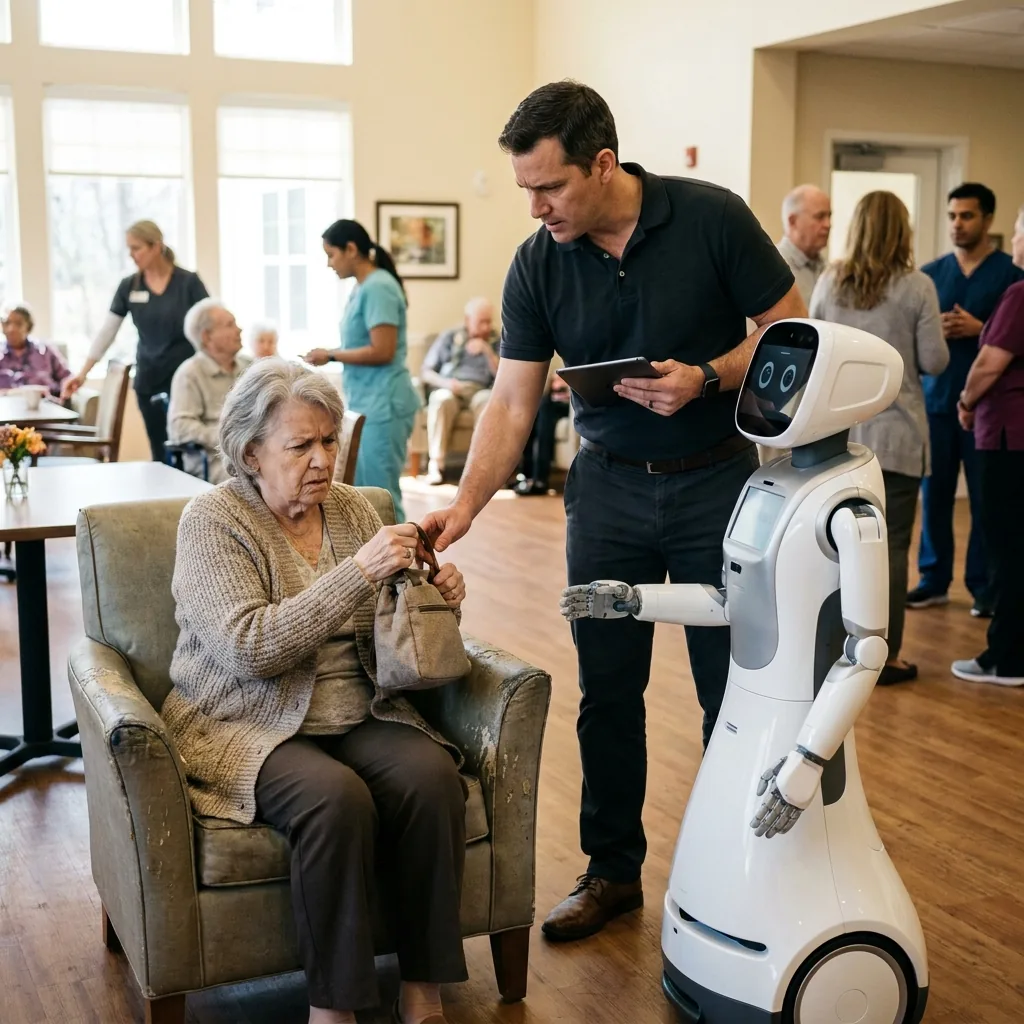
The robot was parked beside Elena’s chair near the window, its screen lit with her reminder schedule and the little water prompt it always gave her around that time. Elena had one hand on the armrest and the other resting on the robot’s handle. She looked from Trent Weller to Dawn Mercer and then back to the robot, the way people look when other adults are discussing their daily life over their head.
Trent wore a vendor badge and carried a tablet tucked flat against his chest. He did not crouch to Elena’s level or speak to her first. He spoke to Dawn in the soft clipped tone people use when they want a room to hear authority without sounding loud.
“Under updated compliance guidance, this resident’s access needs to be suspended pending review,” he said.
I asked, “What guidance?”
He gave me a quick glance like I had interrupted a meeting I was not invited to.
“Vendor policy tied to care-assist use conditions,” he said.
That sentence had a polished sound and no content. I asked him again, plain this time.
“What is the rule?”
Dawn stepped in before he answered. She was using the same calm voice staff use when somebody’s family starts asking hard questions in a public room.
“Ms. Brooks, we’re just trying to keep things orderly while we clarify the issue.”
I said, “Orderly is fine. Taking away her robot with no rule anybody can show me is not fine.”
Elena lifted her hand and tapped the robot’s frame with two fingers. “It tells me my pills and my water and when my daughter said she’d be here,” she said. “I use it every day.”
That was the whole issue in one sentence. This was not a novelty gadget somebody had rolled in for entertainment. The robot was part of how her day stayed in order. It reminded her, announced activity changes, and let staff send simple prompts without stopping at her chair every ten minutes.
Trent finally addressed Elena, but he still sounded like he was talking into a meeting note.
“This is temporary, Mrs. Alvarez. We just need to restrict functionality until review is complete.”
“What review?” I said.
He shifted the tablet from one arm to the other. “A standard review.”
“Started by who?”
“By the vendor.”
“Based on what?”
He looked to Dawn again. That happened several times over the next few minutes. He would make the claim, I would ask for the piece underneath it, and then he would hand the weight of the room back to facility staff as if they could make his missing answer disappear.
Dawn asked Jamal Reeves, who had just rolled his medication cart into the room, to give them a minute before passing Elena’s chair. Jamal stopped and waited. He did not say much then, but he looked at the robot, then at Elena, then at Trent, like he was trying to fit this interruption into a routine that normally made sense.
I asked Dawn whether she had seen the policy herself.
She said, “I’m relying on the vendor’s compliance direction right now.”
That was the first clean fact anybody gave me. She had not seen it either.
Trent reached for the robot’s docking cord and said, “It needs to go back to the charging alcove until this is resolved.”
Elena pulled her hand back slowly, not dramatic, just careful. “It was charging last night,” she said.
He stopped touching the cord but did not correct her. Instead he said, “The device cannot remain in active resident use.”
A woman across the room looked up from a puzzle table and asked whether that meant the robots were being changed. Dawn told her no, this was resident-specific. Trent nodded at that, very firm.
That was when the thing stopped sounding technical and started sounding invented. If the robot itself was fine, and if nobody could say Elena had done anything except use it the same way she always had, then what exactly was resident-specific about a rule nobody could produce?
I asked him one more time, slowly enough that Jamal and two residents near the television could hear every word.
“If this is a real policy, explain how it applies to anyone else in this room who uses the same kind of reminders, prompts, and staff support.”
For the first time, Trent did not answer right away. He said, “That’s not the relevant comparison.”
I said, “Then tell me the relevant one.”
Dawn opened the incident binder on the front counter area as if the binder itself might help, then stopped with one hand on the page because there was clearly nothing in front of her that matched what Trent was saying.
He repeated, “This is a targeted compliance restriction.”
I asked, “Targeted by what standard?”
And in a room full of people who had just watched him block an elderly woman’s access to the robot that structured her day, the vendor who claimed to have a rule still could not explain why that same rule did not immediately reach half the ordinary routines happening three feet away.
The robot vendor tried to take Mrs. Alvarez’s care robot out of service right in the common room while people were folding towels and waiting for their afternoon meds, and when I asked him to show me the rule, he said he did not have to do that in front of residents. He said Elena Alvarez could no longer use the robot assigned to her because of “policy,” but nobody at Maple Glen could tell me which policy, where it was written, or why it had suddenly started at 2:10 on a Tuesday.
The robot was parked beside Elena’s chair near the window, its screen lit with her reminder schedule and the little water prompt it always gave her around that time. Elena had one hand on the armrest and the other resting on the robot’s handle. She looked from Trent Weller to Dawn Mercer and then back to the robot, the way people look when other adults are discussing their daily life over their head.
Trent wore a vendor badge and carried a tablet tucked flat against his chest. He did not crouch to Elena’s level or speak to her first. He spoke to Dawn in the soft clipped tone people use when they want a room to hear authority without sounding loud.
“Under updated compliance guidance, this resident’s access needs to be suspended pending review,” he said.
I asked, “What guidance?”
He gave me a quick glance like I had interrupted a meeting I was not invited to.
“Vendor policy tied to care-assist use conditions,” he said.
That sentence had a polished sound and no content. I asked him again, plain this time.
“What is the rule?”
Dawn stepped in before he answered. She was using the same calm voice staff use when somebody’s family starts asking hard questions in a public room.
“Ms. Brooks, we’re just trying to keep things orderly while we clarify the issue.”
I said, “Orderly is fine. Taking away her robot with no rule anybody can show me is not fine.”
Elena lifted her hand and tapped the robot’s frame with two fingers. “It tells me my pills and my water and when my daughter said she’d be here,” she said. “I use it every day.”
That was the whole issue in one sentence. This was not a novelty gadget somebody had rolled in for entertainment. The robot was part of how her day stayed in order. It reminded her, announced activity changes, and let staff send simple prompts without stopping at her chair every ten minutes.
Trent finally addressed Elena, but he still sounded like he was talking into a meeting note.
“This is temporary, Mrs. Alvarez. We just need to restrict functionality until review is complete.”
“What review?” I said.
He shifted the tablet from one arm to the other. “A standard review.”
“Started by who?”
“By the vendor.”
“Based on what?”
He looked to Dawn again. That happened several times over the next few minutes. He would make the claim, I would ask for the piece underneath it, and then he would hand the weight of the room back to facility staff as if they could make his missing answer disappear.
Dawn asked Jamal Reeves, who had just rolled his medication cart into the room, to give them a minute before passing Elena’s chair. Jamal stopped and waited. He did not say much then, but he looked at the robot, then at Elena, then at Trent, like he was trying to fit this interruption into a routine that normally made sense.
I asked Dawn whether she had seen the policy herself.
She said, “I’m relying on the vendor’s compliance direction right now.”
That was the first clean fact anybody gave me. She had not seen it either.
Trent reached for the robot’s docking cord and said, “It needs to go back to the charging alcove until this is resolved.”
Elena pulled her hand back slowly, not dramatic, just careful. “It was charging last night,” she said.
He stopped touching the cord but did not correct her. Instead he said, “The device cannot remain in active resident use.”
A woman across the room looked up from a puzzle table and asked whether that meant the robots were being changed. Dawn told her no, this was resident-specific. Trent nodded at that, very firm.
That was when the thing stopped sounding technical and started sounding invented. If the robot itself was fine, and if nobody could say Elena had done anything except use it the same way she always had, then what exactly was resident-specific about a rule nobody could produce?
I asked him one more time, slowly enough that Jamal and two residents near the television could hear every word.
“If this is a real policy, explain how it applies to anyone else in this room who uses the same kind of reminders, prompts, and staff support.”
For the first time, Trent did not answer right away. He said, “That’s not the relevant comparison.”
I said, “Then tell me the relevant one.”
Dawn opened the incident binder on the front counter area as if the binder itself might help, then stopped with one hand on the page because there was clearly nothing in front of her that matched what Trent was saying.
He repeated, “This is a targeted compliance restriction.”
I asked, “Targeted by what standard?”
And in a room full of people who had just watched him block an elderly woman’s access to the robot that structured her day, the vendor who claimed to have a rule still could not explain why that same rule did not immediately reach half the ordinary routines happening three feet away.