Story code: ST-001374
Part 1: The Weight of White Paper
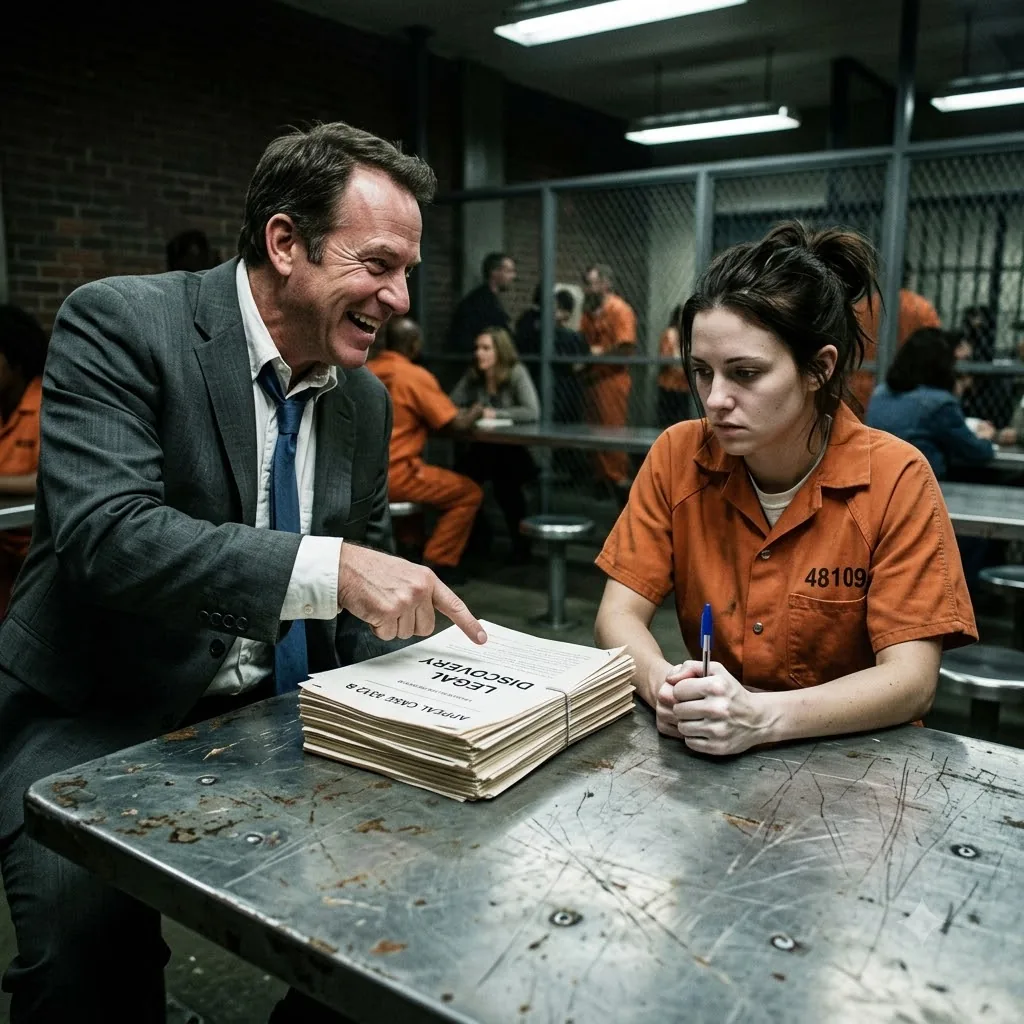
The thick manila folder hit the gouged metal of the visitation table with a sharp, cracking sound that echoed off the cinderblock walls. David, the defense attorney, stood on the other side of the partition, practically vibrating in his expensive wool suit. Sweat beaded at his temples, catching the harsh glare of the overhead fluorescent lights. He did not sit. He could not sit. He slid a thick stack of heavy, watermarked paper out of the folder and pushed it across the scratched surface.
Maya sat perfectly still in the bolted-down steel chair. Her gray uniform hung off her shoulders, smelling of industrial laundry detergent and stale air.
David tapped his index finger against the pristine white pages. He leaned forward, his voice a tight, buzzing frequency of absolute triumph. He announced that it was over. He declared that the district attorney had completely folded. The conviction was vacated. The record was wiped utterly clean. She was completely, unconditionally free.
Maya lowered her gaze to the table. Someone, years ago, had carved a deep, jagged groove into the steel right in front of her seat. She traced the rough edge of the metal with her eyes. She did not reach for the papers. The cold from the steel chair seeped through her thin uniform, settling deep into her bones, identical to the cold she had felt every single day for the past decade.
David kept talking. His excitement filled the small, sterile room, bouncing off the walls and suffocating the narrow space between them. He detailed the collapse of the prosecution’s case. He listed the frantic backpedaling of the appellate judges. He spoke of the massive settlement, the unprecedented speed of the reversal, the absolute totality of their legal victory. He paced the three available feet of floor space behind his chair, running a hand through his thinning hair, laughing a breathless, disbelieving laugh.
He waited for her to scream. He waited for her to slam her hands on the table, to break down into violent sobs of relief, to leap up and celebrate the return of her life.
Maya gave him nothing. She offered only the slow, measured blink of a woman who had spent three thousand and six hundred days staring at concrete. The concept of freedom sat on the table between them like an artifact from a dead civilization. It held no meaning. The words were just vibrations in the air. David told her she was getting her life back. He did not understand that the life she left behind had been burned to the foundation. There was no house to return to, no reality to resume. There was only a devastating, echoing emptiness waiting for her beyond the razor wire.
Her silence finally began to penetrate David’s euphoria. He stopped pacing. He settled into the chair opposite her, the metal legs scraping harshly against the linoleum floor. He smoothed his tie, his expression shifting into a mask of professional sympathy. He told her the shock would wear off. He assured her that the numbness was a perfectly normal psychological response to sudden trauma reversal. He promised her that by this time tomorrow, she would be eating real food on a balcony overlooking the city, wrapped in a blanket that did not itch.
Maya looked at his mouth moving. She found it exhausting to watch him expend so much energy.
David reached into his breast pocket and retrieved a heavy, black fountain pen with gold trim. He uncapped it with a soft click and turned the document around so it faced her. He slid the pen across the metal table. It came to rest against the edge of the paper.
He pointed to the bottom right corner of the top page. He instructed her to sign on the solid black line. He explained that this was the final release, the absolute last bureaucratic hurdle required to process her immediate discharge. One signature, he said, and the heavy steel doors at the front of the facility would open for her.
Maya extended her right hand. Her knuckles were stark white, the skin dry and rough. She picked up the pen. The weight of the metal barrel felt entirely alien in her grip, entirely too heavy for the simple act of writing her own name. She pulled the document a fraction of an inch closer.
The legal jargon at the top of the page blurred together into a wall of meaningless black text. She did not care about the stipulations or the clauses. She dropped her gaze to the bottom of the page, searching for the empty line David had indicated.
She found the space for her signature.
Then she saw the line directly opposite hers, designated for the authorizing party of the settlement.
The line was not empty. It was already occupied by a signature in bold, aggressive black ink. It was a name Maya had not allowed herself to speak aloud since the night the sirens came for her. It was the name of the man who had orchestrated her destruction with effortless precision.
The heavy gold pen in her hand stopped descending. The nib hovered a millimeter above the pristine white paper. Maya stared at the black ink of that name, her hand suddenly seizing with a violent, uncontrollable tremor.
The thick manila folder hit the gouged metal of the visitation table with a sharp, cracking sound that echoed off the cinderblock walls. David, the defense attorney, stood on the other side of the partition, practically vibrating in his expensive wool suit. Sweat beaded at his temples, catching the harsh glare of the overhead fluorescent lights. He did not sit. He could not sit. He slid a thick stack of heavy, watermarked paper out of the folder and pushed it across the scratched surface.
Maya sat perfectly still in the bolted-down steel chair. Her gray uniform hung off her shoulders, smelling of industrial laundry detergent and stale air.
David tapped his index finger against the pristine white pages. He leaned forward, his voice a tight, buzzing frequency of absolute triumph. He announced that it was over. He declared that the district attorney had completely folded. The conviction was vacated. The record was wiped utterly clean. She was completely, unconditionally free.
Maya lowered her gaze to the table. Someone, years ago, had carved a deep, jagged groove into the steel right in front of her seat. She traced the rough edge of the metal with her eyes. She did not reach for the papers. The cold from the steel chair seeped through her thin uniform, settling deep into her bones, identical to the cold she had felt every single day for the past decade.
David kept talking. His excitement filled the small, sterile room, bouncing off the walls and suffocating the narrow space between them. He detailed the collapse of the prosecution’s case. He listed the frantic backpedaling of the appellate judges. He spoke of the massive settlement, the unprecedented speed of the reversal, the absolute totality of their legal victory. He paced the three available feet of floor space behind his chair, running a hand through his thinning hair, laughing a breathless, disbelieving laugh.
He waited for her to scream. He waited for her to slam her hands on the table, to break down into violent sobs of relief, to leap up and celebrate the return of her life.
Maya gave him nothing. She offered only the slow, measured blink of a woman who had spent three thousand and six hundred days staring at concrete. The concept of freedom sat on the table between them like an artifact from a dead civilization. It held no meaning. The words were just vibrations in the air. David told her she was getting her life back. He did not understand that the life she left behind had been burned to the foundation. There was no house to return to, no reality to resume. There was only a devastating, echoing emptiness waiting for her beyond the razor wire.
Her silence finally began to penetrate David’s euphoria. He stopped pacing. He settled into the chair opposite her, the metal legs scraping harshly against the linoleum floor. He smoothed his tie, his expression shifting into a mask of professional sympathy. He told her the shock would wear off. He assured her that the numbness was a perfectly normal psychological response to sudden trauma reversal. He promised her that by this time tomorrow, she would be eating real food on a balcony overlooking the city, wrapped in a blanket that did not itch.
Maya looked at his mouth moving. She found it exhausting to watch him expend so much energy.
David reached into his breast pocket and retrieved a heavy, black fountain pen with gold trim. He uncapped it with a soft click and turned the document around so it faced her. He slid the pen across the metal table. It came to rest against the edge of the paper.
He pointed to the bottom right corner of the top page. He instructed her to sign on the solid black line. He explained that this was the final release, the absolute last bureaucratic hurdle required to process her immediate discharge. One signature, he said, and the heavy steel doors at the front of the facility would open for her.
Maya extended her right hand. Her knuckles were stark white, the skin dry and rough. She picked up the pen. The weight of the metal barrel felt entirely alien in her grip, entirely too heavy for the simple act of writing her own name. She pulled the document a fraction of an inch closer.
The legal jargon at the top of the page blurred together into a wall of meaningless black text. She did not care about the stipulations or the clauses. She dropped her gaze to the bottom of the page, searching for the empty line David had indicated.
She found the space for her signature.
Then she saw the line directly opposite hers, designated for the authorizing party of the settlement.
The line was not empty. It was already occupied by a signature in bold, aggressive black ink. It was a name Maya had not allowed herself to speak aloud since the night the sirens came for her. It was the name of the man who had orchestrated her destruction with effortless precision.
The heavy gold pen in her hand stopped descending. The nib hovered a millimeter above the pristine white paper. Maya stared at the black ink of that name, her hand suddenly seizing with a violent, uncontrollable tremor.