Story code: ST-000346
Part 1: Stakeholder Alignment
The digital signature on the severance PDF glowed with an artificial blue finality against the stark white of Arthur’s monitor. It was exactly 2:14 PM on a Tuesday, and a twenty-year career in regional logistics management had just been cleanly erased by an automated HR algorithm. A suffocating silence pressed into the home office, amplifying the faint hum of the central air conditioning and the rhythmic blinking of a cursor at the bottom of the unfeeling document. The vacuum of his ruined livelihood threatened to swallow him whole, a crushing wave of panic rising in his chest, when his smartphone vibrated fiercely against the mahogany desk.
The screen flashed with a driveway motion alert. Arthur lunged for the device, desperate for any distraction from the glowing screen of his professional demise. The fish-eye lens of the security camera streamed a live feed of the cul-de-sac. It was not a delivery driver dropping off a package.
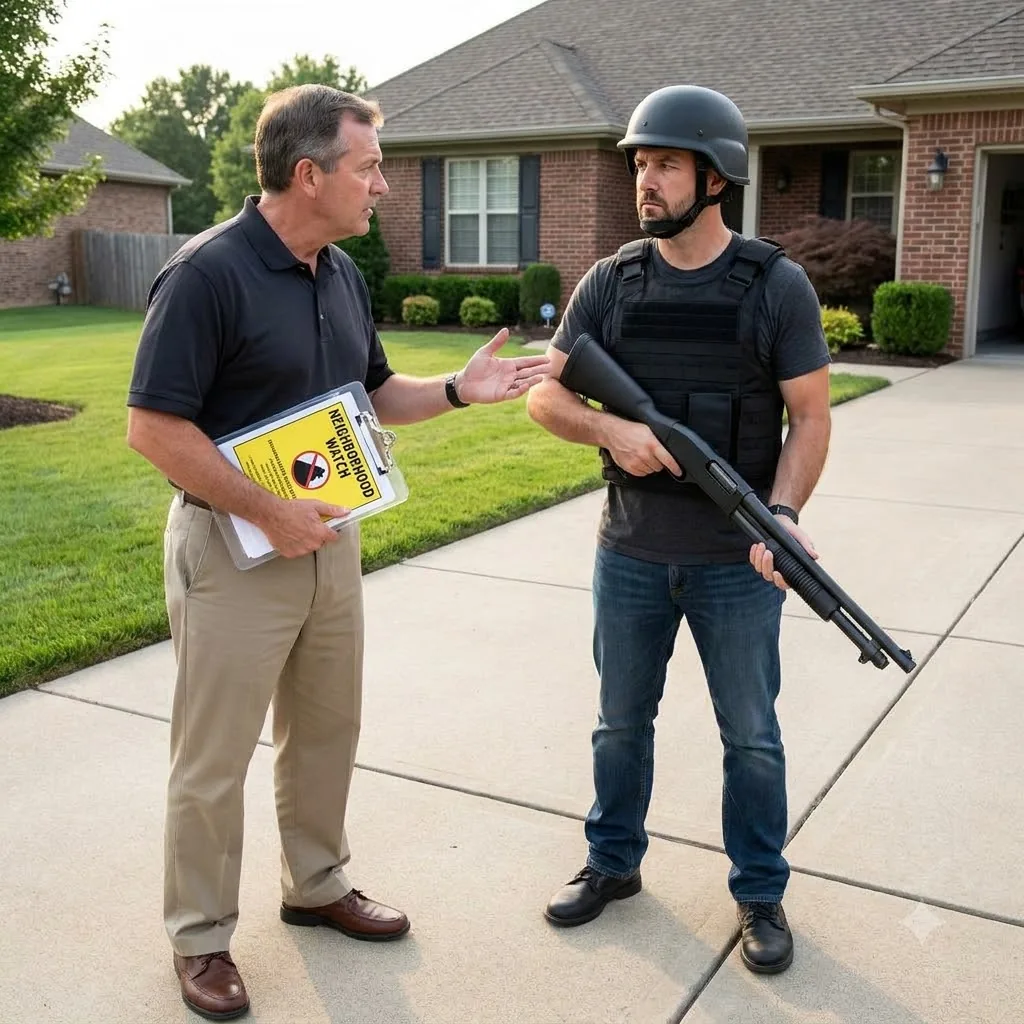
His neighbor, Brody, stood beside a lifted Ford F-150, aggressively fastening the Velcro straps of an olive-drab plate carrier over a plaid flannel shirt.
Arthur stared at the phone screen. Brody adjusted a row of magazine pouches across his abdomen and reached into the truck bed. The sheer, overwhelming terror of the layoff vanished, instantly overwritten by the rigid, comforting protocol of his role as the Elmwood Estates HOA Watch Captain. Arthur could not process the destruction of his pension, but he could absolutely manage an unauthorized tactical deployment in a residential zone.
He left the computer monitor glowing and marched down the carpeted stairs. His mind raced, automatically translating the primal fear of bankruptcy into the sterile language of middle-management. He straightened the collar of his polo shirt and smoothed the front of his khakis. He needed a clear action plan. He needed to establish a dialogue, identify Brody’s pain points, and de-escalate the friction before the situation impacted community property values. The twenty years of dedication, the missed family dinners, the relentless supply chain optimization-all of it had been deleted by a machine, but Arthur boxed that reality away and locked it tight. He was still the Watch Captain. He still had jurisdiction over the pavement outside his front door.
Arthur pushed open his front door and stepped into the blinding afternoon sunlight. The neighborhood was dead quiet, typical for a Tuesday, with manicured lawns and empty driveways stretching down the block.
Brody was entirely focused on a heavy canvas bag resting on his tailgate. He wore a drop-leg holster strapped to his right thigh and a radio clipped to his shoulder strap.
Arthur strode across the immaculate grass, adopting the firm, leveled posture he used for quarterly performance reviews. He projected his voice with measured authority, keeping his hands visible and unthreatening.
“Brody, we need to pause and align on your current objectives.”
Brody spun around. His eyes were wide, bloodshot, and darting rapidly up and down the empty street. He wore tactical gloves with hardened carbon-fiber knuckles. He looked right past Arthur, scanning the perimeter of the adjacent hedges.
“They breached the lower gate, Arthur,” Brody said, his voice a frantic, breathless rasp. “The vans are staging by the retention pond. I told the board this would happen. I told them we needed a rapid response protocol.”
Arthur stepped onto the hot asphalt of Brody’s driveway. He completely ignored the mention of vans. His brain refused to acknowledge any actual danger, filtering the armed man in front of him through the lens of an unruly subordinate throwing a tantrum in the breakroom.
“I hear your frustration regarding the lower gate,” Arthur said, weaving his hands together in a steeple gesture. “However, gearing up in heavy body armor on a weekday constitutes a severe optics issue for the community. We need to circle back to the core competencies of the neighborhood watch. Our primary deliverable is observe and report, not direct kinetic intervention. This kind of rogue initiative is not on brand for Elmwood Estates.”
Brody pulled a matte-black rifle from the canvas bag. The metal glinted in the suburban sun.
Arthur felt a cold sweat break out on the back of his neck. The severance PDF flashed in his mind for a fraction of a second, a phantom image of his collapsing reality, but he forced it down with brutal efficiency. He leaned harder into his corporate vocabulary, wielding it like a shield against the absolute madness unfolding on the driveway.
“Let us take a step back and look at the macro picture,” Arthur continued, lowering his tone to a soothing, HR-approved cadence. “Brandishing a firearm outside your property line creates a significant liability for all stakeholders in Elmwood Estates. I need you to table the weapon so we can workshop a more sustainable solution to your security concerns.”
Brody did not look at Arthur. He slammed a curved magazine into the receiver of the rifle. He kept his gaze fixed on the intersection at the bottom of the hill.
“You need to get inside, Arthur,” Brody muttered, his voice dropping to a terrifying, deadpan register. “Or you need to get your vest. The time for the quarterly newsletter is over.”
Arthur took a half-step forward, extending his hand in a placating motion. He needed to assert leadership. He needed to control the narrative before his family came home to find both their breadwinner unemployed and their neighbor starting a ground war.
“Brody, I am issuing a verbal warning,” Arthur said, his voice trembling slightly beneath the rehearsed corporate steel. “If we cannot find synergy on this de-escalation, I will be forced to escalate this to the executive board. We need to leverage our existing communication channels. Let us just take a breath, put the hardware back in the truck, and schedule a quick touchbase to strategize a forward-facing-”
Brody raised the rifle parallel to his chest and forcefully racked the charging handle, the heavy, metallic clack echoing through the silent cul-de-sac and slicing Arthur’s sentence entirely in half.
The digital signature on the severance PDF glowed with an artificial blue finality against the stark white of Arthur’s monitor. It was exactly 2:14 PM on a Tuesday, and a twenty-year career in regional logistics management had just been cleanly erased by an automated HR algorithm. A suffocating silence pressed into the home office, amplifying the faint hum of the central air conditioning and the rhythmic blinking of a cursor at the bottom of the unfeeling document. The vacuum of his ruined livelihood threatened to swallow him whole, a crushing wave of panic rising in his chest, when his smartphone vibrated fiercely against the mahogany desk.
The screen flashed with a driveway motion alert. Arthur lunged for the device, desperate for any distraction from the glowing screen of his professional demise. The fish-eye lens of the security camera streamed a live feed of the cul-de-sac. It was not a delivery driver dropping off a package.
His neighbor, Brody, stood beside a lifted Ford F-150, aggressively fastening the Velcro straps of an olive-drab plate carrier over a plaid flannel shirt.
Arthur stared at the phone screen. Brody adjusted a row of magazine pouches across his abdomen and reached into the truck bed. The sheer, overwhelming terror of the layoff vanished, instantly overwritten by the rigid, comforting protocol of his role as the Elmwood Estates HOA Watch Captain. Arthur could not process the destruction of his pension, but he could absolutely manage an unauthorized tactical deployment in a residential zone.
He left the computer monitor glowing and marched down the carpeted stairs. His mind raced, automatically translating the primal fear of bankruptcy into the sterile language of middle-management. He straightened the collar of his polo shirt and smoothed the front of his khakis. He needed a clear action plan. He needed to establish a dialogue, identify Brody’s pain points, and de-escalate the friction before the situation impacted community property values. The twenty years of dedication, the missed family dinners, the relentless supply chain optimization-all of it had been deleted by a machine, but Arthur boxed that reality away and locked it tight. He was still the Watch Captain. He still had jurisdiction over the pavement outside his front door.
Arthur pushed open his front door and stepped into the blinding afternoon sunlight. The neighborhood was dead quiet, typical for a Tuesday, with manicured lawns and empty driveways stretching down the block.
Brody was entirely focused on a heavy canvas bag resting on his tailgate. He wore a drop-leg holster strapped to his right thigh and a radio clipped to his shoulder strap.
Arthur strode across the immaculate grass, adopting the firm, leveled posture he used for quarterly performance reviews. He projected his voice with measured authority, keeping his hands visible and unthreatening.
“Brody, we need to pause and align on your current objectives.”
Brody spun around. His eyes were wide, bloodshot, and darting rapidly up and down the empty street. He wore tactical gloves with hardened carbon-fiber knuckles. He looked right past Arthur, scanning the perimeter of the adjacent hedges.
“They breached the lower gate, Arthur,” Brody said, his voice a frantic, breathless rasp. “The vans are staging by the retention pond. I told the board this would happen. I told them we needed a rapid response protocol.”
Arthur stepped onto the hot asphalt of Brody’s driveway. He completely ignored the mention of vans. His brain refused to acknowledge any actual danger, filtering the armed man in front of him through the lens of an unruly subordinate throwing a tantrum in the breakroom.
“I hear your frustration regarding the lower gate,” Arthur said, weaving his hands together in a steeple gesture. “However, gearing up in heavy body armor on a weekday constitutes a severe optics issue for the community. We need to circle back to the core competencies of the neighborhood watch. Our primary deliverable is observe and report, not direct kinetic intervention. This kind of rogue initiative is not on brand for Elmwood Estates.”
Brody pulled a matte-black rifle from the canvas bag. The metal glinted in the suburban sun.
Arthur felt a cold sweat break out on the back of his neck. The severance PDF flashed in his mind for a fraction of a second, a phantom image of his collapsing reality, but he forced it down with brutal efficiency. He leaned harder into his corporate vocabulary, wielding it like a shield against the absolute madness unfolding on the driveway.
“Let us take a step back and look at the macro picture,” Arthur continued, lowering his tone to a soothing, HR-approved cadence. “Brandishing a firearm outside your property line creates a significant liability for all stakeholders in Elmwood Estates. I need you to table the weapon so we can workshop a more sustainable solution to your security concerns.”
Brody did not look at Arthur. He slammed a curved magazine into the receiver of the rifle. He kept his gaze fixed on the intersection at the bottom of the hill.
“You need to get inside, Arthur,” Brody muttered, his voice dropping to a terrifying, deadpan register. “Or you need to get your vest. The time for the quarterly newsletter is over.”
Arthur took a half-step forward, extending his hand in a placating motion. He needed to assert leadership. He needed to control the narrative before his family came home to find both their breadwinner unemployed and their neighbor starting a ground war.
“Brody, I am issuing a verbal warning,” Arthur said, his voice trembling slightly beneath the rehearsed corporate steel. “If we cannot find synergy on this de-escalation, I will be forced to escalate this to the executive board. We need to leverage our existing communication channels. Let us just take a breath, put the hardware back in the truck, and schedule a quick touchbase to strategize a forward-facing-”
Brody raised the rifle parallel to his chest and forcefully racked the charging handle, the heavy, metallic clack echoing through the silent cul-de-sac and slicing Arthur’s sentence entirely in half.