Story code: ST-000738
Part 1: The Topographical Clause
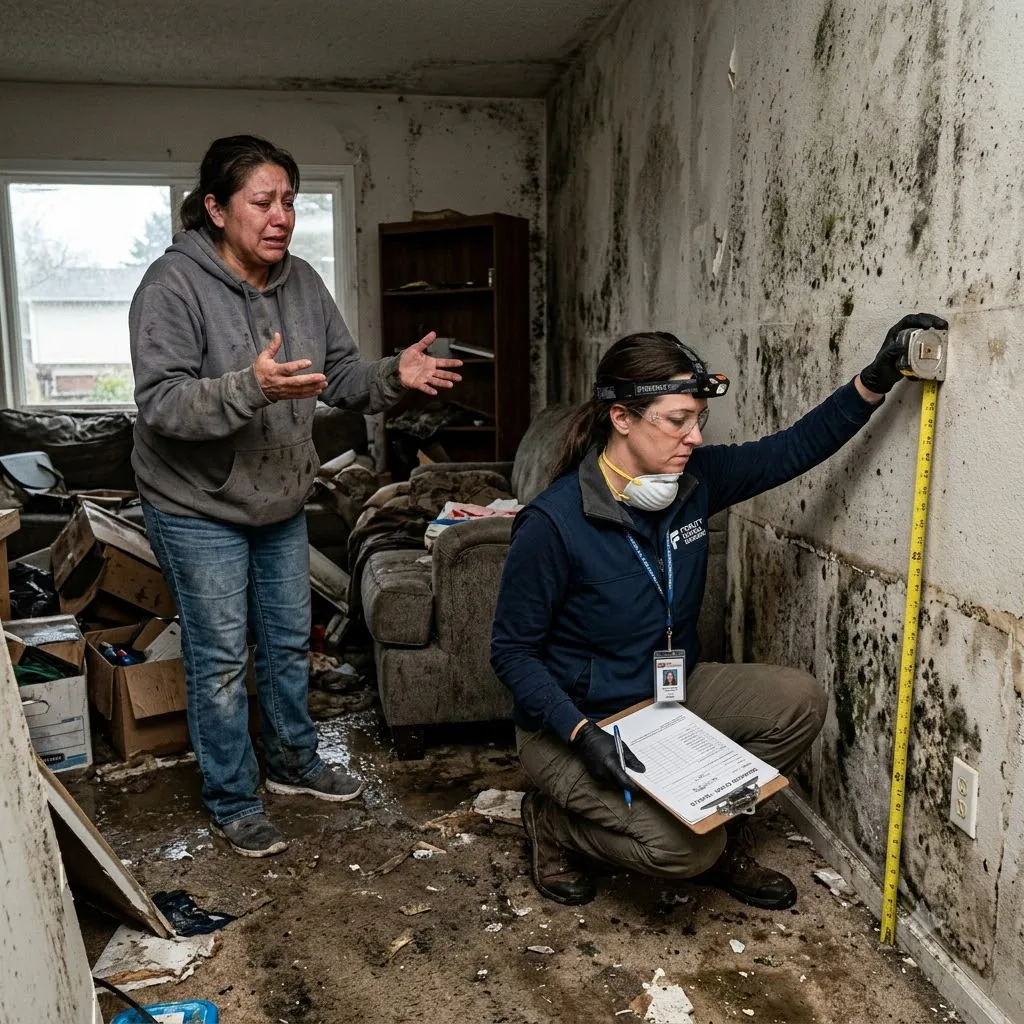
Elias pressed the metal hook of his tape measure against the buckling baseboard, extending the yellow ribbon exactly thirty-four inches up the ruined drywall to the distinct brown water line. The soggy gypsum yielded under his thumb, dropping wet gray clumps onto the warped laminate flooring. He recorded the measurement in his tablet, strictly adhering to the mandated protocol for properties along County Road 119.
Behind him, Sarah paced the length of the devastated living room, her boots squelching with every step. She wrung a damp dishtowel between her hands, her voice tight and frantic as she cataloged the destruction of her life savings. She pointed out the waterlogged sofa, the ruined antique hutch, the layer of silt coating the kitchen counters, and the smell of raw sewage backing up through the plumbing.
Elias did not look up from his screen. He swiped to the next field in the proprietary adjusting software, checking the box marked ‘External Groundwater Intrusion.’ His supervisor had made the directive absolutely clear during the morning briefing. Every property on this specific two-mile stretch of the county road was subject to a newly enforced interpretation of the topographical runoff clause. There were no exceptions, no partial payouts, and no room for adjuster discretion.
“I have the receipts for the foundation sealing we did last year,” Sarah said, stepping closer to Elias as he moved toward the ruined drywall near the front window. She held out a wrinkled manila folder. “The agent told us the new policy covered the basement and the main floor up to four feet. We paid the premium in full.”
Elias kept his eyes on his laser level, aligning the red beam with the water stain. He tapped another entry into his tablet. The policy language she referenced was standard, but the company’s legal department had retroactively classified this entire flood plain as a high-risk municipal drainage zone. The classification nullified standard intrusion coverage. It was entirely bureaucratic, meticulously legal, and completely devastating to the homeowners on this specific strip of pavement.
He moved to his portable workstation, a heavy plastic briefcase resting on the only dry surface left-the kitchen island. He opened it and powered on the mobile thermal printer. The machine hummed to life, a small green light indicating it was ready to generate the final settlement document.
Sarah stepped up to the opposite side of the island. Her eyes were red-rimmed, her shoulders trembling under a damp fleece jacket. She spoke about her husband working double shifts, about the money they had just poured into the nursery, about the impossibility of starting over with nothing. She laid the manila folder on the counter, right next to the humming printer.
Elias pulled a blank Notice of Claim Determination from his stack and fed it into the machine. He finally met her gaze, maintaining the neutral, sympathetic expression drilled into him during corporate training. He explained the ruling in a steady, practiced tone, citing Section four, Paragraph B of the revised topographical guidelines. He informed her that the source of the water was deemed a regional runoff event originating from an unapproved municipal zone, placing the damage entirely outside the scope of her coverage.
The printer ground away, spitting out a thick sheet of carbon-backed paper. Elias tore it cleanly from the roll. He highlighted the zero-dollar payout figure at the bottom of the page, uncapped his pen, and signed his name on the designated line.
“There has to be an appeal,” Sarah said, her voice dropping to a harsh whisper. She stared at the zero-dollar figure highlighted in bright yellow. “You cannot walk in here, look at my destroyed home, and hand me a piece of paper that says I get nothing.”
Elias slid the document across the silt-covered countertop. He recited the mandatory closing script, informing her of the thirty-day window to submit a written grievance to the corporate oversight board in another state, a process he knew resulted in an automated denial letter nine months later. He closed his briefcase and snapped the latches shut. He was finished here, ready to move to the next ruined house on the doomed stretch of road.
Sarah did not pick up the paper. She stopped wringing the dishtowel. The frantic energy drained out of her posture, replaced by a sudden, terrifying stillness. She turned away from the kitchen island and walked directly to the heavy wooden front door.
Elias hoisted his briefcase by the handle, expecting her to open the door and order him off the property. It was the standard reaction to a zero-dollar payout.
Instead, Sarah pushed the door firmly shut. She reached up and engaged the heavy brass deadbolt with a loud, definitive click. She slid the master key out of the lock cylinder. Without looking back at Elias, she walked to the brass floor register set into the warped laminate, knelt in the muddy water, and dropped the key straight down into the flooded ductwork.
Elias pressed the metal hook of his tape measure against the buckling baseboard, extending the yellow ribbon exactly thirty-four inches up the ruined drywall to the distinct brown water line. The soggy gypsum yielded under his thumb, dropping wet gray clumps onto the warped laminate flooring. He recorded the measurement in his tablet, strictly adhering to the mandated protocol for properties along County Road 119.
Behind him, Sarah paced the length of the devastated living room, her boots squelching with every step. She wrung a damp dishtowel between her hands, her voice tight and frantic as she cataloged the destruction of her life savings. She pointed out the waterlogged sofa, the ruined antique hutch, the layer of silt coating the kitchen counters, and the smell of raw sewage backing up through the plumbing.
Elias did not look up from his screen. He swiped to the next field in the proprietary adjusting software, checking the box marked ‘External Groundwater Intrusion.’ His supervisor had made the directive absolutely clear during the morning briefing. Every property on this specific two-mile stretch of the county road was subject to a newly enforced interpretation of the topographical runoff clause. There were no exceptions, no partial payouts, and no room for adjuster discretion.
“I have the receipts for the foundation sealing we did last year,” Sarah said, stepping closer to Elias as he moved toward the ruined drywall near the front window. She held out a wrinkled manila folder. “The agent told us the new policy covered the basement and the main floor up to four feet. We paid the premium in full.”
Elias kept his eyes on his laser level, aligning the red beam with the water stain. He tapped another entry into his tablet. The policy language she referenced was standard, but the company’s legal department had retroactively classified this entire flood plain as a high-risk municipal drainage zone. The classification nullified standard intrusion coverage. It was entirely bureaucratic, meticulously legal, and completely devastating to the homeowners on this specific strip of pavement.
He moved to his portable workstation, a heavy plastic briefcase resting on the only dry surface left-the kitchen island. He opened it and powered on the mobile thermal printer. The machine hummed to life, a small green light indicating it was ready to generate the final settlement document.
Sarah stepped up to the opposite side of the island. Her eyes were red-rimmed, her shoulders trembling under a damp fleece jacket. She spoke about her husband working double shifts, about the money they had just poured into the nursery, about the impossibility of starting over with nothing. She laid the manila folder on the counter, right next to the humming printer.
Elias pulled a blank Notice of Claim Determination from his stack and fed it into the machine. He finally met her gaze, maintaining the neutral, sympathetic expression drilled into him during corporate training. He explained the ruling in a steady, practiced tone, citing Section four, Paragraph B of the revised topographical guidelines. He informed her that the source of the water was deemed a regional runoff event originating from an unapproved municipal zone, placing the damage entirely outside the scope of her coverage.
The printer ground away, spitting out a thick sheet of carbon-backed paper. Elias tore it cleanly from the roll. He highlighted the zero-dollar payout figure at the bottom of the page, uncapped his pen, and signed his name on the designated line.
“There has to be an appeal,” Sarah said, her voice dropping to a harsh whisper. She stared at the zero-dollar figure highlighted in bright yellow. “You cannot walk in here, look at my destroyed home, and hand me a piece of paper that says I get nothing.”
Elias slid the document across the silt-covered countertop. He recited the mandatory closing script, informing her of the thirty-day window to submit a written grievance to the corporate oversight board in another state, a process he knew resulted in an automated denial letter nine months later. He closed his briefcase and snapped the latches shut. He was finished here, ready to move to the next ruined house on the doomed stretch of road.
Sarah did not pick up the paper. She stopped wringing the dishtowel. The frantic energy drained out of her posture, replaced by a sudden, terrifying stillness. She turned away from the kitchen island and walked directly to the heavy wooden front door.
Elias hoisted his briefcase by the handle, expecting her to open the door and order him off the property. It was the standard reaction to a zero-dollar payout.
Instead, Sarah pushed the door firmly shut. She reached up and engaged the heavy brass deadbolt with a loud, definitive click. She slid the master key out of the lock cylinder. Without looking back at Elias, she walked to the brass floor register set into the warped laminate, knelt in the muddy water, and dropped the key straight down into the flooded ductwork.