Story code: ST-001427
Part 1: The White Canvas
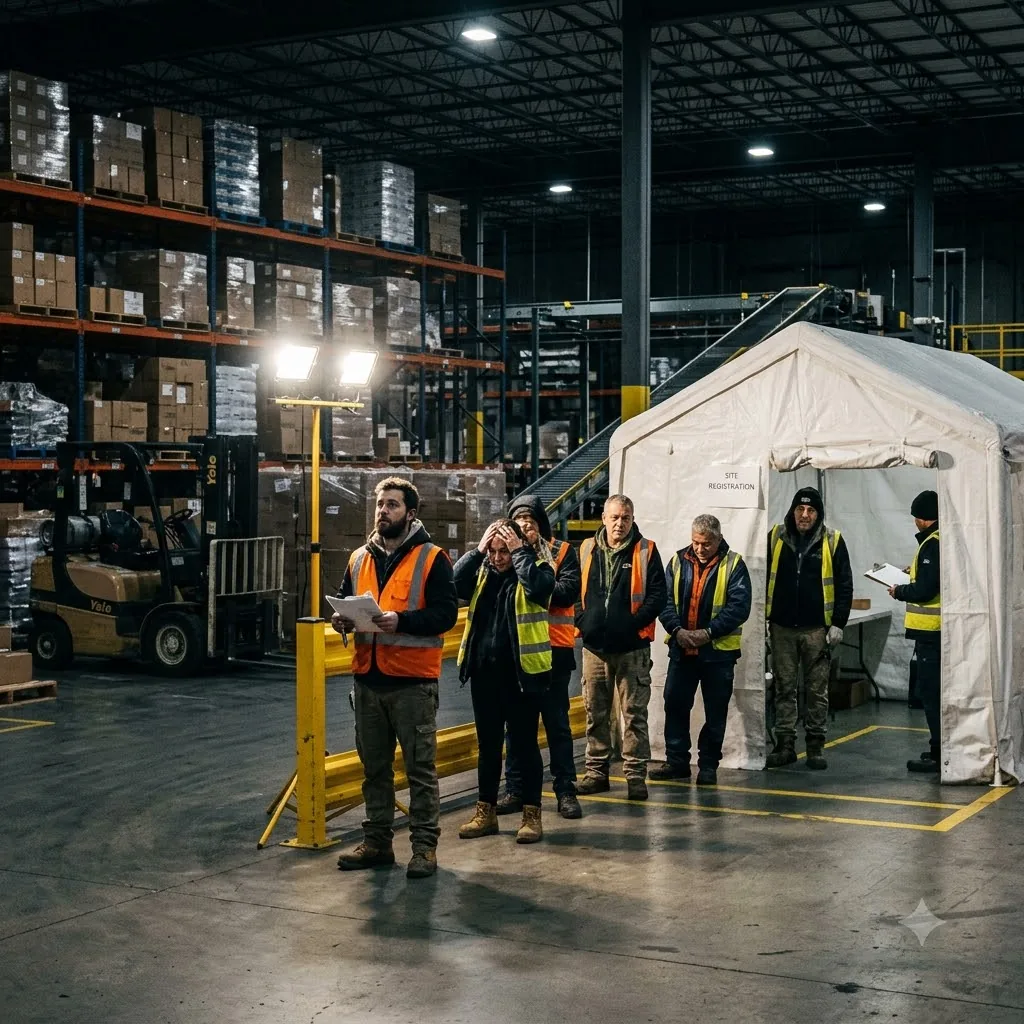
The fluorescent lights hummed a violent, flickering rhythm against the concrete floor as a woman in a crisp beige blazer talked about mindfulness. Marcus shifted his weight, feeling the familiar burning ache in his lower back radiate down to his steel-toed boots. He stood shoulder-to-shoulder with thirty other night-shift loaders in lane four of the massive distribution center. None of them were looking at the speaker. They were all staring at the temporary white canvas structure erected between the pallet racks.
The beige-blazer woman clicked a button on her laser pointer, illuminating a laminated poster about deep breathing and workplace resiliency. Her voice was piped too loud through a portable PA system, the sharp syllables echoing off the corrugated steel ceiling. She spoke about processing heavy emotions, finding a center in turbulent times, and synergizing personal well-being with productivity. The men around Marcus let the words wash over them like static. They communicated in a completely different frequency. They used the silent, fractional movements they had all learned on the avenues and blocks miles away from the warehouse gates. A chin tilted down meant trouble. A gaze held a second too long meant danger. A shifted stance meant brace for impact.
Right now, the collective stance of the entire graveyard crew was braced.
The company had abruptly halted the sortation line halfway through the shift for these mandatory wellness checks. HR called it a proactive measure for employee mental health, a new corporate initiative they were rolling out across all facilities. They had maintenance set up the canvas tent right on the loading dock, sealing it tight against the drafts of the open bay doors. The heavy duty zipper on the front flap sounded like a car door scraping a guardrail every time it opened.
Marcus watched the zipper part again. Hector emerged from the white canvas.
Hector usually walked with a wide, rolling gait. He was a man who threw sixty-pound boxes for twelve hours a night and laughed through most of the grinding labor. Now, his arms were pinned tight to his sides. His face was the color of old ash under the harsh lights. He walked back to the line of waiting men, his eyes fixed firmly on the oil-stained concrete. He did not look at the beige-blazer woman. He did not look at the shift supervisor holding the clipboard. As he stepped back into formation beside Marcus, Hector gave one single, tight nod. It was the neighborhood signal for a dead end. It was the look men gave when they were cornered and telling you to run.
Marcus felt a cold prickle of sweat form at the base of his neck, the chill sliding down his spine.
The corporate trainer droned on, asking the silent, exhausted crowd to envision a stream of clear water washing away their workplace stress. Her tone was bright, synthetic, and relentlessly upbeat. It clashed violently with the smell of diesel exhaust, hot cardboard, and stale sweat hanging thick in the lane.
Another name was called from the supervisor’s clipboard. Jamal stepped forward. He gave Marcus a flat, unreadable look before walking toward the canvas tent. The zipper tore open and swallowed him into the bright white space.
Marcus tracked the time on the digital wall clock suspended above bay seven. The red numbers flipped slowly. Four minutes passed. Five. The trainer switched to a new visual aid about synergistic emotional pathways and healthy boundaries. The men in the line shifted their heavy boots, the sound like grinding gravel in the quiet cavern of the warehouse. The silence radiating from the tent was heavy and deeply unnatural. On the street, silence like this meant someone was already caught. It meant the exits were closed and the sweep was already happening.
The zipper screamed down its track. Jamal walked out.
Jamal had a reputation for an iron jaw. He was a man who once worked three consecutive shifts with a cracked rib without making a single sound. Now, his hands were visibly shaking. He shoved them deep into his high-vis vest pockets, but Marcus saw the tremor rattling the reflective fabric. Jamal moved back into the line, his broad shoulders heavily hunched. As he passed, his eyes darted up and met Marcus’s gaze. The look was entirely hollowed out, stripped of any usual defiance. Jamal gave the exact same fractional, tight nod Hector had given. It was a clear, silent, desperate warning.
The structure in the middle of the floor was not a wellness check.
Marcus mentally calculated the remaining names on the nightly roster. He was next. The dusty air in the warehouse suddenly felt incredibly thick, thick enough that it was hard to pull into his burning lungs. The corporate trainer clapped her hands together, the sharp crack cutting through the droning hum of the overhead lights. She smiled a wide, empty smile and told everyone they were doing a phenomenal job prioritizing their inner peace.
The shift supervisor with the clipboard cleared his throat loudly. He looked directly at Marcus and raised his silver pen, tapping it against the plastic board.
Marcus took a slow, steadying breath and stepped out of the formation. The walk across the concrete to the canvas tent felt like moving through deep water. The white fabric walls glowed fiercely under the harsh warehouse lights. The zipper was already open a few inches at the top. Through the narrow gap, Marcus could not see a smiling therapist or a blood pressure cuff. He saw a bare metal folding table. Resting directly in the center of that table was a neat stack of familiar, bright yellow index cards.
They were the exact color, weight, and size of the restricted contact cards Marcus kept carefully locked inside the false bottom of his metal thermos.
The supervisor grabbed the heavy canvas tent flap and pulled it wide open.
The fluorescent lights hummed a violent, flickering rhythm against the concrete floor as a woman in a crisp beige blazer talked about mindfulness. Marcus shifted his weight, feeling the familiar burning ache in his lower back radiate down to his steel-toed boots. He stood shoulder-to-shoulder with thirty other night-shift loaders in lane four of the massive distribution center. None of them were looking at the speaker. They were all staring at the temporary white canvas structure erected between the pallet racks.
The beige-blazer woman clicked a button on her laser pointer, illuminating a laminated poster about deep breathing and workplace resiliency. Her voice was piped too loud through a portable PA system, the sharp syllables echoing off the corrugated steel ceiling. She spoke about processing heavy emotions, finding a center in turbulent times, and synergizing personal well-being with productivity. The men around Marcus let the words wash over them like static. They communicated in a completely different frequency. They used the silent, fractional movements they had all learned on the avenues and blocks miles away from the warehouse gates. A chin tilted down meant trouble. A gaze held a second too long meant danger. A shifted stance meant brace for impact.
Right now, the collective stance of the entire graveyard crew was braced.
The company had abruptly halted the sortation line halfway through the shift for these mandatory wellness checks. HR called it a proactive measure for employee mental health, a new corporate initiative they were rolling out across all facilities. They had maintenance set up the canvas tent right on the loading dock, sealing it tight against the drafts of the open bay doors. The heavy duty zipper on the front flap sounded like a car door scraping a guardrail every time it opened.
Marcus watched the zipper part again. Hector emerged from the white canvas.
Hector usually walked with a wide, rolling gait. He was a man who threw sixty-pound boxes for twelve hours a night and laughed through most of the grinding labor. Now, his arms were pinned tight to his sides. His face was the color of old ash under the harsh lights. He walked back to the line of waiting men, his eyes fixed firmly on the oil-stained concrete. He did not look at the beige-blazer woman. He did not look at the shift supervisor holding the clipboard. As he stepped back into formation beside Marcus, Hector gave one single, tight nod. It was the neighborhood signal for a dead end. It was the look men gave when they were cornered and telling you to run.
Marcus felt a cold prickle of sweat form at the base of his neck, the chill sliding down his spine.
The corporate trainer droned on, asking the silent, exhausted crowd to envision a stream of clear water washing away their workplace stress. Her tone was bright, synthetic, and relentlessly upbeat. It clashed violently with the smell of diesel exhaust, hot cardboard, and stale sweat hanging thick in the lane.
Another name was called from the supervisor’s clipboard. Jamal stepped forward. He gave Marcus a flat, unreadable look before walking toward the canvas tent. The zipper tore open and swallowed him into the bright white space.
Marcus tracked the time on the digital wall clock suspended above bay seven. The red numbers flipped slowly. Four minutes passed. Five. The trainer switched to a new visual aid about synergistic emotional pathways and healthy boundaries. The men in the line shifted their heavy boots, the sound like grinding gravel in the quiet cavern of the warehouse. The silence radiating from the tent was heavy and deeply unnatural. On the street, silence like this meant someone was already caught. It meant the exits were closed and the sweep was already happening.
The zipper screamed down its track. Jamal walked out.
Jamal had a reputation for an iron jaw. He was a man who once worked three consecutive shifts with a cracked rib without making a single sound. Now, his hands were visibly shaking. He shoved them deep into his high-vis vest pockets, but Marcus saw the tremor rattling the reflective fabric. Jamal moved back into the line, his broad shoulders heavily hunched. As he passed, his eyes darted up and met Marcus’s gaze. The look was entirely hollowed out, stripped of any usual defiance. Jamal gave the exact same fractional, tight nod Hector had given. It was a clear, silent, desperate warning.
The structure in the middle of the floor was not a wellness check.
Marcus mentally calculated the remaining names on the nightly roster. He was next. The dusty air in the warehouse suddenly felt incredibly thick, thick enough that it was hard to pull into his burning lungs. The corporate trainer clapped her hands together, the sharp crack cutting through the droning hum of the overhead lights. She smiled a wide, empty smile and told everyone they were doing a phenomenal job prioritizing their inner peace.
The shift supervisor with the clipboard cleared his throat loudly. He looked directly at Marcus and raised his silver pen, tapping it against the plastic board.
Marcus took a slow, steadying breath and stepped out of the formation. The walk across the concrete to the canvas tent felt like moving through deep water. The white fabric walls glowed fiercely under the harsh warehouse lights. The zipper was already open a few inches at the top. Through the narrow gap, Marcus could not see a smiling therapist or a blood pressure cuff. He saw a bare metal folding table. Resting directly in the center of that table was a neat stack of familiar, bright yellow index cards.
They were the exact color, weight, and size of the restricted contact cards Marcus kept carefully locked inside the false bottom of his metal thermos.
The supervisor grabbed the heavy canvas tent flap and pulled it wide open.