Story code: ST-000059
Part 1: Code 8A
The acrid sting of eucalyptus ash bypassed the stacked modular trailer’s heavy-duty HEPA filters, coating the back of Arthur’s throat with a fine, bitter grit. He ignored the sensory suffocation, finding his usual deep comfort in the laminated rigidity of the VA Adjudication Manual taped firmly beside his computer monitor. His fingers moved in a steady, calming rhythm across the mechanical keyboard as he processed a soot-stained claim for emergency medical replacements. The physical file sat on his green desk blotter, smelling intensely of wet carbon and melted plastic. Its edges were curled and blackened, the blue ink smeared by what Arthur assumed was water from a high-pressure firehose or a desperate, clumsy attempt to salvage the document from the ashes of a ruined home.
The applicant, a veteran whose registered address now sat squarely inside a designated catastrophic burn scar on the map, was requesting the immediate replacement of a specialized CPAP respiratory device and a ninety-day supply of localized burn dressings. Arthur traced his standard-issue ballpoint pen down the strict column of required documentation. The veteran had submitted the primary emergency request form, but the mandatory secondary field verification of total property loss was completely absent.
Arthur felt a brief, familiar flutter of annoyance at the incomplete submission. Natural disasters did not magically suspend federal guidelines. If anything, the apocalyptic chaos outside the thin walls of the temporary government complex made his strict adherence to procedure even more vital. Without the unyielding framework of Title 38, Section 4.11, the entire bureaucratic system would collapse into complete anarchy. People could claim anything they desired, draining limited emergency resources from those who properly followed the protocols. Arthur leaned closer to his bright monitor, the eerie orange haze of the midday sun pressing ominously against his plexiglass window, and confidently initiated the automated denial sequence.
He navigated the complex dropdown menus with practiced, clinical efficiency. He selected Code 8A, typing a brief note regarding the lack of field verification in the mandatory remarks section. His keystrokes were measured and deliberate, producing a rhythmic clack that anchored his mind. Each press of a key served as a small, necessary assertion of order against the smoky, unpredictable world outside the trailer. He picked up his red rubber stamp, pressing it firmly into the inkpad before bringing it down hard on the physical file. The heavy thud of the ‘INSUFFICIENT’ marker echoed loudly in his small, quiet office. He placed the burnt file into the metal outbox and exhaled a long, measured breath, ready for the next case.
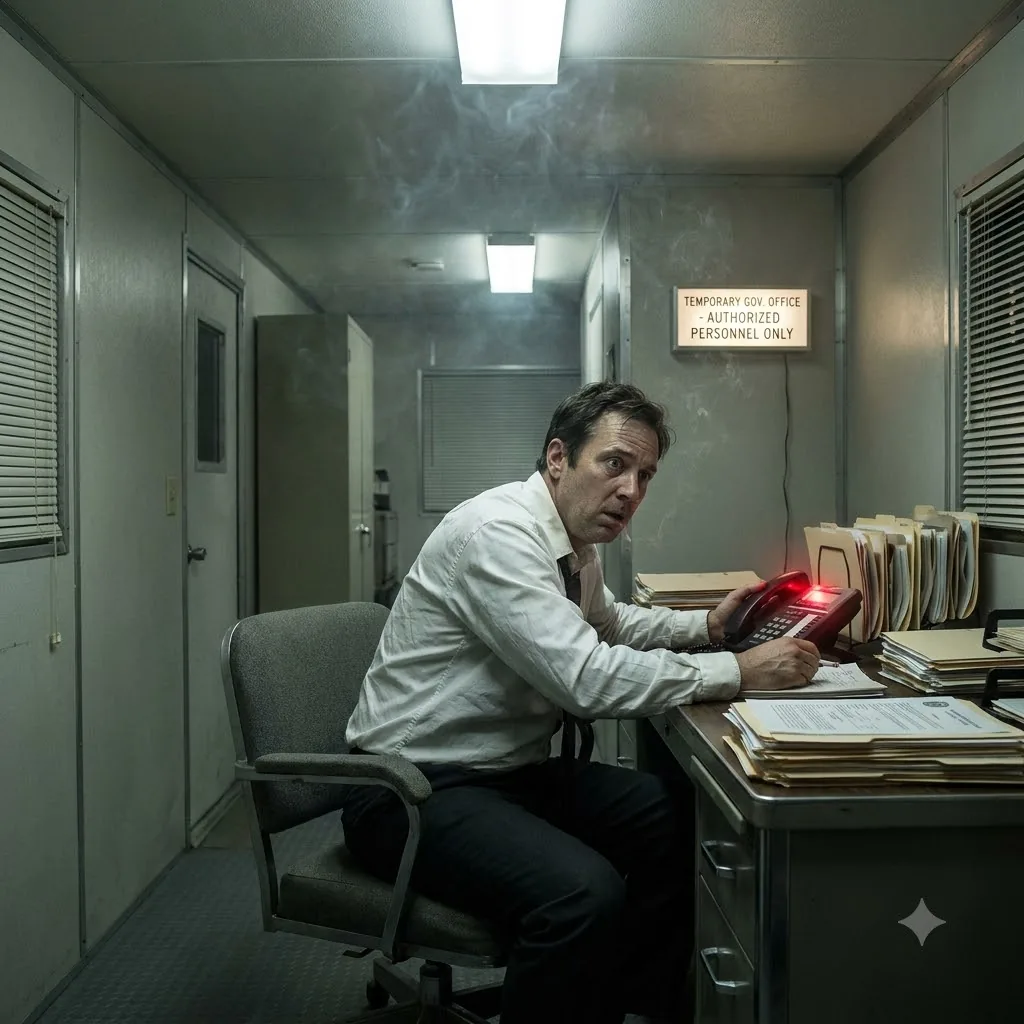
The jarring shrill of the internal emergency line suddenly shattered the manufactured peace of his workspace. It was the red phone on the corner of his desk, a direct hardline originating from the ground-floor security checkpoint of the temporary complex. Arthur stared at the flashing light for a second, highly annoyed by the sudden interruption of his workflow. He picked up the receiver, fully expecting a routine fire drill announcement or a campus-wide reminder from facilities about the deteriorating air quality index.
Instead, the frantic, breathless voice of Chief Security Officer Miller blasted through the earpiece. Miller was shouting over a chaotic, terrifying backdrop of crashing metal, blaring localized security alarms, and panicked screams from the lobby staff. The security chief frantically reported a code red breach at the main entry turnstile. A man had just forced his massive frame through the reinforced plexiglass partition at the front entrance, shattering the barrier entirely.
Arthur sat up rigidly, his knuckles turning white as his hand tightened around the heavy plastic receiver. Miller described the unfolding violence in clipped, terrified bursts. The intruder was covered from head to toe in fresh blood and thick black soot, completely ignoring the deployed tasers and the shouted commands of the armed ground staff. The man had pulled the electrified prongs right out of his jacket, vaulted the shattered turnstile, landed heavily on the restricted side, and was now violently shoving his way toward the east stairwell.
Arthur looked slowly down at his metal outbox, his eyes locking onto the scorched edges of the denied claim file he had just processed. Over the phone, Miller yelled that the bleeding intruder was roaring a specific nine-digit claim sequence at the top of his lungs. The numbers Miller rattled off mirrored the exact sequence Arthur had just typed into the rejection matrix. The VA automated system generated denial notifications via text message to the applicant the very second the final enter key was pressed. The timing aligned perfectly.
The heavy, metal-capped boots of the intruder began to echo up the central metal stairwell, reverberating violently through the thin, wobbly floorboards of Arthur’s second-story office. Miller’s voice on the phone dissolved into useless static, replaced by breathless commands to the other guards to lock down the upper administrative floor. Arthur stood up slowly, his chair rolling back and hitting the wall. The sharp, toxic smell of smoke suddenly overwhelmed the small space as his heart rate spiked into a terrifying rhythm. He backed away from his desk, leaving the phone off the hook, his wide eyes fixed on the flimsy hollow-core door of his office.
The thudding footsteps grew impossibly loud, bypassing the other administrative departments entirely and heading directly down the narrow corridor toward the adjudication wing. The thin walls of the temporary trailer rattled violently with the sheer physical force of the approaching man. Someone out in the hallway shouted a desperate warning to get back, followed instantly by the sickening crunch of a heavy body being thrown with extreme prejudice against a metal filing cabinet. Arthur lunged forward to reach for the manual deadbolt on his door just as a massive, blood-smeared hand slammed flat against the frosted glass from the other side.
The acrid sting of eucalyptus ash bypassed the stacked modular trailer’s heavy-duty HEPA filters, coating the back of Arthur’s throat with a fine, bitter grit. He ignored the sensory suffocation, finding his usual deep comfort in the laminated rigidity of the VA Adjudication Manual taped firmly beside his computer monitor. His fingers moved in a steady, calming rhythm across the mechanical keyboard as he processed a soot-stained claim for emergency medical replacements. The physical file sat on his green desk blotter, smelling intensely of wet carbon and melted plastic. Its edges were curled and blackened, the blue ink smeared by what Arthur assumed was water from a high-pressure firehose or a desperate, clumsy attempt to salvage the document from the ashes of a ruined home.
The applicant, a veteran whose registered address now sat squarely inside a designated catastrophic burn scar on the map, was requesting the immediate replacement of a specialized CPAP respiratory device and a ninety-day supply of localized burn dressings. Arthur traced his standard-issue ballpoint pen down the strict column of required documentation. The veteran had submitted the primary emergency request form, but the mandatory secondary field verification of total property loss was completely absent.
Arthur felt a brief, familiar flutter of annoyance at the incomplete submission. Natural disasters did not magically suspend federal guidelines. If anything, the apocalyptic chaos outside the thin walls of the temporary government complex made his strict adherence to procedure even more vital. Without the unyielding framework of Title 38, Section 4.11, the entire bureaucratic system would collapse into complete anarchy. People could claim anything they desired, draining limited emergency resources from those who properly followed the protocols. Arthur leaned closer to his bright monitor, the eerie orange haze of the midday sun pressing ominously against his plexiglass window, and confidently initiated the automated denial sequence.
He navigated the complex dropdown menus with practiced, clinical efficiency. He selected Code 8A, typing a brief note regarding the lack of field verification in the mandatory remarks section. His keystrokes were measured and deliberate, producing a rhythmic clack that anchored his mind. Each press of a key served as a small, necessary assertion of order against the smoky, unpredictable world outside the trailer. He picked up his red rubber stamp, pressing it firmly into the inkpad before bringing it down hard on the physical file. The heavy thud of the ‘INSUFFICIENT’ marker echoed loudly in his small, quiet office. He placed the burnt file into the metal outbox and exhaled a long, measured breath, ready for the next case.
The jarring shrill of the internal emergency line suddenly shattered the manufactured peace of his workspace. It was the red phone on the corner of his desk, a direct hardline originating from the ground-floor security checkpoint of the temporary complex. Arthur stared at the flashing light for a second, highly annoyed by the sudden interruption of his workflow. He picked up the receiver, fully expecting a routine fire drill announcement or a campus-wide reminder from facilities about the deteriorating air quality index.
Instead, the frantic, breathless voice of Chief Security Officer Miller blasted through the earpiece. Miller was shouting over a chaotic, terrifying backdrop of crashing metal, blaring localized security alarms, and panicked screams from the lobby staff. The security chief frantically reported a code red breach at the main entry turnstile. A man had just forced his massive frame through the reinforced plexiglass partition at the front entrance, shattering the barrier entirely.
Arthur sat up rigidly, his knuckles turning white as his hand tightened around the heavy plastic receiver. Miller described the unfolding violence in clipped, terrified bursts. The intruder was covered from head to toe in fresh blood and thick black soot, completely ignoring the deployed tasers and the shouted commands of the armed ground staff. The man had pulled the electrified prongs right out of his jacket, vaulted the shattered turnstile, landed heavily on the restricted side, and was now violently shoving his way toward the east stairwell.
Arthur looked slowly down at his metal outbox, his eyes locking onto the scorched edges of the denied claim file he had just processed. Over the phone, Miller yelled that the bleeding intruder was roaring a specific nine-digit claim sequence at the top of his lungs. The numbers Miller rattled off mirrored the exact sequence Arthur had just typed into the rejection matrix. The VA automated system generated denial notifications via text message to the applicant the very second the final enter key was pressed. The timing aligned perfectly.
The heavy, metal-capped boots of the intruder began to echo up the central metal stairwell, reverberating violently through the thin, wobbly floorboards of Arthur’s second-story office. Miller’s voice on the phone dissolved into useless static, replaced by breathless commands to the other guards to lock down the upper administrative floor. Arthur stood up slowly, his chair rolling back and hitting the wall. The sharp, toxic smell of smoke suddenly overwhelmed the small space as his heart rate spiked into a terrifying rhythm. He backed away from his desk, leaving the phone off the hook, his wide eyes fixed on the flimsy hollow-core door of his office.
The thudding footsteps grew impossibly loud, bypassing the other administrative departments entirely and heading directly down the narrow corridor toward the adjudication wing. The thin walls of the temporary trailer rattled violently with the sheer physical force of the approaching man. Someone out in the hallway shouted a desperate warning to get back, followed instantly by the sickening crunch of a heavy body being thrown with extreme prejudice against a metal filing cabinet. Arthur lunged forward to reach for the manual deadbolt on his door just as a massive, blood-smeared hand slammed flat against the frosted glass from the other side.