Story code: ST-000543
Part 1: The Generous Stranger
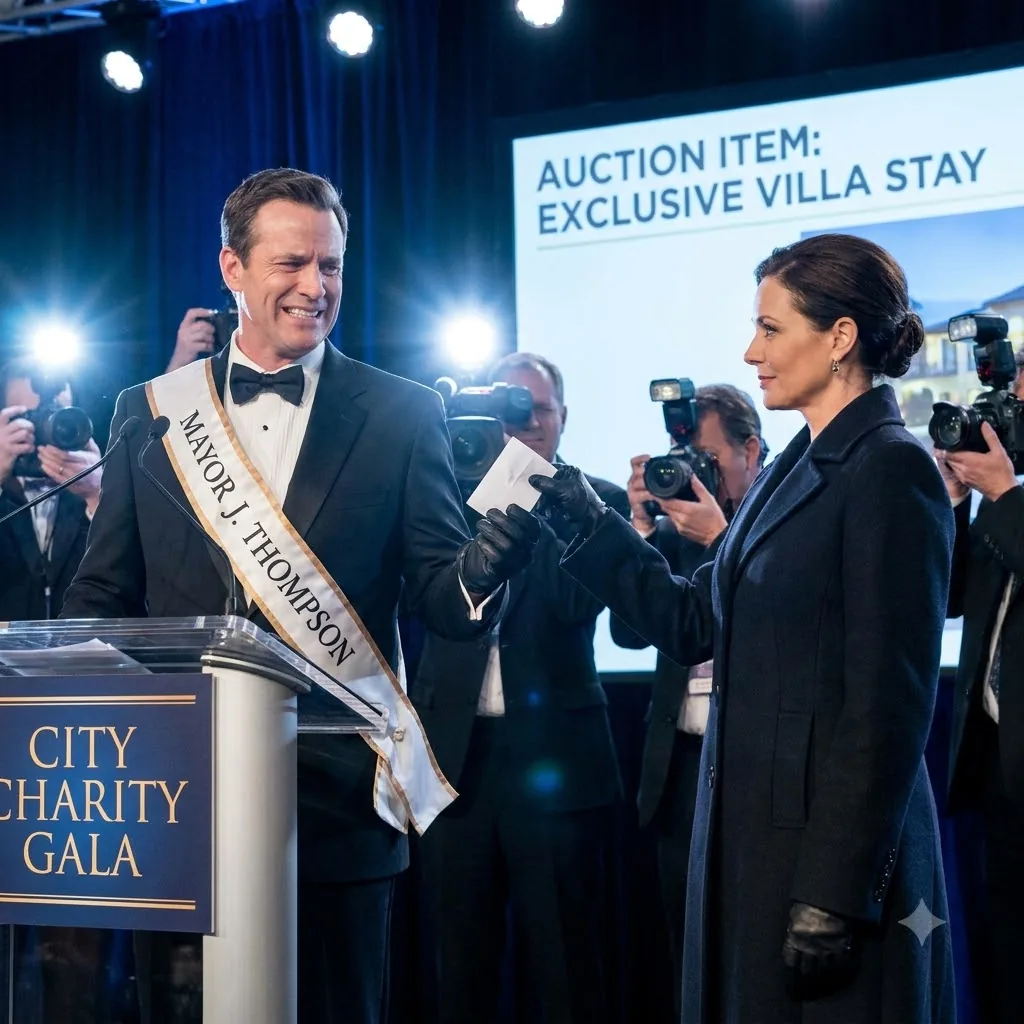
The stage spotlights pinned Mayor Elias Thorne behind the mahogany podium just as a sharp, unfamiliar voice cut through the murmuring crowd with a bid of fifty thousand dollars. Elias maintained his practiced, benevolent smile, projecting the image of a humble public servant even as his pulse spiked at the interruption. The Oakridge Community Gala was the crown jewel of his administration, designed to cement his legacy. He knew every corporate sponsor and socialite in this ballroom. Yet the woman standing in the center aisle, raising a silver bidding paddle, was a complete stranger. The local press corps pivoted their heavy lenses toward her, trapping Elias in a blinding crossfire of camera flashes. He could not step away, nor could he show anything less than absolute delight.
She wore a tailored emerald evening gown that stood out sharply against the conservative black-tie attire of the local elite. As the crowd erupted into murmurs of shock and sudden, thunderous applause, she lowered her paddle and began a slow, deliberate walk toward the front of the room. Elias gripped the edges of the podium, his knuckles turning white. His campaign manager had choreographed every minute of this charity auction to highlight his unwavering dedication to the community. This unscripted moment threw the meticulous schedule off balance, but the sheer size of the bid demanded immediate, public gratitude.
“A truly remarkable display of generosity,” Elias announced, projecting his resonant voice. He extended his right hand toward the sweeping staircase at the left edge of the stage. “Please, join me up here to accept the gratitude of our entire community.” He kept his posture open, playing the welcoming host, though a cold knot formed in his stomach. Wealthy out-of-towners did not just drop into municipal charity auctions and hand over that kind of money without an agenda. He watched her every step, searching for a familiar corporate pin.
The woman ascended the carpeted steps with the grace of someone entirely accustomed to the spotlight. Flashbulbs popped in rapid succession from the photographer pit below, casting harsh white shadows across her composed features. She carried no evening bag and no clutch. She held only a crisp, folded piece of white paper pinched delicately between her thumb and forefinger. Elias relaxed his shoulders slightly, categorizing her as an eccentric philanthropist bringing a physical cashier’s check or a written pledge to maximize the theatricality of her donation. It was an old-fashioned gesture, but one that played phenomenally well on television.
She stopped exactly two feet from the podium. Up close, her polite smile held a rigid, artificial quality. Her eyes were a pale, striking blue, remaining fixed entirely on Elias, ignoring the hundreds of people cheering from the floor. Elias stepped out from behind the safety of the microphone to meet her, his hand extended for the customary photo-op handshake. She reached out, but instead of grasping his palm to shake it, she pressed the folded piece of paper directly into his hand. Her fingers were ice-cold against his skin.
The cameras captured the exchange. Elias beamed, turning his shoulders slightly to ensure the photographers caught his best angle, lifting the folded paper just high enough to register as a prop for the evening news. The crowd’s applause swelled into a standing ovation, echoing off the vaulted ceilings of the grand ballroom. The woman leaned in closer, invading his personal space while maintaining the flawless outward posture of a delighted donor posing with a politician. Her perfume smelled terribly sharp, like heavy antiseptic and bitter almond, entirely at odds with her glamorous appearance.
“You need to look at what you just bought, Mr. Mayor,” she whispered, her voice flat and completely devoid of the warmth she was projecting to the crowd. She stepped back immediately, clapping her hands together in a silent pantomime of celebration, her eyes never leaving his face.
Elias dropped his gaze to his right hand, expecting to see a bank logo, a massive routing number, or the ornate script of a wealthy family trust. He hooked his thumb under the crease and pushed the thick paper open. The harsh, bright stage lights illuminated a stark black-and-white grid. There was no dollar amount. There was no signature line. His eyes darted across harsh horizontal lines, sterile clinical formatting, and columns of dense alphanumeric codes. It was a medical chart.
The blood completely drained from Elias’s face, leaving his skin clammy. He stared at the top right corner of the document, where a patient identification number sat bold and black above a series of recent, highly specific laboratory values. The sterile, unfeeling layout of the page violently clashed with the opulent, festive surroundings of the ballroom. A row of numbers in a red-flagged column blurred together as his breathing turned shallow and erratic. He instinctively moved his elbow inward, attempting to fold the paper away, desperate to hide the bizarre document inside his suit jacket before anyone else saw it.
Before he could bend the thick crease, the woman shifted her weight, deliberately blocking his path back to the microphone and gesturing grandly toward the open paper in his trembling hand just as the lead photographer in the front row shouted for him to hold the paper up to the light.
The stage spotlights pinned Mayor Elias Thorne behind the mahogany podium just as a sharp, unfamiliar voice cut through the murmuring crowd with a bid of fifty thousand dollars. Elias maintained his practiced, benevolent smile, projecting the image of a humble public servant even as his pulse spiked at the interruption. The Oakridge Community Gala was the crown jewel of his administration, designed to cement his legacy. He knew every corporate sponsor and socialite in this ballroom. Yet the woman standing in the center aisle, raising a silver bidding paddle, was a complete stranger. The local press corps pivoted their heavy lenses toward her, trapping Elias in a blinding crossfire of camera flashes. He could not step away, nor could he show anything less than absolute delight.
She wore a tailored emerald evening gown that stood out sharply against the conservative black-tie attire of the local elite. As the crowd erupted into murmurs of shock and sudden, thunderous applause, she lowered her paddle and began a slow, deliberate walk toward the front of the room. Elias gripped the edges of the podium, his knuckles turning white. His campaign manager had choreographed every minute of this charity auction to highlight his unwavering dedication to the community. This unscripted moment threw the meticulous schedule off balance, but the sheer size of the bid demanded immediate, public gratitude.
“A truly remarkable display of generosity,” Elias announced, projecting his resonant voice. He extended his right hand toward the sweeping staircase at the left edge of the stage. “Please, join me up here to accept the gratitude of our entire community.” He kept his posture open, playing the welcoming host, though a cold knot formed in his stomach. Wealthy out-of-towners did not just drop into municipal charity auctions and hand over that kind of money without an agenda. He watched her every step, searching for a familiar corporate pin.
The woman ascended the carpeted steps with the grace of someone entirely accustomed to the spotlight. Flashbulbs popped in rapid succession from the photographer pit below, casting harsh white shadows across her composed features. She carried no evening bag and no clutch. She held only a crisp, folded piece of white paper pinched delicately between her thumb and forefinger. Elias relaxed his shoulders slightly, categorizing her as an eccentric philanthropist bringing a physical cashier’s check or a written pledge to maximize the theatricality of her donation. It was an old-fashioned gesture, but one that played phenomenally well on television.
She stopped exactly two feet from the podium. Up close, her polite smile held a rigid, artificial quality. Her eyes were a pale, striking blue, remaining fixed entirely on Elias, ignoring the hundreds of people cheering from the floor. Elias stepped out from behind the safety of the microphone to meet her, his hand extended for the customary photo-op handshake. She reached out, but instead of grasping his palm to shake it, she pressed the folded piece of paper directly into his hand. Her fingers were ice-cold against his skin.
The cameras captured the exchange. Elias beamed, turning his shoulders slightly to ensure the photographers caught his best angle, lifting the folded paper just high enough to register as a prop for the evening news. The crowd’s applause swelled into a standing ovation, echoing off the vaulted ceilings of the grand ballroom. The woman leaned in closer, invading his personal space while maintaining the flawless outward posture of a delighted donor posing with a politician. Her perfume smelled terribly sharp, like heavy antiseptic and bitter almond, entirely at odds with her glamorous appearance.
“You need to look at what you just bought, Mr. Mayor,” she whispered, her voice flat and completely devoid of the warmth she was projecting to the crowd. She stepped back immediately, clapping her hands together in a silent pantomime of celebration, her eyes never leaving his face.
Elias dropped his gaze to his right hand, expecting to see a bank logo, a massive routing number, or the ornate script of a wealthy family trust. He hooked his thumb under the crease and pushed the thick paper open. The harsh, bright stage lights illuminated a stark black-and-white grid. There was no dollar amount. There was no signature line. His eyes darted across harsh horizontal lines, sterile clinical formatting, and columns of dense alphanumeric codes. It was a medical chart.
The blood completely drained from Elias’s face, leaving his skin clammy. He stared at the top right corner of the document, where a patient identification number sat bold and black above a series of recent, highly specific laboratory values. The sterile, unfeeling layout of the page violently clashed with the opulent, festive surroundings of the ballroom. A row of numbers in a red-flagged column blurred together as his breathing turned shallow and erratic. He instinctively moved his elbow inward, attempting to fold the paper away, desperate to hide the bizarre document inside his suit jacket before anyone else saw it.
Before he could bend the thick crease, the woman shifted her weight, deliberately blocking his path back to the microphone and gesturing grandly toward the open paper in his trembling hand just as the lead photographer in the front row shouted for him to hold the paper up to the light.