Story code: ST-000548
Part 1: The Deposition
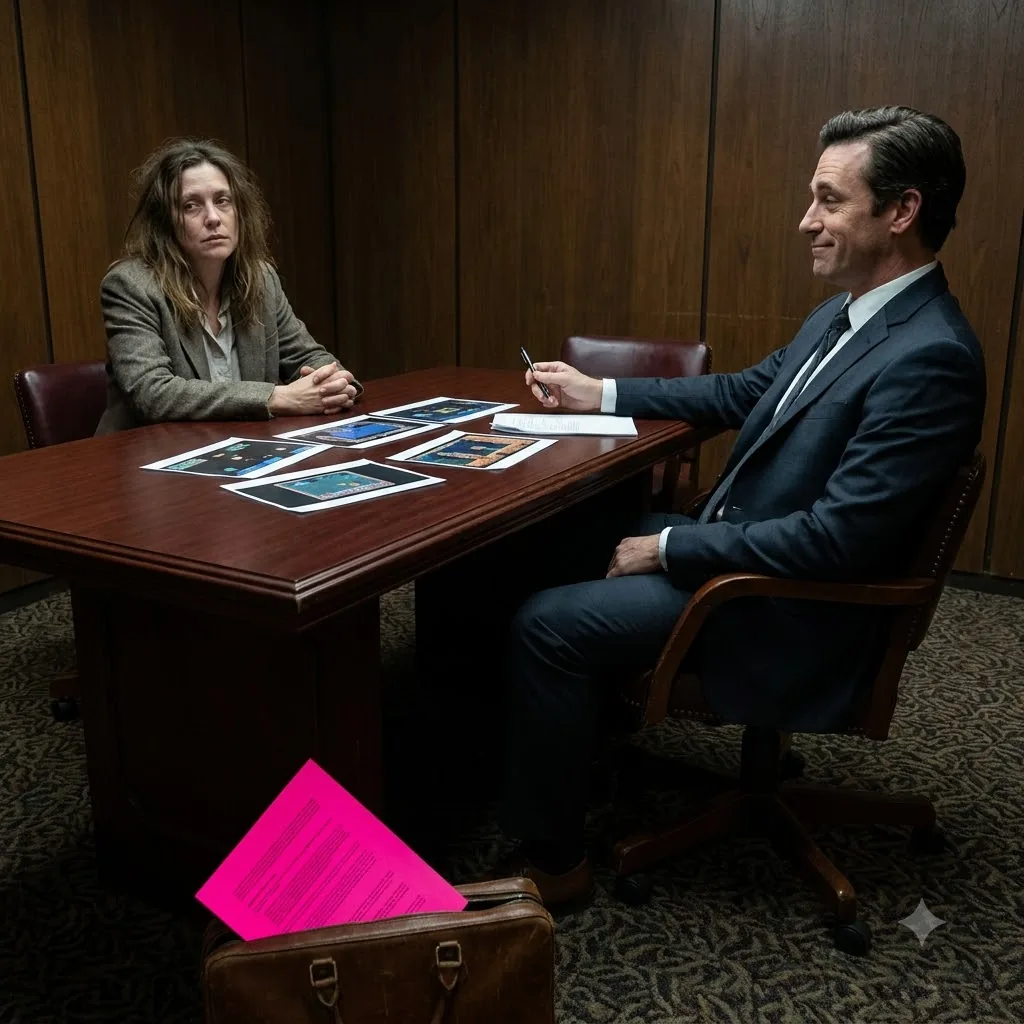
Sarah stared at the glossy screenshots of a violent video game spread out across the polished mahogany deposition table, pressing her palms flat against the wood to stop her fingers from trembling. The windowless conference room felt entirely devoid of oxygen, the heavy silence punctuated only by the rhythmic, metallic tap of the defense attorney’s gold pen against a blood-splattered digital rendering. Arthur Vance adjusted his crisp French cuffs and slid another eight-by-ten photograph toward her, ensuring it sat directly in her line of sight.
The image depicted a first-person perspective of an artificial battlefield, the screen cluttered with digital assault weapons and bright red damage indicators. Vance stated for the record that this was a game her late son had played for over four hundred hours in the year leading up to his death. His expectant stare demanded her attention, silently challenging her to break composure. His strategy was brutally obvious to everyone in the room. He needed the official court transcript to reflect a grieving mother admitting that her child was corrupted by a television screen, deflecting all liability away from the massive corporate gun manufacturer he represented.
Sarah kept her eyes locked on the empty space between the photographs. Her own counsel, a weary attorney named Higgins, shifted in his heavy leather chair and stated an objection to the relevance of the gaming logs. Vance waved the objection away with a dismissive flick of his wrist. He reminded Higgins that the plaintiff’s mental state and media consumption were central to their defense against the wrongful death suit. Beside them, the court reporter’s fingers fluttered rapidly over her stenograph machine, capturing every cruel deflection in cold, permanent shorthand.
Every muscle in Sarah’s neck pulled tight. The urge to flip the heavy table and force Vance to look at a picture of her boy as he actually was roared in her ears. Instead, she inhaled the stale, air-conditioned breeze rattling from the vent above. She had promised her surviving son, Mark, that she would remain perfectly calm today. Mark was at home, exactly thirty days clean, holding onto his fragile sobriety by a mere thread. The crushing stress of the lawsuit had nearly broken him. Sarah was here to shield him, to absorb the corporate defense team’s venom so Mark could heal in peace.
Vance sighed, acting as though Sarah’s silence was a tremendous burden to the legal process. He announced to the room that he had another line of inquiry to establish the instability of her household environment. Turning away from the scattered gaming prints, he reached down to his right. His open leather briefcase rested on an empty chair beside him, the heavy brass locks gleaming under the harsh fluorescent lights.
Sarah watched his manicured hand dig past a stack of thick manila folders. As he pulled a new file upward, a bright, neon-pink sliver of paper caught on the edge of the leather clasp.
Sarah’s breath hitched in her throat. She knew that exact shade of blinding, unnatural pink. It was the carbon copy of a county police citation. Specifically, it was the exact form the county sheriff’s department used for an emergency overdose intervention. The distinctive perforated edge and the heavy block lettering bleeding through the top corner were unmistakable. She had spent three agonizing hours clutching a pink slip exactly like that one in the waiting room of the emergency ward just two months ago. The neon hue was burned permanently into her retinas. It was the color of her family’s private, waking nightmare.
Her mind raced to catch up with the visual evidence. Vance represented a multi-billion-dollar firearms manufacturer, not the local county. There was absolutely no legal or procedural reason for him to possess a medical distress citation, let alone one from their specific residential district. The only explanation was that his team had sent private investigators to dig through her family’s darkest, most vulnerable moments. He intended to drag Mark’s private, agonizing fentanyl struggle into the public court record to prove her home was fundamentally broken.
If Vance read that citation aloud, it would become part of the permanent public domain. The corporate-funded journalists sitting in the gallery of the upcoming trial would publish it. Mark’s name, his worst night, and the immense trauma he was fighting so desperately to overcome would be printed in the local papers as a defense strategy to protect a corporate balance sheet. The shock of that public exposure would destroy her surviving son. It would snap his thirty days of hard-won sobriety in half.
Vance pinched the neon-pink slip, pulling it entirely free from the folder. He cleared his throat, declaring to the court reporter that he was submitting a county incident report into evidence to demonstrate the chaotic nature of the plaintiff’s residence. His lips parted to read the name printed on the citation.
Sarah did not wait for Higgins to register an objection. She shoved her chair back so violently it crashed into the wall behind her, lunging across the mahogany table and sweeping the glossy gaming prints to the floor as her fingers clamped down like a vise on Vance’s wrist.
Sarah stared at the glossy screenshots of a violent video game spread out across the polished mahogany deposition table, pressing her palms flat against the wood to stop her fingers from trembling. The windowless conference room felt entirely devoid of oxygen, the heavy silence punctuated only by the rhythmic, metallic tap of the defense attorney’s gold pen against a blood-splattered digital rendering. Arthur Vance adjusted his crisp French cuffs and slid another eight-by-ten photograph toward her, ensuring it sat directly in her line of sight.
The image depicted a first-person perspective of an artificial battlefield, the screen cluttered with digital assault weapons and bright red damage indicators. Vance stated for the record that this was a game her late son had played for over four hundred hours in the year leading up to his death. His expectant stare demanded her attention, silently challenging her to break composure. His strategy was brutally obvious to everyone in the room. He needed the official court transcript to reflect a grieving mother admitting that her child was corrupted by a television screen, deflecting all liability away from the massive corporate gun manufacturer he represented.
Sarah kept her eyes locked on the empty space between the photographs. Her own counsel, a weary attorney named Higgins, shifted in his heavy leather chair and stated an objection to the relevance of the gaming logs. Vance waved the objection away with a dismissive flick of his wrist. He reminded Higgins that the plaintiff’s mental state and media consumption were central to their defense against the wrongful death suit. Beside them, the court reporter’s fingers fluttered rapidly over her stenograph machine, capturing every cruel deflection in cold, permanent shorthand.
Every muscle in Sarah’s neck pulled tight. The urge to flip the heavy table and force Vance to look at a picture of her boy as he actually was roared in her ears. Instead, she inhaled the stale, air-conditioned breeze rattling from the vent above. She had promised her surviving son, Mark, that she would remain perfectly calm today. Mark was at home, exactly thirty days clean, holding onto his fragile sobriety by a mere thread. The crushing stress of the lawsuit had nearly broken him. Sarah was here to shield him, to absorb the corporate defense team’s venom so Mark could heal in peace.
Vance sighed, acting as though Sarah’s silence was a tremendous burden to the legal process. He announced to the room that he had another line of inquiry to establish the instability of her household environment. Turning away from the scattered gaming prints, he reached down to his right. His open leather briefcase rested on an empty chair beside him, the heavy brass locks gleaming under the harsh fluorescent lights.
Sarah watched his manicured hand dig past a stack of thick manila folders. As he pulled a new file upward, a bright, neon-pink sliver of paper caught on the edge of the leather clasp.
Sarah’s breath hitched in her throat. She knew that exact shade of blinding, unnatural pink. It was the carbon copy of a county police citation. Specifically, it was the exact form the county sheriff’s department used for an emergency overdose intervention. The distinctive perforated edge and the heavy block lettering bleeding through the top corner were unmistakable. She had spent three agonizing hours clutching a pink slip exactly like that one in the waiting room of the emergency ward just two months ago. The neon hue was burned permanently into her retinas. It was the color of her family’s private, waking nightmare.
Her mind raced to catch up with the visual evidence. Vance represented a multi-billion-dollar firearms manufacturer, not the local county. There was absolutely no legal or procedural reason for him to possess a medical distress citation, let alone one from their specific residential district. The only explanation was that his team had sent private investigators to dig through her family’s darkest, most vulnerable moments. He intended to drag Mark’s private, agonizing fentanyl struggle into the public court record to prove her home was fundamentally broken.
If Vance read that citation aloud, it would become part of the permanent public domain. The corporate-funded journalists sitting in the gallery of the upcoming trial would publish it. Mark’s name, his worst night, and the immense trauma he was fighting so desperately to overcome would be printed in the local papers as a defense strategy to protect a corporate balance sheet. The shock of that public exposure would destroy her surviving son. It would snap his thirty days of hard-won sobriety in half.
Vance pinched the neon-pink slip, pulling it entirely free from the folder. He cleared his throat, declaring to the court reporter that he was submitting a county incident report into evidence to demonstrate the chaotic nature of the plaintiff’s residence. His lips parted to read the name printed on the citation.
Sarah did not wait for Higgins to register an objection. She shoved her chair back so violently it crashed into the wall behind her, lunging across the mahogany table and sweeping the glossy gaming prints to the floor as her fingers clamped down like a vise on Vance’s wrist.