Story code: ST-000497
Part 1: The Wrong Address
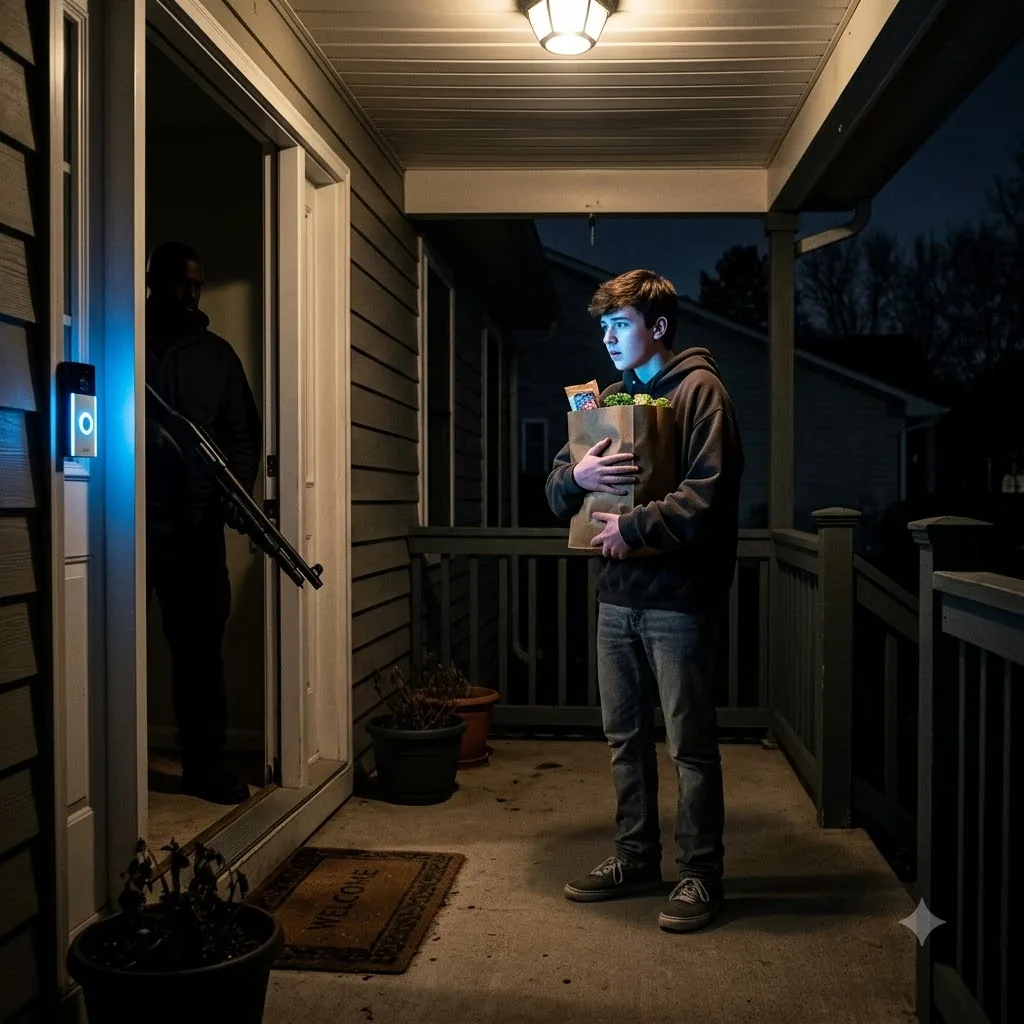
The heavy brown paper bag slipped out of Mateo’s damp grip just as the blue LED ring of the smart doorbell illuminated his worn canvas sneakers. Before he could lunge to catch the tearing paper, the deep, mechanical *clack-clack* of a pump-action shotgun echoing from the dark foyer froze him completely. He stood paralyzed on the braided welcome mat. A tall silhouette shifted behind the heavy mesh of the wrought-iron security screen.
“Mateo Julian Ramirez,” a calm, authoritative voice stated from the darkness beyond the threshold. “Seventeen years old. Provisional driver status. No juvenile priors.”
Mateo stopped breathing. The torn grocery bag gave way completely, sending a plastic jug of whole milk and three loose navel oranges tumbling onto the concrete porch. One of the oranges rolled until it gently bumped against the bottom track of the security door. The figure inside did not look down. The dull steel barrel of the shotgun remained perfectly leveled at Mateo’s chest, catching a faint glint from the streetlamp shining through the yard.
He wanted to scream, to apologize, to turn and sprint down the long brick pathway to his idling Honda Civic, but his legs refused to receive the signals. He was a high school junior trying to earn extra cash on a Tuesday night. He had swiped to accept a simple grocery run to Elmwood Drive, fighting a glitchy GPS app that had spun him around twice in this upscale, dimly lit subdivision. The houses here sat far back from the street, isolated behind towering oak trees and wrought-iron gates. Now, a faceless man was holding a lethal weapon and reading his unauthorized biography.
“Step back from the door,” the voice commanded. “Keep your hands perfectly level with your shoulders.”
Mateo obeyed instantly, lifting his trembling palms. His phone vibrated violently in his front pocket, buzzing with an automated alert from the delivery platform urging him to finalize the drop-off. The repetitive buzzing felt deafening in the quiet suburban air. He tried to force words through his constricted throat to explain the misrouted order, the thermal bags still in his trunk, the buggy mapping app on his phone.
“I have the wrong house,” Mateo stammered, his voice cracking. “I just have the groceries.”
“I know exactly what you have,” the man replied, the shadow moving a fraction closer to the mesh screen. The porch light remained off, keeping the homeowner’s features completely obscured in the black void of the entryway. “And I know your vehicle is registered to your mother, Elena Ramirez. I know you pulled onto this street exactly four minutes ago.”
The extreme specificity of the information hit Mateo like physical blows. He felt a cold sweat break out along his hairline. There was no way a random homeowner could pull up his mother’s vehicle registration in the thirty seconds it took to walk from the driveway to the porch. There was no Ring camera footage that displayed a driver’s juvenile record. The man was speaking with the detached, clinical rhythm of a dispatcher reading a terminal screen.
Mateo took another slow, agonizing step backward, his heel catching the edge of the top step. The shotgun barrel tracked his movement with precise, terrifying smoothness.
“Do not leave the porch,” the man said. The tone was not panicked or fearful, which made the situation drastically worse. A homeowner startled by a late-night trespasser would be shouting, acting out of adrenaline and defense. This man was entirely in control, orchestrating a scene Mateo could not begin to understand.
“Please,” Mateo whispered, keeping his hands locked in the air. “I will leave. I am leaving the food right here.”
“You are going to stand exactly where you are,” the man instructed.
The cold night wind bit through Mateo’s thin windbreaker. He could hear the low, steady hum of his car engine at the curb, the headlights shining uselessly into a manicured hedge. The distance between the porch and the safety of the driver’s seat felt like miles. If he ran, the man could pull the trigger before his foot even hit the grass. The man’s calm demeanor heavily suggested he would not hesitate.
Down the street, the distinct sound of heavy tires taking a corner at high speed broke the suburban silence. Mateo dared to shift his gaze a fraction. Two sets of headlights swung onto the dark residential block, cutting through the shadows and accelerating fast. There were no sirens, just the aggressive roar of engines pushing hard.
“Keep your eyes on the door, Mateo,” the man said softly.
The vehicles slammed on their brakes right behind Mateo’s parked Honda. Red and blue lights erupted from both windshields, washing the lawn, the brick pathway, and the spilled milk in violent flashes of color. Two black-and-white patrol cruisers blocked the street entirely. Doors flung open, followed by the heavy thud of boots hitting the asphalt and the immediate, sharp crackle of police radios.
Relief initially flooded Mateo’s chest. Law enforcement was here. The massive misunderstanding was over. He turned his head toward the officers, preparing to drop to his knees and explain the delivery mistake.
“Hands in the air,” a voice shouted from the street, followed by the metallic clatter of service weapons being drawn.
Mateo threw his hands higher, waiting for the officers to order the man behind the door to drop the shotgun. Instead, three thick red laser sights materialized in the humid air. They did not point past Mateo toward the dark doorway or the armed homeowner. All three bright red dots settled directly onto Mateo’s chest, glowing steadily right over his heart.
The heavy brown paper bag slipped out of Mateo’s damp grip just as the blue LED ring of the smart doorbell illuminated his worn canvas sneakers. Before he could lunge to catch the tearing paper, the deep, mechanical *clack-clack* of a pump-action shotgun echoing from the dark foyer froze him completely. He stood paralyzed on the braided welcome mat. A tall silhouette shifted behind the heavy mesh of the wrought-iron security screen.
“Mateo Julian Ramirez,” a calm, authoritative voice stated from the darkness beyond the threshold. “Seventeen years old. Provisional driver status. No juvenile priors.”
Mateo stopped breathing. The torn grocery bag gave way completely, sending a plastic jug of whole milk and three loose navel oranges tumbling onto the concrete porch. One of the oranges rolled until it gently bumped against the bottom track of the security door. The figure inside did not look down. The dull steel barrel of the shotgun remained perfectly leveled at Mateo’s chest, catching a faint glint from the streetlamp shining through the yard.
He wanted to scream, to apologize, to turn and sprint down the long brick pathway to his idling Honda Civic, but his legs refused to receive the signals. He was a high school junior trying to earn extra cash on a Tuesday night. He had swiped to accept a simple grocery run to Elmwood Drive, fighting a glitchy GPS app that had spun him around twice in this upscale, dimly lit subdivision. The houses here sat far back from the street, isolated behind towering oak trees and wrought-iron gates. Now, a faceless man was holding a lethal weapon and reading his unauthorized biography.
“Step back from the door,” the voice commanded. “Keep your hands perfectly level with your shoulders.”
Mateo obeyed instantly, lifting his trembling palms. His phone vibrated violently in his front pocket, buzzing with an automated alert from the delivery platform urging him to finalize the drop-off. The repetitive buzzing felt deafening in the quiet suburban air. He tried to force words through his constricted throat to explain the misrouted order, the thermal bags still in his trunk, the buggy mapping app on his phone.
“I have the wrong house,” Mateo stammered, his voice cracking. “I just have the groceries.”
“I know exactly what you have,” the man replied, the shadow moving a fraction closer to the mesh screen. The porch light remained off, keeping the homeowner’s features completely obscured in the black void of the entryway. “And I know your vehicle is registered to your mother, Elena Ramirez. I know you pulled onto this street exactly four minutes ago.”
The extreme specificity of the information hit Mateo like physical blows. He felt a cold sweat break out along his hairline. There was no way a random homeowner could pull up his mother’s vehicle registration in the thirty seconds it took to walk from the driveway to the porch. There was no Ring camera footage that displayed a driver’s juvenile record. The man was speaking with the detached, clinical rhythm of a dispatcher reading a terminal screen.
Mateo took another slow, agonizing step backward, his heel catching the edge of the top step. The shotgun barrel tracked his movement with precise, terrifying smoothness.
“Do not leave the porch,” the man said. The tone was not panicked or fearful, which made the situation drastically worse. A homeowner startled by a late-night trespasser would be shouting, acting out of adrenaline and defense. This man was entirely in control, orchestrating a scene Mateo could not begin to understand.
“Please,” Mateo whispered, keeping his hands locked in the air. “I will leave. I am leaving the food right here.”
“You are going to stand exactly where you are,” the man instructed.
The cold night wind bit through Mateo’s thin windbreaker. He could hear the low, steady hum of his car engine at the curb, the headlights shining uselessly into a manicured hedge. The distance between the porch and the safety of the driver’s seat felt like miles. If he ran, the man could pull the trigger before his foot even hit the grass. The man’s calm demeanor heavily suggested he would not hesitate.
Down the street, the distinct sound of heavy tires taking a corner at high speed broke the suburban silence. Mateo dared to shift his gaze a fraction. Two sets of headlights swung onto the dark residential block, cutting through the shadows and accelerating fast. There were no sirens, just the aggressive roar of engines pushing hard.
“Keep your eyes on the door, Mateo,” the man said softly.
The vehicles slammed on their brakes right behind Mateo’s parked Honda. Red and blue lights erupted from both windshields, washing the lawn, the brick pathway, and the spilled milk in violent flashes of color. Two black-and-white patrol cruisers blocked the street entirely. Doors flung open, followed by the heavy thud of boots hitting the asphalt and the immediate, sharp crackle of police radios.
Relief initially flooded Mateo’s chest. Law enforcement was here. The massive misunderstanding was over. He turned his head toward the officers, preparing to drop to his knees and explain the delivery mistake.
“Hands in the air,” a voice shouted from the street, followed by the metallic clatter of service weapons being drawn.
Mateo threw his hands higher, waiting for the officers to order the man behind the door to drop the shotgun. Instead, three thick red laser sights materialized in the humid air. They did not point past Mateo toward the dark doorway or the armed homeowner. All three bright red dots settled directly onto Mateo’s chest, glowing steadily right over his heart.