Story code: ST-000379
Part 1: The Reclassification
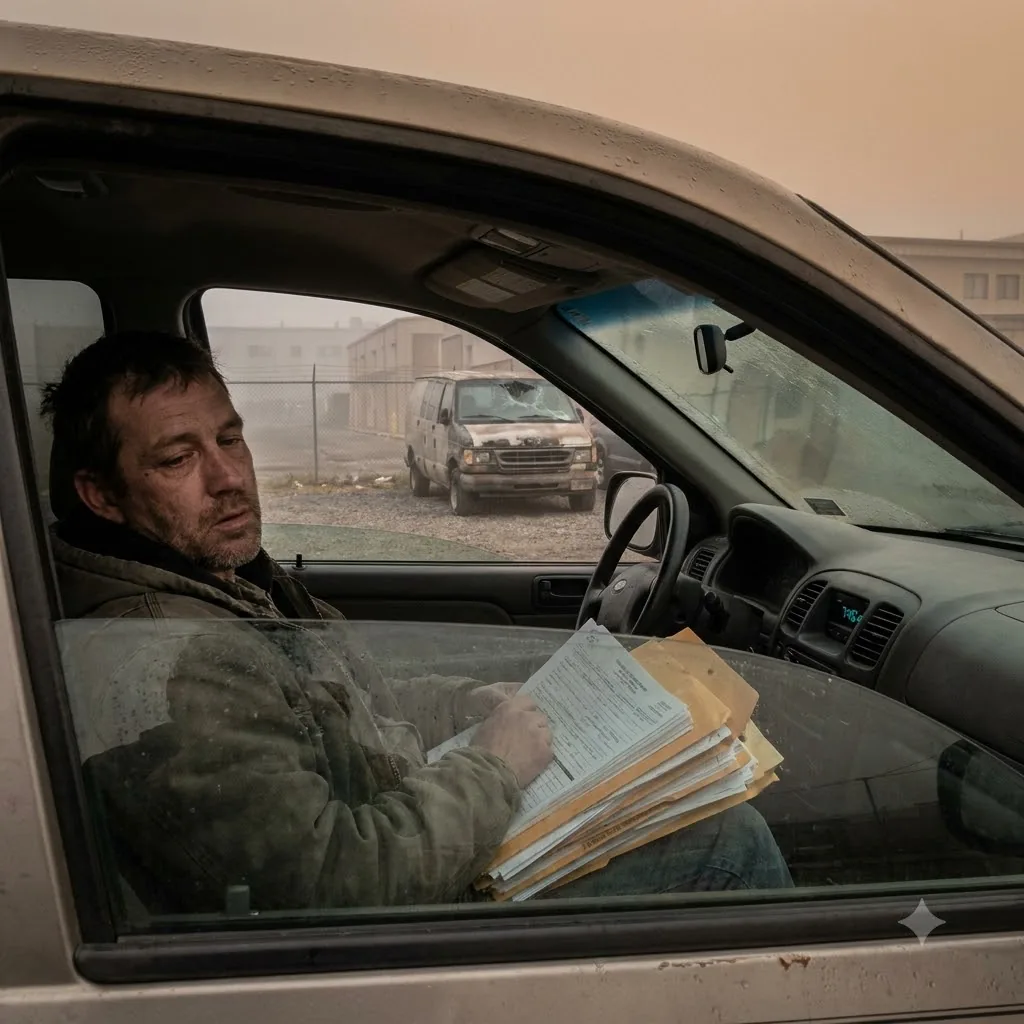
The engine of Elias’s sedan hummed a steady rhythm in the center of the municipal parking lot, blowing dry heat against his shins. He sat in the driver’s seat, running a yellow highlighter over the thirty-seventh page of a dense insurance denial letter. The corporate letterhead officially reclassified a total loss from the summer wildfire as ‘preventable thermal damage.’ He traced the absurd phrase with the neon ink, his jaw clenching tight. Through his rain-streaked windshield, illuminated only by a flickering sodium streetlamp, he watched Arthur Penhaligon sleeping with his head resting against the steering wheel of a battered passenger van.
Elias flipped to the next page, scanning the dense paragraphs of exclusionary clauses. The adjusters blamed Arthur for failing to install non-combustible siding, a mandate that would have cost more than the original mortgage on his destroyed home. Elias typed a quick note on his laptop, translating the endless legal jargon into a plain-text summary. Forty pages of corporate deflection meant the Penhaligons, along with eighty other families, would remain living in their vehicles through the brutal winter freeze. The heater in Elias’s car blasted warmth, creating a stark contrast to the thick layer of frost creeping along the jagged edges of Arthur’s van windows.
A harsh vibration rattled the cup holder. The screen of Elias’s phone lit up, casting a pale blue glow over the dashboard. The notification displayed the name Margot Vance. She was the financial cornerstone of Elias’s political campaign and the most vocal backer of the proposed climate relocation project. He tapped the notification. Margot had sent a large image file without any greeting. It was a digital rendering of the exact zoning map Elias had presented at the town hall three days prior.
Elias pinched the screen, zooming in on the pixelated lines. The original, painstakingly negotiated plan designated a large parcel of vacant, elevated land in the highland district for the new transitional housing units. That plot sat safely above the historic flood lines and clear of the fire-prone brush. In the image Margot had just sent, the highland district was entirely obscured. Someone had taken a thick, digital red marker and drawn an aggressive line crossing out the safe zone completely.
He scrolled further down the image. A bright red arrow pointed directly toward the industrial basin, a sprawling concrete grid flanked by an abandoned chemical plant and a constantly overflowing drainage reservoir. Margot had drawn a crude circle around a massive toxic brownfield site right in the center of the floodplain. A second text bubbled up on the screen beneath the doctored map.
*The highlands will not work. Move them to the basin.*
Elias stared at the glowing text, reading the words four times in a row. The basin flooded every single spring without fail. The soil tests from the adjacent chemical plant were currently sealed under federal litigation due to heavy metal contamination. Placing the displaced climate survivors there was arguably worse than leaving them to freeze in the municipal lot. Margot’s own sprawling estate sat directly on the border of the highland district, offering panoramic views of the very land she was now crossing out. She had spent the last six months publicly championing the relocation effort, hosting lavish fundraisers, and speaking passionately about community resilience to local news outlets.
The jagged red line over the highland map contradicted every public promise she had made on camera.
Elias scrolled back up to the insurance denial on his laptop screen, then looked down at Margot’s text. He had forty pages denying a valid wildfire claim sitting on his passenger seat, and a single red line denying a safe refuge glowing in his hand. His entire campaign relied on Margot’s funding to keep his office doors open and to force the conservative zoning board to approve the necessary permits. Without her financial backing, the shelter project would die in committee before the ground thawed. With her new mandate, the project would doom the very families they were supposed to be saving.
He opened his keyboard app to type a response, his thumb hovering over the glass. He needed a diplomatic way to explain the environmental hazards of the basin. He drafted a sentence, deleted it, and tried again. The cursor blinked steadily in the silent car.
A sudden shift in the shadows outside caught his attention. Elias lowered his phone, squinting through the windshield.
Inside the battered van, Arthur was moving. The exhausted father wiped a thick layer of condensation from the inside of his cracked window with the sleeve of his flannel shirt and peered out into the dark lot. Arthur’s eyes locked onto the glowing headlights of Elias’s idling car.
The heavy van door creaked loudly, the rusted hinges grinding as it swung open. Arthur stepped out onto the freezing asphalt, pulling a thin denim jacket tight across his chest to block the biting wind. He slammed the door shut, taking care not to wake his family sleeping in the back rows.
Elias watched the man walk across the empty parking spaces. Arthur moved with a stiff, painful limp, his breath pluming in thick white clouds in the icy air. Elias quickly minimized the map on his phone and shoved the device deep into his coat pocket. He slammed his laptop shut, hiding the highlighted insurance denial in the darkness of the passenger seat. Arthur reached the driver-side door of the sedan, raised a gloved fist, and rapped his knuckles sharply against the glass.
The engine of Elias’s sedan hummed a steady rhythm in the center of the municipal parking lot, blowing dry heat against his shins. He sat in the driver’s seat, running a yellow highlighter over the thirty-seventh page of a dense insurance denial letter. The corporate letterhead officially reclassified a total loss from the summer wildfire as ‘preventable thermal damage.’ He traced the absurd phrase with the neon ink, his jaw clenching tight. Through his rain-streaked windshield, illuminated only by a flickering sodium streetlamp, he watched Arthur Penhaligon sleeping with his head resting against the steering wheel of a battered passenger van.
Elias flipped to the next page, scanning the dense paragraphs of exclusionary clauses. The adjusters blamed Arthur for failing to install non-combustible siding, a mandate that would have cost more than the original mortgage on his destroyed home. Elias typed a quick note on his laptop, translating the endless legal jargon into a plain-text summary. Forty pages of corporate deflection meant the Penhaligons, along with eighty other families, would remain living in their vehicles through the brutal winter freeze. The heater in Elias’s car blasted warmth, creating a stark contrast to the thick layer of frost creeping along the jagged edges of Arthur’s van windows.
A harsh vibration rattled the cup holder. The screen of Elias’s phone lit up, casting a pale blue glow over the dashboard. The notification displayed the name Margot Vance. She was the financial cornerstone of Elias’s political campaign and the most vocal backer of the proposed climate relocation project. He tapped the notification. Margot had sent a large image file without any greeting. It was a digital rendering of the exact zoning map Elias had presented at the town hall three days prior.
Elias pinched the screen, zooming in on the pixelated lines. The original, painstakingly negotiated plan designated a large parcel of vacant, elevated land in the highland district for the new transitional housing units. That plot sat safely above the historic flood lines and clear of the fire-prone brush. In the image Margot had just sent, the highland district was entirely obscured. Someone had taken a thick, digital red marker and drawn an aggressive line crossing out the safe zone completely.
He scrolled further down the image. A bright red arrow pointed directly toward the industrial basin, a sprawling concrete grid flanked by an abandoned chemical plant and a constantly overflowing drainage reservoir. Margot had drawn a crude circle around a massive toxic brownfield site right in the center of the floodplain. A second text bubbled up on the screen beneath the doctored map.
*The highlands will not work. Move them to the basin.*
Elias stared at the glowing text, reading the words four times in a row. The basin flooded every single spring without fail. The soil tests from the adjacent chemical plant were currently sealed under federal litigation due to heavy metal contamination. Placing the displaced climate survivors there was arguably worse than leaving them to freeze in the municipal lot. Margot’s own sprawling estate sat directly on the border of the highland district, offering panoramic views of the very land she was now crossing out. She had spent the last six months publicly championing the relocation effort, hosting lavish fundraisers, and speaking passionately about community resilience to local news outlets.
The jagged red line over the highland map contradicted every public promise she had made on camera.
Elias scrolled back up to the insurance denial on his laptop screen, then looked down at Margot’s text. He had forty pages denying a valid wildfire claim sitting on his passenger seat, and a single red line denying a safe refuge glowing in his hand. His entire campaign relied on Margot’s funding to keep his office doors open and to force the conservative zoning board to approve the necessary permits. Without her financial backing, the shelter project would die in committee before the ground thawed. With her new mandate, the project would doom the very families they were supposed to be saving.
He opened his keyboard app to type a response, his thumb hovering over the glass. He needed a diplomatic way to explain the environmental hazards of the basin. He drafted a sentence, deleted it, and tried again. The cursor blinked steadily in the silent car.
A sudden shift in the shadows outside caught his attention. Elias lowered his phone, squinting through the windshield.
Inside the battered van, Arthur was moving. The exhausted father wiped a thick layer of condensation from the inside of his cracked window with the sleeve of his flannel shirt and peered out into the dark lot. Arthur’s eyes locked onto the glowing headlights of Elias’s idling car.
The heavy van door creaked loudly, the rusted hinges grinding as it swung open. Arthur stepped out onto the freezing asphalt, pulling a thin denim jacket tight across his chest to block the biting wind. He slammed the door shut, taking care not to wake his family sleeping in the back rows.
Elias watched the man walk across the empty parking spaces. Arthur moved with a stiff, painful limp, his breath pluming in thick white clouds in the icy air. Elias quickly minimized the map on his phone and shoved the device deep into his coat pocket. He slammed his laptop shut, hiding the highlighted insurance denial in the darkness of the passenger seat. Arthur reached the driver-side door of the sedan, raised a gloved fist, and rapped his knuckles sharply against the glass.