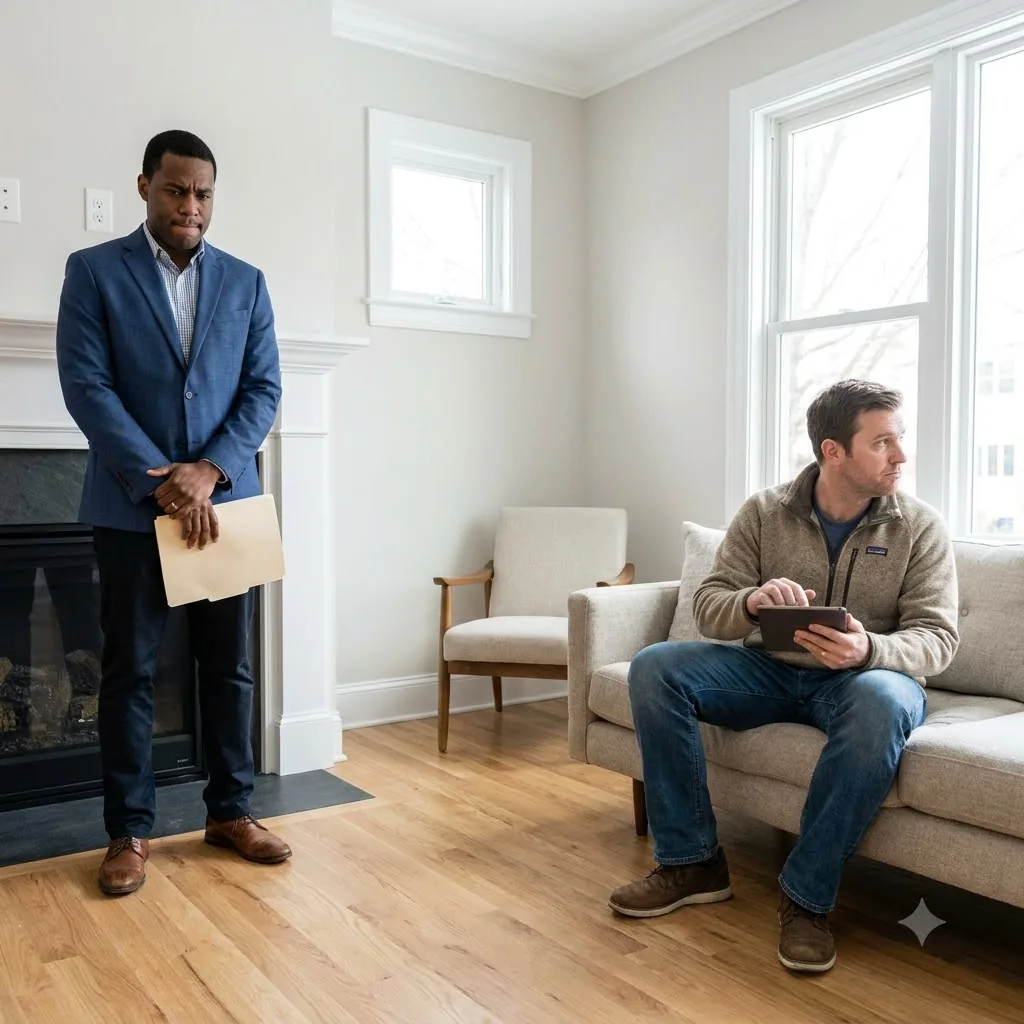
Story code: ST-000258
Part 2: The Assessment Trap
The appraiser shoved the front door wide open. The midday heat rushed into the air-conditioned foyer. Marcus scrambled, clutching the thick leather binder to his chest, and chased the man out onto the concrete porch.
“Wait,” Marcus said, his voice cracking slightly as he abandoned his subservient tone. “You didn’t even look at the basement. Or the municipal permits. You were inside my house for less than ten minutes.”
The appraiser didn’t break his stride. He marched quickly down the driveway toward a nondescript white sedan parked close to the curb. “Property condition is logged,” the man tossed over his shoulder, his voice completely devoid of inflection. “Everything is already routed to the portal.”
“But the custom work,” Marcus pleaded. He stepped off the porch, feeling the oppressive afternoon sun beating down on his neck. “I have the receipts right here. Over forty thousand dollars in premium materials alone. You have to include that in the structural assessment.”
The man opened his car door and carelessly tossed the tablet onto the passenger seat. He finally turned and looked at Marcus. There was no sympathy in his eyes, just a dull, bureaucratic exhaustion. “I don’t have to do anything, man. The algorithm flags the zip code risk. I just confirm the footprint and take the required exterior shots. Take it up with your underwriter.”
The car door slammed shut with a sharp, metallic thud, cutting off whatever Marcus was about to say. The engine turned over, and the white sedan rapidly pulled away from the curb, disappearing down the street lined with chain-link fences and cracked, weed-choked sidewalks.
Marcus stood completely alone in his driveway. The heavy leather binder felt like an anchor pulling on his arms. The fourteenth of the month. Nine days. That was all he had left. The crippling balloon payment on his commercial warehouse lease was a hard, immovable wall. If he didn’t secure the equity line from his house in time, his business equipment would be seized, his loyal employees let go, and five years of grueling startup work would be wiped out entirely.
He walked slowly back into the house, locking the front door with a numb hand. The silent perfection of the living room now felt like a decorated tomb.
His phone vibrated violently in his pocket. He pulled it out. The bright screen displayed the caller ID: *David Keller – Loan Officer*.
Marcus swiped the screen with a sweaty thumb, pressing the phone to his ear. “David. The appraiser just left. It was an absolute disaster. He didn’t look at anything inside.”
“I know,” David said, his voice tight, clipped, and deeply stressed. “The preliminary report just auto-populated in our system. Marcus… it’s bad.”
Marcus walked heavily over to the kitchen island, leaning his body weight against the cool quartz countertop he had polished just three hours ago. “Define bad. You know the math. I need two hundred and eighty thousand to clear the business debt and leave enough for the closing costs. We pulled the local comps last week. The house is worth at least three-twenty.”
“The automated valuation came back at two hundred and twelve thousand,” David said softly.
The number hit Marcus like a physical blow to the stomach. The breath rushed out of his lungs. “That’s impossible. That’s barely above what I paid for the property before the renovation. The raw materials alone-”
“I know, I know,” David interrupted urgently. “But the report is locked in the system. He submitted it.”
“Then we appeal it!” Marcus shouted, the simmering panic finally breaking through his forced composure. “I have a binder full of every single permit, every receipt, every contractor sign-off. We demand a Reconsideration of Value. We get a different, actual appraiser out here.”
A heavy silence stretched across the line.
“David? Tell me we can appeal this immediately.”
“We can,” David said slowly, his tone laced with pity. “But a formal Reconsideration of Value requires a desk review by the underwriting committee. Then they have to formally authorize a second appraisal, put it out for a regional bid, and schedule a new walkthrough. The current turnaround time for an ROV is thirty to forty-five days.”
Marcus closed his eyes. The pristine kitchen began to spin slightly. “My balloon payment is due on the fourteenth. That is exactly nine days from now. If I don’t have the wire transfer by then, I am in default. They will literally padlock the doors to my warehouse.”
“If we trigger an appeal, the loan application goes into a suspended status,” David explained. “We won’t close on the fourteenth. Not a chance in hell. But if you accept this fraudulent valuation just to keep the closing date on track, the maximum cash out you can get is about forty thousand. You’ll be fifty grand short of what you need to save the business.”
Marcus opened his eyes, staring blindly at the herringbone floor he had laid plank by plank, sacrificing his weekends and his sanity. It was a perfectly engineered trap. Accept the appraisal, fall short, and lose the business. Fight the appraisal, miss the deadline, and lose the business.
“Send me the report,” Marcus demanded, his voice dropping to a hollow, echoing whisper. “I want to see exactly what he wrote.”
“I just emailed the PDF to your secure portal. Call me back when you’ve had a minute to breathe, Marcus. We desperately need to figure out what you want to do.”
The line went dead.
Marcus opened his laptop on the kitchen island. His hands were shaking uncontrollably as he typed in his password, logged into the banking portal, and downloaded the document.
He scrolled past the summary page to the property photos. There was the blurry picture of his bathroom mirror. There was the picture of the street showing the neighbor’s rusted sedan. Under the ‘Condition’ section, a single, damning box was checked: *Standard builder-grade finishes. No significant capital improvements observed.*
He gripped the edge of the island, his knuckles turning white. The appraiser had simply lied. He had ignored the undeniable reality right in front of his face just to hit a button on a screen.
Marcus scrolled rapidly down to the ‘Comparables’ section, bracing himself to see the heavily discounted foreclosures from the unrenovated north side of the neighborhood. But as his eyes scanned the three addresses the appraiser had used to justify the devastatingly low number, his brow furrowed in deep confusion.
He recognized the addresses. They weren’t just random foreclosures on the adjacent block. He leaned in closer, reading the tiny fine print in the ownership history column of the comparable properties.
*Owner of Record: Apex Financial Holdings.*
Apex Financial Holdings. The exact same commercial lender Marcus was currently using for this equity loan. The bank wasn’t using independent, open-market sales to value his home. They were using their own private, internally manipulated portfolio of distressed neighborhood properties to artificially cap his appraisal. And the appraiser had known the exact target number the second he walked through the front door.