Story code: ST-000318
Part 1: The Demolition Order
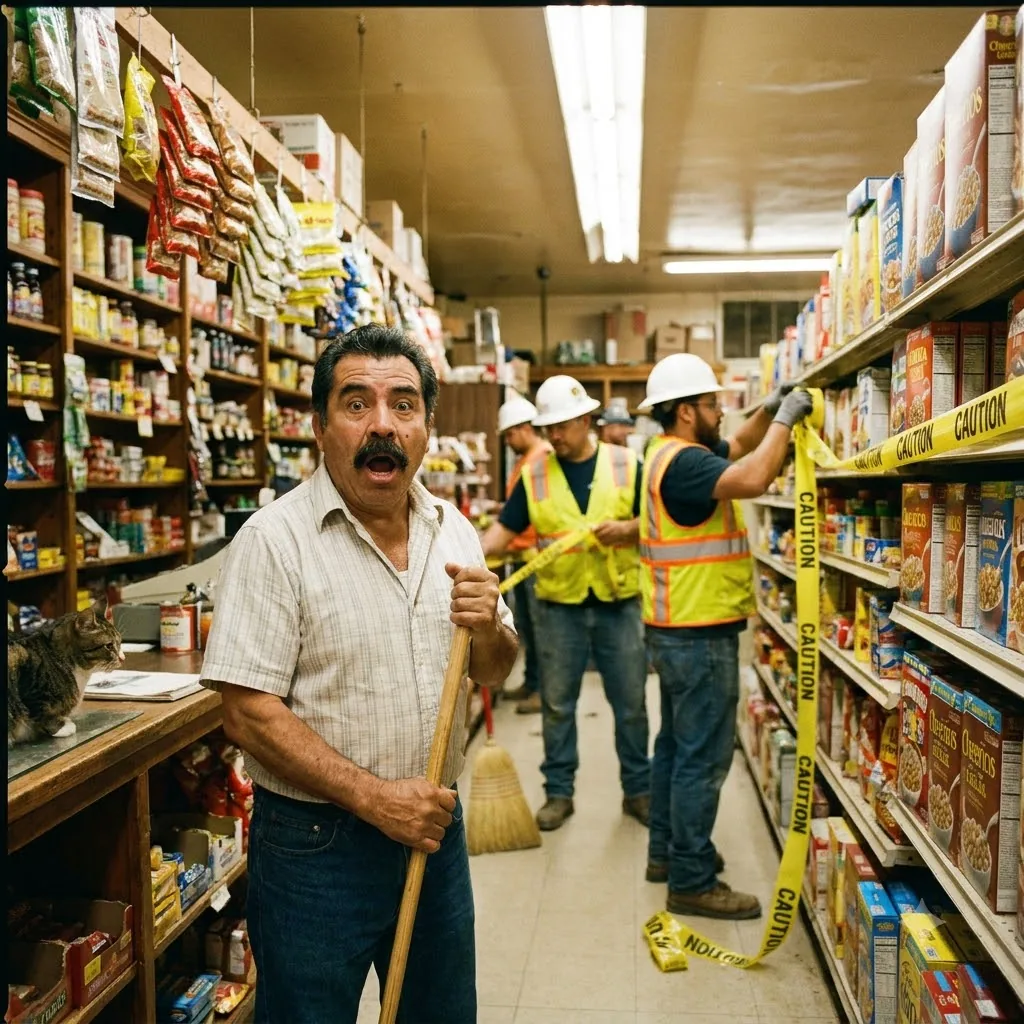
Mateo pushed his wide broom over the faded linoleum by the front door just as four men in yellow hardhats marched past him, carrying a heavy-duty rotary hammer and a spool of yellow caution tape. They did not wipe their heavy steel-toed boots, and they completely ignored the neon open sign glowing bright red in the window. One of the men, wearing a scuffed canvas jacket, immediately tied the caution tape to the metal endcap of the cereal aisle. He began stretching the plastic ribbon across the main walkway, pulling it tight to block off the path to the glass refrigeration units.
Mateo dropped the broom. The wooden handle clattered against the wire magazine rack, scattering a stack of morning papers across the floor. He stepped directly in front of the man with the tape, holding his hands up flat to block the path. He told the man in a loud, firm voice that he had the wrong address, pointing aggressively toward the street numbers painted in gold leaf on the front glass door.
The man in the canvas jacket simply chewed his gum, side-stepped Mateo, and kept pulling the plastic ribbon toward the back wall. At that exact moment, a deafening mechanical roar erupted from the center of the bodega. Mateo spun around, his heart slamming against his ribs. The man with the rotary hammer had plugged the massive tool into the wall outlet near the canned goods and was actively drilling straight down into the center aisle. Thick plumes of white concrete dust exploded into the air, drifting upward and settling like a layer of pale snow over the boxes of dry pasta, the stacks of canned soup, and the fresh fruit on the nearby display tables.
The smell of fresh morning coffee and sweet plantains was instantly choked out by the sharp, metallic scent of pulverized concrete. The violent vibration of the drill traveled through the floorboards, buzzing directly into the soles of Mateo’s sneakers. A regular customer, an elderly woman named Mrs. Higgins, froze in terror by the deli counter. She dropped her plastic basket, sending red apples rolling across the vibrating floor, and hurried out the door with her hands covering her ears.
Mateo sprinted down the aisle toward the drill operator. He shouted at the top of his lungs over the grinding, mechanical scream, ordering the man to shut the machine off this instant. When the man did not look up, Mateo reached out and slapped the side of the worker’s hardhat. The worker finally killed the power. He wiped a layer of gray dust from his safety goggles and stared at Mateo with a look of sheer, bored annoyance.
The worker told Mateo to back off, stating he was just following a demolition work order. Mateo insisted loudly that this was a massive, catastrophic mistake. He stated that his family had owned this exact building for three generations and that absolutely no demolition work had been authorized by him or anyone else. The worker sighed, pulled a neatly folded piece of yellow paper from his safety vest, and tapped the printed address with a thick, calloused finger. The address matched the store perfectly, right down to the zip code. Mateo shook his head violently, reiterating that it was completely impossible and demanding the crew pack up their tools immediately.
The crew acted as if he were completely invisible. Another worker carried a heavy sledgehammer through the front door and set it down with a loud thud near the front counter, right next to Mateo’s carefully arranged display of lottery tickets. The floor tiles in the center aisle, laid down by Mateo’s grandfather thirty years ago, were already shattered into jagged, irreparable shards around a six-inch crater in the exposed concrete. The dust lingering in the air made Mateo cough harshly into his sleeve.
He reached into his pocket for his phone to call the police, his fingers trembling so badly he struggled to unlock the screen. He announced to the room that he was dialing the authorities right now to have them all removed for trespassing. The foreman, a tall man holding a metal clipboard, told Mateo to go ahead and make the call, acting entirely unbothered. The foreman then pulled out a can of bright orange spray paint. He shook the can, the little metal ball rattling loudly, and sprayed a large, dripping X onto the drywall right next to the framed photograph of Mateo’s father.
The sheer, invasive audacity of the destruction paralyzed Mateo for a crucial second. His chest tightened, his breath catching in his throat as the rotary hammer roared to life again, biting even deeper into the physical foundation of his livelihood.
Through the front glass window, a sleek black SUV pulled up to the curb, parking illegally in the loading zone. The heavy doors unlocked with an electronic chirp that pierced through the heavy construction noise. A woman stepped out onto the sidewalk. She wore a sharp, camel-colored designer coat and spotless leather boots, looking entirely out of place against the neighborhood’s worn pavement and morning grit. She did not glance up at the bodega’s awning or the neon signs. Instead, she unrolled a large sheet of thick architectural paper as she walked purposefully toward the entrance.
Mateo lowered his phone, staring through the dusty glass. He could clearly see the bright blue and white lines printed on her wide document. It was a highly detailed schematic, clearly displaying the exact layout of his aisles, his checkout counter, and his rear stockroom, all heavily annotated with red marker. The woman pushed the heavy glass door open, stepping confidently over the threshold without taking her eyes off the blueprints.
Mateo pushed his wide broom over the faded linoleum by the front door just as four men in yellow hardhats marched past him, carrying a heavy-duty rotary hammer and a spool of yellow caution tape. They did not wipe their heavy steel-toed boots, and they completely ignored the neon open sign glowing bright red in the window. One of the men, wearing a scuffed canvas jacket, immediately tied the caution tape to the metal endcap of the cereal aisle. He began stretching the plastic ribbon across the main walkway, pulling it tight to block off the path to the glass refrigeration units.
Mateo dropped the broom. The wooden handle clattered against the wire magazine rack, scattering a stack of morning papers across the floor. He stepped directly in front of the man with the tape, holding his hands up flat to block the path. He told the man in a loud, firm voice that he had the wrong address, pointing aggressively toward the street numbers painted in gold leaf on the front glass door.
The man in the canvas jacket simply chewed his gum, side-stepped Mateo, and kept pulling the plastic ribbon toward the back wall. At that exact moment, a deafening mechanical roar erupted from the center of the bodega. Mateo spun around, his heart slamming against his ribs. The man with the rotary hammer had plugged the massive tool into the wall outlet near the canned goods and was actively drilling straight down into the center aisle. Thick plumes of white concrete dust exploded into the air, drifting upward and settling like a layer of pale snow over the boxes of dry pasta, the stacks of canned soup, and the fresh fruit on the nearby display tables.
The smell of fresh morning coffee and sweet plantains was instantly choked out by the sharp, metallic scent of pulverized concrete. The violent vibration of the drill traveled through the floorboards, buzzing directly into the soles of Mateo’s sneakers. A regular customer, an elderly woman named Mrs. Higgins, froze in terror by the deli counter. She dropped her plastic basket, sending red apples rolling across the vibrating floor, and hurried out the door with her hands covering her ears.
Mateo sprinted down the aisle toward the drill operator. He shouted at the top of his lungs over the grinding, mechanical scream, ordering the man to shut the machine off this instant. When the man did not look up, Mateo reached out and slapped the side of the worker’s hardhat. The worker finally killed the power. He wiped a layer of gray dust from his safety goggles and stared at Mateo with a look of sheer, bored annoyance.
The worker told Mateo to back off, stating he was just following a demolition work order. Mateo insisted loudly that this was a massive, catastrophic mistake. He stated that his family had owned this exact building for three generations and that absolutely no demolition work had been authorized by him or anyone else. The worker sighed, pulled a neatly folded piece of yellow paper from his safety vest, and tapped the printed address with a thick, calloused finger. The address matched the store perfectly, right down to the zip code. Mateo shook his head violently, reiterating that it was completely impossible and demanding the crew pack up their tools immediately.
The crew acted as if he were completely invisible. Another worker carried a heavy sledgehammer through the front door and set it down with a loud thud near the front counter, right next to Mateo’s carefully arranged display of lottery tickets. The floor tiles in the center aisle, laid down by Mateo’s grandfather thirty years ago, were already shattered into jagged, irreparable shards around a six-inch crater in the exposed concrete. The dust lingering in the air made Mateo cough harshly into his sleeve.
He reached into his pocket for his phone to call the police, his fingers trembling so badly he struggled to unlock the screen. He announced to the room that he was dialing the authorities right now to have them all removed for trespassing. The foreman, a tall man holding a metal clipboard, told Mateo to go ahead and make the call, acting entirely unbothered. The foreman then pulled out a can of bright orange spray paint. He shook the can, the little metal ball rattling loudly, and sprayed a large, dripping X onto the drywall right next to the framed photograph of Mateo’s father.
The sheer, invasive audacity of the destruction paralyzed Mateo for a crucial second. His chest tightened, his breath catching in his throat as the rotary hammer roared to life again, biting even deeper into the physical foundation of his livelihood.
Through the front glass window, a sleek black SUV pulled up to the curb, parking illegally in the loading zone. The heavy doors unlocked with an electronic chirp that pierced through the heavy construction noise. A woman stepped out onto the sidewalk. She wore a sharp, camel-colored designer coat and spotless leather boots, looking entirely out of place against the neighborhood’s worn pavement and morning grit. She did not glance up at the bodega’s awning or the neon signs. Instead, she unrolled a large sheet of thick architectural paper as she walked purposefully toward the entrance.
Mateo lowered his phone, staring through the dusty glass. He could clearly see the bright blue and white lines printed on her wide document. It was a highly detailed schematic, clearly displaying the exact layout of his aisles, his checkout counter, and his rear stockroom, all heavily annotated with red marker. The woman pushed the heavy glass door open, stepping confidently over the threshold without taking her eyes off the blueprints.