Story code: ST-001419
Part 1: The Glass Divider
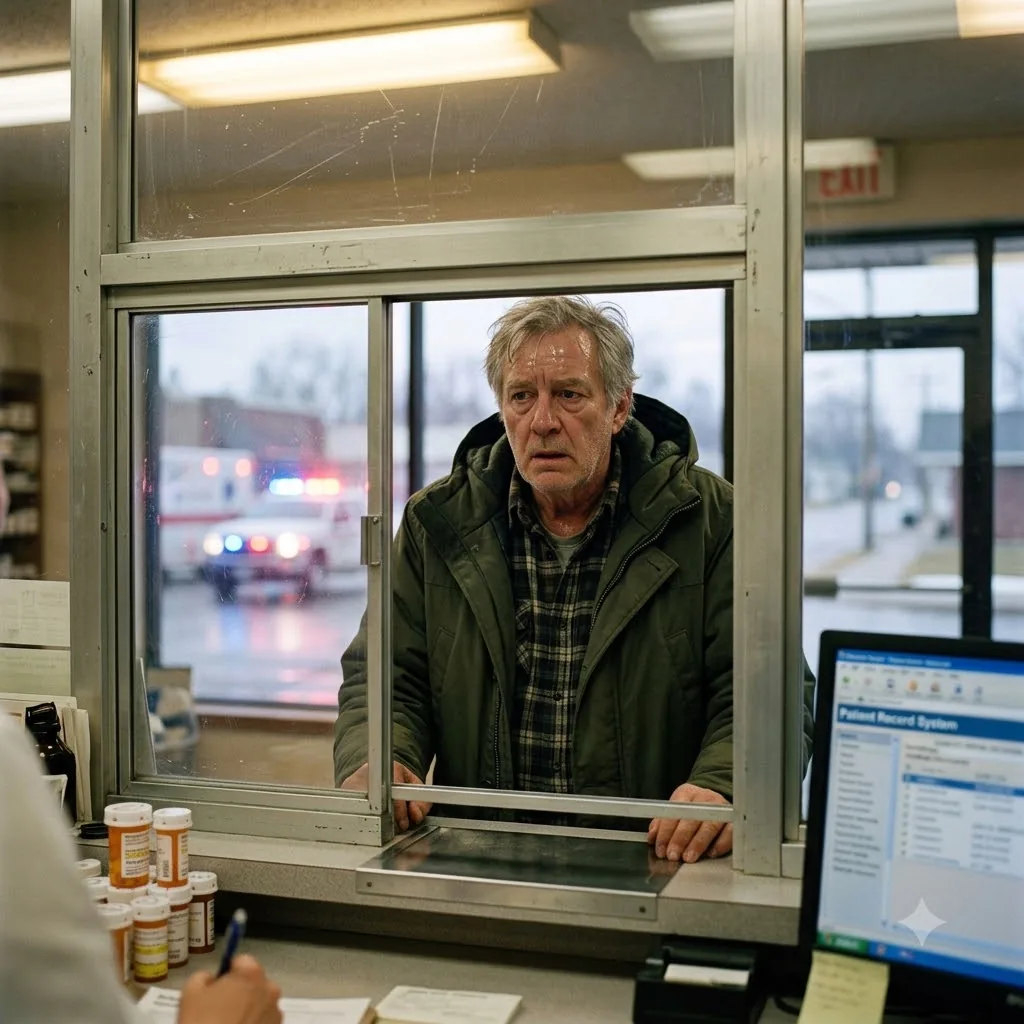
The silent, rhythmic pulse of blue strobe lights washed across the pharmacy’s tinted front windows, painting the rows of greeting cards in sharp, unnatural hues. Across the street, the middle school was executing a scheduled lockdown drill. Arthur stood perfectly still behind his elevated drop-off counter, watching the mechanical precision of the flashing alarms. His pharmacy was a fortress of safety glass, time-delayed safes, reinforced steel doors, and strict federal schedules. He found profound comfort in the rigid boundaries that kept the chaos of the outside world firmly on the other side of his gleaming linoleum floor. In his domain, everything had a protocol. Everything had a rule.
The quiet tension of the afternoon shattered when the heavy automatic doors violently slid apart on their tracks, protesting with a loud mechanical whine. Heavy, uneven footsteps slapped erratically against the tile. Arthur adjusted his posture, straightening his crisp white coat, fully expecting a lost drill supervisor or a confused, irritated parent demanding directions. Instead, a massive, trembling figure slammed heavily into the consultation window.
It was Elias. For ten long years, the broad-shouldered man had driven Route 4 for the exact school currently locked down in silence across the asphalt. Elias usually brought a burst of chaotic warmth into the sterile pharmacy. He smelled of diesel exhaust, stale coffee, and peppermint wrappers, always greeting Arthur with a booming baritone laugh that rattled the vitamin displays. Today, there was no laughter. His gray municipal uniform shirt was drenched in cold, dark patches of sweat, clinging tight to a hunched, shivering torso. His skin carried the sickly, translucent sheen of wet parchment. He leaned heavily against the reinforced glass partition, his massive knuckles white and trembling as he gripped the ledge for support.
“Arthur,” Elias gasped, the word tearing out of his throat like ripped canvas. “I need the script. Now. Please.”
Arthur immediately stepped back, his eyes darting defensively to the illuminated computer terminal. He typed in Elias’s date of birth with practiced, detached efficiency, letting the machine dictate the next step. The patient profile loaded instantly. Schedule II narcotic, severe chronic back pain originating from a horrific bus rollover accident five years ago. Arthur noted the last fill date glowing in red text on the screen.
“You are exactly three days early, Elias,” Arthur stated, his voice flat and heavily modulated by years of diffusing volatile customers. “The system is locked. The insurance will not process the claim, and state law strictly prohibits an override for this class of medication.”
Elias squeezed his eyes shut, his face contorting in pure agony. A low, ragged groan rattled deep in his chest. He dragged a heavy, calloused hand down his face, leaving streaks of grime and sweat. “I am paying cash. I do not care about the insurance. You have to fill it. The pain is not like before. It is entirely different. It is tearing me in half.”
Arthur kept both hands resting lightly on the keyboard, maintaining a strict two-foot defensive distance from the counter. The rules were absolute, designed specifically for moments like this. Early fills for Schedule II narcotics required a new prescription, a direct doctor’s override, and extensive documentation. Elias was exhibiting classic withdrawal signs or severe tolerance escalation. Arthur’s clinical mind categorized the symptoms with cold precision. Shaking. Sweating. Desperation. Complete loss of baseline composure. He had seen this exact deterioration a hundred times, and the procedural protocol was his only shield against losing his license and his livelihood.
“I cannot do it,” Arthur said, pointing a steady, unyielding finger at the monitor. “You know the regulations just as well as I do. I am legally bound by the state board. Go to the emergency room across town if the pain is truly unmanageable. I cannot dispense early.”
Elias slammed his open palm against the counter with bone-rattling force. The plastic displays of lip balm and hand sanitizer launched into the air, scattering across the floor. His eyes, usually warm and crinkled with good humor, were dilated, bloodshot, and wild with an agonizing panic. He leaned closer, his breath hot and ragged against the glass divider, fogging the transparent barrier between them.
“You are not listening to me,” Elias choked out, his voice dropping to a desperate, gravelly whisper that sounded completely foreign to the man Arthur knew. “I have to get back on that bus at three o’clock. I have a route full of kids waiting. I cannot move my legs right. I cannot feel my right foot on the brake pedal. Give me the pills so I can finish my shift.”
Arthur stiffened, a new wave of alarm washing over him. The man was planning to operate a heavy municipal vehicle in a populated school zone in this severely compromised condition. The blue strobe lights from the middle school continued to flash against the white pharmacy walls, casting erratic, frantic shadows across Elias’s contorted face. The lockdown drill outside perfectly mirrored the lockdown protocol initiating inside Arthur’s mind.
“You should absolutely not be driving,” Arthur said, reaching slowly toward the red emergency telephone receiver mounted on the wall beneath the counter. “I am calling the transportation dispatch office to send a replacement driver for your route. You are in no physical condition to transport children.”
The mere suggestion of losing his route-his entire identity and livelihood-seemed to snap the last fragile thread holding Elias together. The big man let out a guttural, terrifying sound that belonged to a cornered, wounded animal. He shoved the heavy plexiglass divider hard enough to severely bend the heavy metal mounting brackets.
“Do not touch that phone,” Elias ordered, his massive chest heaving with every ragged breath.
Arthur gripped the red receiver tightly, his thumb hovering directly over the zero key to page security. His fortress conditioning took over entirely. Threat detected. Secure the perimeter. Enforce the lockdown. He pulled the receiver from the cradle.
Elias did not retreat or surrender. Instead, he reached deep into the side pocket of his heavy uniform jacket, his trembling hand closing aggressively around something heavy, dark, and metallic. Without another word, the massive bus driver vaulted his entire upper body over the lower section of the consultation counter, sweeping the heavy register monitor to the floor with a violent, shattering crash.
The silent, rhythmic pulse of blue strobe lights washed across the pharmacy’s tinted front windows, painting the rows of greeting cards in sharp, unnatural hues. Across the street, the middle school was executing a scheduled lockdown drill. Arthur stood perfectly still behind his elevated drop-off counter, watching the mechanical precision of the flashing alarms. His pharmacy was a fortress of safety glass, time-delayed safes, reinforced steel doors, and strict federal schedules. He found profound comfort in the rigid boundaries that kept the chaos of the outside world firmly on the other side of his gleaming linoleum floor. In his domain, everything had a protocol. Everything had a rule.
The quiet tension of the afternoon shattered when the heavy automatic doors violently slid apart on their tracks, protesting with a loud mechanical whine. Heavy, uneven footsteps slapped erratically against the tile. Arthur adjusted his posture, straightening his crisp white coat, fully expecting a lost drill supervisor or a confused, irritated parent demanding directions. Instead, a massive, trembling figure slammed heavily into the consultation window.
It was Elias. For ten long years, the broad-shouldered man had driven Route 4 for the exact school currently locked down in silence across the asphalt. Elias usually brought a burst of chaotic warmth into the sterile pharmacy. He smelled of diesel exhaust, stale coffee, and peppermint wrappers, always greeting Arthur with a booming baritone laugh that rattled the vitamin displays. Today, there was no laughter. His gray municipal uniform shirt was drenched in cold, dark patches of sweat, clinging tight to a hunched, shivering torso. His skin carried the sickly, translucent sheen of wet parchment. He leaned heavily against the reinforced glass partition, his massive knuckles white and trembling as he gripped the ledge for support.
“Arthur,” Elias gasped, the word tearing out of his throat like ripped canvas. “I need the script. Now. Please.”
Arthur immediately stepped back, his eyes darting defensively to the illuminated computer terminal. He typed in Elias’s date of birth with practiced, detached efficiency, letting the machine dictate the next step. The patient profile loaded instantly. Schedule II narcotic, severe chronic back pain originating from a horrific bus rollover accident five years ago. Arthur noted the last fill date glowing in red text on the screen.
“You are exactly three days early, Elias,” Arthur stated, his voice flat and heavily modulated by years of diffusing volatile customers. “The system is locked. The insurance will not process the claim, and state law strictly prohibits an override for this class of medication.”
Elias squeezed his eyes shut, his face contorting in pure agony. A low, ragged groan rattled deep in his chest. He dragged a heavy, calloused hand down his face, leaving streaks of grime and sweat. “I am paying cash. I do not care about the insurance. You have to fill it. The pain is not like before. It is entirely different. It is tearing me in half.”
Arthur kept both hands resting lightly on the keyboard, maintaining a strict two-foot defensive distance from the counter. The rules were absolute, designed specifically for moments like this. Early fills for Schedule II narcotics required a new prescription, a direct doctor’s override, and extensive documentation. Elias was exhibiting classic withdrawal signs or severe tolerance escalation. Arthur’s clinical mind categorized the symptoms with cold precision. Shaking. Sweating. Desperation. Complete loss of baseline composure. He had seen this exact deterioration a hundred times, and the procedural protocol was his only shield against losing his license and his livelihood.
“I cannot do it,” Arthur said, pointing a steady, unyielding finger at the monitor. “You know the regulations just as well as I do. I am legally bound by the state board. Go to the emergency room across town if the pain is truly unmanageable. I cannot dispense early.”
Elias slammed his open palm against the counter with bone-rattling force. The plastic displays of lip balm and hand sanitizer launched into the air, scattering across the floor. His eyes, usually warm and crinkled with good humor, were dilated, bloodshot, and wild with an agonizing panic. He leaned closer, his breath hot and ragged against the glass divider, fogging the transparent barrier between them.
“You are not listening to me,” Elias choked out, his voice dropping to a desperate, gravelly whisper that sounded completely foreign to the man Arthur knew. “I have to get back on that bus at three o’clock. I have a route full of kids waiting. I cannot move my legs right. I cannot feel my right foot on the brake pedal. Give me the pills so I can finish my shift.”
Arthur stiffened, a new wave of alarm washing over him. The man was planning to operate a heavy municipal vehicle in a populated school zone in this severely compromised condition. The blue strobe lights from the middle school continued to flash against the white pharmacy walls, casting erratic, frantic shadows across Elias’s contorted face. The lockdown drill outside perfectly mirrored the lockdown protocol initiating inside Arthur’s mind.
“You should absolutely not be driving,” Arthur said, reaching slowly toward the red emergency telephone receiver mounted on the wall beneath the counter. “I am calling the transportation dispatch office to send a replacement driver for your route. You are in no physical condition to transport children.”
The mere suggestion of losing his route-his entire identity and livelihood-seemed to snap the last fragile thread holding Elias together. The big man let out a guttural, terrifying sound that belonged to a cornered, wounded animal. He shoved the heavy plexiglass divider hard enough to severely bend the heavy metal mounting brackets.
“Do not touch that phone,” Elias ordered, his massive chest heaving with every ragged breath.
Arthur gripped the red receiver tightly, his thumb hovering directly over the zero key to page security. His fortress conditioning took over entirely. Threat detected. Secure the perimeter. Enforce the lockdown. He pulled the receiver from the cradle.
Elias did not retreat or surrender. Instead, he reached deep into the side pocket of his heavy uniform jacket, his trembling hand closing aggressively around something heavy, dark, and metallic. Without another word, the massive bus driver vaulted his entire upper body over the lower section of the consultation counter, sweeping the heavy register monitor to the floor with a violent, shattering crash.