Story code: ST-001262
Part 1: The Replacement Algorithm
Mateo held the left mouse button down, dragging the cursor across ten years of his life. The text highlighted in a cold, artificial blue on the high-definition monitor. Control-C. He moved his wrist, shifting the cursor away from his personal archive and dropping it into the sterile, flashing prompt window of the new proprietary language model. Control-V.
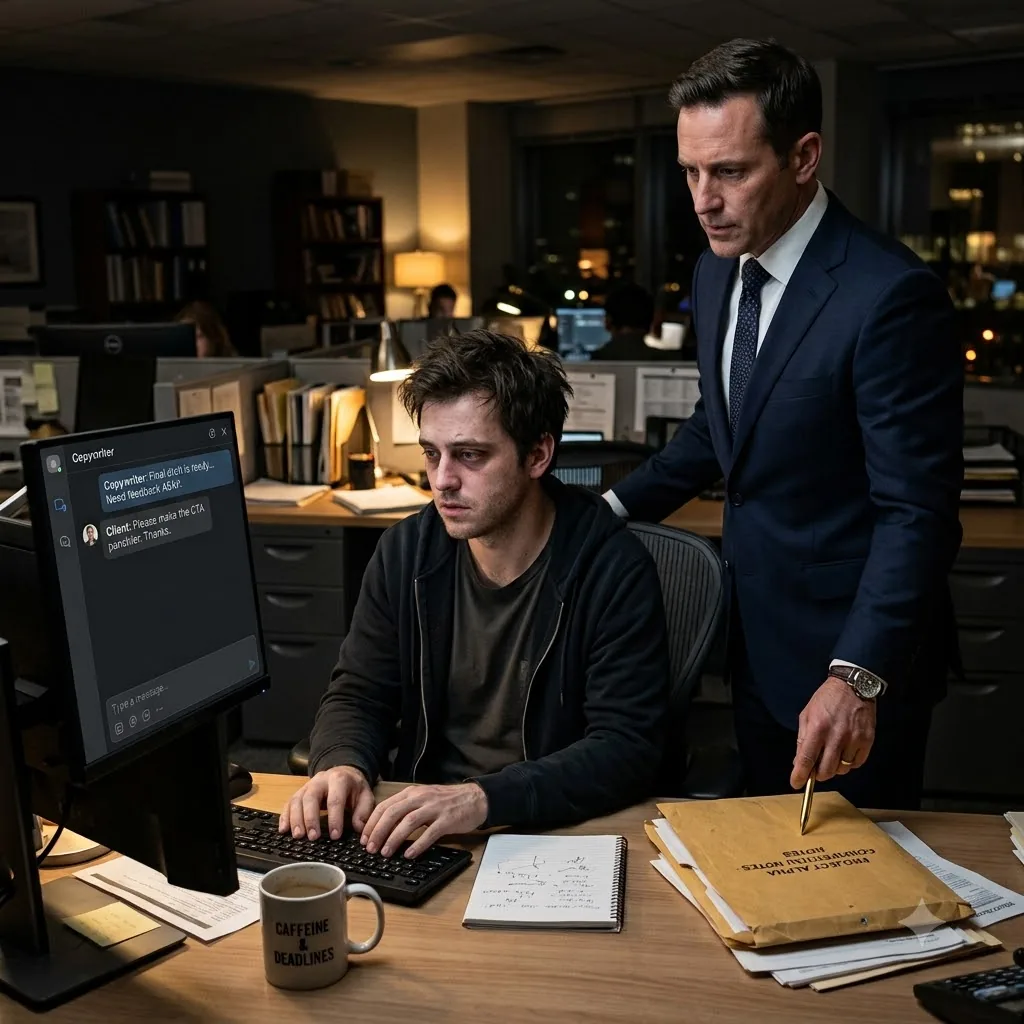
Behind him, the rhythmic, metallic click of a heavy gold pen struck the rigid edge of a thick manila envelope. Tap. Tap. Tap. Vance stood close enough that Mateo could feel the physical displacement of air, carrying the sharp, synthetic scent of peppermint and expensive dry cleaning. The envelope in Vance’s left hand bore a faint, unmistakable government seal in the upper corner. A Department of Homeland Security return address. Mateo kept his eyes locked on the screen, forcing his trembling fingers to remain steady on the keyboard as he submitted his award-winning global footwear campaign to the machine.
The screen blinked. A processing icon spun in endless, perfect circles in the center of the dark interface. Mateo watched the text-words he had agonized over for three weeks in a cramped studio apartment before he made Senior Copywriter-dissolve into invisible tokens and raw data points. The machine chewed on his syntax. It spat back a sterile summary, stripping the rhythm and the humanity from his carefully crafted prose, leaving only the hollow structural bones.
Vance leaned closer. The premium leather of his imported shoes creaked against the polished hardwood floor of the agency.
“It needs more of your foundational emotional core,” Vance murmured, his voice a low, perfectly modulated hum in the vast, empty office. “Feed it the healthcare initiative you wrote last year. The one that secured the regional platinum award.”
Mateo swallowed the dry, jagged lump in his throat. He clicked back to his archive, opening a new folder on his desktop. The digital file was labeled with his daughter’s birth year. It was the exact same year he had landed the hospital account, the campaign that finally allowed him to afford the down payment on their house in a safe neighborhood. He selected the text, reading the opening line he had written while holding his sleeping infant in one arm. The gold pen tapped against the thick, fibrous paper of the envelope again.
The sound echoed through the abandoned bullpen. The executive team had sent everyone else home at five o’clock on a Friday. It was just the two of them remaining, illuminated by the harsh white glow of the monitor and the hungry black void of the text box waiting for its next meal.
Mateo hit the enter key. The algorithm absorbed the healthcare campaign in less than a second. Vance adjusted his stance. The heavy manila folder brushed against the back of Mateo’s mesh ergonomic chair. The friction sounded incredibly loud in the silence. Mateo knew exactly what specific forms were resting inside that envelope. He had filled them out meticulously, double-checking every date, every required signature, every necessary stamp of approval required to upgrade his family’s temporary visas to permanent resident status. He had handed the completed packet to Human Resources three weeks ago for the final corporate sponsor signature. Now, those irreplaceable documents were being held hostage in the hands of an outside efficiency consultant.
“The learning curve on this architecture is exponential,” Vance said, tapping the gold pen one more time before sliding it smoothly into his breast pocket. “It just needs the right pilot to steer it. Someone who understands the agency’s brand voice intimately. Someone willing to ensure a seamless transition for our shareholders.”
Mateo watched the AI generate a brand new paragraph on the screen. It was closer this time. It was terrifyingly, brutally close. The machine possessed his unique cadence, his preferred sentence structures, the highly specific way he utilized em-dashes to create a false sense of urgency for the consumer. It was a flawless, soulless replica of his professional identity unfolding in real-time. He reached for the mouse to highlight a glaring error in the emotional logic of the second stanza. He needed to correct it immediately. He needed to prove the machine still required intense human oversight to function. He moved his hand across the desk pad.
Before his fingers could even grasp the plastic shell of the mouse, Vance leaned entirely into Mateo’s peripheral vision. The consultant’s tailored suit jacket brushed heavily against Mateo’s shoulder, pinning him in place. Vance reached a pale, meticulously manicured hand directly over the keyboard. His heavy thumb found the Escape key in the upper left corner and pressed it down hard. The screen froze instantly, halting the generation mid-word.
“We are done adjusting the parameters for tonight,” Vance said, his voice dropping to a near-whisper that carried the absolute, suffocating weight of a finalized contract. “You have until tomorrow morning to decide if you are going to finish automating this department for me, or if I need to return these adjustment forms to the federal government with a formal letter stating your employment has been permanently terminated.”
Mateo held the left mouse button down, dragging the cursor across ten years of his life. The text highlighted in a cold, artificial blue on the high-definition monitor. Control-C. He moved his wrist, shifting the cursor away from his personal archive and dropping it into the sterile, flashing prompt window of the new proprietary language model. Control-V.
Behind him, the rhythmic, metallic click of a heavy gold pen struck the rigid edge of a thick manila envelope. Tap. Tap. Tap. Vance stood close enough that Mateo could feel the physical displacement of air, carrying the sharp, synthetic scent of peppermint and expensive dry cleaning. The envelope in Vance’s left hand bore a faint, unmistakable government seal in the upper corner. A Department of Homeland Security return address. Mateo kept his eyes locked on the screen, forcing his trembling fingers to remain steady on the keyboard as he submitted his award-winning global footwear campaign to the machine.
The screen blinked. A processing icon spun in endless, perfect circles in the center of the dark interface. Mateo watched the text-words he had agonized over for three weeks in a cramped studio apartment before he made Senior Copywriter-dissolve into invisible tokens and raw data points. The machine chewed on his syntax. It spat back a sterile summary, stripping the rhythm and the humanity from his carefully crafted prose, leaving only the hollow structural bones.
Vance leaned closer. The premium leather of his imported shoes creaked against the polished hardwood floor of the agency.
“It needs more of your foundational emotional core,” Vance murmured, his voice a low, perfectly modulated hum in the vast, empty office. “Feed it the healthcare initiative you wrote last year. The one that secured the regional platinum award.”
Mateo swallowed the dry, jagged lump in his throat. He clicked back to his archive, opening a new folder on his desktop. The digital file was labeled with his daughter’s birth year. It was the exact same year he had landed the hospital account, the campaign that finally allowed him to afford the down payment on their house in a safe neighborhood. He selected the text, reading the opening line he had written while holding his sleeping infant in one arm. The gold pen tapped against the thick, fibrous paper of the envelope again.
The sound echoed through the abandoned bullpen. The executive team had sent everyone else home at five o’clock on a Friday. It was just the two of them remaining, illuminated by the harsh white glow of the monitor and the hungry black void of the text box waiting for its next meal.
Mateo hit the enter key. The algorithm absorbed the healthcare campaign in less than a second. Vance adjusted his stance. The heavy manila folder brushed against the back of Mateo’s mesh ergonomic chair. The friction sounded incredibly loud in the silence. Mateo knew exactly what specific forms were resting inside that envelope. He had filled them out meticulously, double-checking every date, every required signature, every necessary stamp of approval required to upgrade his family’s temporary visas to permanent resident status. He had handed the completed packet to Human Resources three weeks ago for the final corporate sponsor signature. Now, those irreplaceable documents were being held hostage in the hands of an outside efficiency consultant.
“The learning curve on this architecture is exponential,” Vance said, tapping the gold pen one more time before sliding it smoothly into his breast pocket. “It just needs the right pilot to steer it. Someone who understands the agency’s brand voice intimately. Someone willing to ensure a seamless transition for our shareholders.”
Mateo watched the AI generate a brand new paragraph on the screen. It was closer this time. It was terrifyingly, brutally close. The machine possessed his unique cadence, his preferred sentence structures, the highly specific way he utilized em-dashes to create a false sense of urgency for the consumer. It was a flawless, soulless replica of his professional identity unfolding in real-time. He reached for the mouse to highlight a glaring error in the emotional logic of the second stanza. He needed to correct it immediately. He needed to prove the machine still required intense human oversight to function. He moved his hand across the desk pad.
Before his fingers could even grasp the plastic shell of the mouse, Vance leaned entirely into Mateo’s peripheral vision. The consultant’s tailored suit jacket brushed heavily against Mateo’s shoulder, pinning him in place. Vance reached a pale, meticulously manicured hand directly over the keyboard. His heavy thumb found the Escape key in the upper left corner and pressed it down hard. The screen froze instantly, halting the generation mid-word.
“We are done adjusting the parameters for tonight,” Vance said, his voice dropping to a near-whisper that carried the absolute, suffocating weight of a finalized contract. “You have until tomorrow morning to decide if you are going to finish automating this department for me, or if I need to return these adjustment forms to the federal government with a formal letter stating your employment has been permanently terminated.”