Story code: ST-001067
Part 1: System Override
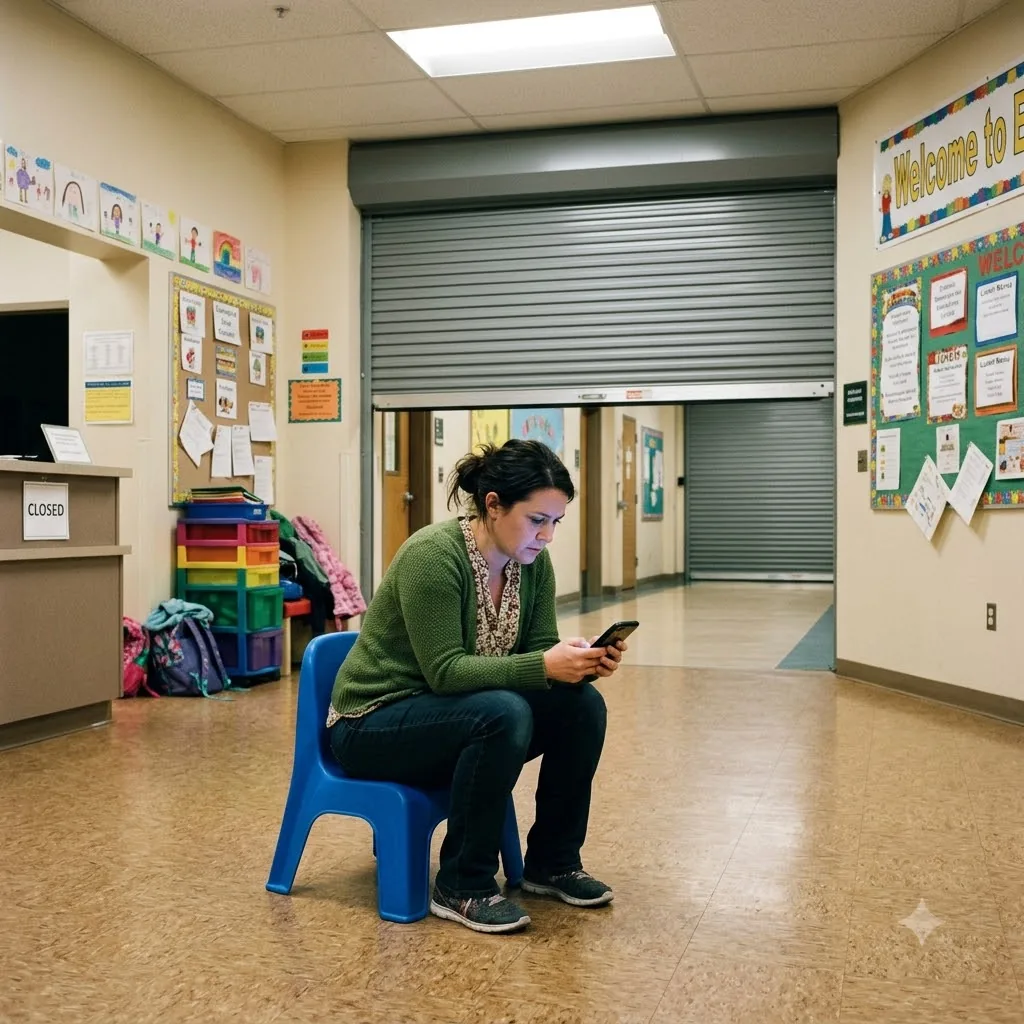
The glow of the automated rejection email cast a harsh, sterile light over Sarah’s phone screen just as she shifted her weight on a tiny, agonizingly rigid plastic elementary school chair. Thank you for your interest, but our screening system noted a five-year gap in your employment history. Four seconds. That was exactly how long it had taken the Apex Solutions hiring algorithm to digest her application, dismiss her decade of systems architecture experience, and spit out a boilerplate response. The AI did not care about nuance. It only cared about uninterrupted timelines, viewing human life as a rigid set of data points to be measured and discarded.
Sarah locked her screen, the glass cool beneath her thumb, and stared at her knees. Her legs were pressed up near her chest thanks to the miniature blue furniture in the front office lobby, making her lower back ache with a dull, persistent throb. She was not leaving. Marcus Vance, the lead hiring manager for Apex, was scheduled to walk through these double glass doors in exactly twelve minutes to pick up his son from the after-school robotics club. Sarah had dressed in her sharpest navy blazer, printed a hard copy of her portfolio on heavy cardstock, and positioned herself squarely in his exit path. She just needed three minutes of his time to prove that a human being with actual hands-on engineering skills was worth more than a resume parser’s binary ruling.
The school lobby buzzed with a low, chaotic energy. A pair of kindergartners chased each other down the adjacent hallway, their light-up sneakers squeaking wildly against the freshly waxed linoleum. Over the intercom, a secretary’s muffled voice droned through a list of bus route delays, her tone flat and exhausted. The air smelled of industrial floor cleaner, wet wool coats, and the lingering ghost of cafeteria pizza. It was an aggressively normal Tuesday afternoon, loud and vibrating with the restless energy of three hundred children waiting for the final bell.
Sarah checked her watch, observing the second hand sweep past the twelve. Ten minutes until Vance arrived. She smoothed the edges of her portfolio, running her thumb over the crisp paper. The five-year gap the algorithm hated so much had been spent caring for her late mother, not sitting idle. She had kept her skills razor-sharp, building independent security patches, breaking down open-source code, and rewriting legacy systems from her dining room table. A machine could not read the sleepless nights she spent mastering the exact proprietary networks Apex Solutions used. Vance would see that. He had to see that. If she could just get him to look at the manual overrides she had coded last month, he would bypass the HR software in a heartbeat.
A heavy set of double doors down the corridor swung open, unleashing a fresh wave of noise. Middle schoolers spilled out of the gymnasium, their voices echoing off the cinderblock walls in a deafening wave of overlapping conversations. Sarah rubbed her temples, trying to focus on her opening pitch. She rehearsed the lines silently. I know this is unorthodox, Mr. Vance, but your automated system rejected my application in four seconds. No, that sounded defensive. I understand your AI screens for continuous employment, but my portfolio demonstrates an elite understanding of failsafe architecture.
She looked up at the wall clock above the receptionist’s empty desk. The red second hand ticked forward. Vance was officially late.
The ambient roar of the gymnasium crowd swelled, peaking as a dropped metal water bottle clattered loudly against the tile. Then, the fluorescent lights overhead flickered.
It was a microscopic stutter in the power grid, the kind of brief brownout that usually meant a blown transformer down the street. But the lights did not just dim. They snapped to a harsh, blinding crimson.
The casual, chaotic noise of the hallway died in an instant. The silence that followed felt heavy, unnatural, and suffocating. The intercom hissed to life, emitting a sharp, piercing burst of static instead of the secretary’s tired voice.
Sarah stood up abruptly, her portfolio slipping from her lap and scattering across the linoleum. Her systems background flared to life, her brain instantly recognizing the sequence. This was not a fire drill. This was the district’s newly installed, fully automated lockdown protocol. She had read about the municipal contract in the local paper. The system was designed to isolate threats by instantly sealing every quadrant of the building without human intervention, relying purely on algorithmic threat detection.
A mechanical groan echoed from the ceiling tiles, a deep vibration that shook the dust from the rafters.
Before the kids in the hallway could even process the red lights, a series of deafening, metallic slams hammered through the building. Solid steel magnetic shutters, meant to drop only in the event of an active crisis, fired downward from the doorframes with violent, bone-rattling force. The glass doors at the front entrance vanished behind a wall of corrugated metal. The corridor leading to the gymnasium sealed shut, the heavy blast doors hitting the floor with a concussive shockwave that vibrated through the soles of Sarah’s shoes.
A teacher down the hall began shouting, her voice muffled behind three inches of reinforced steel. The automated system had not just locked the exterior doors. It had partitioned the entire school, trapping pockets of students in isolated sectors like rats in a maze.
Sarah rushed to the receptionist’s desk, vaulting over the low wooden gate and grabbing the edge of the counter. The main control panel for the physical security system was mounted on the wall, its digital interface flashing with a frantic string of fatal error codes. The AI driving the lockdown was looping, overriding all manual safety protocols and sealing the magnetic locks tighter with every passing second.
She heard a panicked, frantic pounding coming from the other side of the corridor shutter. The kids were trapped in the cross-sections, and the environmental controls on the panel showed the air vents above them slowly grinding shut as the system escalated its threat response to maximum containment.
Sarah slammed her hands onto the receptionist’s keyboard, bringing up the lockdown software’s root directory just as a high-pitched alarm began to shriek.
The glow of the automated rejection email cast a harsh, sterile light over Sarah’s phone screen just as she shifted her weight on a tiny, agonizingly rigid plastic elementary school chair. Thank you for your interest, but our screening system noted a five-year gap in your employment history. Four seconds. That was exactly how long it had taken the Apex Solutions hiring algorithm to digest her application, dismiss her decade of systems architecture experience, and spit out a boilerplate response. The AI did not care about nuance. It only cared about uninterrupted timelines, viewing human life as a rigid set of data points to be measured and discarded.
Sarah locked her screen, the glass cool beneath her thumb, and stared at her knees. Her legs were pressed up near her chest thanks to the miniature blue furniture in the front office lobby, making her lower back ache with a dull, persistent throb. She was not leaving. Marcus Vance, the lead hiring manager for Apex, was scheduled to walk through these double glass doors in exactly twelve minutes to pick up his son from the after-school robotics club. Sarah had dressed in her sharpest navy blazer, printed a hard copy of her portfolio on heavy cardstock, and positioned herself squarely in his exit path. She just needed three minutes of his time to prove that a human being with actual hands-on engineering skills was worth more than a resume parser’s binary ruling.
The school lobby buzzed with a low, chaotic energy. A pair of kindergartners chased each other down the adjacent hallway, their light-up sneakers squeaking wildly against the freshly waxed linoleum. Over the intercom, a secretary’s muffled voice droned through a list of bus route delays, her tone flat and exhausted. The air smelled of industrial floor cleaner, wet wool coats, and the lingering ghost of cafeteria pizza. It was an aggressively normal Tuesday afternoon, loud and vibrating with the restless energy of three hundred children waiting for the final bell.
Sarah checked her watch, observing the second hand sweep past the twelve. Ten minutes until Vance arrived. She smoothed the edges of her portfolio, running her thumb over the crisp paper. The five-year gap the algorithm hated so much had been spent caring for her late mother, not sitting idle. She had kept her skills razor-sharp, building independent security patches, breaking down open-source code, and rewriting legacy systems from her dining room table. A machine could not read the sleepless nights she spent mastering the exact proprietary networks Apex Solutions used. Vance would see that. He had to see that. If she could just get him to look at the manual overrides she had coded last month, he would bypass the HR software in a heartbeat.
A heavy set of double doors down the corridor swung open, unleashing a fresh wave of noise. Middle schoolers spilled out of the gymnasium, their voices echoing off the cinderblock walls in a deafening wave of overlapping conversations. Sarah rubbed her temples, trying to focus on her opening pitch. She rehearsed the lines silently. I know this is unorthodox, Mr. Vance, but your automated system rejected my application in four seconds. No, that sounded defensive. I understand your AI screens for continuous employment, but my portfolio demonstrates an elite understanding of failsafe architecture.
She looked up at the wall clock above the receptionist’s empty desk. The red second hand ticked forward. Vance was officially late.
The ambient roar of the gymnasium crowd swelled, peaking as a dropped metal water bottle clattered loudly against the tile. Then, the fluorescent lights overhead flickered.
It was a microscopic stutter in the power grid, the kind of brief brownout that usually meant a blown transformer down the street. But the lights did not just dim. They snapped to a harsh, blinding crimson.
The casual, chaotic noise of the hallway died in an instant. The silence that followed felt heavy, unnatural, and suffocating. The intercom hissed to life, emitting a sharp, piercing burst of static instead of the secretary’s tired voice.
Sarah stood up abruptly, her portfolio slipping from her lap and scattering across the linoleum. Her systems background flared to life, her brain instantly recognizing the sequence. This was not a fire drill. This was the district’s newly installed, fully automated lockdown protocol. She had read about the municipal contract in the local paper. The system was designed to isolate threats by instantly sealing every quadrant of the building without human intervention, relying purely on algorithmic threat detection.
A mechanical groan echoed from the ceiling tiles, a deep vibration that shook the dust from the rafters.
Before the kids in the hallway could even process the red lights, a series of deafening, metallic slams hammered through the building. Solid steel magnetic shutters, meant to drop only in the event of an active crisis, fired downward from the doorframes with violent, bone-rattling force. The glass doors at the front entrance vanished behind a wall of corrugated metal. The corridor leading to the gymnasium sealed shut, the heavy blast doors hitting the floor with a concussive shockwave that vibrated through the soles of Sarah’s shoes.
A teacher down the hall began shouting, her voice muffled behind three inches of reinforced steel. The automated system had not just locked the exterior doors. It had partitioned the entire school, trapping pockets of students in isolated sectors like rats in a maze.
Sarah rushed to the receptionist’s desk, vaulting over the low wooden gate and grabbing the edge of the counter. The main control panel for the physical security system was mounted on the wall, its digital interface flashing with a frantic string of fatal error codes. The AI driving the lockdown was looping, overriding all manual safety protocols and sealing the magnetic locks tighter with every passing second.
She heard a panicked, frantic pounding coming from the other side of the corridor shutter. The kids were trapped in the cross-sections, and the environmental controls on the panel showed the air vents above them slowly grinding shut as the system escalated its threat response to maximum containment.
Sarah slammed her hands onto the receptionist’s keyboard, bringing up the lockdown software’s root directory just as a high-pitched alarm began to shriek.