Story code: ST-000266
Part 1: He Brought a Microchip Record to My Gate
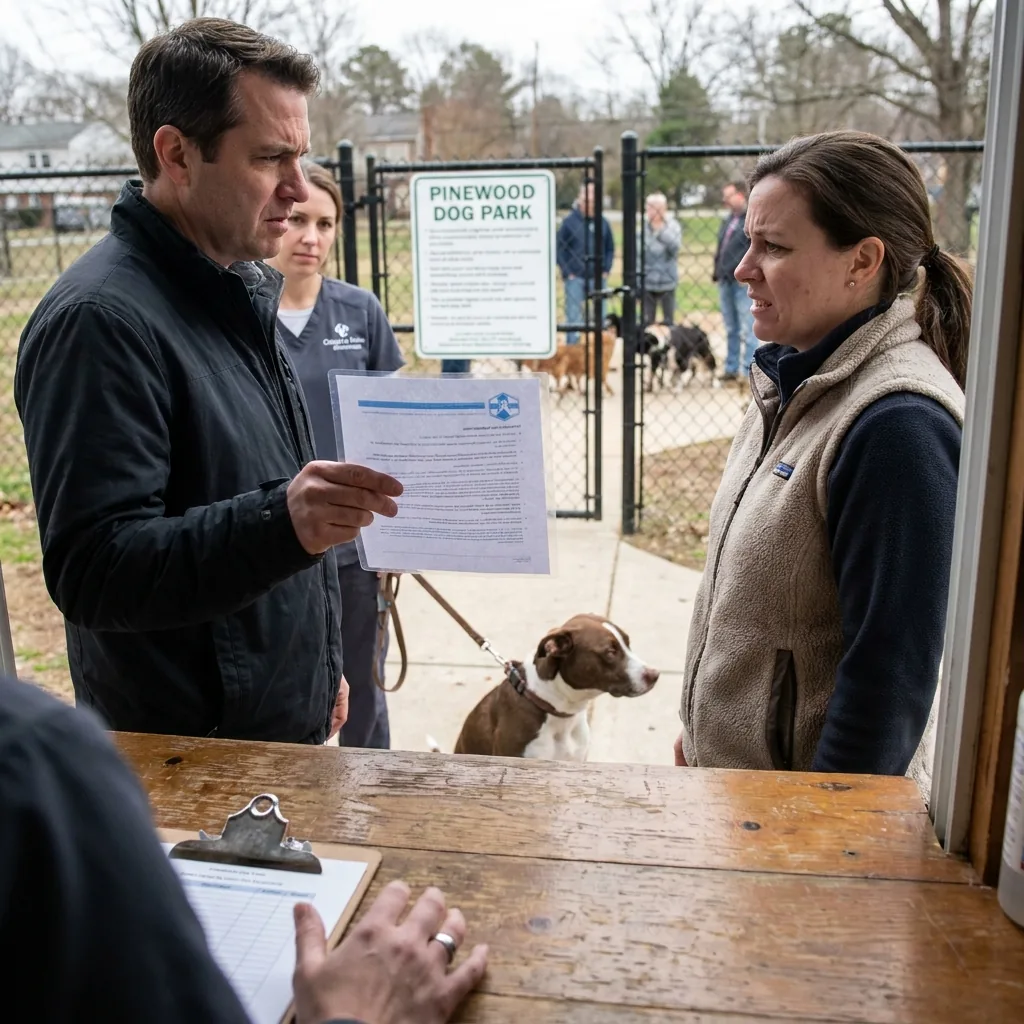
Derek Hale tried to stop Luna at my dog park gate with a vet microchip record held over the check-in counter like a badge, and for one ugly minute the process was on his side. Dogs were circling inside the double gate, tennis balls were hitting the fence, people were shifting leashes in line, and he used all of that ordinary traffic to say, loud enough for everybody to hear, that I had to deny entry because his ex had “stolen his dog” and the chip record proved custody. The problem was already in his hand before I even took the page from him.
I work the gate three mornings a week, which means I scan tags, check vaccine dates, watch for over-capacity, and keep people from turning the entrance into a stage. We have a waist-high counter bolted beside the latch, a scanner dock, a gate log on a tablet, and just enough room for two people to start talking over each other if I let them.
That morning the line was moving fine until Derek planted himself sideways in front of the opening and blocked the woman holding Luna’s harness from stepping through. Luna was a tan shepherd mix with one ear tipped forward and a blue leash looped twice around the handler’s wrist. Derek didn’t touch the leash. He just kept one arm across the gate gap and shook the printout in my direction.
“You need to stop her,” he said. “Scan the chip. Pull the record. That dog is listed under me.”
The woman on the leash side said, “Maya, please just let me in and let him do his show somewhere else.”
I knew her by sight. She came in with Luna often enough that I could recognize the harness before I looked up. But our gate rules are simple when somebody throws ownership into it in public: pause entry, verify the animal record, document the dispute, and do not let either side drag the dog through the middle of it. Process is supposed to keep people from bullying each other. Derek was using it like a crowbar.
So I said, “Nobody is going through the gate until I check the chip number against the park profile.”
He nodded hard, too fast, like he had been waiting for that exact sentence.
A couple behind them pulled their doodle back to the fence and stared. Somebody inside the park called for a dog named Pepper. Luna stayed pressed against the handler’s leg, ears up every time Derek raised his voice.
He slid the paper across the counter. It was a clinic record with Luna’s chip number, a patient line, and a print date from that week. He tapped one section with two fingers.
“Registered contact,” he said. “That’s me. So she doesn’t get to walk in here like nothing happened.”
The page had enough real formatting to slow everything down. Clinic name at the top. Technician initials. Scan entries. I took it, set it flat, and reached for our scanner.
“Need the dog close,” I said.
The woman didn’t argue with me. She crouched, steadied Luna by the harness, and let me pass the scanner over Luna’s shoulder. The chip number came back clean and matched the one on the paper Derek had brought.
That was the first moment the line behind them went quiet.
Derek heard the scanner beep and spread his hands toward the people waiting. “Thank you. Exactly.”
I ignored that and opened Luna’s park profile. The account had current vaccines, approved access, and the same chip number. The visible handler on the account was not Derek. That alone was not enough to settle a custody fight at the gate, because microchip records can show contact history, not just one name forever. What mattered was sequence.
So I read the clinic page more carefully.
There were three scan-related timestamps on it. One was a wellness visit. One was a contact update. One was a chip verification. Derek kept pointing to the line with his name attached, but the order of the times made my hand stop over the tablet.
I looked at the page, then at our gate log, then back at the page.
He saw me pause and leaned in. “What now?”
I kept my voice flat. “I’m reading.”
The woman holding Luna said nothing. She just shifted the leash higher in her grip when Derek moved closer to the counter.
On the paper, the contact update that attached Derek’s name was stamped at 9:14 a.m. The chip verification he was claiming as proof that Luna was brought in under his custody was stamped at 8:52 a.m. the same morning. Forty-two minutes earlier.
I checked the clinic heading again to make sure I wasn’t missing a date change. Same day.
Derek tapped the page a second time. “You can’t just stand there. If the chip is under me, block her access.”
“It doesn’t say what you just said,” I told him.
His chin lifted. “Read it right.”
So I turned the page toward myself, kept one hand on the scanner dock, and pulled up our gate log with the other. If he wanted process, he was about to get all of it in order.
Because the record in front of me was saying he had Luna verified at the clinic before the record changed to show his name at all, and that was not a small typo. That was the kind of timestamp problem that makes the whole claim wobble the second you read every line out loud.
Derek Hale tried to stop Luna at my dog park gate with a vet microchip record held over the check-in counter like a badge, and for one ugly minute the process was on his side. Dogs were circling inside the double gate, tennis balls were hitting the fence, people were shifting leashes in line, and he used all of that ordinary traffic to say, loud enough for everybody to hear, that I had to deny entry because his ex had “stolen his dog” and the chip record proved custody. The problem was already in his hand before I even took the page from him.
I work the gate three mornings a week, which means I scan tags, check vaccine dates, watch for over-capacity, and keep people from turning the entrance into a stage. We have a waist-high counter bolted beside the latch, a scanner dock, a gate log on a tablet, and just enough room for two people to start talking over each other if I let them.
That morning the line was moving fine until Derek planted himself sideways in front of the opening and blocked the woman holding Luna’s harness from stepping through. Luna was a tan shepherd mix with one ear tipped forward and a blue leash looped twice around the handler’s wrist. Derek didn’t touch the leash. He just kept one arm across the gate gap and shook the printout in my direction.
“You need to stop her,” he said. “Scan the chip. Pull the record. That dog is listed under me.”
The woman on the leash side said, “Maya, please just let me in and let him do his show somewhere else.”
I knew her by sight. She came in with Luna often enough that I could recognize the harness before I looked up. But our gate rules are simple when somebody throws ownership into it in public: pause entry, verify the animal record, document the dispute, and do not let either side drag the dog through the middle of it. Process is supposed to keep people from bullying each other. Derek was using it like a crowbar.
So I said, “Nobody is going through the gate until I check the chip number against the park profile.”
He nodded hard, too fast, like he had been waiting for that exact sentence.
A couple behind them pulled their doodle back to the fence and stared. Somebody inside the park called for a dog named Pepper. Luna stayed pressed against the handler’s leg, ears up every time Derek raised his voice.
He slid the paper across the counter. It was a clinic record with Luna’s chip number, a patient line, and a print date from that week. He tapped one section with two fingers.
“Registered contact,” he said. “That’s me. So she doesn’t get to walk in here like nothing happened.”
The page had enough real formatting to slow everything down. Clinic name at the top. Technician initials. Scan entries. I took it, set it flat, and reached for our scanner.
“Need the dog close,” I said.
The woman didn’t argue with me. She crouched, steadied Luna by the harness, and let me pass the scanner over Luna’s shoulder. The chip number came back clean and matched the one on the paper Derek had brought.
That was the first moment the line behind them went quiet.
Derek heard the scanner beep and spread his hands toward the people waiting. “Thank you. Exactly.”
I ignored that and opened Luna’s park profile. The account had current vaccines, approved access, and the same chip number. The visible handler on the account was not Derek. That alone was not enough to settle a custody fight at the gate, because microchip records can show contact history, not just one name forever. What mattered was sequence.
So I read the clinic page more carefully.
There were three scan-related timestamps on it. One was a wellness visit. One was a contact update. One was a chip verification. Derek kept pointing to the line with his name attached, but the order of the times made my hand stop over the tablet.
I looked at the page, then at our gate log, then back at the page.
He saw me pause and leaned in. “What now?”
I kept my voice flat. “I’m reading.”
The woman holding Luna said nothing. She just shifted the leash higher in her grip when Derek moved closer to the counter.
On the paper, the contact update that attached Derek’s name was stamped at 9:14 a.m. The chip verification he was claiming as proof that Luna was brought in under his custody was stamped at 8:52 a.m. the same morning. Forty-two minutes earlier.
I checked the clinic heading again to make sure I wasn’t missing a date change. Same day.
Derek tapped the page a second time. “You can’t just stand there. If the chip is under me, block her access.”
“It doesn’t say what you just said,” I told him.
His chin lifted. “Read it right.”
So I turned the page toward myself, kept one hand on the scanner dock, and pulled up our gate log with the other. If he wanted process, he was about to get all of it in order.
Because the record in front of me was saying he had Luna verified at the clinic before the record changed to show his name at all, and that was not a small typo. That was the kind of timestamp problem that makes the whole claim wobble the second you read every line out loud.